
How Many Wedding Invitations Do I Need for 200 Guests? Your Simple Guide to Wedding Planning
Planning a wedding can be exciting yet overwhelming, especially when it comes to invitations. If you’re expecting 200 guests, you don’t need to order 200 invitations. Instead, you should generally order about 125 invitations. This figure considers that many guests will be coming as couples or families, reducing the number of invites you really need.
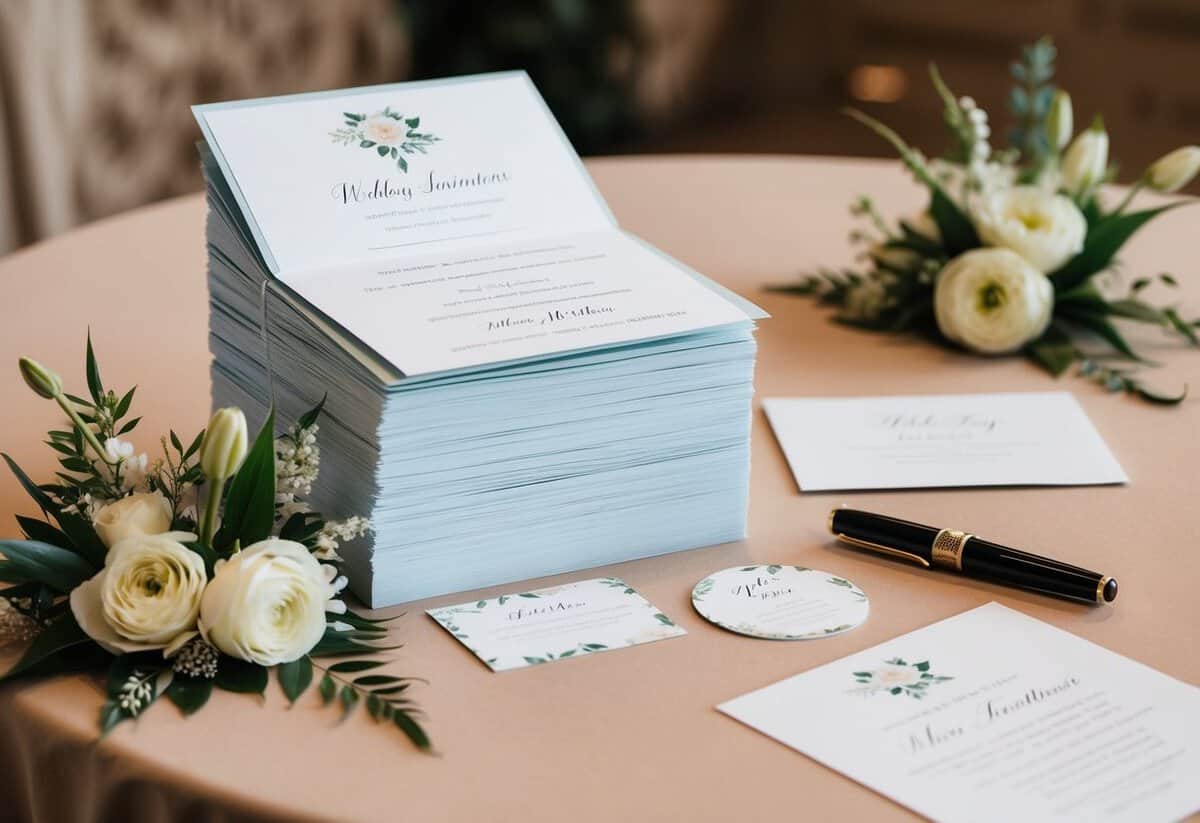
Finding the right number of invitations can help simplify your planning process and save you money. Understanding how many invitations to send out means you can focus on other important details of your big day without stress. With a little math and consideration of your guest list, you can get it just right!
Understanding the Guest List Dynamics
Creating a guest list for your wedding is a vital step in the planning process. The number of invitations you need can differ based on several factors, such as how you group your guests and the size of your wedding.
Determining the Size of Your Wedding
When planning for around 200 guests, the first thing to do is decide on your wedding size. Do you want an intimate gathering or a larger celebration?
Consider how guests are related. You may send one invitation per family or couple. For example, if you’re inviting families, aim for about 150 invitations since some will include multiple guests.
Also, remember to count individual guests. If you’re inviting singles, each should receive their own invitation, increasing your total count. The average wedding size can vary, but knowing your preferred style helps establish your guest list.
Calculating Invitation Quantities
Now that you understand your guest dynamics, it’s time to calculate how many wedding invitations you actually need. A good rule of thumb is one invitation per household or couple.
For example, if you’re inviting 200 guests, you might only need around 120-150 invitations, depending on family sizes and plus-ones. If many guests are single or couples, adjust accordingly.
You can also think about sending a few extra invitations. This way, you’ll be prepared for those who may RSVP late. Always keep in mind the importance of plus-ones for guests who may not know others at the wedding.
By considering these factors, you can ensure your invitations match your guest count accurately.
The Invitation Suite Components
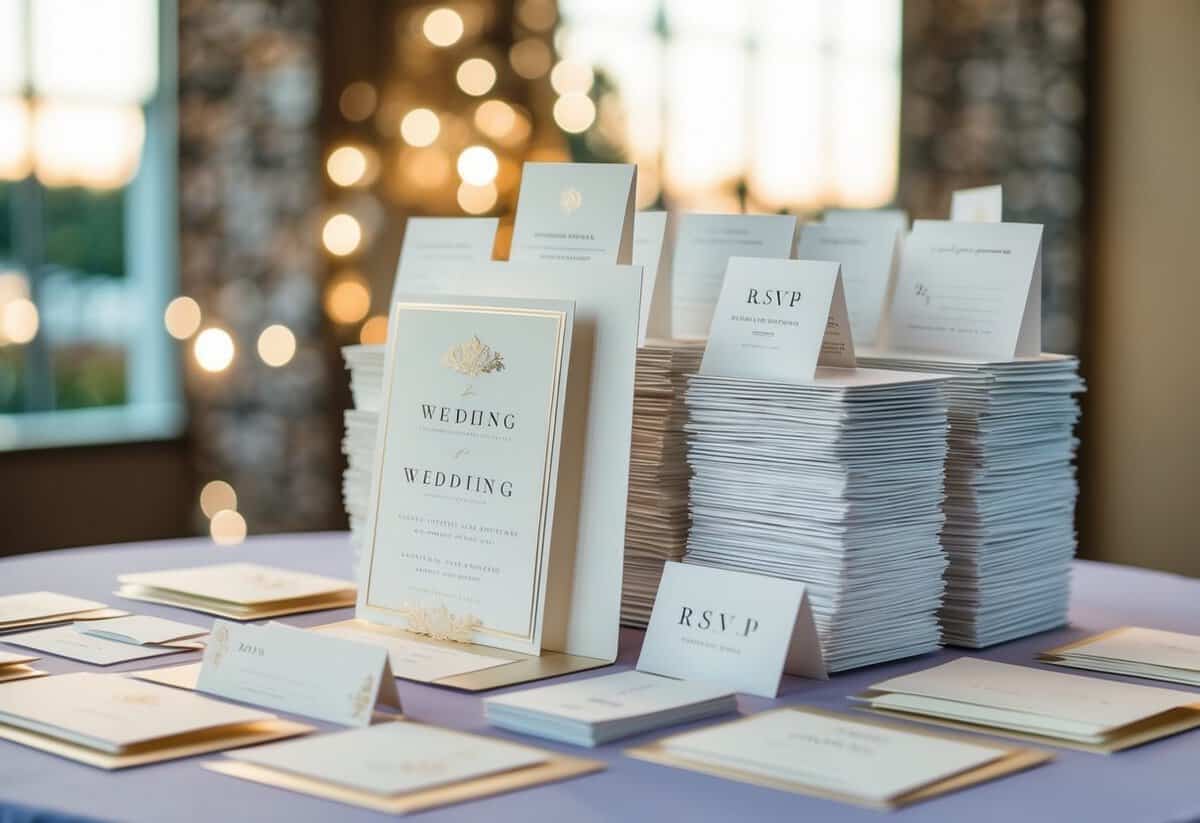
When planning your wedding, knowing the components of your invitation suite is essential. These elements will help convey your wedding details and set the tone for your special day. Let’s explore what you need and some design tips.
Essentials of Wedding Stationery
Your wedding stationery typically includes several key pieces. At the core of your invitation suite is the main wedding invitation, which provides all the essential details like the date, time, and location.
Next, include an RSVP card that allows guests to confirm their attendance easily. You might also want a details card to share extra information, such as directions or dress code.
Finally, don’t forget the envelopes. You will need an outer envelope for the invitation and a smaller one for the RSVP. Consider ordering a few extra invitation suites in case of mistakes or last-minute guests. This way, you’ll be prepared!
Choosing Design and Calligraphy
The design of your invitation suite helps reflect your wedding style. Think about colors, fonts, and layouts that resonate with you.
Calligraphy can add a personal touch. Hiring a calligrapher can elevate your invitations with elegant handwriting. This can make even a simple design stand out.
Choose design elements that match your theme, such as floral graphics or vintage styles. Don’t forget about paper quality! Heavier cardstock feels more luxurious.
Looking at wedding invitation samples can inspire your choices. Collect ideas from various sources to create your ideal look. This ensures your invitation suits your vision perfectly!
Addressing Common Invitation Challenges
When planning a wedding, managing invitations can lead to some tricky situations. You may face challenges with RSVPs and possible addressing mistakes. Let’s look at some effective ways to handle these issues.
Managing RSVPs and Attendance
Getting timely RSVPs is crucial for your wedding planning. To encourage quick responses, include a clear RSVP date on your invitations. You can opt for digital options like online forms to streamline the process.
Make a list of all guests who have responded positively, negatively, or have yet to reply. Keep this organized, as attendance rates can fluctuate. It’s wise to anticipate that some guests may not attend, so invite a few extra people to cover possible declines.
Consider following up with guests who haven’t replied a week before your deadline. A friendly reminder can often prompt responses and ease any concerns you may have.
Dealing with Addressing Errors
Addressing invitations correctly is essential, but sometimes mistakes happen. Double-check names and addresses before sending. Use a clear format, such as Mr. and Mrs. Smith, to avoid confusion.
If you find an error after sending, don’t fret. You can send a quick, polite message to clarify the mistake. Most guests will appreciate your honesty.
Creating a spreadsheet with guest details can help reduce errors. Include columns for names, addresses, and RSVP status. This makes the invitation process smoother and minimizes future addressing issues.
Budgeting for Invitations and Extras
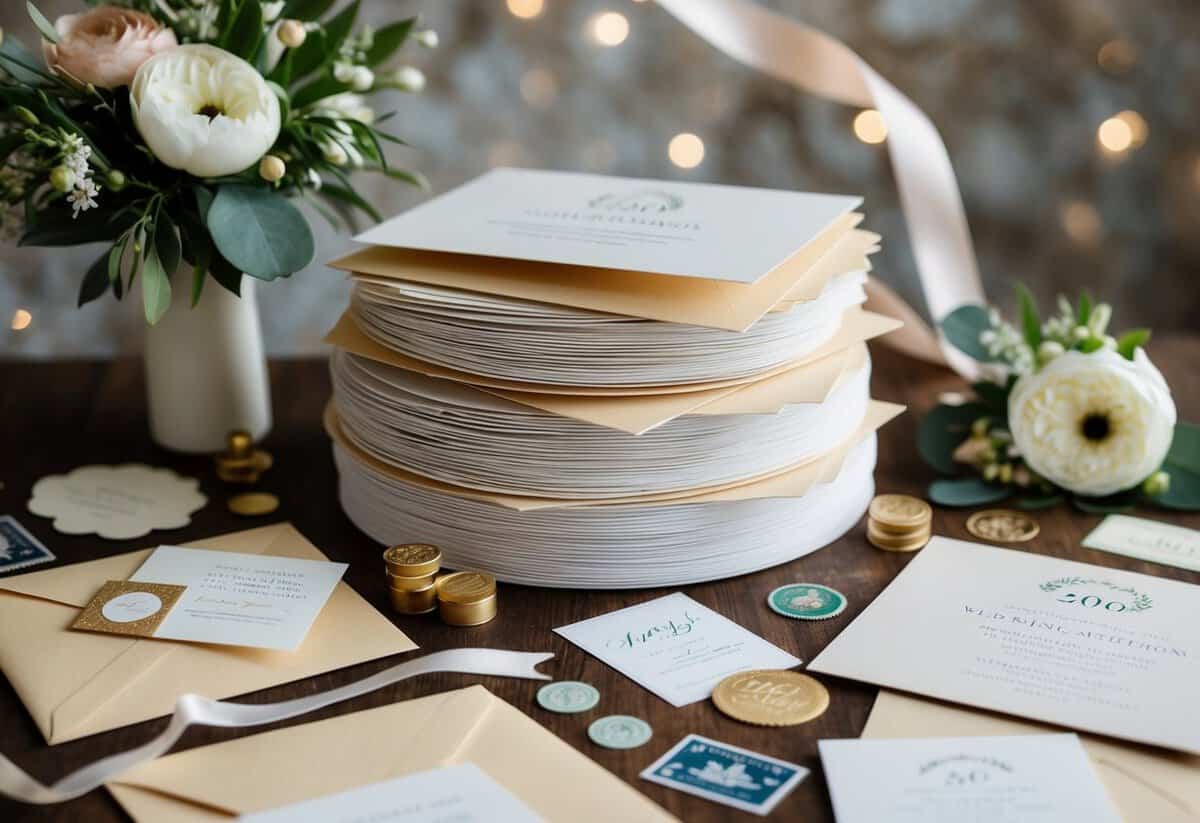
When planning your wedding, budgeting for invitations is a key part of the process. It’s essential to estimate costs and consider ordering extra invitations and envelopes. This ensures you have everything covered without last-minute stress.
Estimating Wedding Invitation Costs
To determine how many wedding invitations you need, start with your guest list. For 200 guests, you might only need around 120 invitations, since many households will receive a single invite.
Next, consider the cost of wedding invitations. Prices can vary widely. For example, basic invites may start at $1 each, while custom designs can go for $5 to $10 each.
To help manage costs, create a budget. A breakdown might look like this:
- Basic invites: $200 (for 200 invitations at $1 each)
- Custom designs: $1,000 (for 200 invitations at $5 each)
Make sure to include any additional costs, like shipping or special features like foil stamping.
Ordering Extra Invitations and Envelopes
It’s a good idea to order extra invitations. A rule of thumb is to purchase about 10 additional invites to cover any last-minute additions or mistakes.
This way, you won’t find yourself short if an unexpected guest turns up or if an invite is lost in the mail.
Also, remember to order extra envelopes. You’ll need more than just the number of invitations. Aim for about 20% extra.
So, if you order 120 invitations, consider getting around 144 envelopes.
This planning not only provides keepsakes for you and your family but also reduces potential stress as the big day approaches. A little extra effort now can save you time and worry later!