
How Much Do Men’s Wedding Bands Cost? Price Guide
For many well-made men’s wedding bands, you’ll spend about $300 to $1,500. Simple titanium or tungsten styles can cost less, while platinum, gemstone, and custom designs can exceed $1,500.
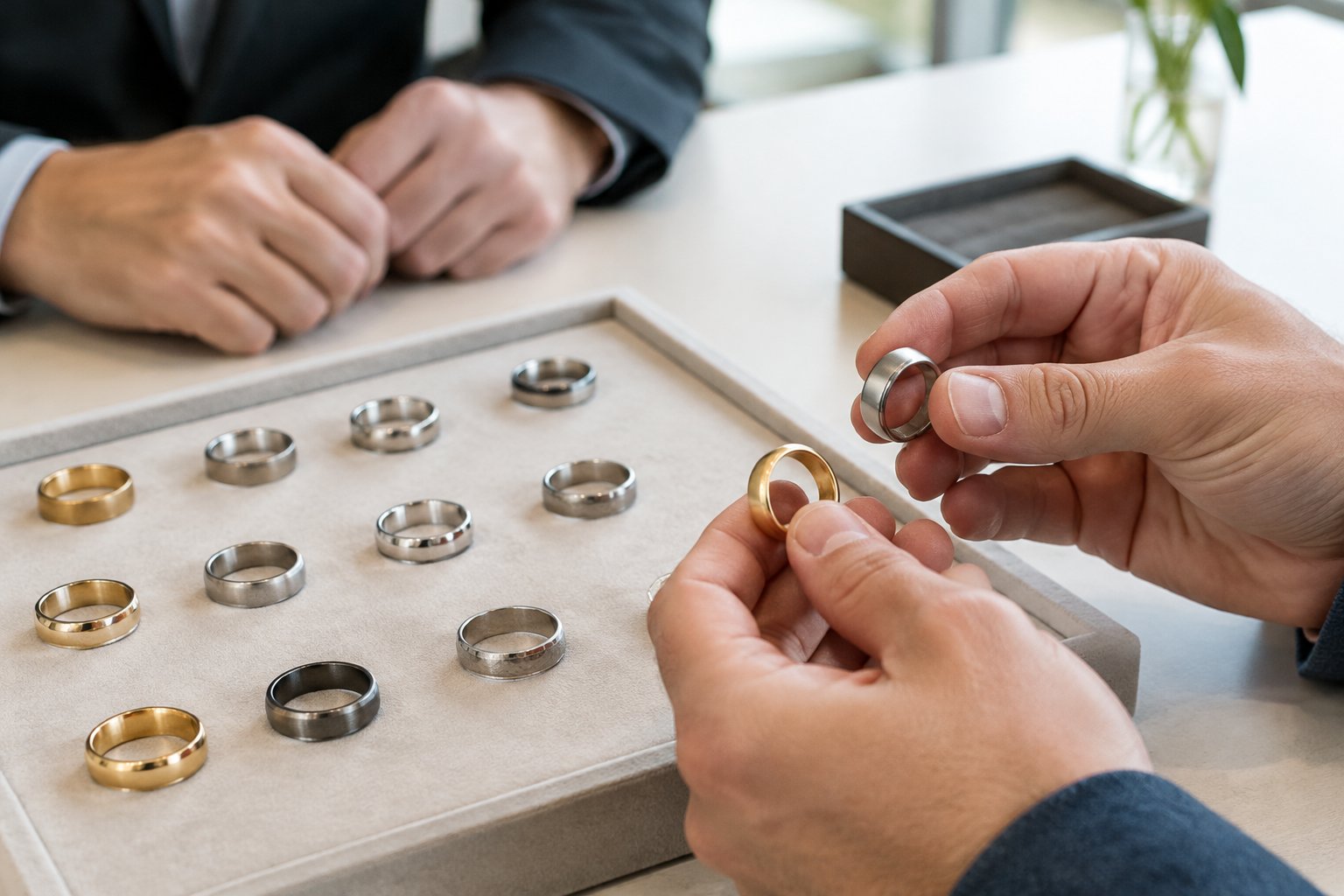
The ring’s material and design shape its price, while width and craftsmanship can add to the total. Set a comfortable spending limit, then compare bands that fit your style and daily routine.
What Do Most Grooms Spend?
A practical planning figure for men’s wedding bands is about $600, with many grooms spending between $300 and $600. The price range is wide, so the average cost of a men’s wedding band offers a useful starting point, not a rule for your purchase.
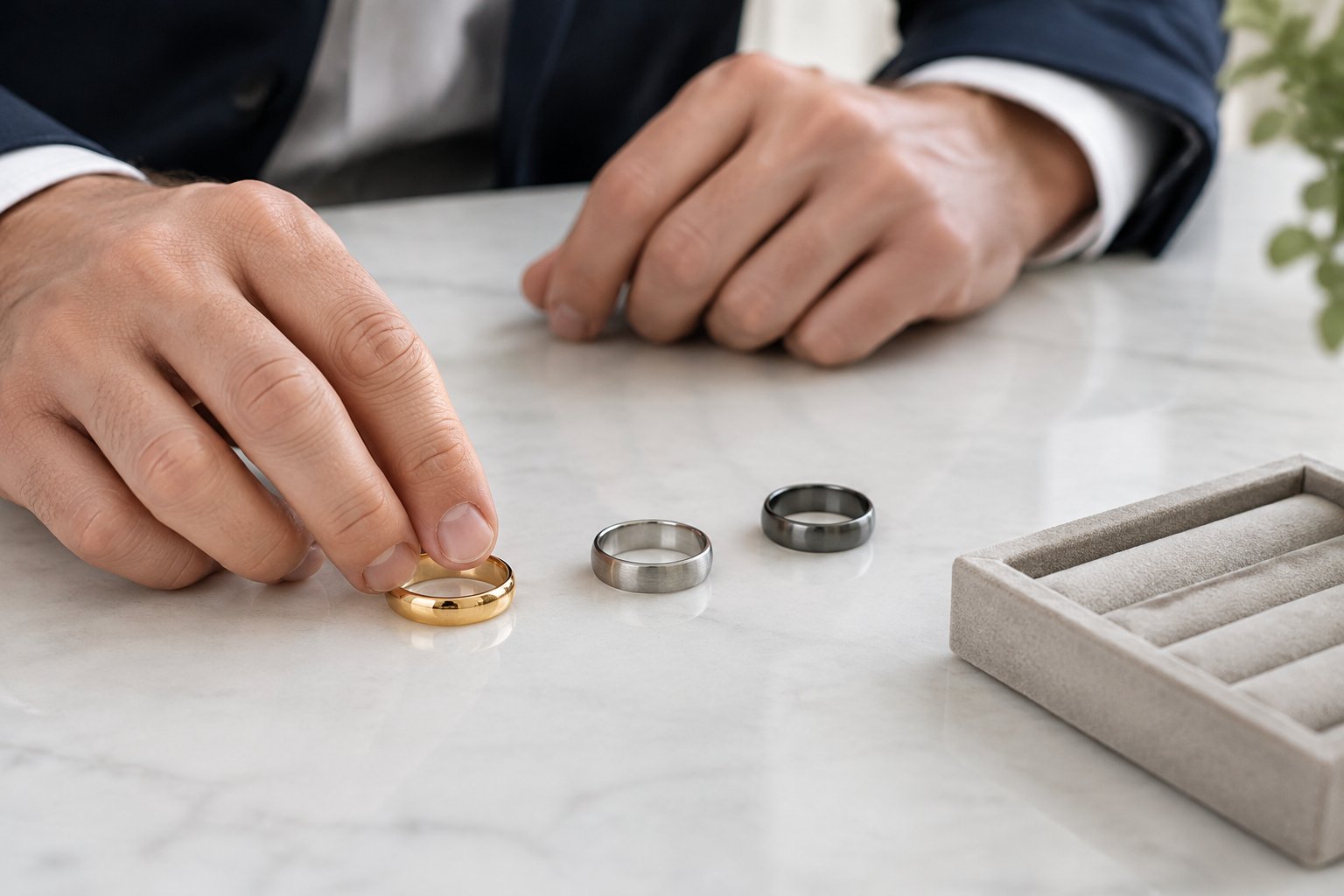
Simple alternative-metal rings sit at the lower end of the market, while precious metals and added details raise the price. Your band’s size, material, and finish help explain why two rings with a similar look can have very different price tags.
What Is the Average Cost of a Men’s Wedding Band?
Published estimates place the average cost of a men’s wedding band near $500 to $600, though some estimates run higher. A budget of $300 to $1,500 gives you room to shop across a broad range of well-made styles.
A plain titanium or tungsten ring may cost under $500. A classic gold band often costs more, and platinum or a custom design can push the total above $1,500. For a closer look at spending expectations, see this guide to how much a man should pay for a wedding band.
Why Does the Median Differ From the Average?
The median is the middle price when you line up all purchases from least expensive to most expensive. The average adds every price together and divides by the number of purchases, so a small number of very expensive rings can raise it.
That’s why average estimates may differ across surveys and retailers. If you want a useful number for your own plan, start with the prices of the materials and styles you’re considering, then compare them with your spending limit.
How Much Do Bands Cost by Material?
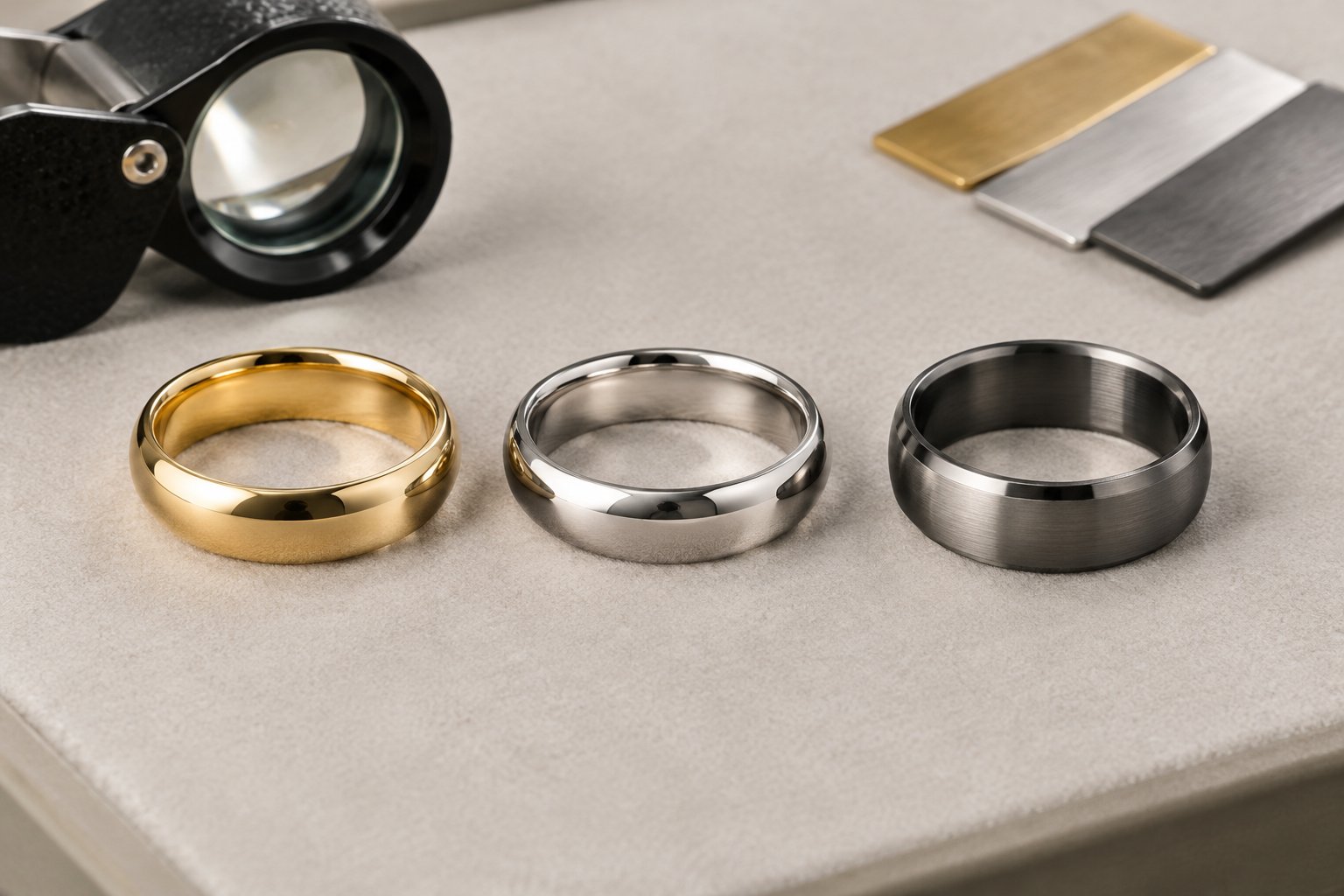
Material is one of the biggest factors in a band’s price, with gold and platinum costing more than many alternative metals. The table gives you a general price range; width, weight, and design details can shift the final cost.
What Are Typical Prices for Gold and Platinum?
A 14K gold band often costs $500 to $1,500, while 18K gold can range from $1,000 to $2,500. Platinum bands commonly start around $1,500 and can reach $3,000 or more.
| Material | Typical price range | What you get |
|---|---|---|
| 14K gold | $500–$1,500 | Classic style with a durable gold alloy |
| 18K gold | $1,000–$2,500 | Higher gold content and a richer color |
| Platinum | $1,500–$3,000+ | Dense, naturally white metal that does not need rhodium plating |
| Titanium | $100–$500 | Lightweight, durable band |
| Tungsten carbide | $100–$500 | Heavy band with strong scratch resistance |
| Damascus steel | $150–$500 | Distinctive layered pattern |
Gold prices vary with the market, and a wider, heavier band uses more metal. White gold may need periodic rhodium plating to keep its bright finish, while platinum develops a soft patina as it wears.
If you’re weighing style and daily use alongside price, compare the best types of wedding bands for men.
How Much Do Titanium, Tungsten, and Other Alternative Bands Cost?
Titanium and tungsten bands often cost $100 to $500, making them lower-priced choices with distinct feels. Titanium is light on your finger; tungsten feels heavier and resists scratches well.
Other alternative materials come with their own price ranges. Damascus steel and wood-inlay designs can start near $150, while meteorite details may bring a band to $300 to $800. Bands with rare materials or more involved inlays can cost $500 or more. Check the sizing policy before buying, since many alternative-metal bands cannot be resized.
What Makes One Band More Expensive Than Another?
A band’s price rises with the amount of material it uses and the time required to make its design. Wider profiles, intricate finishes, gemstones, and custom details can all add cost.
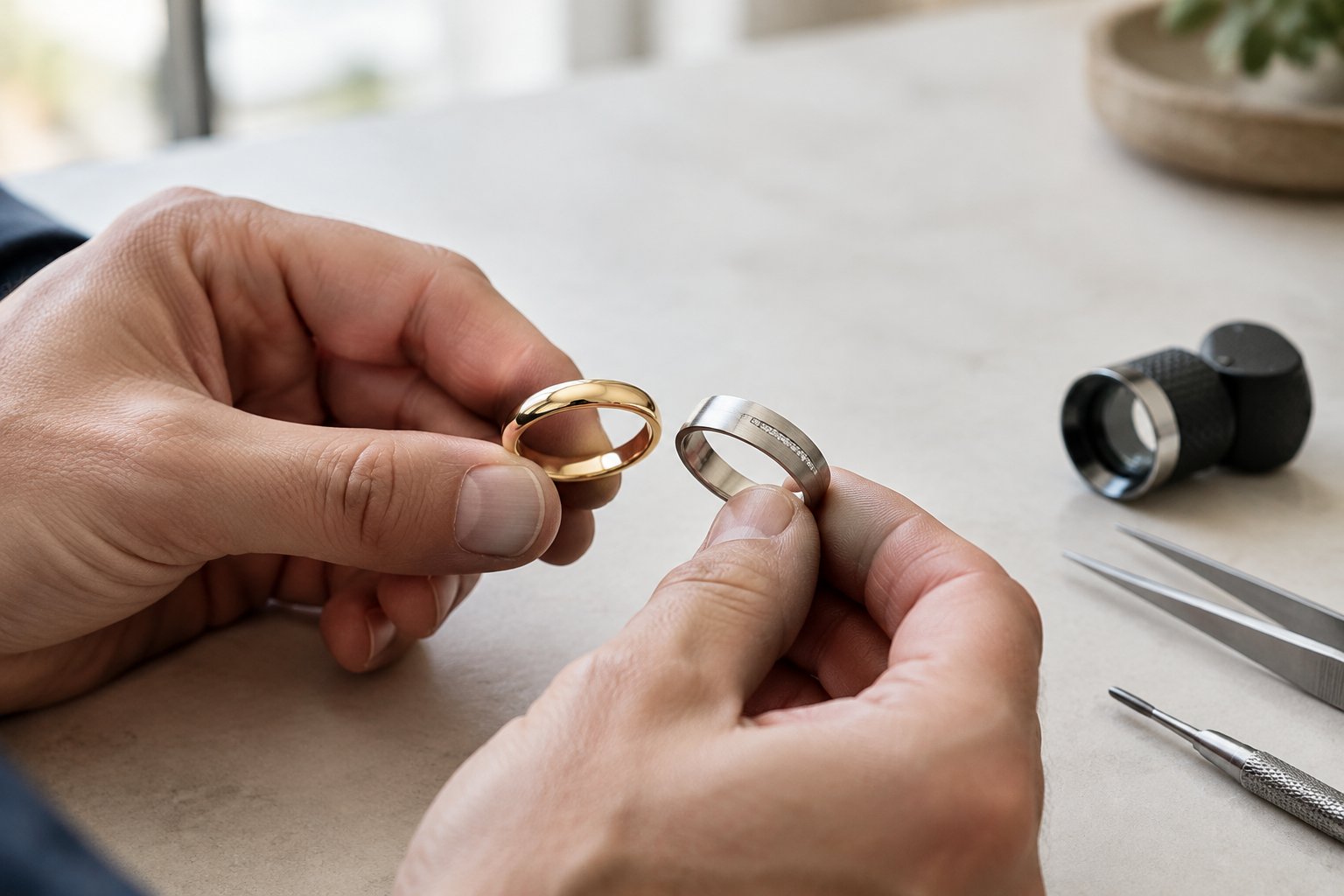
A ring’s appearance also reflects its finish and craftsmanship. If you’re choosing details for a refined look, this guide to what makes a wedding ring look expensive can help you compare visual features.
How Do Width, Design, and Craftsmanship Affect Price?
A wider or thicker band needs more metal, which raises the price of gold and platinum styles. A comfort-fit interior, beveled edges, or a textured finish may also add to the cost because each detail takes extra work.
Machine-made bands can cost less than handcrafted or custom pieces. A plain polished band is one of the most affordable designs in a given metal, while hammered textures, two-tone construction, and complex inlays add labor and materials.
How Much Do Gemstones and Custom Details Add?
Gemstones can increase a band’s price by hundreds or thousands of dollars, depending on the stone’s size, quality, and setting. A small accent stone costs less than a row of diamonds or a custom setting.
Engraving is often a modest extra charge, and some retailers include simple text engraving. Custom shapes and mixed-material designs call for more labor, so ask for a full quote that includes the design work, stone setting, and personalization.
How Should You Set a Wedding Band Budget?
Set a maximum price that fits your wedding spending plan, then choose a material and design within that limit. A useful budget includes the band itself, any personalization, and care or resizing costs you may face later.

Many shoppers can find a durable, attractive band for under $1,500. For help balancing ring costs with other wedding expenses, use this guide to making a realistic wedding budget.
What Can You Expect to Find at Each Price Point?
Your options expand as you move into higher price ranges:
- Under $500: You’ll find many titanium, tungsten, stainless steel, and simple silver styles, plus some basic gold or alternative-metal designs.
- $500 to $1,500: You can shop for classic 14K gold, more detailed alternative-metal bands, and selected gemstone styles.
- Above $1,500: You’ll find platinum, wider or heavier gold bands, larger gemstone designs, and custom work.
Treat these ranges as a starting point. A narrow 14K band may cost less than a wide, detailed band in the same metal, and retailer pricing can vary.
Where Can You Save Without Sacrificing Everyday Wearability?
Choose a simple finish and a comfortable width to keep costs in check. A 14K gold band gives you a classic precious-metal option, while titanium and tungsten offer durable styles at lower prices.
You can also save by choosing a plain band and adding a modest engraving. Before you buy, check the warranty, return window, and exchange policy; a low upfront price has less value if a poor fit leaves you with a ring you cannot wear.
What Should You Consider Before You Buy?
Before you pay, confirm the fit, the band’s repair options, and any routine care costs. A policy that covers exchanges or repairs can affect what you spend over the ring’s lifetime.
Can the Band Be Resized or Repaired?
Gold and platinum bands can usually be resized by a jeweler, though the design and amount of size change affect what repairs are possible. Tungsten, titanium, ceramic, and cobalt bands are generally too hard to resize, so check whether the seller offers a size exchange.
Get sized by a jeweler before ordering, especially if you’re choosing an alternative metal. A wide band can feel tighter than a narrow one, so ask for a fit check in the width you plan to wear.
What Care or Maintenance Costs Should You Expect?
Gold bands can pick up scratches and may need polishing over time. White gold may need rhodium plating to refresh its bright surface, while platinum can develop a matte patina that some wearers prefer.
Ask what your warranty covers before checkout. Routine cleaning may be simple at home, while professional polishing, plating, or repairs can add costs. Keep the care instructions and purchase documents with your ring.