
How Much Does a Videographer Cost for a Wedding? A Guide
Wedding videography in the U.S. commonly costs $2,000 to $4,000 for professional coverage, while a short, basic package can cost less and a larger cinematic production can exceed $5,000. Your final price reflects the coverage hours, crew size, editing, and films you want delivered.
A lower quote can cover only a few hours and a short highlight film. A full-day package with ceremony and speech edits takes more filming and editing time, so set your budget around the finished videos you want. If you’re setting your wedding spending plan now, compare a few local packages and choose the deliverables that fit your priorities.
What Is the Typical Wedding Videographer Price Range?
A useful starting budget is $2,000 to $4,000 for a professional wedding videographer in the U.S. Prices shift by region and package, so compare the exact coverage and finished films each quote includes. Include the videography line in your wedding budget plan before deciding which upgrades fit.
What Do Basic, Midrange, and Premium Packages Usually Cost?
A basic package often runs about $1,000 to $2,000 for limited coverage and a short highlight film. A midrange package commonly costs $2,000 to $4,000 and may include six to eight hours, a highlight film, and an edited ceremony.
Premium packages can start around $5,000 and climb higher when you add extended coverage, multiple operators, and longer edits. Treat these ranges as budgeting guides, not fixed price tiers. A package at the top of the midrange might include more films than a lower-priced package, so check the written list of deliverables. Your city, date, and venue location also affect the quote.
How Do Hourly and Full-Day Rates Compare?
Most videographers price wedding coverage as a package with a set number of hours. Some list an hourly charge for extra time; published examples range from about $100 to $350 per added hour. A full-day package can offer better value if your timeline runs longer than a shorter package plus overtime.
Compare start and end times, too. An eight-hour booking that begins at the ceremony gives you a different amount of coverage from one that starts during getting-ready preparations. Ask what the overtime rate is and how the videographer counts travel between locations.
What Factors Change the Final Quote?
Coverage time, crew size, editing needs, and travel are the main factors that move your final quote. The schedule and the films you want after the wedding shape how much work the package requires.
How Do Coverage Hours and Crew Size Affect Cost?
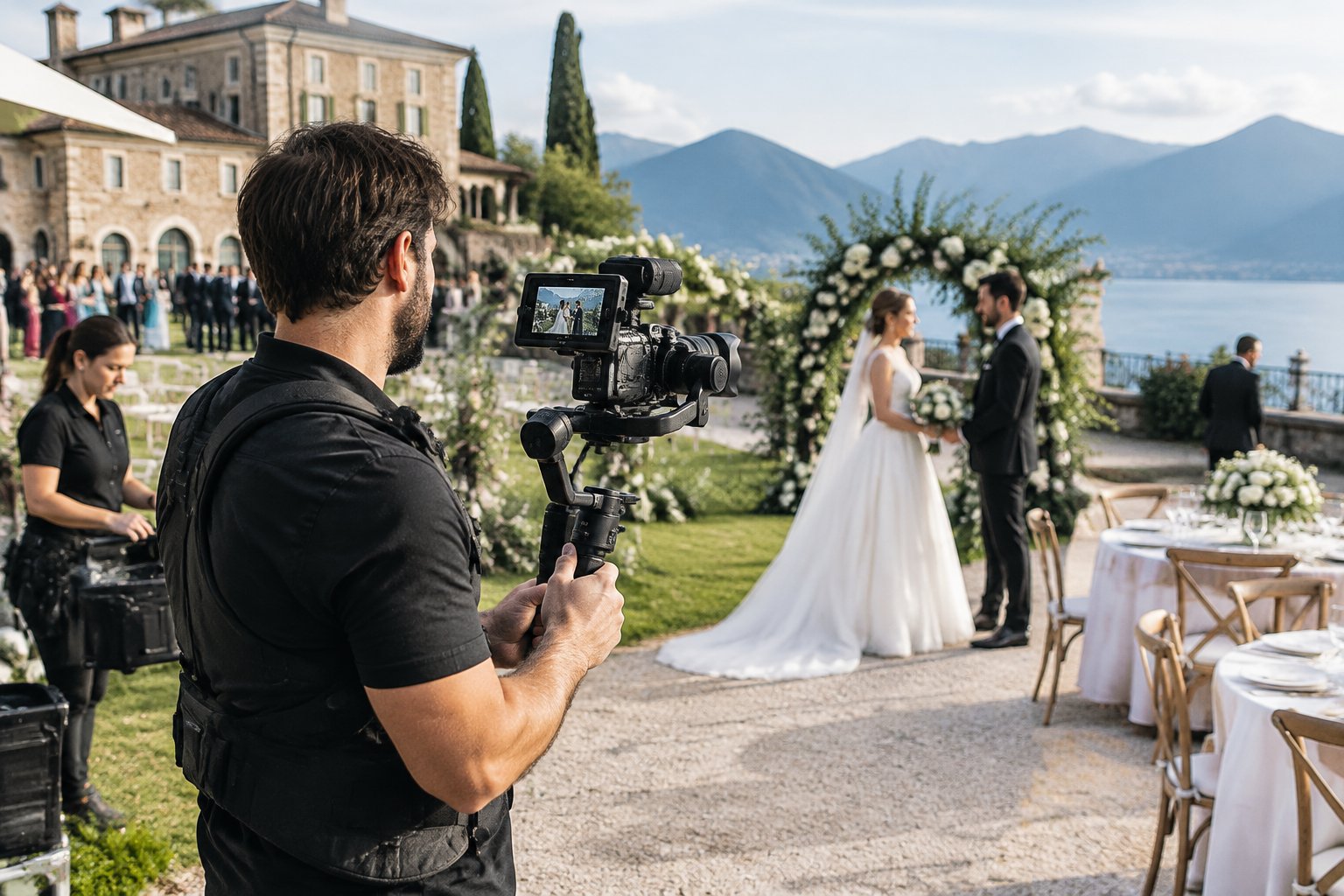
More coverage hours mean more time on site, while a second videographer adds a crew member and another point of view. A second operator can film two preparations happening at once or capture guest reactions while the main camera covers the ceremony.
A second camera set up in one spot does not provide the same coverage as another person moving through the event. Ask how many people will film and what each person will cover. If you’re deciding whether extra angles are worth the added cost, consider how many cameras your wedding video needs based on your ceremony and timeline.
Do Editing, Travel, and Delivery Options Add to the Price?
Editing can change the price as much as coverage does. A short highlight film takes less post-production work than a package with a full ceremony edit, speeches, and a longer documentary-style film. Raw footage, rush delivery, and social media clips may also cost extra.
Travel fees can apply when your venue is outside the videographer’s included area. Ask whether mileage, overnight stays, or meals are part of the quote. Confirm the delivery method and timing, too, including whether you receive downloadable files, a USB drive, or an online gallery.
What Is Usually Included in a Videography Package?
A standard package often includes filming for a set number of hours, professional audio, editing, and digital delivery of at least one finished film. The details vary, so read the package list and contract closely.
Which Filming and Editing Services Should You Expect?
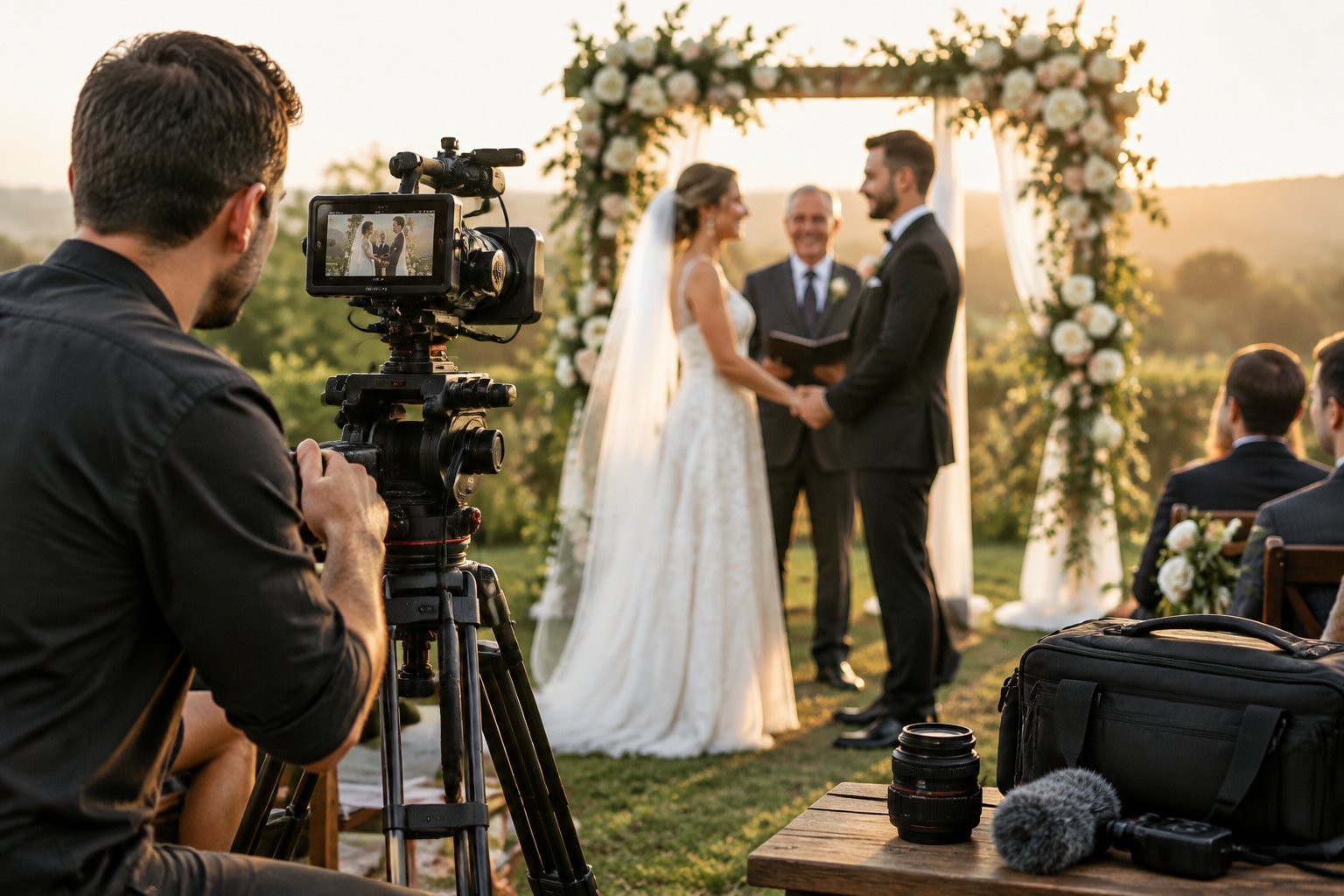
Your package may include ceremony and reception coverage, a highlight film, and professional audio for vows and speeches. Some include a full ceremony edit, multiple camera angles, or raw footage; others list those as upgrades. Ask how the videographer records vows and toasts, and coordinate with your DJ or venue team so the sound feed is clear.
You can also review tips for getting good audio at your wedding before comparing recording plans. Check the expected length of each film and whether the package includes revisions. If you want a video projection at the reception, confirm who supplies the projector and whether setup, testing, and playback support are included. These services can be separate from the wedding-day film package.
What Should You Check in the Contract?
Your contract should state the coverage window, number of videographers, deliverables, delivery estimate, and payment schedule. It should also explain overtime, travel charges, revision limits, cancellation terms, and what happens if your assigned videographer cannot attend.
Ask whether the business carries liability insurance, especially if your venue requires proof from vendors. Get any promised ceremony film, speeches, or raw files listed by name in the contract. Clear terms help you see what you are paying for before you sign.
Which Reception Extras Are Separate From Videography?
A videographer records your event, while entertainment and photo booth vendors provide separate services. Check each contract so you know who supplies music, lighting, equipment, and any on-site video projection.
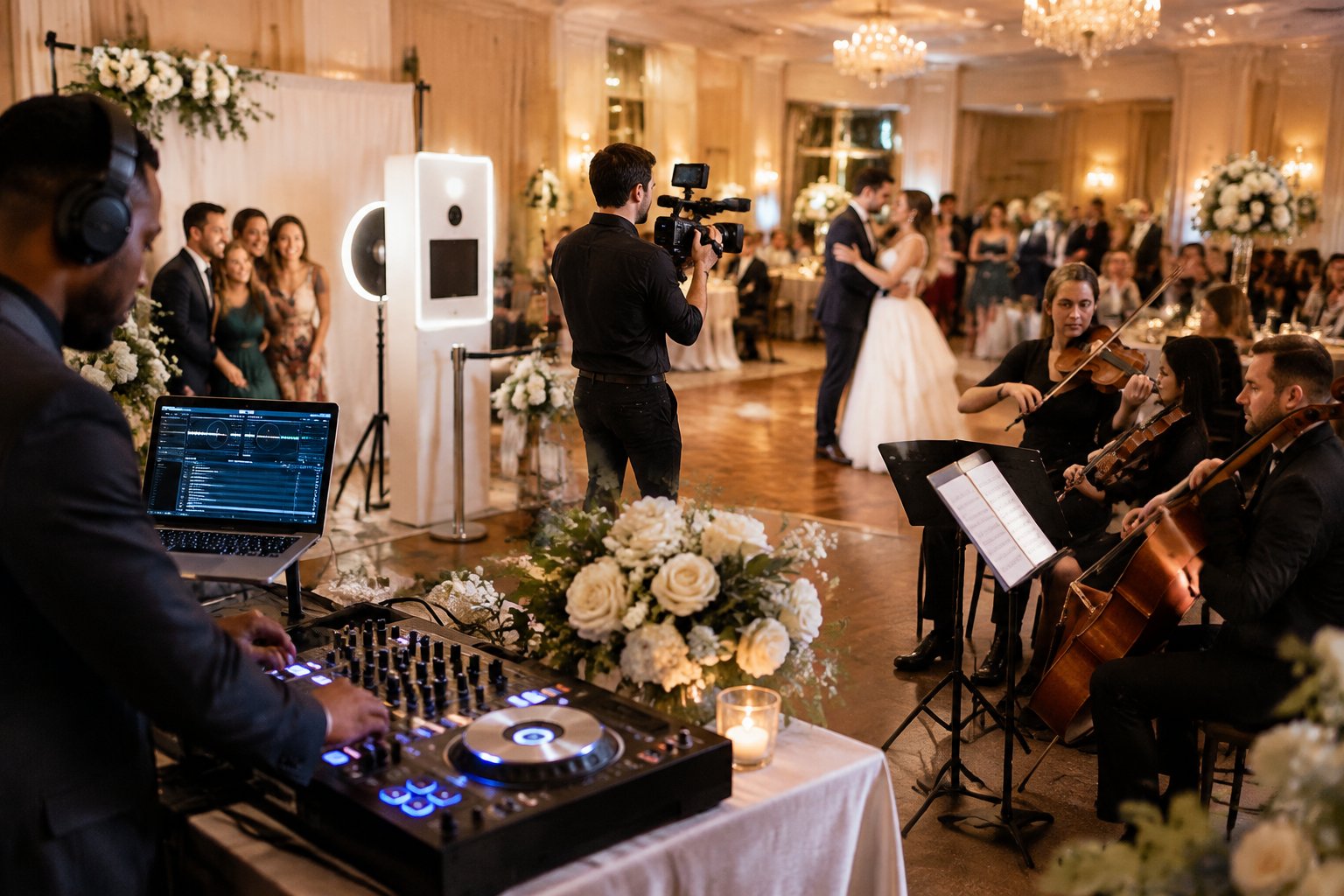
Are a Wedding DJ, Photo Booth, or Uplighting Included?
A wedding DJ, photo booth or photobooth, and uplighting are generally separate reception services. An entertainment company such as AAA Entertainment may handle music and event production; check its quote for the specific services you are booking. The videographer’s package covers filming and video editing unless your contract lists additional services.
If you book a DJ, share your timeline and do-not-play list in advance. You can also tell the DJ which styles you enjoy, such as hip hop, jazz, oldies, or Top 40. Ask separately about a projector and video projection if you want to show a same-day edit or other video during the reception.
How Can You Tell DJ Services Apart From Video Coverage?
A wedding DJ plays music, makes announcements, and guides reception events. A videographer records those moments and creates edited films afterward. Some vendors offer more than one service, so check the quote to see which team member handles each task and what equipment is included.
Your reception schedule can help you plan both vendors’ work. Map the order of events, including toasts and dances, and share it with your vendors so the DJ can cue each moment while the videographer is ready to film.
How Can You Compare Quotes and Stay on Budget?
Compare complete packages line by line, then choose the one that includes the coverage and finished films you value. A lower starting price may not include the ceremony edit, extra hours, or travel you need.
Which Questions Should You Ask Before Booking?
Ask each videographer:
- How many hours and videographers are included?
- Which parts of the day will you film?
- What finished films will we receive, and how long will each be?
- How do you record vows and speeches?
- What are the overtime, travel, and rush-delivery fees?
- When will the videos arrive, and how many revision rounds are included?
Request a full wedding film in addition to a highlight reel. A complete example helps you judge the pacing, audio, and editing style across an entire event.
Where Can You Save Without Losing Important Coverage?
Start by choosing the moments you most want to watch again, such as the ceremony, speeches, and first dance. Then match the coverage window to those priorities and ask whether a shorter package fits your timeline. You can also skip extras such as raw footage or a same-day edit if you do not plan to use them.
Set aside a clear amount for video within your budget, then compare quotes with the same hours and deliverables. If you reduce coverage, confirm the filming start and end times in writing so the moments you care about fall within the booked window.