
How Much Food Do You Serve at a Wedding? Tips for Perfect Portions
When planning your wedding, you might have questions about the food. A good rule of thumb is to plan for about one pound of food per guest for a buffet-style meal. For a family-style service, plan for 1.5 pounds per guest. This helps ensure that everyone leaves satisfied without too much waste.
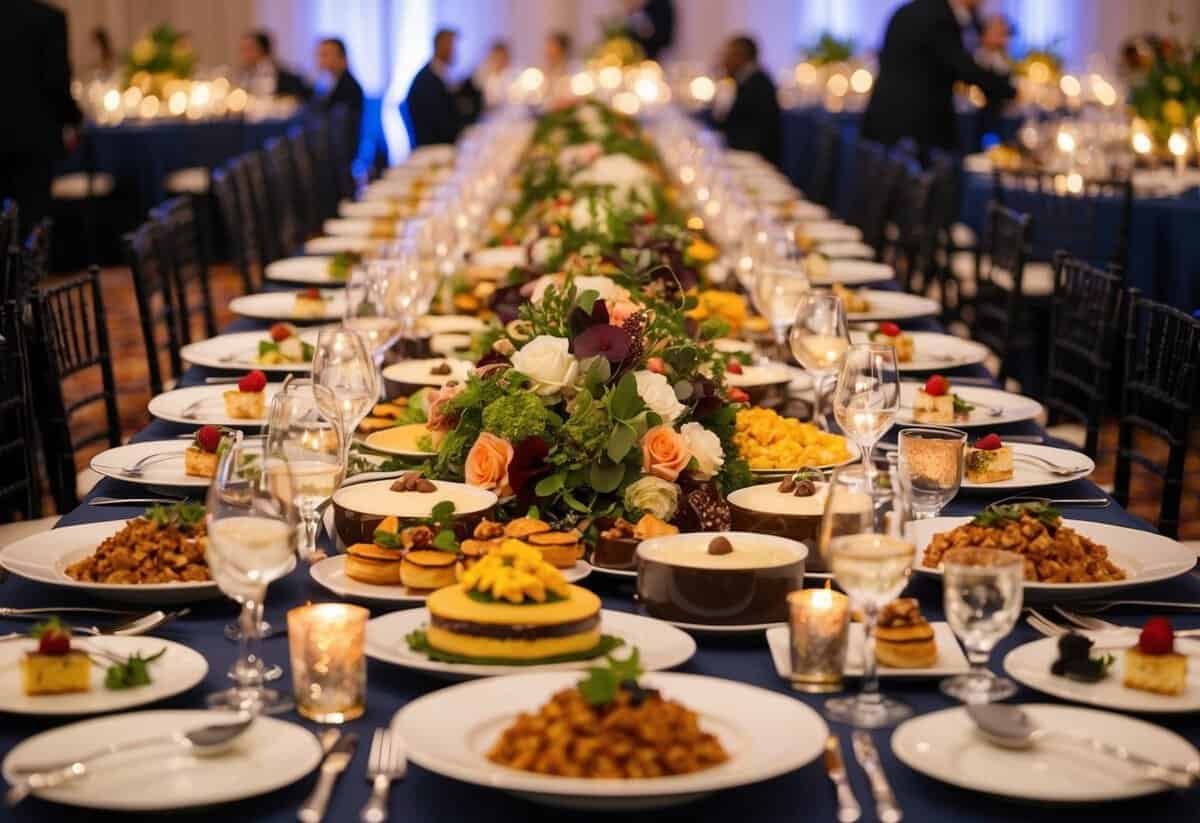
Don’t forget to consider the type of meal you’re serving. If you have a cocktail hour with appetizers, you may not need as much food during the main meal. The joy of wedding planning also means personalizing the menu to reflect you and your partner’s tastes. Embrace this opportunity to make it special!
Knowing the right amounts can make a big difference in your budget and overall planning process. By keeping your guest count in mind and understanding their appetites, you can create a memorable dining experience that complements your celebration.
Understanding the Basics of Wedding Food Service
Planning the food for your wedding requires careful thought. You need to consider your guest count and their preferences to make sure everyone enjoys the meal. Let’s explore how to manage these important details.
Determining Guest Count and RSVP Process
To effectively plan your wedding food, start with your guest list. Make a list of everyone you want to invite. After that, send out your invitations and include an RSVP card or link to simplify tracking who can attend.
Aim to get your RSVPs back at least a month before the wedding. This timeline helps you finalize numbers with your caterer. If you anticipate extra guests, it’s smart to plan for a few additional servings. Remember, it’s always better to have a little extra than to run short.
Assessing Food Preferences and Dietary Restrictions
When planning your menu, think about the variety of your guests’ tastes. Not everyone may enjoy the same foods.
Create a simple survey for your guests to fill out with their dietary restrictions. Common issues include vegetarian, vegan, gluten-free, or nut allergies. Understanding these needs allows you to provide dishes that everyone can enjoy.
Consider having a mix of options, such as a main dish with sides that cater to different diets. This thoughtful approach ensures all your guests feel included at your celebratory meal, making it a memorable event for everyone.
Selection of Food and Beverages
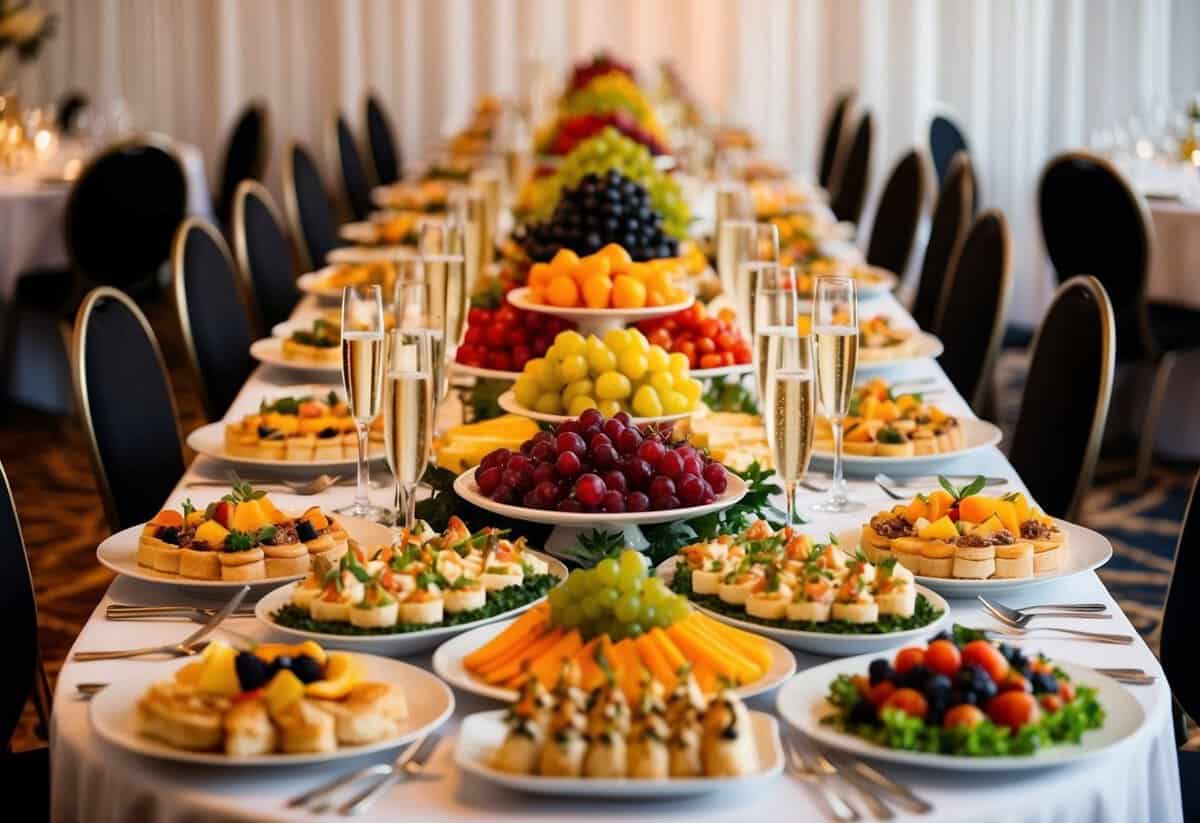
When planning your wedding menu, it’s important to think carefully about the food and beverages you will serve. Your choices should reflect your tastes and cater to your guests’ preferences. It’s all about creating a delightful experience for everyone.
Choosing the Right Appetizers and Hors D’Oeuvres
Start your reception off right with delicious appetizers and hors d’oeuvres. Think about variety to cater to different tastes. Options like stuffed mushrooms, shrimp cocktails, or mini quiches work well.
You can serve these items in different ways:
- Passed platters – Waitstaff can bring them around to guests.
- Buffet-style – Set up a table so guests can help themselves.
Don’t forget vegetarian or gluten-free options to ensure all guests feel included. Aim for bite-sized portions that are easy to eat while mingling.
Creating a Balanced Menu of Entrees and Side Dishes
For the main course, consider a mix of proteins and vegetarian dishes that reflect your culinary preferences. Classic options like roast chicken, beef tenderloin, or a flavorful veggie pasta can impress your guests.
Pair your entrees with a variety of side dishes, such as:
- Seasonal vegetables – Fresh and colorful vegetables can add a nice touch.
- Starches – Consider options like mashed potatoes, rice pilaf, or quinoa.
Try to estimate about two to three sides per guest that complement the main dish. This variety ensures guests can personalize their plates according to their tastes.
Picking Desserts and the Centrepiece Wedding Cake
Desserts can be one of the highlights of your wedding meal. Choose options that fit your theme or preferences. In addition to your wedding cake, consider offering a dessert bar with items like mini pastries, cookies, or even cupcakes.
Your wedding cake should be both beautiful and delicious. Work with a baker to choose flavors that you love, and think about dietary requirements.
Don’t forget to provide drinks, too! Offering a selection of non-alcoholic and alcoholic options will keep your guests happy throughout the celebration.
Styles of Wedding Catering and Service
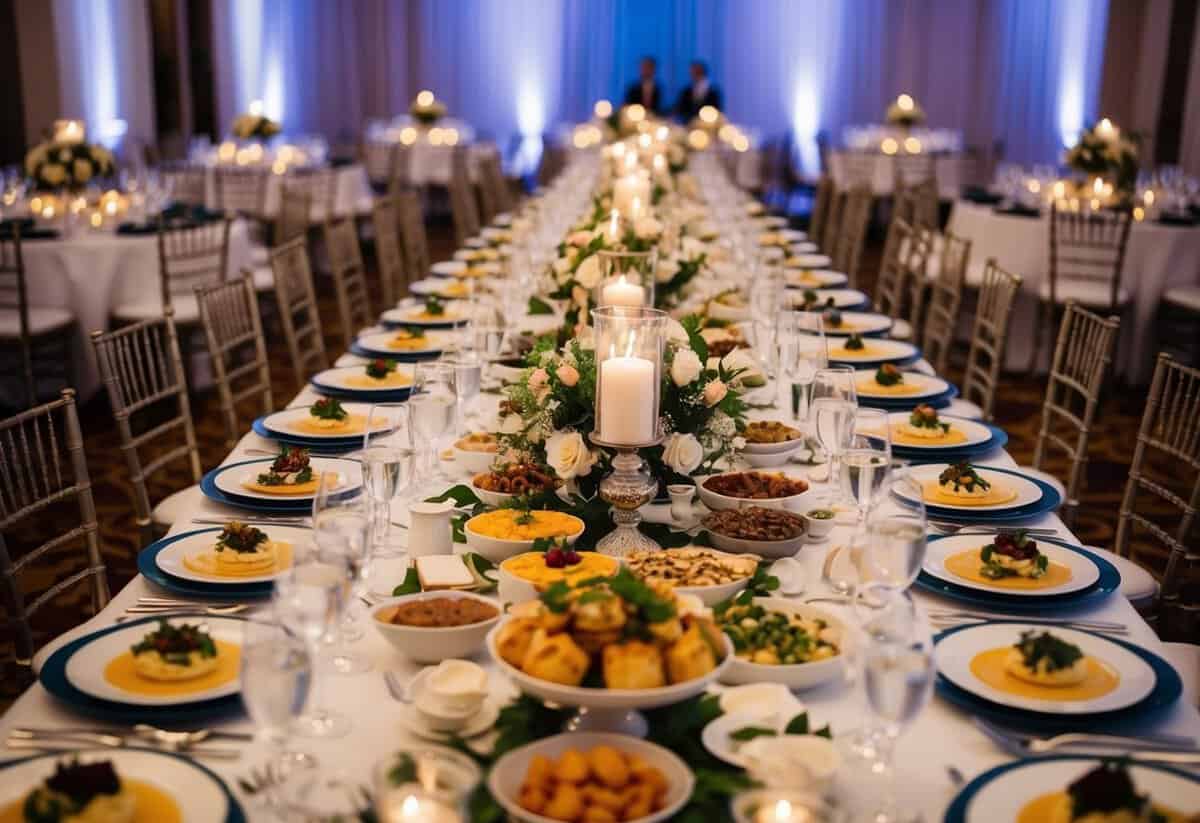
Choosing the right style of catering for your wedding is essential for creating the perfect dining experience. From buffet options to sit-down meals, understanding these choices will help you plan your wedding menu effectively.
The Buffet versus Sit-Down Meals
Buffet service offers various food items for guests to choose from. This style allows everyone to customize their meal according to their tastes. It can also save money since you can provide a broader variety of dishes without worrying about individual plate sizes.
On the other hand, sit-down meals have a more formal feel. Guests receive their meals served directly at the table. This option may require more planning with your caterer to arrange for different courses. It’s also a great chance to showcase unique dishes in a beautifully presented way.
Cocktail Reception and Finger Foods
A cocktail reception focuses on a mix of passed hors d’oeuvres and food stations. This style encourages guests to mingle and socialize as they enjoy various finger foods.
Common choices for this type of reception include small bites like sliders, bruschetta, and mini quiches. It’s a casual approach that allows for a lively atmosphere. Just ensure there are enough options for your guests, especially if you’re having multiple dietary preferences.
Family-Style Service Considerations
Family-style service involves large platters of food placed on each table. Guests then serve themselves, creating a warm and communal dining experience. It’s important to have enough space on the tables for the shared platters and bowls.
Before choosing this style, talk to your caterer about logistics. They may suggest table sizes or the number of platters required based on your guest count. Family-style is great for fostering conversation and engagement among your guests.
Managing Food Portion Sizes and Costs
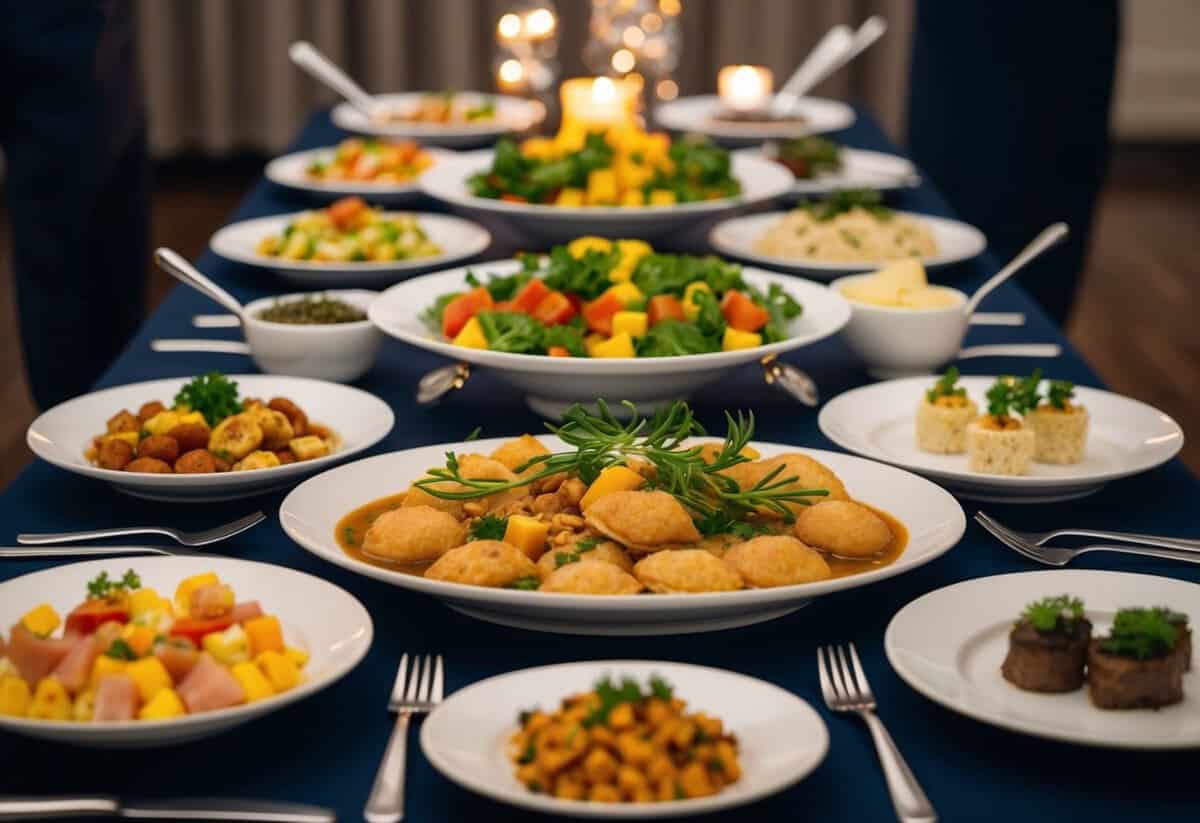
When planning your wedding menu, it’s essential to think about food portion sizes and costs. This will help ensure guests leave satisfied without overspending or wasting food. Paying attention to appetizers and controlling costs can lead to a successful and enjoyable event.
Calculating Appetizer Portions and Food Quantities
Start by deciding how many appetizers to serve based on your guest count. A good rule of thumb is to plan for about 6-8 pieces per person for a two-hour cocktail hour. If your wedding reception follows, adjust the numbers accordingly.
Here’s a simple breakdown for 100 guests:
- 100 guests x 6 pieces = 600 appetizer pieces
- Divide by your appetizer types, such as:
- Cheese platter: 200 pieces
- Shrimp cocktail: 200 pieces
- Veggie platter: 200 pieces
This balanced approach helps ensure all guests can enjoy a variety of options while avoiding excess.
Controlling Food Costs and Minimizing Leftovers
Staying within budget requires controlling food costs. Use a food cost calculator to estimate expenses based on ingredient prices.
For example, you can serve cost-effective dishes like pasta or salads. These tend to have lower ingredient costs than proteins.
Also, consider offering a buffet instead of a sit-down dinner. This allows guests to serve themselves, reducing waste.
Design a plan to donate leftovers to local shelters. Planning carefully helps minimize waste and ensures you stay within budget while providing a great dining experience for your guests.