
How Much Food to Serve at a Wedding? A Simple Guide for Perfect Portions
Planning a wedding can be exciting yet overwhelming, especially when it comes to deciding how much food to serve your guests. A good rule of thumb is to plan for about one pound of food per guest for a buffet-style meal. Meanwhile, you should plan about three to four pieces of appetizers per person. This guideline can help you ensure that everyone leaves happy and satisfied.
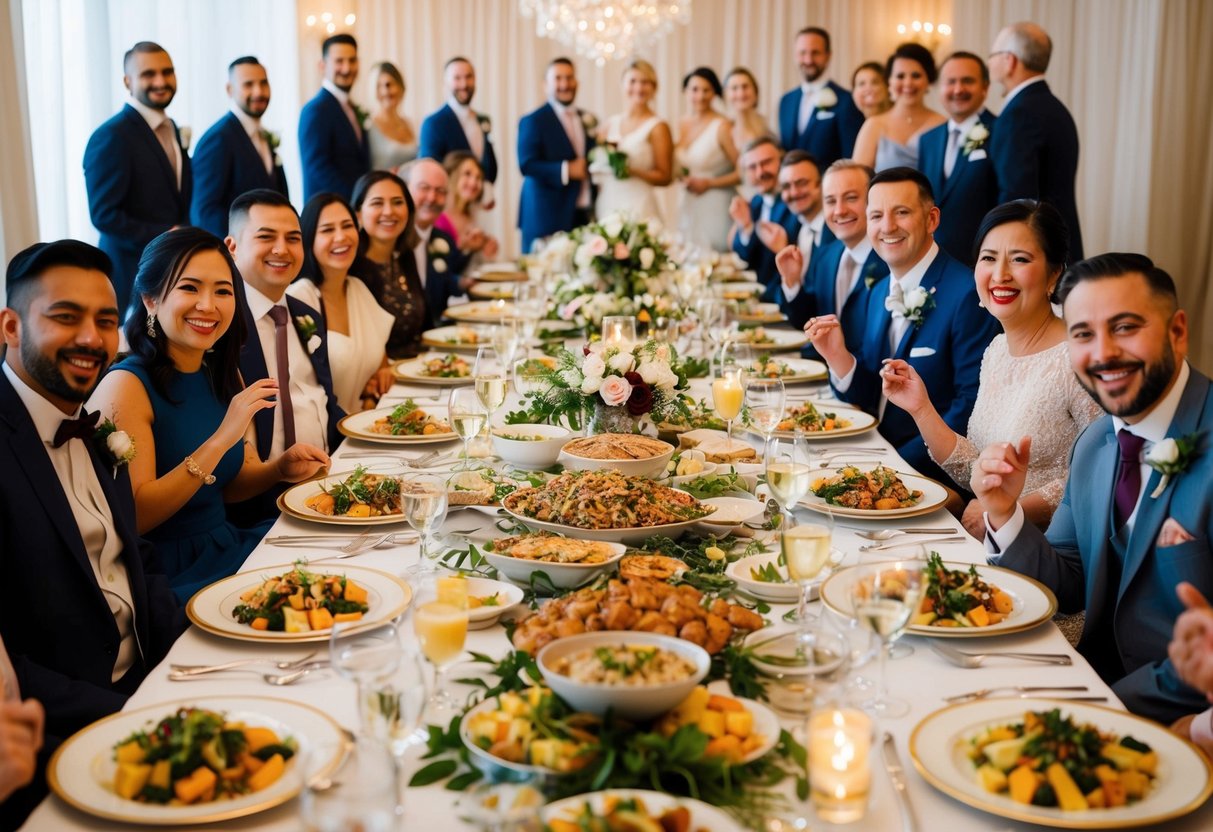
Understanding your guest count is crucial to your wedding food planning. Whether you’re serving a formal dinner or a more casual buffet, knowing how many people will attend allows you to tailor the menu to fit their needs. Don’t forget to include options for different dietary preferences, which shows your guests that you care about their experience.
As you dive into the details of your wedding day, remember that food plays a big role in the celebration. You want to create an enjoyable atmosphere where everyone feels welcome. With careful planning and understanding of these basic guidelines, you can make sure your wedding is remembered for both the love shared and the delicious food served.
Determining Guest Count and Portion Sizes
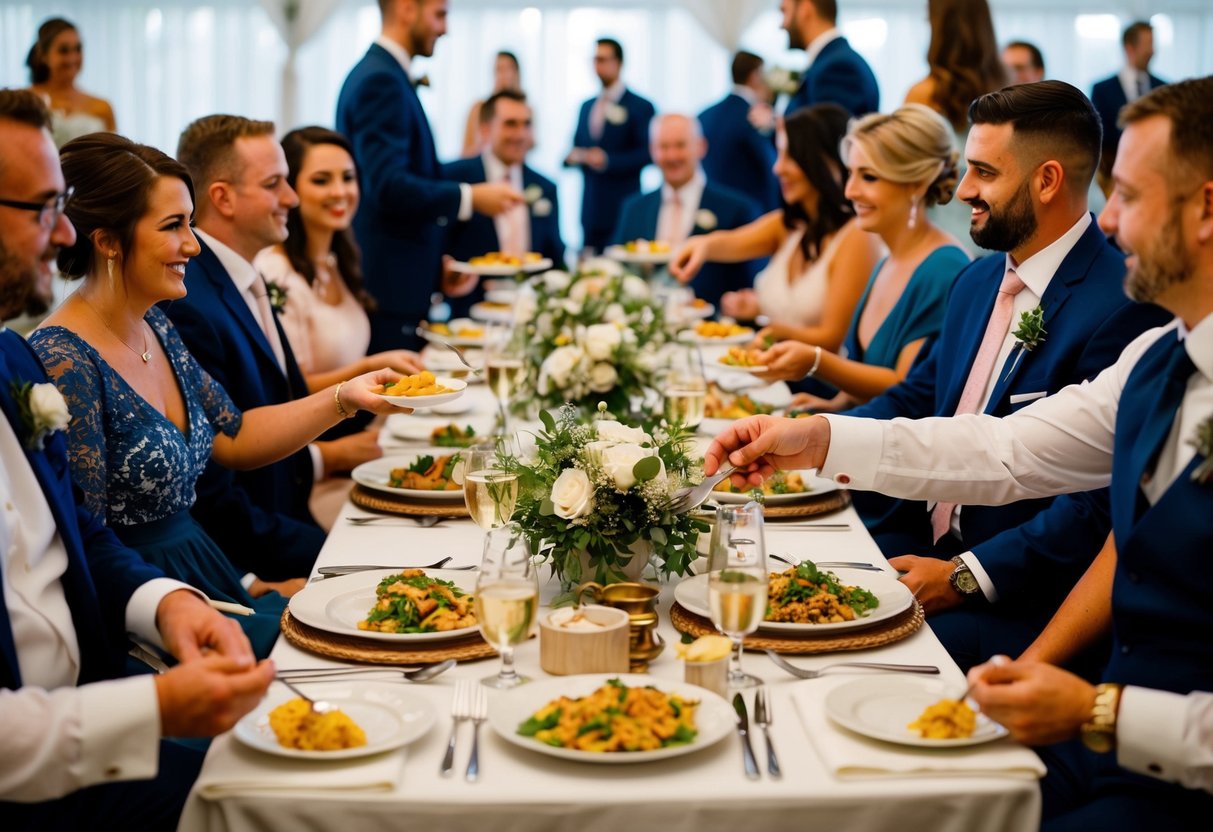
Getting the guest count right and understanding portion sizes is key when planning the food for your wedding. You want to ensure everyone enjoys a satisfying meal without having too much waste. Here’s a closer look at how to achieve that.
Understanding Portion Sizes
Portion sizes can vary based on the type of meal and the time of day. For main dishes, a standard portion is typically 6 to 8 ounces per person. This is especially true for heavier dishes like meats. For lighter fare, such as appetizers, aim for about 6 to 8 bites per guest if served before a meal.
Consider a breakdown like this:
- Appetizers: 6-8 bites per person
- Main Dishes: 6-8 ounces per person
- Side Dishes: 4-6 ounces per person
- Desserts: 1-2 servings per person
This helps you balance your food offerings and ensures everyone is satisfied.
Calculating Food Quantities
To calculate how much food you’ll need, start by determining your guest count. Make a list of those who will attend.
Next, use a simple formula:
- Number of Guests x Portion Size per Item = Total Food Needed
For example, if you have 100 guests and plan for a 6-ounce main dish, you’d need 600 ounces of the main dish. That equates to about 37.5 pounds.
Always consider adding a buffer, like 10%, for unexpected guests or larger appetites. This way, you can avoid running out of food during your wedding celebration.
Accounting for Dietary Restrictions and RSVP
Be mindful of dietary restrictions when planning your menu. You might have guests who are vegetarian, vegan, or have food allergies. Check in with your guests ahead of time to understand their needs.
When you send out your RSVPs, include a note asking about dietary preferences. This helps you adjust your portion sizes and menu items accordingly.
Keep in mind that accommodating these needs can reduce leftover food, making your event more enjoyable for everyone. It also shows that you care about your guests’ well-being.
Selecting the Right Wedding Menu
Creating a delicious wedding menu takes careful thought. You’ll want to balance flavors, cater to different dietary needs, and offer variety. Here are some methods to help you choose the right options for your celebration.
Choosing the Main Entree
When selecting your main entree, consider the preferences of your guests. Popular choices include beef, chicken, and fish. You might go for classic options like filet mignon or herb-roasted chicken.
Vegetarian Options: Always include a vegetarian dish. Grilled vegetable lasagna or stuffed bell peppers can be great picks.
Portion Sizes: Plan for about 4 to 6 ounces of protein per person. If your wedding is formal, you might provide two entrees for guests to choose from.
Picking Perfect Side Dishes
Side dishes complement your main entree and can enhance the overall meal. Think about options that bring both color and taste.
Starch Choices: Options like mashed potatoes, rice pilaf, or roasted potatoes are crowd-pleasers. You could offer a seasonal vegetable medley or mixed greens salad to add freshness.
Presentation Matters: Consider serving side dishes family-style or on individual plates. This can make your meal visually appealing and encourage guests to try different combinations.
Offering Assorted Appetizers and Snacks
Appetizers set the tone for the meal and get guests excited. Offer a variety of tastes and textures to please everyone.
Popular Choices: Shrimp cocktail, mini sliders, or bruschetta can be favorites. A cheese board with various cheeses, fruits, and crackers works well, too.
Timing and Quantity: Serve appetizers during the cocktail hour. Plan for about 6 to 8 pieces per person to keep everyone satisfied until the main meal.
Dessert Selections Beyond the Wedding Cake
While the wedding cake is a centerpiece, consider adding more desserts to your menu. This adds a fun touch and ensures every guest finds something they enjoy.
Mini Desserts: Think about small options like cupcakes, macarons, or brownies. They’re easy to eat and visually appealing.
Sweet Stations: Create a dessert table with different choices. Include fruits, pastries, and candies. This allows guests to personalize their sweet treat experience.
Styles of Service
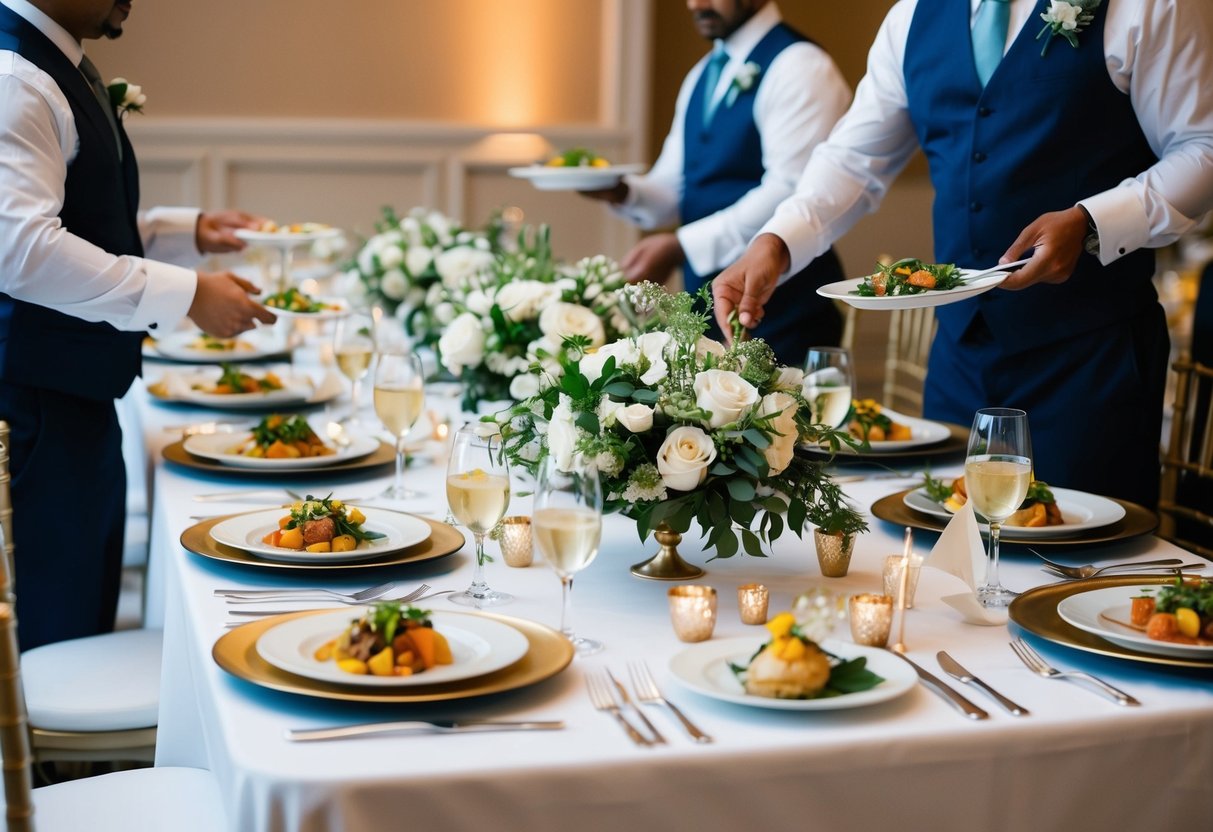
When planning your wedding, choosing the right food service style can set the mood and create a memorable experience for your guests. Different styles can cater to various tastes and preferences, ensuring everyone has a delightful dining experience.
Buffet Versus Family-Style
Buffet service allows guests to serve themselves from a variety of dishes. This style is flexible and encourages mingling. You can include a range of options, such as main courses, sides, and salads.
Family-style service brings a homier feel. Your guests share large platters of food at their tables, making it an intimate experience. It promotes conversation and connection, which is great for weddings. Consider offering appetizer portions that suit your theme, allowing your guests to sample a little bit of everything.
Both options have their pros and cons. Buffets can streamline service but may lead to longer lines. Family-style can increase interaction but requires careful planning to manage portion sizes and platter availability.
Hosting a Memorable Cocktail Hour
A cocktail hour adds a fun touch to your wedding. It gives guests a chance to relax and socialize before the main meal. Start with light appetizers like mini sliders or skewers.
Think about including a mix of bite-sized treats and refreshing drinks. This keeps the energy high and sets a festive tone. Consider signature cocktails that reflect your style as a couple.
Offering outdoor seating can enhance the experience, weather permitting. This casual environment allows transitions between the cocktail hour and dinner flow smoothly.
Incorporating Late-Night Snacks
Late-night snacks can be a delightful surprise for your guests. After dancing and celebrating, a little food can boost spirits and energy. Consider serving fun options like sliders, pizza, or even a s’mores station.
A great way to engage your guests is by offering snack choices they can customize. This adds a personal touch and makes for a fun experience.
Think about timing; serving snacks an hour or so before the event ends keeps the atmosphere lively. It can also help ensure everyone leaves with full bellies and happy memories.
Working with Caterers
When planning your wedding, working with a caterer is key to making your dining experience enjoyable. Good communication, planning, and understanding their recommendations will lead to a successful meal at your wedding reception.
Communicating with Your Caterer
Clear communication with your caterer is essential. Start by discussing your vision for the wedding reception, including your preferred styles of food, such as buffet, plated, or family-style service.
Make sure to convey the number of guests expected. This helps the caterer suggest accurate portion sizes. You might ask about any dietary restrictions among your guests, whether due to allergies or lifestyle choices.
Maintain open lines of communication, checking in regularly as your big day approaches. This ensures that both of you are on the same page.
Planning and Coordinating Service
Planning the service style helps set the mood for the event. Discuss with your caterer how you want meals served: plated service allows for elegance, while a buffet is often more casual and interactive.
Consider the logistics of the meal service. Talk about the timing of the food, especially if it’s served hot or requires specific setups. Discuss staffing needs too; how many servers will be there?
Ask about possible delays and how they handle them. Having a solid plan helps everything run smoothly and keeps your guests happy.
Caterer Recommendations for Wedding Reception
Caterers often have valuable recommendations based on their experience. They can suggest popular entrees that appeal to a wide range of tastes.
For example, they might recommend beef, chicken, and vegetarian options to cover all preferences. Some caterers also offer sample tastings. This allows you to experience the dishes before deciding.
Don’t hesitate to ask for advice on seasonal ingredients. Choosing what’s in season can make your menu fresh and delicious.
Caterers might also suggest pairing wines that complement your entrees. This further enhances the dining experience.