
How Much Is 100 Invitations? A Guide to Invitation Pricing
When planning a wedding, one of the first questions that may come to your mind is, “How much are 100 invitations?” The cost for 100 wedding invitations can range anywhere from $200 to $1,200. This depends on the styles, materials, and printing methods you choose. Knowing this can help you set a budget that fits your overall wedding expenses.
Choosing the right type of invitations is essential. Digital printing tends to be the most budget-friendly option, allowing you to save without sacrificing style. You might find the average couple spends between $300 and $700 for 100 invitations and response cards, offering a sweet spot for quality and affordability.
As you dive into the options available, it’s important to consider all the factors that influence pricing, from design to paper type. With the right information, you can make choices that reflect your vision while keeping your budget in check.
Understanding Invitation Costs

Planning your wedding invites involves more than just decisions on colors and designs. Knowing the components, factors that affect pricing, and the average costs can help you budget effectively and choose the right options for your celebration.
Components of an Invitation Suite
A complete invitation suite usually includes several key items. This typically covers the main invitation card, RSVP card, and envelopes.
You might also consider additional elements like:
- Details card: Provides information on the venue, gifts, or accommodations.
- Save-the-date card: Alerts guests ahead of time about your wedding date.
- Thank you cards: A nice touch to express appreciation after the event.
Each of these components adds to your overall invitation costs, so keep track of what you need as you build your suite.
Factors Influencing Invitation Pricing
Several factors can affect the pricing of your wedding invitations. Here are some important ones:
- Paper quality: High-quality or textured paper can significantly increase costs.
- Printing style: Methods like letterpress or foil stamping can be pricier than standard digital printing.
- Design complexity: Custom designs or intricate details will generally cost more than simpler ones.
- Quantity: Ordering in bulk often lowers the cost per invitation, while smaller orders may be priced higher per piece.
Understanding these factors helps you tailor your choices to fit your invitation budget.
Average Cost of Wedding Invitations
On average, wedding invitations can range from $200 to $1,200 for 100 invitations. The variety of options leads to this wide range.
Basic invitations might cost about $1 to $2 per card, while more elaborate designs can go up to $5 to $8 each. Here’s a quick breakdown based on different styles:
- Basic invitations: $1 – $2 each
- Standard designs: $3 – $5 each
- Luxury invitations: $5 – $8 each
Knowing these numbers can help you better manage your wedding budget. Choose what fits your style without breaking the bank!
Choosing the Right Paper and Printing Method
Selecting the perfect paper and printing method is crucial for your wedding invitations. The right choices can enhance the overall look and feel of your invites, making a lasting impression on your guests.
Popular Paper Types and Qualities
When choosing paper for your invitations, you have several options. Cardstock is a popular choice due to its durability and weight. Heavy cardstock gives your invitations a luxurious feel.
Specialty papers offer unique textures and styles. For instance, handmade paper can add a personal touch, while vellum provides a soft, translucent look. Linen paper has a subtle texture that adds sophistication.
Consider the quality of the paper carefully. Higher quality papers resist bending and tearing. Your choices influence the impression your invitations make, so choose what feels right for your wedding theme.
Comparison of Printing Techniques
There are various printing techniques to consider when creating your invitations. Digital printing is common for its affordability and speed. It’s ideal for vibrant colors and intricate designs.
For a more traditional feel, letterpress offers a classic, tactile look. It involves pressing ink into the paper for a high-quality finish. Foil stamping adds a shiny metallic touch, making your invites pop.
Engraving creates a raised design, adding depth and elegance. Embossing also raises parts of the design, but without ink. Thermography gives a glossy, raised effect that’s budget-friendly.
Each method has its pros and cons, so consider your budget and desired aesthetic when making a choice.
Additional Elements and Customizations
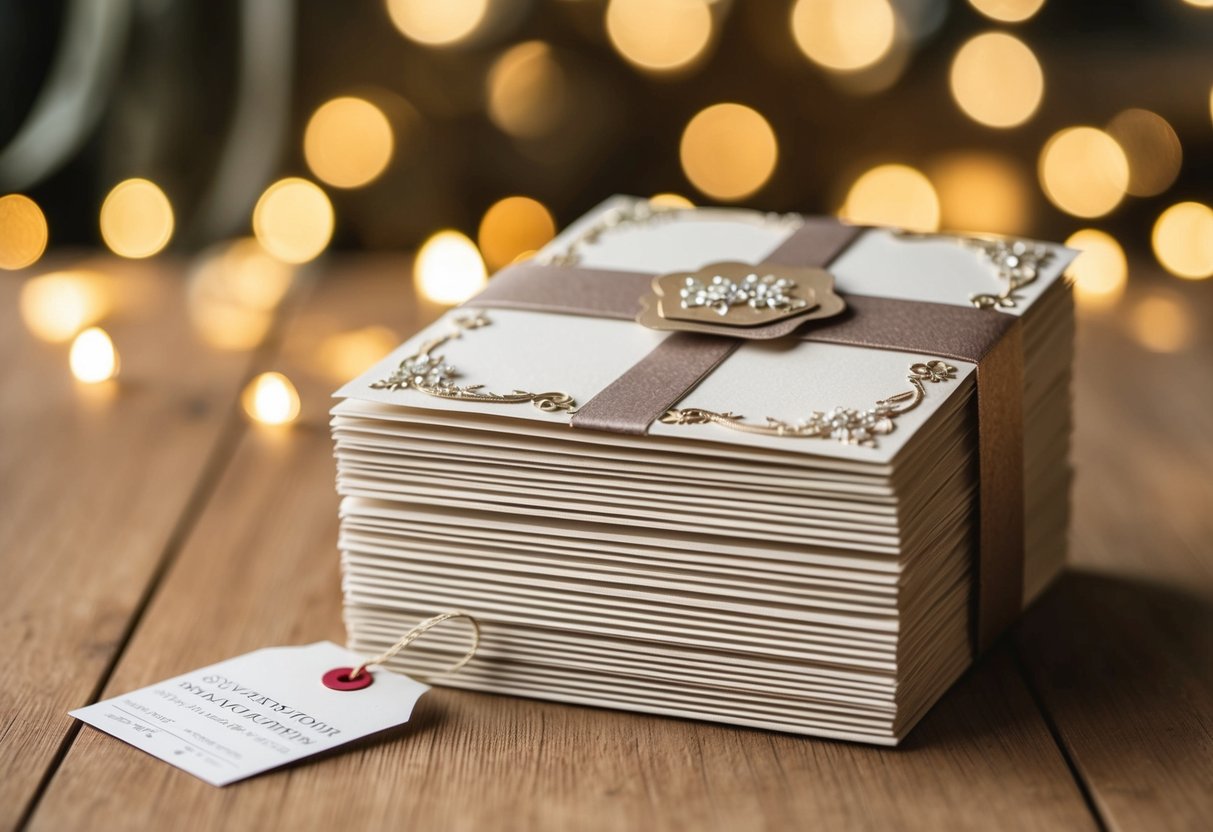
When planning your wedding invitations, consider how additional elements and customizations can enhance their appeal. These choices allow you to reflect your style and make your invitations stand out.
Enhancements and Embellishments
There are many ways to elevate your invitations. You can start with wax seals for a classic touch. Adding envelope liners in your wedding colors can provide a pop of design when guests open their envelopes.
Choose from different types of embellishments, like blind debossing or edging, to create texture. A belly band can hold multiple inserts neatly and add an extra design element. If you’re using RSVP cards, consider including response envelopes with pre-paid postage to simplify guests’ replies.
You may also want to personalize thank you cards and menu cards for the event. These added pieces can create a cohesive look for your wedding stationery.
Design Complexity and Personalization
The degree of customization impacts your invitation costs significantly. A fully custom design allows for unique themes, while semi-custom designs can provide style with less effort. Custom wedding invitations may incorporate your choice of colors, fonts, and images.
Complex designs often require advanced printing methods like thermography printing or digital printing. Many couples opt for DIY invitations to save money, but don’t forget about quality. Using templates can help streamline this process.
Finally, think about the service you want when ordering. Some companies offer personalized service that can make the process smoother and more enjoyable. Taking time to consider these options will help you create beautiful, memorable invitations.
Managing Your Invitation Budget Wisely
When planning your wedding, managing the cost of 100 invitations is essential. There are various ways to get the most value for your money while still creating beautiful invitations. From material choices to helpful tips, staying within budget is achievable.
Cost-Effective Options and Savings Tips
To keep your invitation costs down, consider using recycled paper or standard matte paper. These options are often more affordable than specialty papers like glossy or glitter cardstock.
You can also save by using digital invitations, which cut printing and mailing costs. Search for local printing shops offering discounts for bulk orders. Look for affordable wedding invitations online, as many retailers offer sales.
Another tip is to limit embellishments. While items like glassine envelopes or parchment paper may be appealing, they can add to your overall cost. Stick with simpler designs that are elegant and appealing.
Finally, always request samples before making a bulk order. This helps ensure you are happy with the quality of the paper, whether it’s cotton fiber or felt cardstock.