
How Much Should a Man Spend on His Wife’s Engagement Ring? A Guide to Finding the Perfect Balance
When you pick out your wife’s dream engagement ring, you might wonder how much you should actually spend. The traditional guideline suggests that you should spend around two to three months of your salary on the ring. This means that if you earn $5,000 a month, you might budget between $10,000 to $15,000 for her perfect ring.

Keep in mind that this is just a guideline. The right amount can vary based on your finances and what feels comfortable for you. Think about her style and preferences too, as you want to choose a ring that she will truly love and cherish. The process should be exciting, not stressful, so focus on what will make this symbol of your love special for both of you.
Understanding Engagement Ring Budgets
Setting a budget for an engagement ring is an important step in the buying process. It helps you find a ring that fits your partner’s style and your financial situation. Understanding traditional and modern views on spending can guide your decision.
The Traditional Rule of Thumb
Many people follow the traditional guideline of spending two to three months’ salary on an engagement ring. This rule, while popular, may not be realistic for everyone.
For example, if you earn $5,000 a month, you might feel pressured to spend $10,000 to $15,000.
This can lead to financial stress or debt, which is not ideal for starting a new chapter. Instead of sticking strictly to this rule, assess your own personal budget and financial obligations.
A meaningful ring doesn’t need to break the bank. Focus on finding a ring that fits your financial situation, making the purchase more fulfilling.
Modern Perspectives on Spending
Today’s views on engagement ring budgets are shifting. Many couples choose to spend less than the traditional amount. According to recent surveys, the average engagement ring cost is around $6,000.
However, some may spend under $1,000 or even significantly more depending on personal circumstances and preferences.
When budgeting, consider what you can comfortably afford without stretching your finances. This may mean saving for a few extra months or choosing a different style of ring.
A beautiful ring can be just as meaningful at a lower price point. Ultimately, make your decision based on what feels right for you and your relationship.
Factors Influencing Engagement Ring Cost
When considering how much to spend on an engagement ring, several key factors play a crucial role in determining the final price. By understanding these components, you can make a more informed decision about the ring you want to buy.
Diamond Quality and The 4 Cs
The quality of the diamond is one of the most significant factors affecting the cost of an engagement ring. The 4 Cs are essential to consider:
- Cut: The cut determines how well the diamond reflects light. A better cut can significantly increase the ring’s value.
- Clarity: This refers to the presence of imperfections. Higher clarity means fewer inclusions, which raises the price.
- Color: Diamonds range from colorless to light yellow. Colorless diamonds are rarer and more expensive.
- Carat Weight: Larger diamonds cost more. However, a slightly smaller diamond with higher quality can sometimes be a better choice.
Understanding these aspects helps you balance quality and cost effectively.
Ring Size and Carat Weight
The size of the ring, including both diameter and carat weight, influences its overall price. Larger carat weights tend to be more expensive. For example, a 1-carat diamond typically costs more than a 0.5-carat diamond.
Keep in mind that ring size can also affect the amount of gold or platinum used in the band. This additional material will add to the overall cost.
If you’re looking for a balance, consider a 0.9-carat ring that may look just as stunning as a full 1-carat ring but at a lower cost.
Earth-Mined vs. Lab-Grown Diamonds
Deciding between earth-mined and lab-grown diamonds can also influence your budget.
- Earth-mined diamonds are mined from the ground and often carry a higher price due to their rarity and natural origin.
- Lab-grown diamonds, on the other hand, are created in controlled environments and can be up to 40% cheaper than their mined counterparts.
Both types are real diamonds, but lab-grown options can offer excellent value. Consider your budget and values when making this choice, as both have unique benefits.
Tips for Buying an Engagement Ring
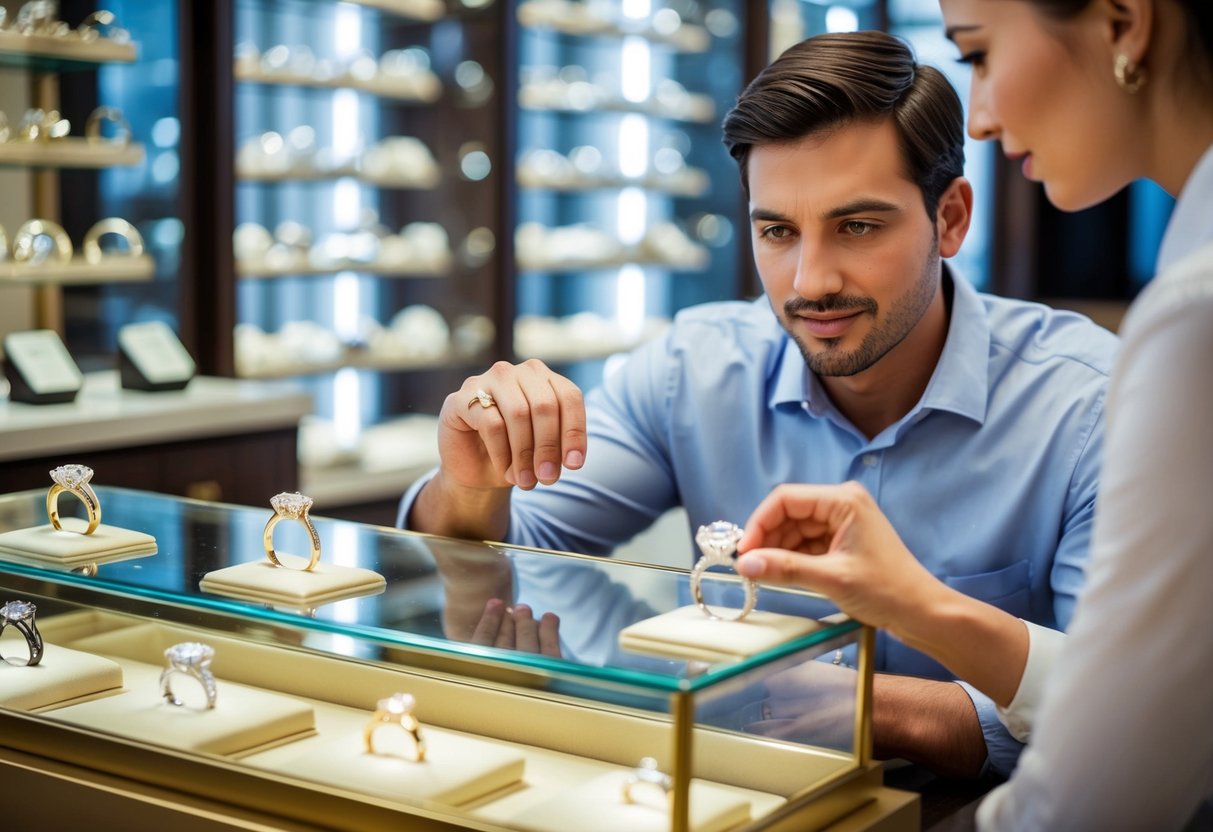
Buying an engagement ring can feel overwhelming, but knowing what to look for can simplify the process. Focus on understanding the diamond industry, explore custom design options, and make sure to secure ring insurance to protect your investment.
Navigating the Diamond Industry
The diamond industry can be tricky, but you can navigate it successfully. Start by learning about the four Cs: cut, color, clarity, and carat weight. Each of these factors affects a diamond’s beauty and value.
Consider visiting multiple jewelers to compare prices and options. Look for certifications from reputable organizations like the GIA or AGS. This ensures that the diamond’s quality is verified.
Finally, don’t shy away from asking questions. Jewelers appreciate informed buyers and can provide valuable insights. Understanding these aspects will help you find the perfect ring for your partner.
Exploring Custom Design Options
A custom-designed engagement ring allows you to create something unique and meaningful. Start by gathering inspiration from different styles and settings you think your partner would love. This can include images from magazines, websites, or jewelry stores.
Once you have a vision, select a jeweler skilled in custom designs. Discuss your ideas, budget, and the type of metal you prefer, such as gold or platinum.
Most jewelers will provide sketches or computer-generated images to help visualize the final product. This process ensures that your ring is one-of-a-kind and reflects your partner’s taste perfectly.
Securing Ring Insurance
Protecting your investment with ring insurance is crucial. Many jewelers offer insurance options, or you can look into standalone jewelry policies. It’s important to understand what is covered, including theft, damage, or loss.
To get started, you’ll need a professional appraisal for the ring. This ensures that you have an accurate value for coverage.
Keep your policy documents in a safe place and consider taking photos of the ring for records. Having insurance gives you peace of mind, so you can enjoy the joy of your engagement without worrying about unforeseen issues.
Calculating Your Engagement Ring Budget
Setting a budget for an engagement ring is important. You want to find a balance between your finances and your partner’s expectations. Here are some tips to help you.
1. Use the Two-Month Salary Rule:
A common guideline suggests spending about two months of your salary. For example, if you earn $60,000 a year, that equals $10,000 for the ring.
2. Consider Your Savings:
Look at how much money you have saved. Decide what portion of your savings you can comfortably spend. This approach gives you flexibility without creating stress.
3. Try an Engagement Ring Calculator:
You can use an engagement ring calculator to get more personalized advice. This tool helps you determine a budget based on your income and expenses.
4. Set a Personal Percentage:
Think about a percentage of your income. For example, if you decide to allocate 10% of your annual income, you can easily see how much that adds up to.