
How to Decide on a Wedding Photographer: A Practical Guide
To decide on a wedding photographer, choose someone whose complete galleries match your preferred style, whose approach feels comfortable, and whose written package covers the moments you care about within your budget. You’ll spend much of your wedding day with this person, and the photographs will preserve moments you can’t recreate.

Start by saving images that feel right to you and your partner. Then use them to guide conversations with photographers, alongside your date, venue, schedule, and budget.
As you build your shortlist, ask to see complete galleries and set up a conversation with the photographers whose work you connect with.
What Photography Style Fits Your Day?
Your preferred wedding photography style should match both the images you love and the way you want the day to feel. Sharing a few saved examples helps a photographer explain how their approach would work for your celebration.
Do You Prefer Candid, Classic, or Editorial Images?
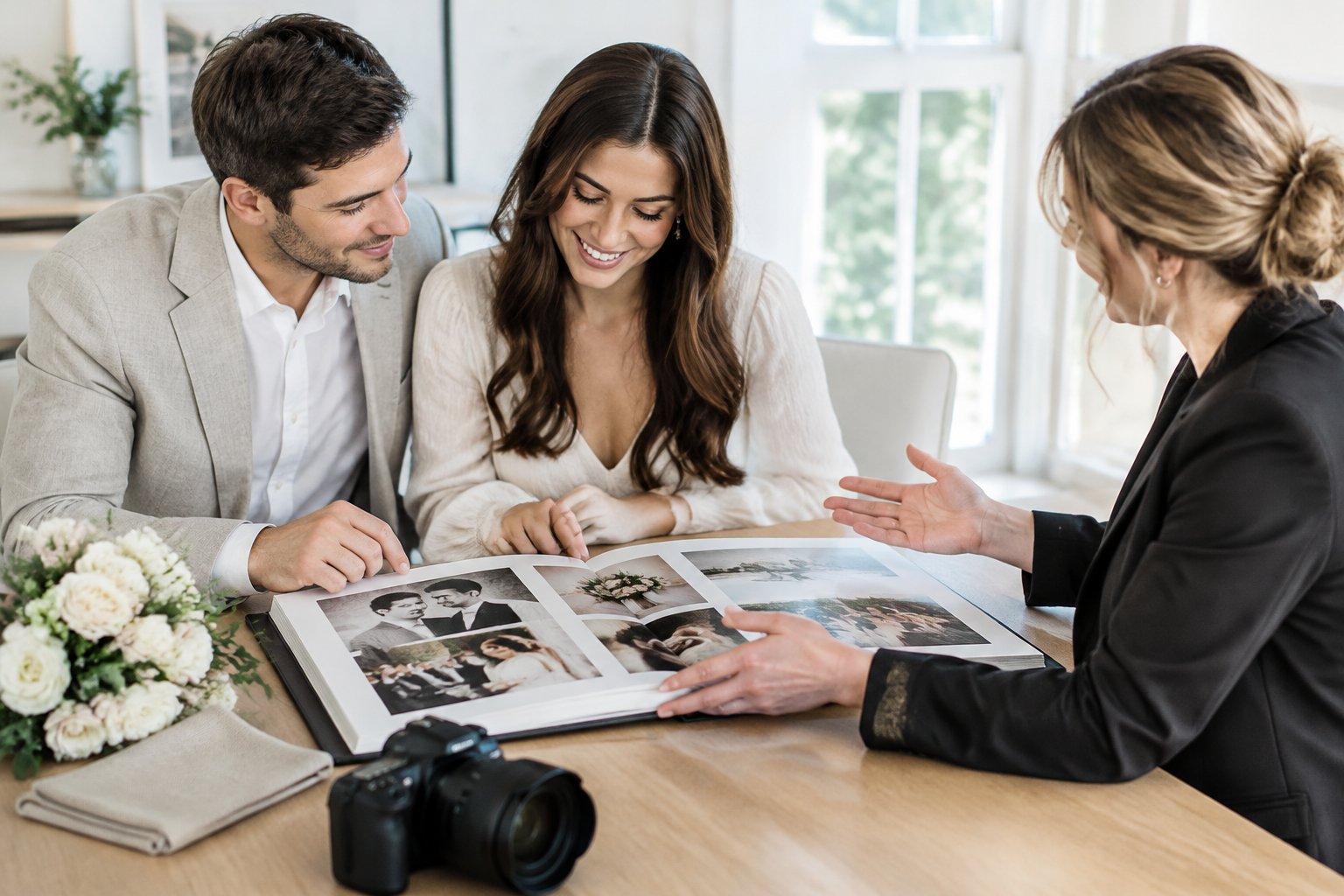
Candid wedding photography focuses on moments as they unfold, such as a joyful reaction during a toast. Classic images use clear posing and familiar compositions, making them a good fit for family portraits and timeless group shots. Editorial images bring more direction, with carefully planned poses and a fashion-inspired feel.
Many photographers blend wedding photography styles across the day. You might want candid coverage during the reception, classic portraits with family, and a few directed couple portraits.
Save examples that show what you like, then ask the photographer how they balance those approaches. If you’re still shaping your visual direction, how to figure out your wedding style can help you spot patterns in what you’re drawn to.
Would Film Photography Suit Your Vision?
Film photography gives images a distinct look, and the film process involves different equipment and development steps from digital photography. Ask whether the photographer shoots film, digital, or a mix of both, and request a full gallery that shows the results you’d receive.
If film is important to you, ask how many film images are included, how they are delivered, and how the photographer handles changing light. A hybrid approach can give you film images alongside digital coverage, so you can compare the look and plan your priorities.
How Can Your Venue and Timeline Shape Your Style?
Your venue’s light, layout, and rules affect the images a photographer can make. A bright outdoor ceremony, a dim reception room, and a venue with strict movement limits each call for a different plan.
Share your schedule and locations early. Ask how much time you’ll need for portraits, where family photos can happen, and what the photographer does if rain changes your outdoor plans.
A style that works beautifully in a portfolio should also make sense for the spaces and timing of your wedding.
How Can You Judge a Photographer’s Work?
Review complete galleries to see how a wedding photographer handles a full day, including changing light and fast-moving moments. A polished portfolio shows the best images; full wedding galleries help you assess consistency.
Why Should You Review Full Wedding Galleries?
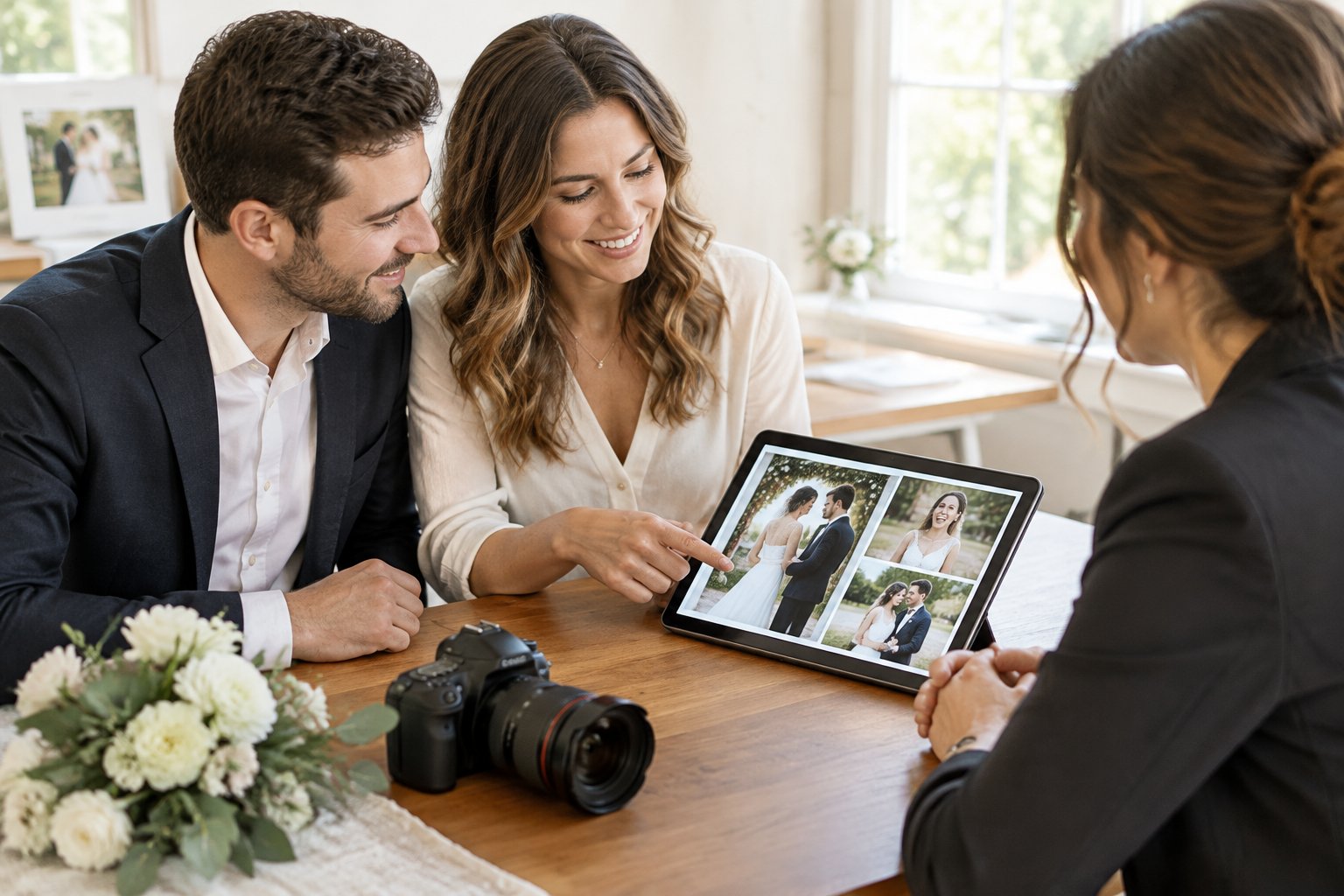
Ask to see at least two full wedding galleries, ideally from weddings with a similar setting, season, or guest count to yours. Look at the photographs from getting ready through the reception, and notice how the photographer handles transitions between events.
Check that important moments feel covered throughout the gallery, not only in a handful of standout images. Look for clear family portraits, thoughtful details, and candid moments that suit your taste.
If you want to know what your final delivery might include, ask how the photographer selects and edits images, and review what wedding photographers include in a delivered gallery.
What Should You Look for Across Different Lighting Conditions?
Study indoor and outdoor images, along with photographs made in bright sun, shade, and low reception light. Notice whether skin tones look consistent and whether faces remain clear in group portraits.
Ask how the photographer handles flash, dark rooms, and venue restrictions. If your ceremony venue has rules about where photographers can stand, share those details before booking. Galleries from a similar venue can show how the photographer works with comparable spaces and light.
Can Engagement Photos Show You What Working Together Is Like?
An engagement session gives you a chance to get comfortable in front of the camera and learn how the photographer guides you. You’ll also see how they communicate during a portrait session before your wedding day arrives.
Ask what the session includes and whether the person who will photograph your wedding will lead it. If you’re deciding what kind of session feels right, pre-wedding photoshoot ideas can help you talk through locations and settings.
Will Their Approach Feel Right on Your Wedding Day?
The right wedding photographer helps you feel at ease while keeping the day moving smoothly. Their communication, direction, and experience should fit your comfort level and the needs of your celebration.

How Do They Direct Portraits and Capture Candid Moments?
Ask how the photographer handles portraits if you feel awkward in front of a camera. A professional wedding photographer should be able to explain how they offer direction, help you relax, and make space for natural moments.
Talk about how much posing you want. If you prefer a brief portrait session, say so; if you want more guided portraits, ask how that fits into the schedule.
Their answer should give you a clear picture of how present they’ll be during different parts of the day.
What Experience Do They Have With Weddings Like Yours?
Ask about weddings with a similar guest count, venue layout, cultural traditions, or schedule. Experience with your specific venue can be useful, while experience with similar conditions can also help the photographer plan.
Share any ceremony customs, family dynamics, or important moments that need special care. Ask how the photographer works with your planner and other vendors, and confirm who will be behind the camera on the day.
If a studio assigns a lead photographer after booking, review that person’s work and make sure the contract names them.
How Can Reviews and a Consultation Reveal Their Personality?
Reviews can show how a photographer communicates, handles schedule changes, and treats guests. Look for details about the client experience and read several reviews to get a broader sense of what working together feels like.
Use a consultation to ask questions and see how the photographer listens. You should feel comfortable sharing your priorities and asking for clarification.
Pay attention to how clearly they explain their process, from planning and wedding-day coverage to image delivery.
What Coverage and Support Do You Need?
Choose coverage hours around the moments you want photographed, then confirm who will be there and what happens if plans change. Your timeline, venue locations, and guest count help determine whether you need one photographer or a larger team.
Which Moments Should Your Photographer Cover?
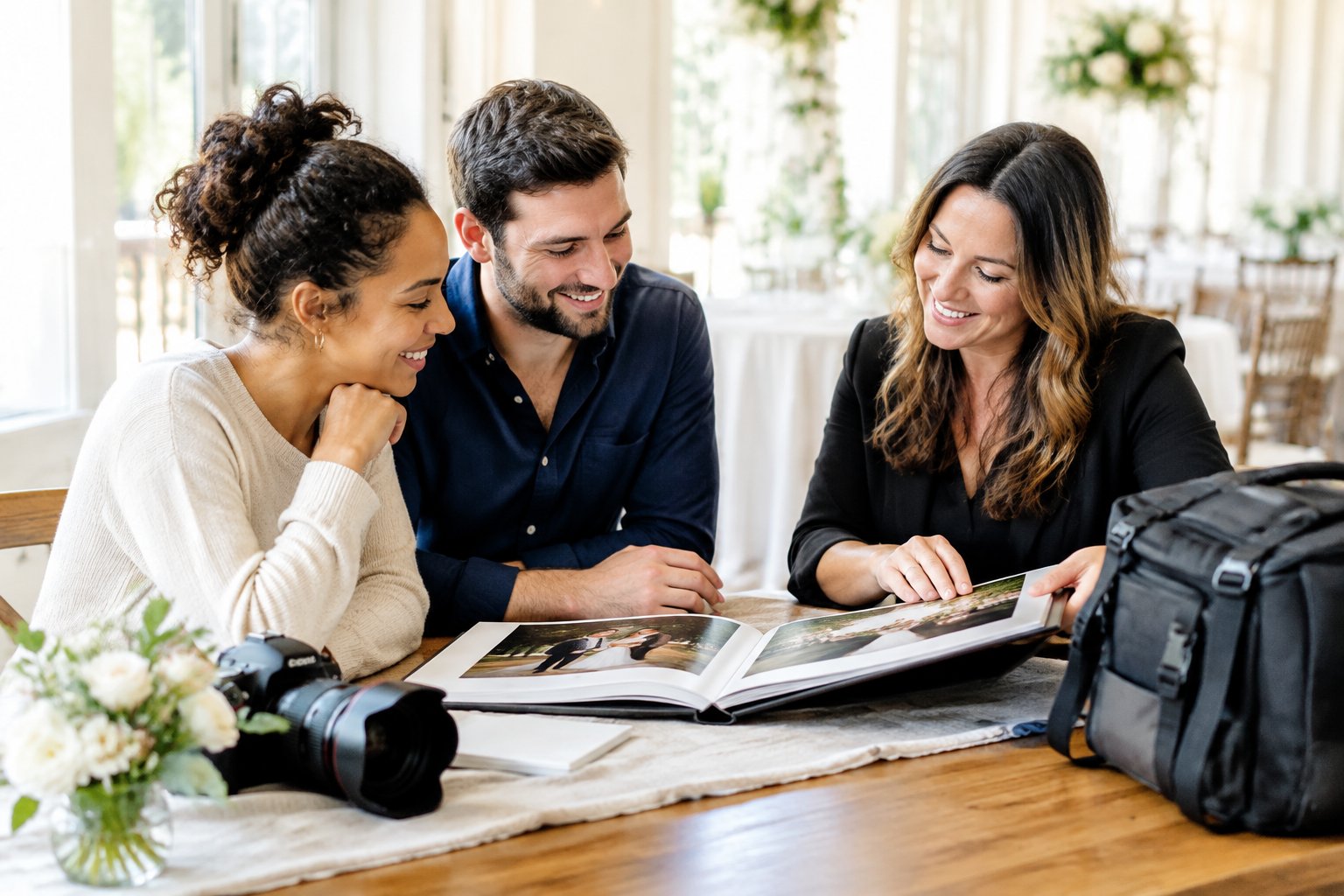
List the moments you want documented, from getting ready through the reception events that matter to you. Then map those priorities onto your schedule, including travel between locations, portrait time, and the ceremony start.
Ask whether the proposed hours cover the full window you want. Your photographer can help you identify timing gaps and estimate how long portraits and travel will take.
For more help planning the coverage window, review whether wedding photographers stay for the whole wedding. A wedding-day photo checklist can also help you organize priority moments before sharing your timeline.
When Is a Second Shooter Worth It?
A second shooter can cover moments happening at the same time, such as each partner getting ready in a different location. They can also photograph the ceremony from another angle or capture guests while the lead photographer focuses on portraits.
Ask what the second shooter will do, how many hours they’ll be present, and whether their work appears in the final gallery. Compare the added cost with your actual schedule and guest list.
If your timeline keeps the wedding party in one place and events happen in sequence, one photographer may cover the day you’ve planned.
What Backup Plans Should a Photographer Have?
Ask how the photographer protects your images and responds to equipment failure or an emergency. A clear answer should cover backup cameras, memory cards, file storage, and the plan for arranging a replacement photographer if the lead becomes unavailable.
Confirm who would step in and how they would receive your timeline and priorities. Ask how long your images are stored after delivery and whether you need to download and back them up yourself.
Having these details in writing gives you a clear plan for unexpected problems.
How Do You Compare Packages and Book Confidently?
Compare packages by the coverage, services, and terms each one includes, then choose the option that fits your day and budget. Package names can differ, so ask for clear answers about hours, photographers, travel, and delivery.
What Should Your Photography Budget Include?
Your photography budget should account for the full service you want, including coverage hours, any second shooter, travel, and add-ons such as an album or engagement session. Ask for a complete quote that identifies extra costs, including overtime and travel fees.
Compare the value of each package against the moments you want covered. A lower price may reflect fewer hours or fewer deliverables, while a higher price may include services you don’t need.
To weigh the expense against your priorities, consider whether a wedding photographer is worth the cost.
Which Deliverables, Rights, and Deadlines Matter?
Ask what you’ll receive, how the images will be delivered, and when to expect them. Get details about the online gallery, file resolution, image editing, print permissions, and any album or print options.
Clarify how long your gallery will stay online and whether you should save your own copies. Ask who owns the copyright and what personal use rights you receive.
If you want the photographer to share images publicly, discuss permission and privacy preferences before signing.
What Should the Contract Confirm Before You Sign?
Your contract should name your wedding date, locations, coverage hours, assigned photographer, included services, payment schedule, and delivery timeline. Read the terms for overtime, cancellation or rescheduling, image rights, and the photographer’s emergency plan.
Ask for any verbal promises to be added to the agreement before you sign. Confirm the deposit amount, due dates, and accepted payment methods, then keep a copy of the signed contract and receipts. If you have questions about payment timing, check how payment to a wedding photographer is handled.