
How to List Names on a Wedding Seating Chart: A Quick and Easy Guide
Creating a wedding seating chart might feel overwhelming at first, but it doesn’t have to be.
To list names on your wedding seating chart, start by organizing your guest list alphabetically. Then, pair each name with their corresponding table number. This method helps guests quickly find their seats and adds a touch of organization to your big day.
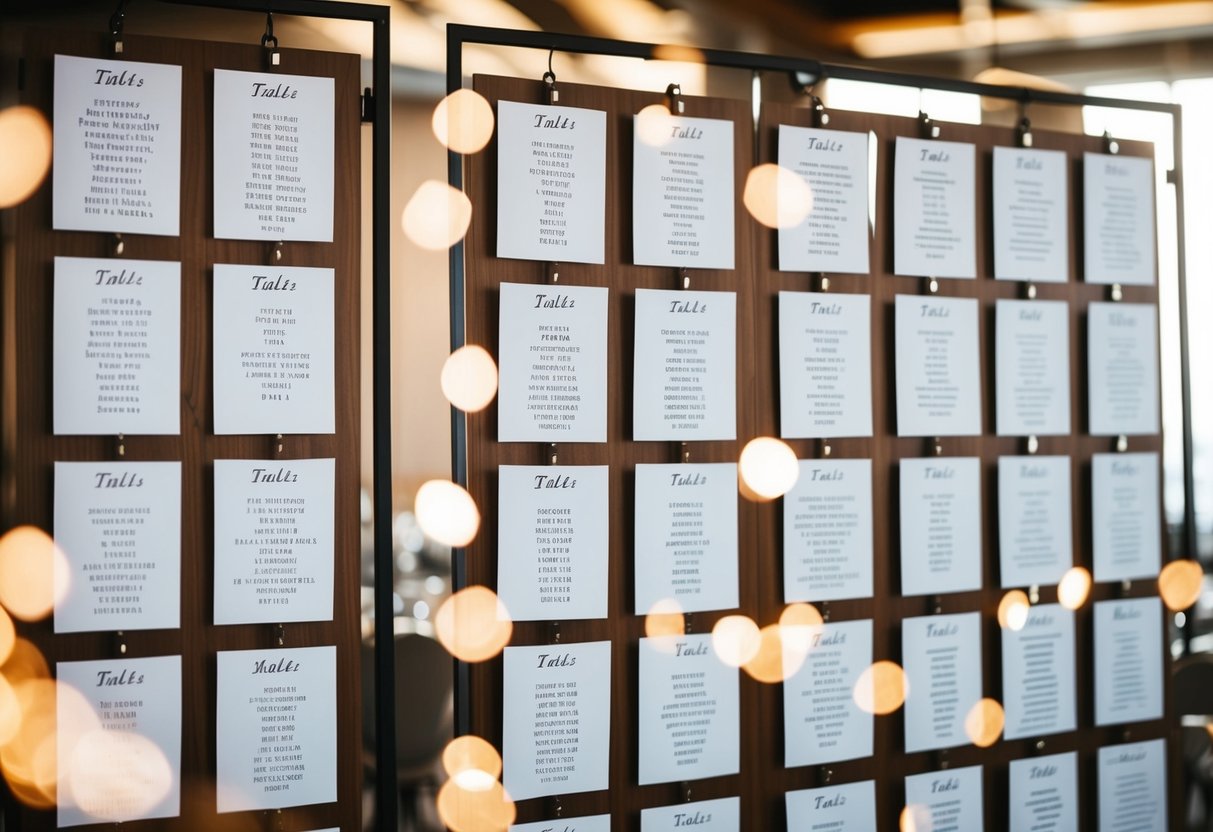
As you dive into the details of wedding planning, consider how seating arrangements can affect the atmosphere of your reception. Grouping guests by their relationships can foster conversations and make everyone feel comfortable.
You may also want to consult with your venue to understand the layout and maximize space while incorporating your guests’ preferences.
With a clear plan, the task of completing your seating chart can be simple and even enjoyable. By considering your guest list and how they’ll connect, you can create a welcoming environment that sets the tone for a memorable celebration.
Designing Your Wedding Seating Chart
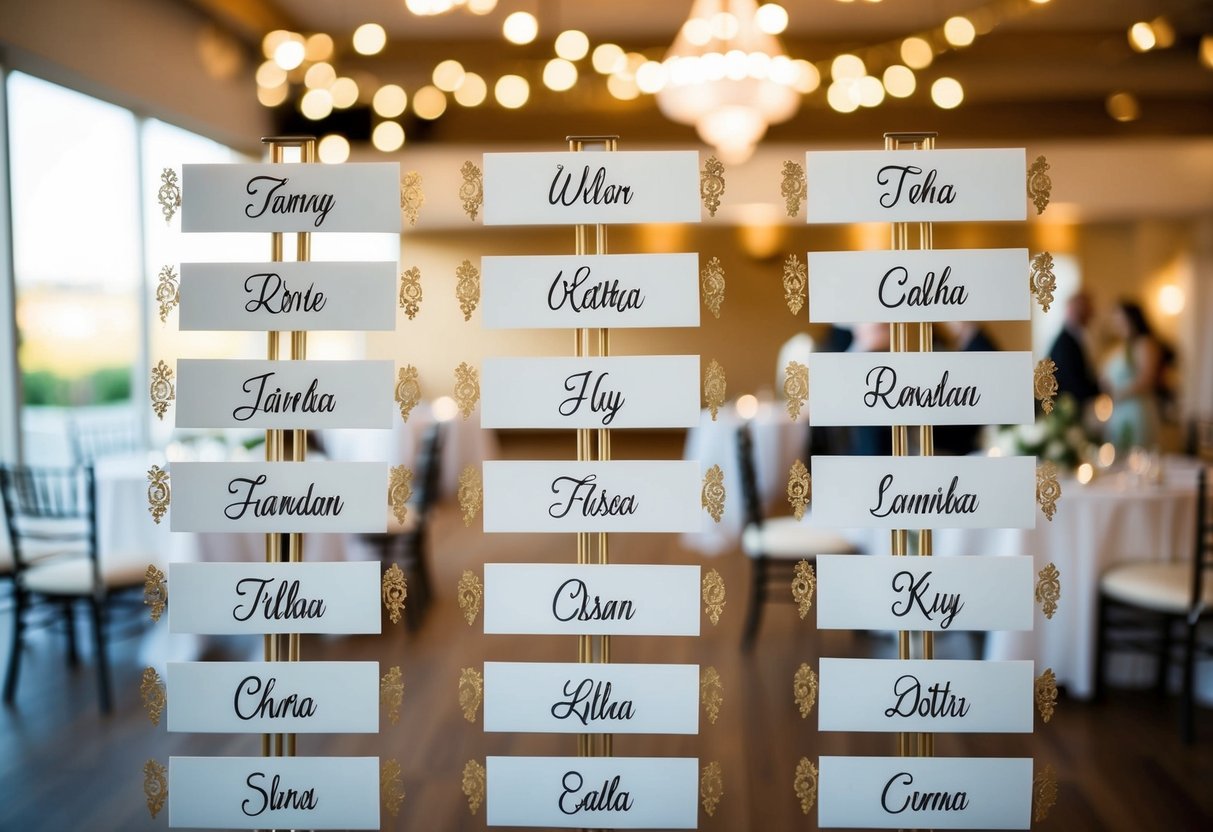
Creating a seating chart for your wedding is a fun way to plan your reception. It helps your guests know where to sit and sets the tone for the event.
Focus on table layout, table numbers, and seating chart signs to make the process smoother.
Determining Table Layout and Shapes
To start, think about the layout of your reception venue. Different types of tables can affect the feel of the room. Many venues offer a mix of round tables and rectangular tables.
- Round tables encourage conversation, as guests can easily see each other.
- Rectangular tables are great for larger groups or family-style dining.
Consider how many people you want at each table. If you have space, a few round tables may create a softer look, while rectangular tables can streamline seating.
Lastly, think about the dance floor and other spaces in your layout. Make sure your tables allow for easy movement around the venue.
Assigning Table Numbers
Once you’ve chosen your table shapes and layout, it’s time to assign table numbers. This will make it easier for your guests to find their seats.
To keep things organized, consider using a list or spreadsheet to track who sits where.
Start with family and close friends, then add other guests.
Label each table clearly with numbers or thematic names to add a personal touch. You can place the table numbers on nice stands at each table or use elegant calligraphy for a classy feel.
Creating a Seating Chart Sign
A wedding seating chart sign is a central part of helping guests find their seats. This sign lets everyone know where they belong and adds to your reception décor.
- Choose a prominent spot near the entrance.
- Use a visually appealing design that matches your wedding theme.
You can create a digital seating chart for ease. Many couples opt for websites or apps to design and display their charts. Ensure it’s easy to read, using clear fonts and enough space for names.
This approach can eliminate the need for guests to search through a list, making it a smoother experience as they enter your reception.
The Etiquette of Seating Arrangements
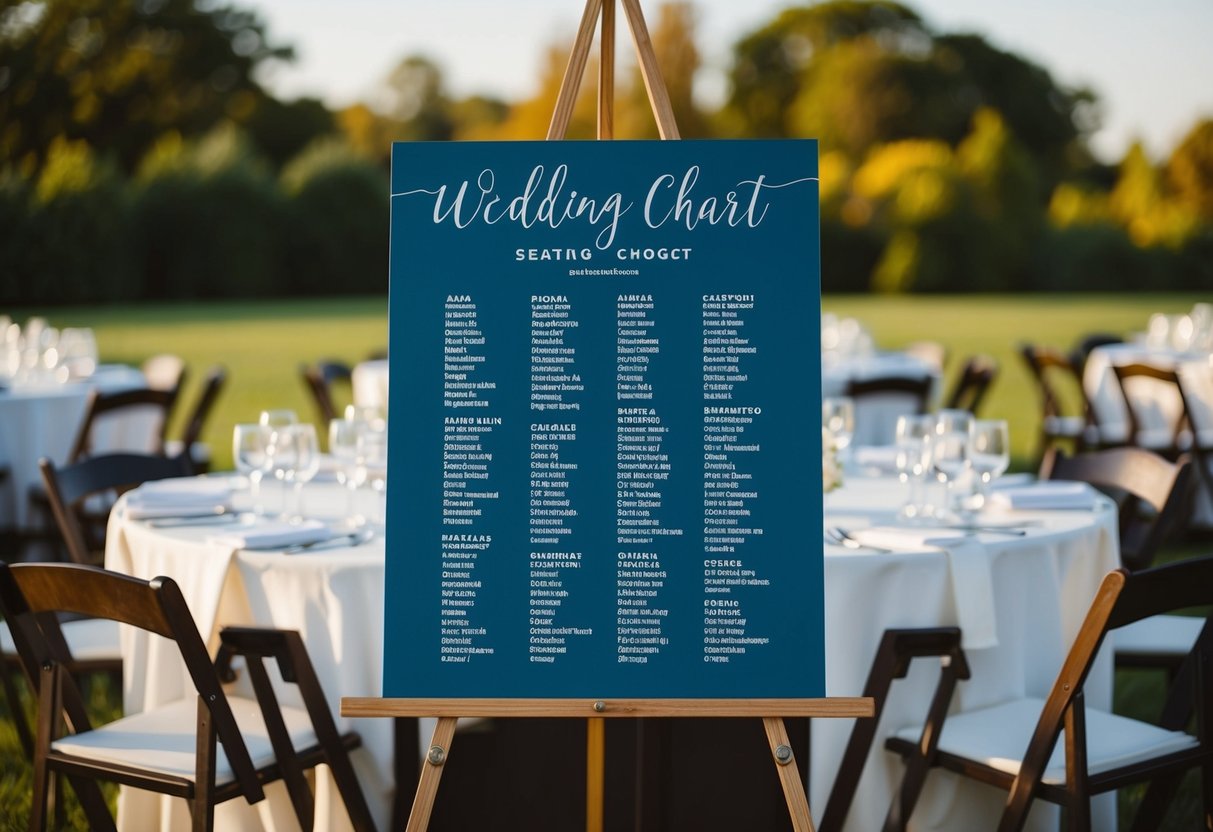
When creating a seating chart for your wedding, there are key etiquette rules to follow. These will help ensure your guests feel comfortable and welcomed.
You’ll want to think about how to order guest names, where to seat elderly guests, and how to handle singles and couples.
Ordering Guest Names
Start by listing guest names in alphabetical order. This makes it easy for everyone to find their seats quickly. Use full names with last names to avoid any confusion.
If guests are a married couple, list their names together. For example, use “Mr. and Mrs. Smith” instead of individual names.
Consider grouping your friends and family together while still keeping the order. This will help everyone easily navigate the chart. You might use tables to display the information clearly.
Placement of Elderly Guests
When seating elderly guests, give them special consideration. Place them near the front or in quieter areas of the venue. This will make it easier for them to hear and participate in the ceremony.
Incorporate seating options that provide comfort, such as cushioned chairs. Ensure they have their family members or close friends nearby. This gives them support and makes the evening more enjoyable.
Seating Singles and Couples
Creating a separate singles table is a thoughtful choice. This allows single guests to mingle and enjoy their time without feeling out of place.
When seating couples, you want to position them together for a comfortable experience.
For example, the sweetheart table is a romantic spot just for the couple. The head table can feature the bridal party or close family.
Planning their placement carefully helps everyone feel included and engaged.
Seating Chart Essentials
Creating a seating chart involves careful planning and attention to details like RSVPs and the choice between escort cards or place cards. These elements help ensure your guests have a smooth experience during the reception.
Incorporating RSVPs and Guest Counts
Start by tracking your guest list and RSVPs. Knowing your guest count is crucial. It helps you decide how many tables to set up and how to organize seating.
Create a list of confirmed guests. You can use a simple table to mark who is coming. This list will help you assign seats effectively.
Think about how to manage late RSVPs. If a guest replies late, be ready to adjust your seating arrangement.
It might help to have a flexible seating chart for easy changes.
Choosing Escort Cards or Place Cards
Deciding between escort cards and place cards is important for your seating arrangement. Escort cards guide guests to their tables. They often list the guest’s name and table number, arranged alphabetically for easy finding.
Place cards, on the other hand, are set at each table. They show guests their specific seats. This makes it easier to control the seating arrangement.
Consider what fits your style. Escort cards allow for more customizable designs and are great for larger weddings. Place cards work well for more intimate gatherings. Both options make the seating process organized and enjoyable for your guests.