
How to Plan Wedding Transportation: Routes, Shuttles, and Timing
To plan wedding transportation, start with a list of who needs a ride, where each group must go, and when they need to arrive. Then match each trip to a vehicle, build in time for traffic and boarding, and share clear pickup details with your guests.

Your wedding day transportation plan can help your wedding party stay together and give guests a clear way to reach the celebration. Start by writing down your guest count and every location on your schedule, then use those details to request transportation quotes.
Who Needs a Ride on the Wedding Day?
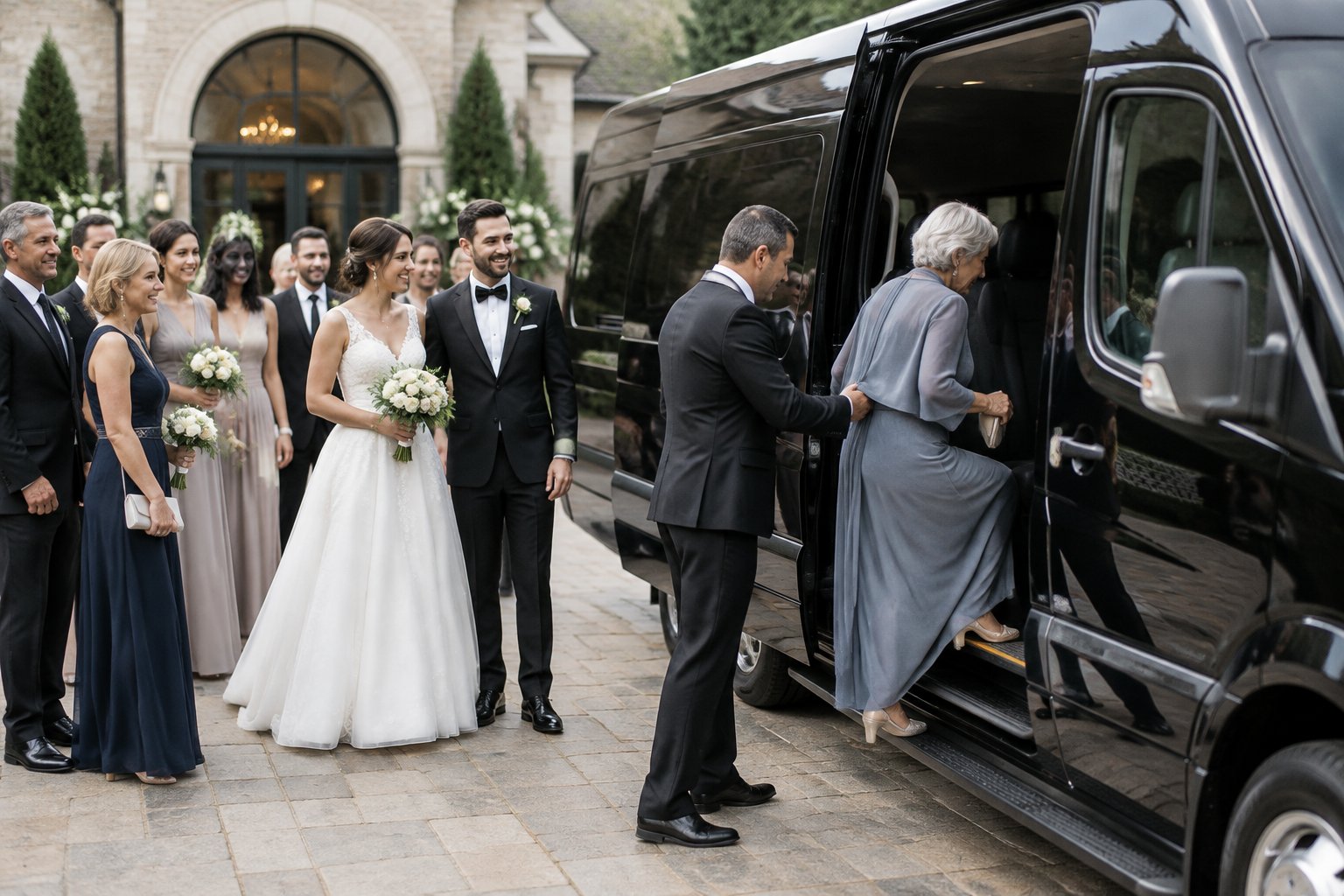
Decide who needs a ride by considering their role, travel needs, and access to a car. Your wedding day transportation plan might cover the couple and wedding party, while guest transportation can help when parking is limited or hotels are far from the venue.
Transportation for the Couple and Wedding Party
Plan rides for you and your partner first, then count the attendants who need to travel with you. If your wedding party is getting ready away from the ceremony venue, a shared ride can help everyone arrive together and keep the schedule on track.
Your group size and getting-ready plans will shape the vehicle choice. A smaller vehicle may suit a few attendants, while a larger option gives your full party room to travel together.
If you are deciding who rides with the bride, review who goes in wedding cars as you set your headcount. You can also clarify who travels with the bride to the wedding before booking.
Rides for Family, Older Relatives, and Out-of-Town Guests
Ask close family members whether they need help getting to the ceremony or reception. A ride for parents, grandparents, or a relative with mobility needs can make arrival easier.
If you are making a plan for the bride’s mother, consider where the mother of the bride rides alongside the rest of the family arrangements.
Guest transportation is especially helpful when many guests are staying at the same hotel, the venue has limited parking, or rideshare service is hard to find nearby. You can offer a shuttle for all guests or reserve seats for out-of-town guests and anyone who needs assistance.
If guests are arranging their own rides, share parking directions and local transportation details in advance.
Which Vehicles Fit Each Group?

Choose wedding transportation options by matching each vehicle’s passenger capacity and style to the group and route. A guest shuttle, minibus, or charter bus can move a larger group, while smaller vehicles suit the couple or wedding party.
Guest Shuttles, Minibuses, and Charter Buses
A guest shuttle is a practical choice when you want guests to travel between a hotel and your venue together. A minibus can suit a smaller guest list or a route with several short trips.
A charter bus can carry a larger group in one trip, though the vehicle must fit the roads and loading area at each stop. Ask each company for the exact passenger capacity of the vehicle it will provide.
Check whether luggage, mobility aids, or other items affect the number of seats available. If you have several pickup locations, ask the provider to confirm that the route and schedule allow enough time for each stop.
Stretch Limousines, Party Buses, and Sprinter Vans
A stretch limousine gives you a private ride with a formal feel, while a party bus offers space for a larger wedding party to travel together. A sprinter van can work well for a smaller group, especially when you need a vehicle that can make multiple trips.
Check passenger capacity, access, and comfort before choosing. Your wedding attire may need extra room, and a narrow road or tight parking area can limit which vehicles reach the venue.
If you are choosing a car for the couple, compare what car to use for a wedding with the route and the look you want.
Luxury Sedans and Getaway Cars
A luxury sedan suits a private ride for you, your partner, or a family member. A getaway car can take you to your hotel after the reception and create a special exit moment.
You can book a dedicated vehicle or arrange a trusted driver and car, as long as the plan and pickup time are clear. Confirm where the driver will wait and how you will reach the car after the reception.
If you are using a rented or borrowed vehicle, name the person responsible for keys and parking.
How Do You Map Routes and Build a Timeline?

Build your wedding transportation timeline around the ceremony start time, each route, and the time people need to board. Your wedding day logistics will run more smoothly when you give drivers a written schedule with pickup locations and contact details.
List Every Stop and Check Travel Times
Write down every location where a passenger or vehicle must stop. Include getting-ready locations, the ceremony, the reception, the hotel pickup point, and any after-party.
Note which groups travel on each leg so you can see where separate vehicles are needed. Check estimated drive times for the day and time of your wedding.
Ask your transportation provider about road limits, loading areas, and route access, especially if the venue is remote or has narrow roads. Share the route with your coordinator and venue contacts so they can confirm where vehicles should enter and wait.
Work Backward From the Ceremony and Add Buffers
Start with the ceremony time and set a target arrival time that gives guests room to find their seats. Work backward from that point using the drive time, boarding time, and pickup schedule.
Add extra time for traffic, parking, and guests who need help getting on board. For example, if you want guests seated 15 minutes before the ceremony, include that time before calculating when the shuttle should reach the venue.
Your transportation timeline should also match your ceremony and reception schedule. A wedding timeline plan can help you coordinate vehicle arrivals with the rest of the day.
Plan Shuttle Rotations and Return Trips
Estimate how many guests need rides and how many people each vehicle can carry. If one shuttle cannot serve everyone in a single trip, plan enough rotations for guests to arrive before the seating deadline.
Confirm the number of trips with the provider and allow time for the vehicle to travel back to the pickup point. Set return trips for guests leaving at different times.
An early departure can help guests who want to leave before the reception ends, while a final run gives later guests a planned ride back. Tell guests the last departure time so they can plan ahead.
How Much Should You Budget and When Should You Book?

Set your transportation budget by pricing each vehicle, service window, and trip you need. Wedding transportation services may charge by the hour, by the route, or by a package, so compare quotes using the same schedule and passenger count.
Compare Quotes, Vehicle Rates, and Minimum Hours
Request written quotes that list the vehicle, passenger capacity, service hours, route, mileage, fees, and gratuity. Ask whether the quote includes waiting time and extra trips.
Some providers set a minimum rental period, so compare the full cost of the booking instead of looking only at an hourly rate. Costs vary by vehicle, location, date, and rental length.
A stretch limousine, party bus, minibus, and charter bus each have different pricing, and specialty vehicles can carry a higher rate. Add transportation to your wider wedding budget plan and decide which rides are most useful before choosing extras.
Book Early for Peak Dates and Popular Vehicles
Contact providers once your wedding date and venues are set, especially if your wedding falls during a busy season or on a popular Saturday. Booking six to nine months ahead gives you more time to compare options and reserve the vehicle that fits your plan.
Specialty cars and large shuttles can have limited availability, so start your search early. Before you pay a deposit, confirm the vehicle type, passenger capacity, service hours, and cancellation terms in writing.
If you are organizing your planning schedule, find out when to start booking wedding services and add transportation to your vendor checklist.
What Should You Confirm With Vendors and Tell Guests?
Give your transportation provider a written schedule and share the same pickup details with your guests. Clear instructions, confirmed costs, and a day-of contact help keep the plan easy to follow.
Review the Contract, Overtime, and Backup Plans
Read the wedding transportation contract before you sign. Check the date, vehicle, pickup and drop-off locations, service hours, passenger capacity, total price, deposit, and payment dates.
Make sure it explains overtime charges, cancellation terms, and any fees for extra mileage or stops. Ask what happens if the assigned vehicle has a problem or the driver is delayed.
Confirm who will contact you on the wedding day and give that person your coordinator’s number. Keep a copy of the contract and final schedule where your coordinator can access them.
Share Pickup Details and Shuttle Schedules
Send guests the pickup address, boarding time, return schedule, and any parking instructions. Put the details on your wedding website or travel information page, then send a reminder before the wedding.
If the schedule changes, update the page and contact guests who may be affected. Include a contact name and phone number for day-of transportation questions.
You can make guest updates easier by following a clear plan for informing people about your wedding.
Set Expectations for Boarding and Guest Etiquette
Tell guests where to wait and how early to arrive for boarding. Ask them to follow the driver’s directions and keep the pickup area clear so the vehicle can depart on schedule.
If seats are limited, explain whether rides are first-come or assigned. Share the final shuttle time in a clear place, such as your website and a sign at the reception. Give your coordinator a copy of the same schedule so guests receive consistent information throughout the day.