
How to Properly Write a Married Couple’s Name: Tips for Elegant Invitations
Knowing how to properly write a married couple’s name can be tricky, especially when trying to follow etiquette rules. The traditional approach to addressing a couple is to use the husband’s name first, such as Mr. and Mrs. Smith. However, there are modern variations you can consider. This can reflect your personal style or their preferences, making it important to pay attention to the couple’s wishes.
If you are preparing invitations for a wedding or writing a card, understanding these naming conventions can help you avoid faux pas. Using just the titles along with the last name is also a great option, like Mr. and Mrs. Johnson, especially when you want a clean and formal presentation. This method is widely accepted and makes sure your address comes across as respectful and correct.
Whether it’s for a formal invitation, a casual card, or a wedding gift, getting the couple’s name right matters. Tailoring your approach based on the couple’s unique relationship can help you make a positive impression. Then you’ll feel confident that you’ve honored their union in just the right way.
Fundamentals of Naming Etiquette
Knowing how to address a married couple properly is key to showing respect in social settings. This section covers the use of traditional titles and how to include both names correctly in various contexts.
Uses of Mr. and Mrs. Titles
When addressing a married couple, the traditional titles of Mr. and Mrs. are often used. Typically, you would write “Mr. John Smith and Mrs. Jane Smith.” This format places the husband’s name first, reflecting long-standing etiquette.
In more modern contexts, couples may choose to switch these titles. For example, you might see “Mrs. Jane and Mr. John Smith.” This approach can be more equal and may suit couples who prefer a less traditional method.
For same-sex couples, you can choose any combination of titles. For instance, “Mr. Alex Taylor and Mr. Jamie Taylor” or “Mrs. Emma Brown and Mrs. Olivia Brown” works well.
Inclusion of Maiden and Last Names
It is important to consider how you include both partners’ names, especially when one partner has a maiden name. When a woman keeps her maiden name after marriage, it’s common to address her as “Ms.”
For instance, you can say “Mr. John Smith and Ms. Jane Doe.” This clearly acknowledges both names and honors their personal identities.
If the couple shares a last name, you can simply write their full names together. A complete example would be “Mr. John and Mrs. Jane Smith.”
In casual settings, feel free to use just first names once you know the couple well. This friendly approach can make interactions feel warmer and more personal.
Addressing Envelopes for Couples

When addressing envelopes for couples, it’s important to follow certain etiquette. This ensures that your envelope looks polished and respectful to the recipients. Here’s how to craft formal addresses, use proper salutations, and utilize full names and titles effectively.
Crafting Formal Addresses
To address an envelope formally to a married couple, start with “Mr. and Mrs.” or use both partners’ names. For example, you could write “Mr. and Mrs. John Smith” if the couple shares the husband’s last name.
If they have different last names, use “Ms.” and “Mr.” along with their full names. Write “Ms. Jane Doe and Mr. John Smith” to maintain equality. Make sure to spell out street numbers and use complete names for clarity.
Leveraging Proper Salutations
When it comes to salutations, the way you greet the couple can set the tone for your message. Using “Dear Mr. and Mrs. Smith” is a classic choice. If you prefer a more inclusive option, “Dear Jane and John” works well too.
Remember to pay attention to preferences. Some couples may prefer traditional formats, while others might use first names. Always try to follow their preference if you know it.
Utilizing Full Names and Titles
You should always use full names when addressing envelopes. This includes first, middle, and last names if applicable. For example, write “Ms. Samantha Marie Johnson and Mr. Thomas Lee Brown.”
If an honorific like “Dr.” or “Professor” applies, include it as well. Using full names ensures that your envelope is clear and respectful.
For the return address, include your name on the first line and your full street address underneath. This helps ensure proper delivery and makes it easy for the couple to respond.
Wedding-Specific Addressing
Addressing invitations is an important part of planning your wedding. Getting it right helps set the tone for your special day. Here are the key details for handling wedding invitations and save-the-date cards.
Handling Wedding Invitations
When addressing wedding invitations for married couples, it’s customary to use “Mr. and Mrs.” followed by the husband’s full name. For example, if their names are John and Jane Smith, write it as Mr. and Mrs. John Smith. This format is traditional and works well for many couples.
If the couple has different last names, address each person with their title and name on separate lines. For instance, if one is a Ms. and the other is a Mr., you might write:
Ms. Jane Doe
Mr. John Smith
It’s also important to consider same-sex couples. You might choose to list their names alphabetically or use Mr. and Mr. Smith or Ms. and Ms. Doe. Always make sure to respect their preferences.
Addressing Save-the-Date Cards
Save-the-date cards can be a bit more relaxed but should still follow proper etiquette. Similar to wedding invitations, you should use the couple’s formal titles followed by their names.
For married couples, it looks like this:
Mr. and Mrs. John Smith.
For couples with different last names, write:
Ms. Jane Doe and Mr. John Smith.
If it’s an unmarried couple, list each person’s name on a separate line, like:
Ms. Jane Doe
Mr. John Smith.
This way, everyone feels included and valued. Use clear and simple language so your guests know what’s coming.
Addressing Variations
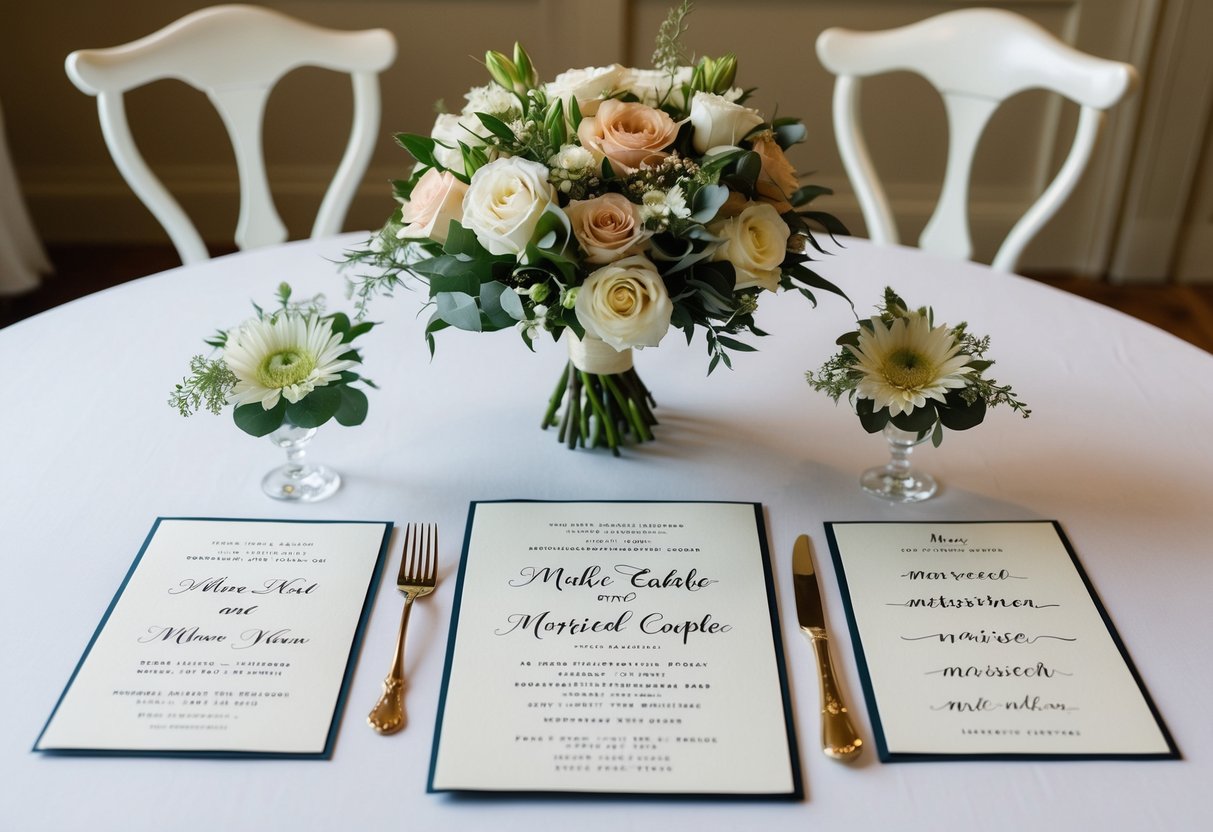
When addressing married couples, it’s important to consider different naming conventions. This section looks at how to address same-sex couples, hyphenated last names, and unmarried couples with dual last names. Each situation has its own etiquette that helps convey respect and understanding.
Same-Sex Couples and Hyphenated Names
For same-sex couples, you can use both partners’ names, reflecting equality. For example, if the couple is Alex Taylor and Jamie Lee, you might use “Mr. Alex Taylor and Mr. Jamie Lee” or “Mr. and Mrs. Lee-Taylor” if they choose a hyphenated name.
When addressing a couple with hyphenated last names, always include both names. You could write “Dear Mr. and Mrs. Smith-Jones” or “Dear Ms. Lee-Taylor and Ms. Anderson.” This approach acknowledges both identities and honors current address etiquette.
Unmarried Couples and Dual Last Names
Unmarried couples often choose to keep their last names. In this case, you can address them by both last names. For example, you might use “Dear Ms. Taylor and Mr. Lee.” This format is clear and respectful.
If they choose to combine their names, consider how they prefer to be addressed. Some may opt for a hyphenated last name, such as “Ms. Taylor-Lee.” It’s always a good idea to ask the couple how they like their names presented. This is especially important if you’re following Miss Manners’ guidelines on address etiquette.