
How to Room Block for a Wedding: A Practical Guide
Wedding room blocks give your guests a clear place to book near your venue, often at a group rate. To room block for a wedding, estimate how many guests need lodging, request offers from nearby hotels, choose terms that fit your budget, and share the booking details and deadline.

Start researching once your wedding date and venue are set. If you’re still organizing your planning timeline, use this guide to decide when to start booking wedding plans. Then contact nearby hotels and ask for their rates and terms in writing.
What Does a Wedding Room Block Include?
A hotel room block holds a set number of rooms for your guests at one property, often at a group rate until a set booking deadline. Your offer should spell out the room count, stay dates, reservation method, and any costs or guest perks.
How Guests Reserve and Pay for Their Rooms
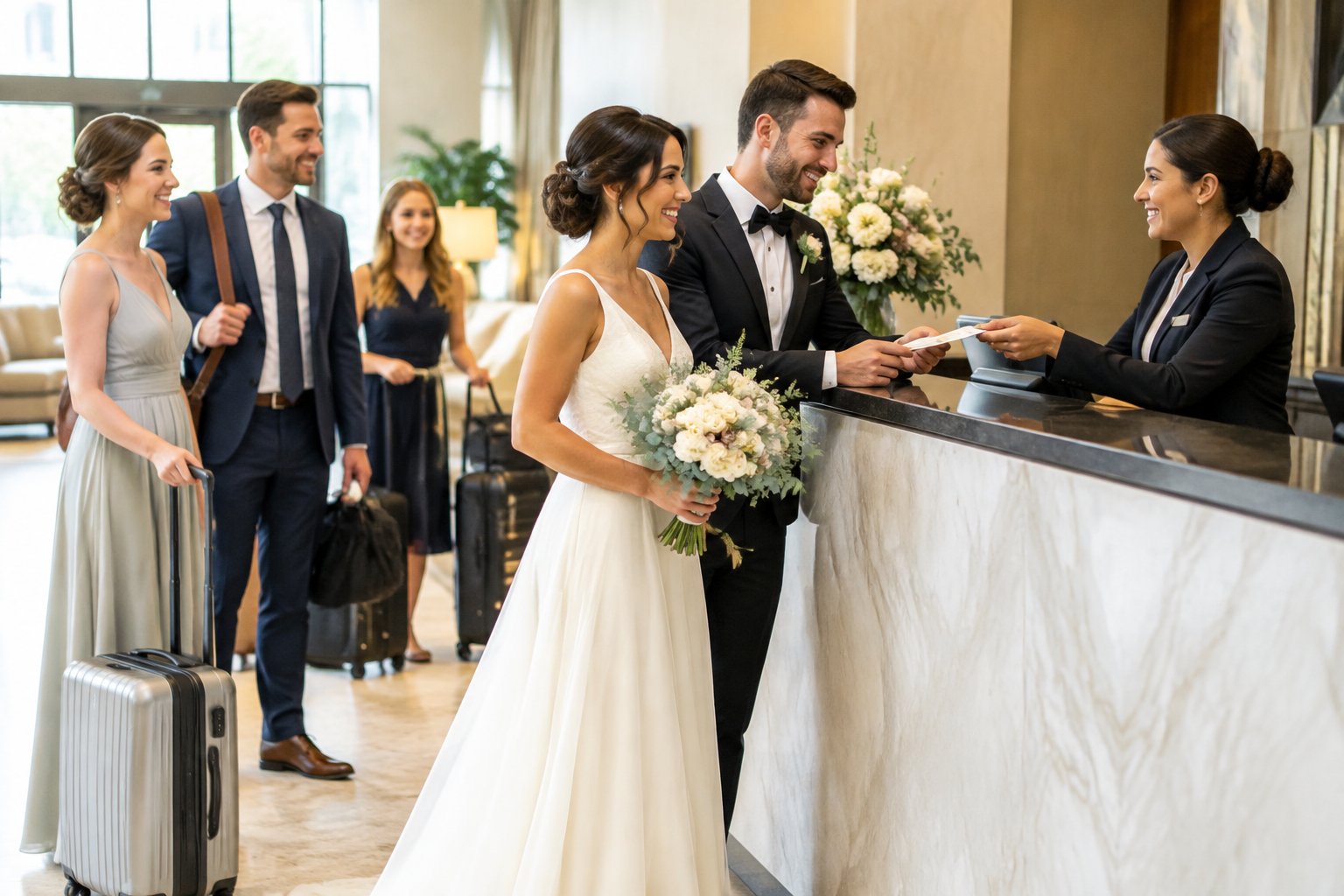
Your hotel will provide instructions for guests to reserve, such as a group code or a personalized booking link. Guests choose their room and pay the hotel directly, unless you have agreed to cover specific rooms for family or members of your wedding party. For more details on payment, review who pays for wedding hotel rooms.
Ask whether the group rate covers different room types or extra nights. Confirm the guest cancellation policy, taxes, and any fees so you can share an accurate price.
Why a Block Can Make Wedding Travel Easier
A wedding room block gives guests a convenient lodging option near your celebration. When guests stay at the same hotel, it can also simplify plans for shuttles and other wedding-weekend activities.
Hotel room blocks make it easier to share one set of booking instructions with your guests. Your guests can still choose another place to stay, while the block gives them a clear option to consider.
How Do Courtesy and Contracted Blocks Differ?
A courtesy room block holds rooms for guests without requiring you to pay for unbooked rooms, while a contracted block may make you responsible for meeting a booking minimum. The contract type affects your financial risk, room availability, and the terms you need to review.

| Feature | Courtesy block | Contracted block |
|---|---|---|
| Financial commitment | Usually none for unused rooms | May include a minimum booking requirement |
| Unbooked rooms | Released after the deadline | May count toward an attrition requirement |
| Written terms | Set by the hotel | Detailed in a signed contract |
| Availability | Limited to rooms held | Set by the agreement |
When a Courtesy Room Block Makes Sense
A courtesy room block suits you when your guest count is uncertain or you want to avoid a financial commitment for unused rooms. The hotel holds a set number of rooms until its cutoff date, then releases any unbooked rooms.
Ask how many rooms the hotel will hold and when guests must book. The group rate and room availability apply according to the hotel’s terms, so get both details in writing.
What to Check in a Contracted Block’s Attrition Clause
An attrition clause states how many of the contracted rooms your guests must book. If bookings fall below the required amount, you may owe a fee for the shortfall.
Before you sign, ask how the hotel calculates the required pickup and whether reservations made outside the group link count. Check the deadline for reducing the room count, any deposit, and the cancellation terms. If the wording is unclear, ask the hotel to explain it in writing.
How Many Rooms Should You Request and When?
Estimate your wedding hotel room block from the guests who need overnight lodging, then contact hotels early enough to compare options. Your estimate is a starting point, and you can ask whether the hotel will let you add rooms as bookings come in.

Estimate Demand From Out-of-Town Guests
Start with guests who live far enough away to need a place to stay. Estimate how many are likely to attend and how many people will share each room. For example, if you expect 40 traveling guests and most will share rooms in pairs, you could start by asking about 20 rooms.
Adjust your estimate for guests who plan to travel with children, single guests who need their own room, or family members who may stay elsewhere. Your expected wedding guest count can help you make a more useful estimate.
Start Hotel Research Before Rooms Sell Out
Begin contacting hotels after you confirm your date and venue. A planning window of about nine to twelve months gives you time to compare offers; start earlier if your wedding falls during a busy travel period or in a high-demand destination.
Ask each hotel how long it can hold rooms and when the group rate expires. Those dates help you set a booking timeline guests can follow.
How Do You Compare Hotels and Negotiate Terms?
Compare each group hotel booking offer by its full cost, location, room availability, and contract terms. A low nightly rate may come with added fees or a booking commitment, so review the complete offer before choosing.

Contact Hotels Near the Venue
Start with hotels near your venue, then consider properties with convenient transportation or lower rates. If your guests have different budgets, ask about options at more than one price point.
When you contact each hotel, provide the wedding date, venue location, estimated room count, and the nights guests may need. Ask for a written proposal that includes room types and booking instructions.
Compare Rates, Deadlines, and Guest Perks
Review the full guest cost, including taxes, parking, and other fees. Compare the cutoff date and room types alongside the rate, then ask about guest perks such as breakfast, welcome-bag delivery, or discounted parking.
You can ask whether the hotel will extend the deadline or add rooms if demand is strong. Get any agreed changes in writing so you and your guests have clear terms.
Review the Agreement Before Signing
Read the agreement for the dates, room count, rate, payment duties, and cancellation rules. If you’re considering a contracted block, confirm the attrition clause, deposit, and process for reducing or adding rooms.
Make sure the agreement matches the offer you accepted. Keep a copy of the signed terms and note the cutoff date on your wedding planning calendar.
How Can Guests Book and Meet the Deadline?
Give guests clear booking instructions as soon as your hotel confirms the block. Share the hotel name, group code or hotel booking link, stay dates, and cutoff date in the places guests already use for wedding details.
Share the Group Code and Hotel Booking Link
Send the hotel’s booking link or group code exactly as provided. Include the dates covered by the block and explain that guests reserve and pay the hotel directly.
If the hotel offers more than one room type or stay length, tell guests to check availability through the booking link or ask the hotel about options.
Add Lodging Details to Wedding Communications
Put the hotel information on your wedding website and include it in relevant guest updates. Keep the room-block cutoff separate from your RSVP deadline so guests can track both dates. Your wedding RSVP timeline can help you keep those deadlines distinct.
Remind Guests Before the Cutoff Date
Send a friendly reminder before the hotel’s booking deadline, especially if the date is approaching. Repeat the link or group code and note that rooms or the group rate may no longer be available after the cutoff.
If guests have questions about reservations, direct them to the hotel’s contact information. The hotel can help with individual booking changes and cancellation details.