
How to RSVP with a Plus One? A Friendly Guide to Adding Guests to Your Invitation
When you receive an invitation that allows a plus-one, it can feel exciting but also a bit confusing. Simply respond according to the instructions on the invitation, making sure to indicate whether you will bring a guest. This shows your host that you appreciate their invitation and helps them plan accordingly.

Plus-one etiquette is all about consideration. It’s essential to know how to handle this situation respectfully, both for yourself and your potential guest.
Make sure to communicate with your host about who you’re bringing, as many hosts prefer to know the names of attendees in advance. This helps them create seating arrangements and keep everything organized for the event.
Navigating the plus-one process can sometimes feel daunting, but it doesn’t have to be! Understanding how to handle your RSVP correctly makes the experience enjoyable for both you and your host. Follow the guidelines, communicate openly, and get ready to enjoy a wonderful event with your chosen guest!
Understanding Wedding Invitations and RSVPs
When you receive a wedding invitation, it contains important details about the event and how to RSVP. Knowing how to read the invitation and the RSVP card can help you respond correctly, especially if you are allowed to bring a plus one.
Interpreting the Invitation
Your wedding invitation has several parts that tell you what you need to know. The outer envelope usually includes your name and address, while the inner envelope may specify if you can bring a guest.
Look for phrases like “plus one” or “and guest.” If these words are not included, you should assume you’re invited alone.
Make a note of the wedding website listed on the invitation. This is a great place for further details about the event, including accommodations and registry information.
The RSVP Card Explained
The RSVP card is key to letting the couple know if you’ll be attending. It usually includes space for your name, an option to indicate your attendance, and dietary preferences.
If a plus one is allowed, it will mention this directly on the RSVP card. Make sure you fill it out completely and return it by the date provided.
If it’s a digital invitation, follow the prompts to reply on the wedding website or specified email. This helps the couple with planning, so be sure to respond promptly!
Guidelines for Bringing a Plus-One
When you receive a wedding invitation that includes a plus-one option, it’s important to handle it with care. Knowing who qualifies for a plus-one and how to RSVP correctly can help you avoid awkward situations. Here’s what you need to consider.
Who Gets a Plus-One?
Not everyone receives a plus-one invitation. If you’re single or dating someone serious, you might qualify for a plus-one. Generally, engaged couples, married couples, or long-term partners are often expected to bring their significant other.
If the couple specifically invites you and a guest, you can assume you’re welcome to bring someone. Pay attention to the wording on the invitation. Phrases like “plus-one” or “invite a guest” typically mean you’re free to choose someone you’d enjoy having at the event.
Always consider guest etiquette when deciding who to bring. If it’s unclear whether your casual date can come, it’s best to ask the couple directly. They may appreciate your consideration.
How to Address a Plus-One on an RSVP
When filling out your RSVP card, follow the formalities. If the envelope includes both your name and a plus-one designation, list your guest’s name on the RSVP. For example, if the invitation says “you and guest,” write your name followed by your guest’s name.
If no specific name is mentioned, simply write “and guest” or “plus-one.” The engaged couple may not want to assume who your guest is, so it’s polite to include that information.
If you’re unsure about bringing someone due to the invitation’s wording, don’t hesitate to reach out to the engaged couple. It’s better to clarify than to guess. Respect their wishes, and you’ll ensure a smooth RSVP experience.
Planning Considerations for Plus-Ones
When inviting a plus-one, there are important factors to keep in mind. These include the venue’s space, your budget, and how to arrange seating for an enjoyable experience. Each plays a vital role in making your day smooth.
Venue Capacity and Guest Count
Before you decide on plus-ones, check your venue’s capacity. Every venue has a limit on the number of guests it can comfortably accommodate.
Knowing your overall guest count helps in planning. A larger guest list may lead to a lively atmosphere, but be careful not to exceed the maximum capacity.
Consider the layout as well. If you’re planning an intimate wedding, fewer guests mean a cozier vibe, which can make your ceremony special.
Budget and Financial Constraints
Your wedding budget is crucial. Each additional guest adds cost, from catering to potentially needing more tables and chairs.
Take a moment to break down the expenses. For example, think about:
- Food and Drinks: More guests equal more meals.
- Seating and Decorations: Adding chairs and tables can increase decor costs.
- Favors and Gifts: Remember, extra guests mean more items to purchase.
Make sure you have a clear picture of how these costs affect your total budget.
Seating Arrangements and Reception Details
Seating arrangements can become tricky when planning for plus-ones. Ensure that everyone has a place to sit at both the ceremony and reception.
Think about the following:
- Mixing Guests: You may want to seat plus-ones with friends or family to keep things friendly.
- Table Layout: An inviting table layout can enhance the celebration.
- Formality of the Event: An elegant event may require more thought into seating, while a casual gathering allows more flexibility.
Planning carefully helps ensure guests feel welcomed and enjoy the event, making the day memorable for everyone involved.
Etiquette for Guests and Hosts
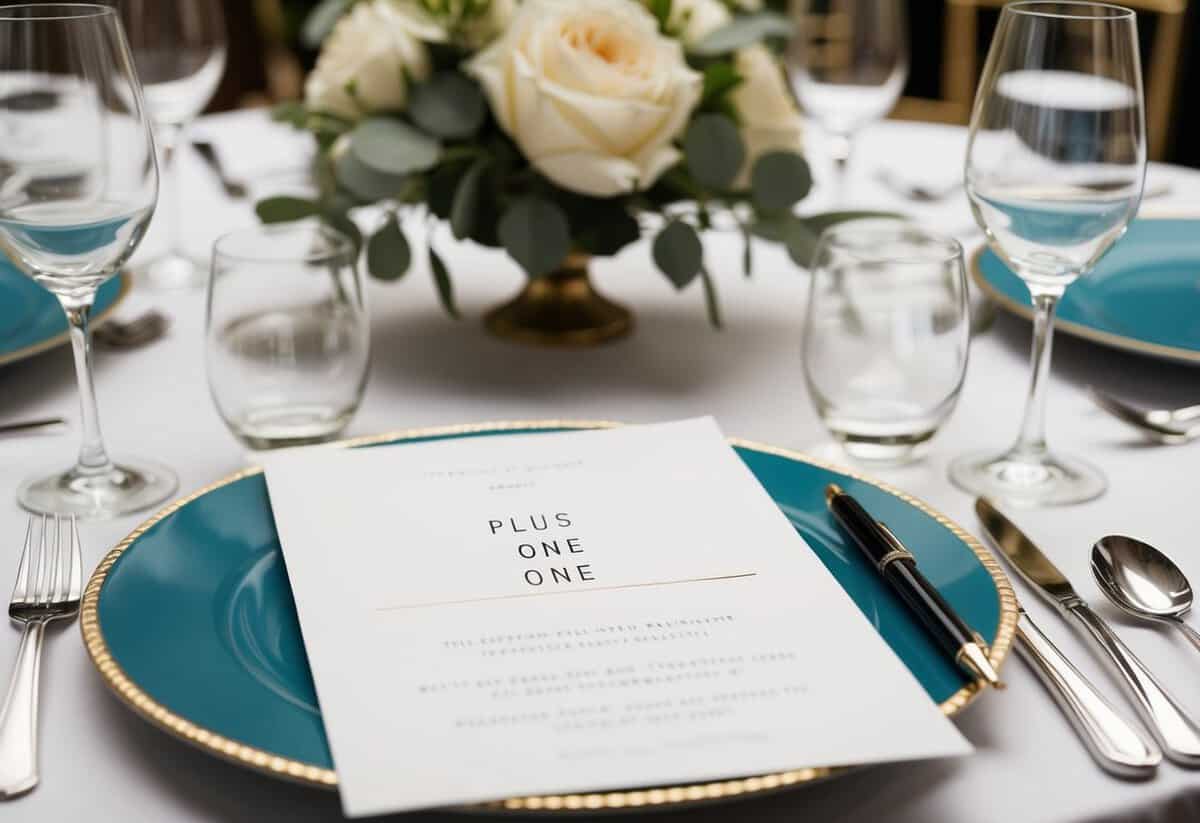
Navigating plus-one invitations can be tricky for both guests and hosts. Understanding the expectations can help ensure a pleasant experience for everyone involved.
Addressing Plus-One Invitations
When you receive an invitation that allows a plus-one, consider the following. Firstly, check the wording on the invite. If it clearly states you can bring a guest, feel free to include someone. If it doesn’t mention a plus-one, it’s best to respect that.
For weddings, remember that invites may be limited due to venue restrictions. In such cases, the couple might prefer guests to attend solo. Always be considerate and communicate with your host about your plus-one.
If you feel unsure, just ask! A friendly message can clear up any confusion. It shows you care about the couple’s wishes and helps you maintain good wedding guest etiquette.
Handling Guest Requests and Limitations
Hosts often deal with requests for plus-ones, especially from solo guests. Be open to discussing this, but remember your limitations. If the venue can only hold a certain number of people, it’s okay to set clear boundaries.
When a guest approaches you about bringing someone, kindly explain your situation. For instance, you can say, “I love having you there, but we have a limited guest list.”
If you’re inviting friends who may want to bring a date, it’s helpful to address this in the invite. Including a note like “This invitation is for you only” can help set expectations right from the start.