
How to Throw a Virtual Wedding: Tips for a Beautiful Online Celebration
Planning a virtual wedding can be a fun and creative way to celebrate your special day with friends and family, no matter the distance. To throw a successful virtual wedding, you’ll need to choose the right platform, create a beautiful setup, and ensure that your guests can easily join the celebration.

Think about how you want your wedding ceremony to feel. You can incorporate personal touches like custom invitations, unique backdrops, and interactive elements that allow your guests to feel included. This way, everyone can enjoy your special moments together, even if they’re attending from their own homes.
As you dive into the details of planning a virtual wedding, remember that the goal is to make it a memorable experience for you and your loved ones. Embrace technology to share your vows and celebrate your love in a way that reflects your style and values.
Planning Your Virtual Wedding
When planning your virtual wedding, it’s essential to focus on the right technology, the date and time, and a detailed schedule. These elements will help ensure a smooth and memorable event for you and your guests.
Choosing the Right Technology
Selecting the right platform for your ceremony is crucial. Popular options include Zoom, Facebook Live, and Instagram Live.
- Zoom: Great for larger gatherings, allowing up to 1,000 guests with the right plan. You can also record the event for later viewing.
- Facebook Live: Ideal for sharing with friends and family on social media. Just make sure you set up privacy settings to control who can watch.
- Instagram Live: Perfect for a more casual gathering. Note that it only allows live viewers, so no recording option here.
Make sure to test your setup beforehand to ensure a stable internet connection.
Setting the Date and Time
Choosing the right date and time is important to maximize attendance. Consider your guests’ locations and time zones.
- Aim for a weekend when most people are free.
- Early afternoon or early evening tends to work best for virtual events.
It’s also helpful to send out a save-the-date in advance. Make sure to follow up with invites that include the technology you’ll be using and any other important details.
Creating a Detailed Schedule
A detailed schedule keeps things organized and ensures everyone is on the same page.
- Ceremony: Decide on the length. Typically, aim for 30-45 minutes.
- Hosts and Speakers: Assign roles for family and friends who will read vows or give speeches. Let them know when to join the call.
- Breaks: Plan for a short break if you have segments in your wedding like speeches, a cake-cutting scene, or activities.
Having a clear timeline helps everyone understand their role in the ceremony. Remember to share this schedule with your guests ahead of time so they know what to expect and when to connect!
Legal Considerations and Documentation
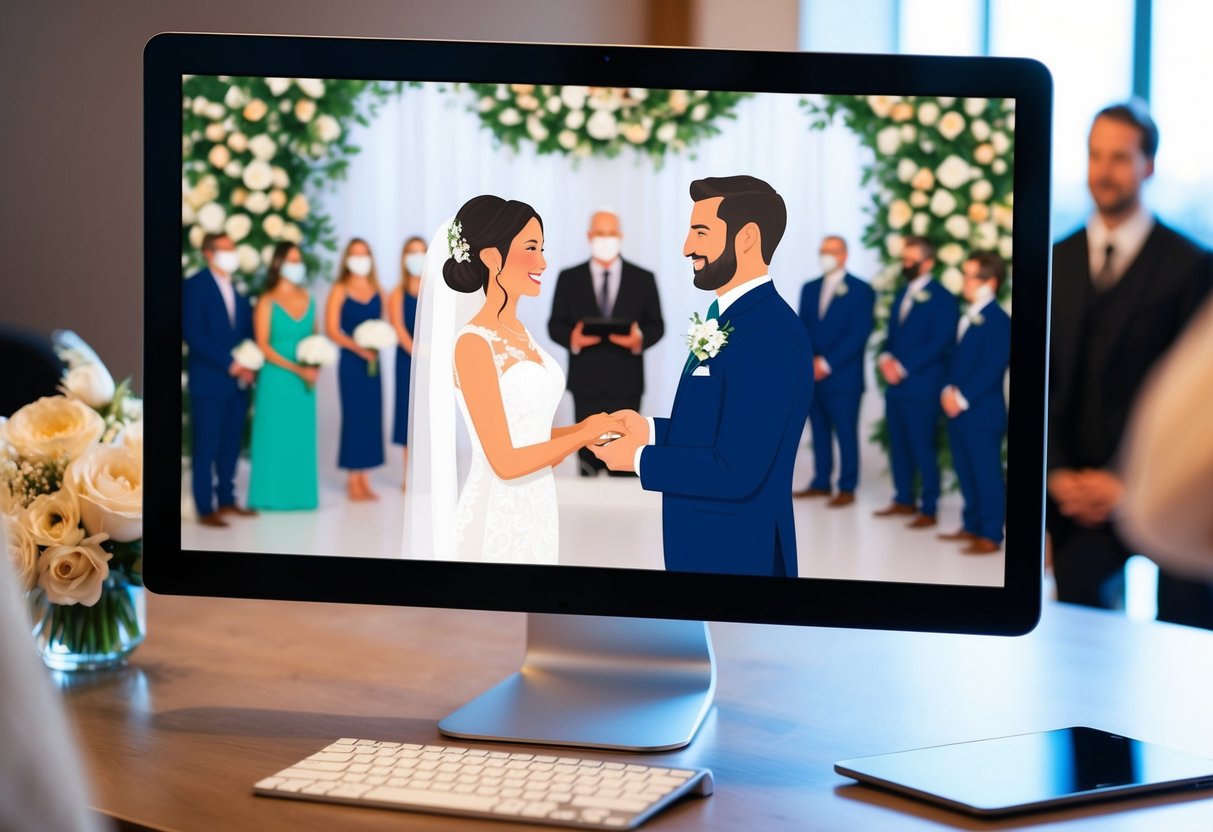
When planning your virtual wedding, it’s essential to understand the legal requirements involved. This includes knowing your state’s marriage laws and ensuring you obtain the proper documentation.
Understanding Marriage Laws
Each state has different marriage laws that dictate what is required for a legal marriage. You should start by checking if your state recognizes virtual ceremonies. Some states require in-person attendance, while others allow a video conference with an officiant.
Key items to review include:
- Legal Age: Ensure both parties meet the age requirements.
- Residency: Some states have residency requirements for marriage.
- Officiant: Confirm that your officiant is licensed to perform ceremonies in your state.
Researching these details will help you plan without legal hiccups.
Obtaining the Marriage License
Getting a marriage license is a crucial step in your virtual wedding planning. Most counties allow you to apply for a license online or in person. Here’s what you typically need:
- Identification: Bring a valid photo ID, such as a driver’s license or passport.
- Application Fee: Be prepared to pay a fee, which varies by location.
- Documentation: Depending on your state, you may need to provide additional paperwork, like proof of residency or divorce decrees if applicable.
After obtaining your license, remember to check if there are any waiting periods before the ceremony. This step is vital to ensure your wedding is recognized legally.
Crafting the Virtual Experience

Creating a virtual wedding experience is all about personal touches and thoughtful planning. You want your guests to feel included and excited, even if they can’t be there in person. Here are key elements to consider for your virtual celebration.
Designing Invitations and a Wedding Website
Start with eye-catching virtual wedding invitations. These should reflect your wedding theme and include all the essential details, like date, time, and access links for the livestream. Services like Canva or Paperless Post offer customizable templates to make this easier.
Don’t forget to create a wedding website. This can serve as a hub for everything your guests need to know. Include information about your love story, a schedule for the day, and links to join the ceremony. Adding a virtual guest book feature can allow guests to leave messages and photos, creating a keepsake for you.
Managing the Virtual Guest List
Managing your guest list is crucial. Decide how many virtual participants you want. This might depend on the platform you choose to host your wedding. Make sure to collect email addresses for sending out your virtual invitations.
Creating an RSVP system helps you keep track of who will attend. You can use tools like Google Forms or Eventbrite for this purpose. Always follow up with guests as the date approaches to confirm attendance and to send any last-minute details they might need.
Setting a Dress Code for Remote Guests
A dress code adds a fun element to your virtual wedding. It can set the mood and help your guests feel part of the celebration, even from afar. Decide if you want a formal, casual, or themed dress code.
Communicate this clearly in your wedding invitations. You might suggest colors or styles that match your wedding theme. Encourage guests to share their outfits on social media and tag you. This gives everyone a sense of community, connecting your virtual guests even more.
Celebrating Virtually
Planning a virtual wedding can be both exciting and unique. You can connect with loved ones while celebrating your special day from anywhere. To make the most of it, consider how to organize the ceremony, involve your wedding party, and use interactive features to engage guests.
Organizing the Virtual Ceremony
First, pick a reliable platform for your virtual ceremony. Options like Zoom or Remo can host your event with ease. Select a backdrop that reflects your style and decor. Don’t forget to include floral arrangements to create a beautiful environment.
Make sure to test your equipment before the big day. Check your internet connection, camera, and microphone. You want to ensure everything runs smoothly. Create an agenda for the ceremony and share it with your guests. This way, everyone knows what to expect.
Coordinating the Wedding Party
Involve your wedding party in your virtual celebration. Assign roles to each member, such as welcoming guests or reading special messages. A microwedding can be an excellent way for a small group to celebrate while others join online.
Encourage your wedding party to dress up for the occasion. This adds to the festive mood, making it feel more like a traditional wedding. To personalize the experience, create a shared wedding album where everyone can upload photos from the event.
Interactive Features and Livestreaming
Using interactive features can make your online wedding more engaging. Live polls or Q&A sessions that allow guests to participate are great options. You might also host a virtual toast during the reception, where everyone can raise a glass to your love.
Consider a livestream of your ceremony for guests who can’t attend. Announce a specific time for everyone to log in and watch. It adds excitement to the event. You could even have a digital wedding cake cutting, allowing guests to enjoy their treats at home while you celebrate together.