
How to Write Bride and Groom Name on Wedding Invitations: A Simple Guide
When you create your wedding invitations, getting the names of the bride and groom right is key. You should note that the bride’s name traditionally comes first on the invitation, followed by the groom’s name. This simple guideline ensures that your invitations follow traditional etiquette while reflecting your personal style.
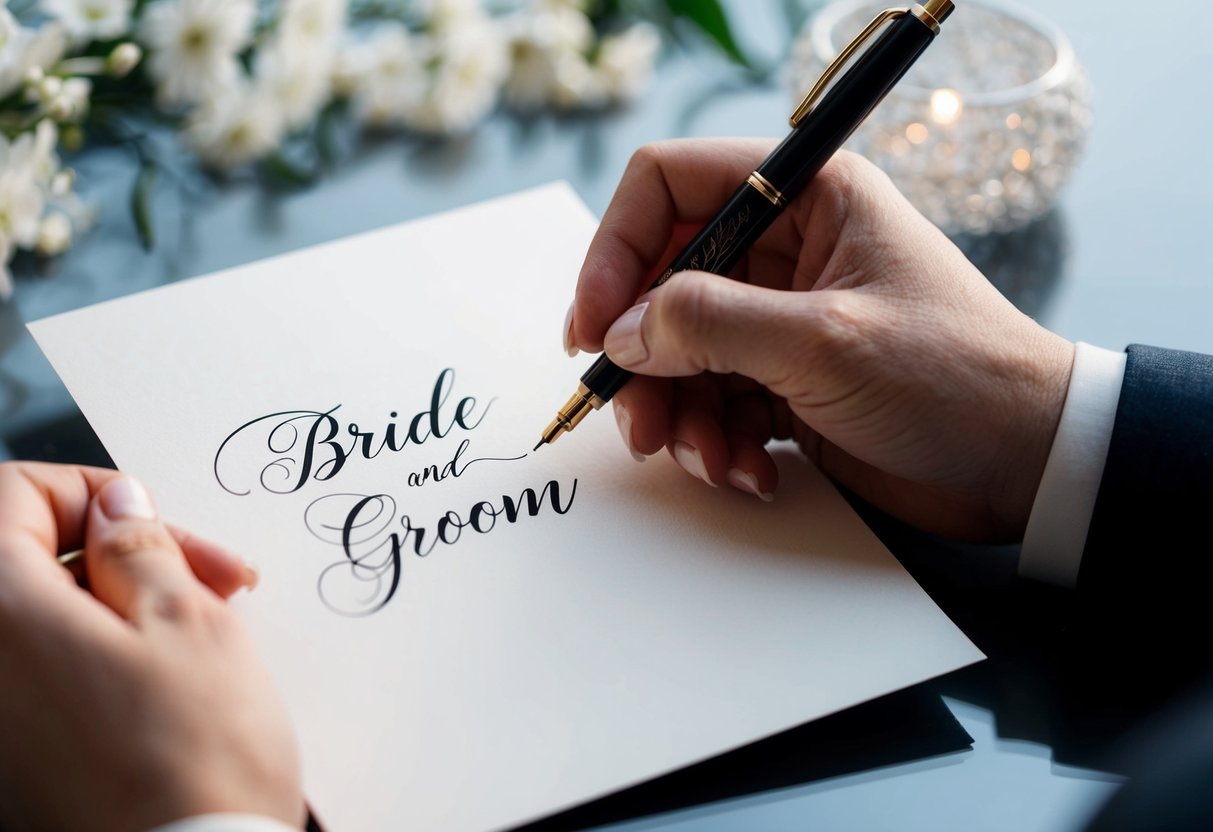
If you want your invitations to look polished, consider including the full names of both parties. You can also personalize it by deciding how to list the names based on your preferences or family traditions. Understanding these details will help you craft perfect wedding invitation wording that everyone will appreciate.
As you prepare to invite your guests, remember that the way you present the bride and groom’s names sets the tone for your special day. From casual to formal, knowing the right format will make your wedding invitations shine.
Understanding Wedding Invitation Etiquette
When crafting your wedding invitations, it’s essential to know the etiquette around naming the bride and groom. This section will guide you through the traditional customs and modern approaches to help you create a perfect invitation.
Navigating Traditional vs. Modern Invitations
In traditional wedding invitations, the bride’s name often comes first. This stems from the idea that her family is hosting the wedding. For formal weddings, use the bride’s first and middle names, followed by the groom’s full name.
If you’re breaking tradition, you can list names differently. For example, some modern couples prefer to use both names in alphabetical order or create a more equal representation. Ultimately, it’s up to you and what feels right for your celebration. Just remember, the choice should reflect your personalities and the tone of your wedding.
Decoding the Host Line
The host line is crucial as it indicates who is inviting the guests. For formal invitations, mention the parents of the bride or groom, depending on who is hosting. You might write “Mr. and Mrs. John Smith” for the bride’s parents.
If you and your partner are hosting, use both of your names. For example, “Together with their families, Emily Johnson and Michael Brown request the honor of your presence.” For informal weddings, you might forget titles and use first names. The key is clarity, so guests know who to thank and celebrate.
Crafting the Perfect Invitation Wording

When writing a wedding invitation, it’s important to get the names and details just right. You’ll want to ensure that the wording is clear and reflects the couple’s style. Pay attention to how you address the couple, incorporate the wedding date and time, and include the request to attend along with reception details.
Addressing the Couple
Start by listing the names of the couple. Traditionally, the bride’s name comes first, followed by the groom’s name. For example, you can write “Emily Johnson and Michael Smith.” If it’s a same-sex couple, simply list their names as desired.
You can also consider how the couple wants to be addressed. If they prefer a more casual tone, you might use “Emily and Michael request the honor of your presence.” This sets the tone for the invite.
Tip: Use full names for more formal invitations. For casual ones, first names may work just fine.
Incorporating the Wedding Date and Time
The date and time of the wedding should come next. Write the date clearly to avoid any confusion. For example, you can say, “Saturday, the 15th of May, 2025.”
For the time, you can phrase it as “at 3:00 in the afternoon.” Combining these details helps guests understand when to celebrate.
Example: “Join us on Saturday, May 15, 2025, at 3:00 PM.”
Remember, clarity is key here. Avoid any abbreviations, and spell out the month to keep it formal.
Request to Attend and Reception Information
Next, make a clear request for guests to join the celebration. A simple phrase can be, “You are cordially invited to celebrate our union.”
If there’s a reception after, include that detail too. For instance, you could add, “Reception to follow at The Rose Garden.” This informs your guests of what to expect after the ceremony.
Make sure to include any important notes, like “Please RSVP by May 1,” to confirm their attendance.
Design Elements and Additional Details

When planning your wedding invitation, pay attention to design elements and additional details that help convey your style and set the tone for your special day. The right choices will not only reflect your personalities but also guide your guests in understanding what to expect.
Selecting the Right Invitation Design
Choosing the right design for your wedding invitations is key. Think about the theme of your wedding. Is it formal, rustic, or modern? This decision will guide your color scheme, fonts, and overall style.
Monograms can add a personal touch. You might consider using the couple’s initials creatively. This small detail can make your invites feel special.
Include the ceremony venue prominently. Make sure it’s easy to read. Use fonts that match the invitation style but are legible.
Incorporate elements such as florals or patterns if they align with your theme. Consistency in design helps create a polished look for your invites and all related stationery.
Inclusion of RSVP and Dress Code
Don’t forget to include an RSVP card with your invitations. This allows guests to confirm their attendance, helping you plan accordingly. Specify if guests should respond by a certain date.
Your RSVP card can also include meal choices, if applicable. This makes it easier for you to coordinate with your caterer.
If you have a dress code, mention it clearly. Whether it’s formal, semi-formal, or casual, providing guidance will keep guests informed. A simple line, like “Black tie encouraged,” helps set expectations.
Including reception information on the invite helps guests plan better. If the venue is different from the ceremony, clearly state this near the RSVP details to avoid confusion.
Pre and Post-Wedding Communication
Effective communication before and after your wedding is key to keeping your guests informed and engaged. Using tools like save-the-date cards and wedding websites can make sharing wedding details easy and enjoyable.
Sending ‘Save-the-Date’ and ‘Thank-You’ Cards
Sending out save-the-date cards is an early way to let your guests know about your wedding date and location. These cards should be mailed out about six to eight months before your wedding. Include essential details such as the date, general location, and a note that a formal invitation will follow.
After your wedding, sending thank-you cards is a thoughtful way to show appreciation. Aim to send these cards within three months of your wedding day. Personalize each card by mentioning the specific gift or contribution. This adds a personal touch that friends and family will cherish.
Creating a Wedding Website
A wedding website is a modern tool that can simplify your planning process. It serves as a central hub where guests can find all necessary information.
Include details like the wedding location, travel accommodations, and a schedule of events.
Make your website engaging and user-friendly. Use beautiful images and a clear layout.
You can also add a section for guest accommodations and registry information. This way, everyone invited can stay informed and connected to your wedding journey.