
Industrial Wedding Venues Florence: Italy Options and Planning
You can create an industrial-style Florence wedding, though dedicated warehouse venues are less common than historic halls and villas. When you search “industrial wedding venues Florence,” consider spaces with brick, stone, metal details, or generous open rooms that let you shape the look with lighting and décor.
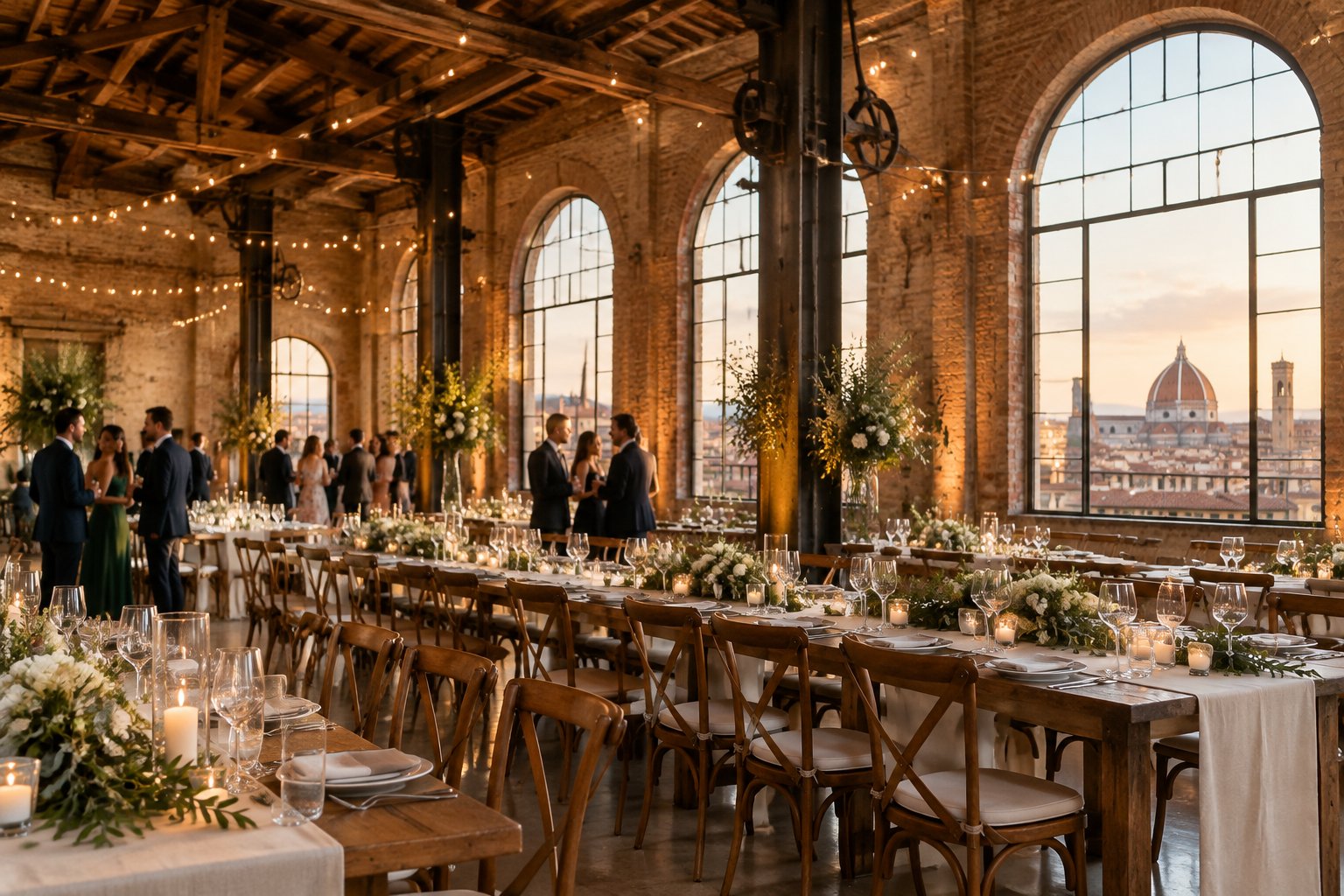
A Florence wedding gives you city art and architecture, while an Italy wedding in the surrounding hills brings a quieter pace and more outdoor space. You can also blend both into a Tuscan wedding weekend.
Start by saving a few city and countryside options, then ask each venue which rooms you can style for your celebration.
Are Industrial Wedding Venues Common in Florence?
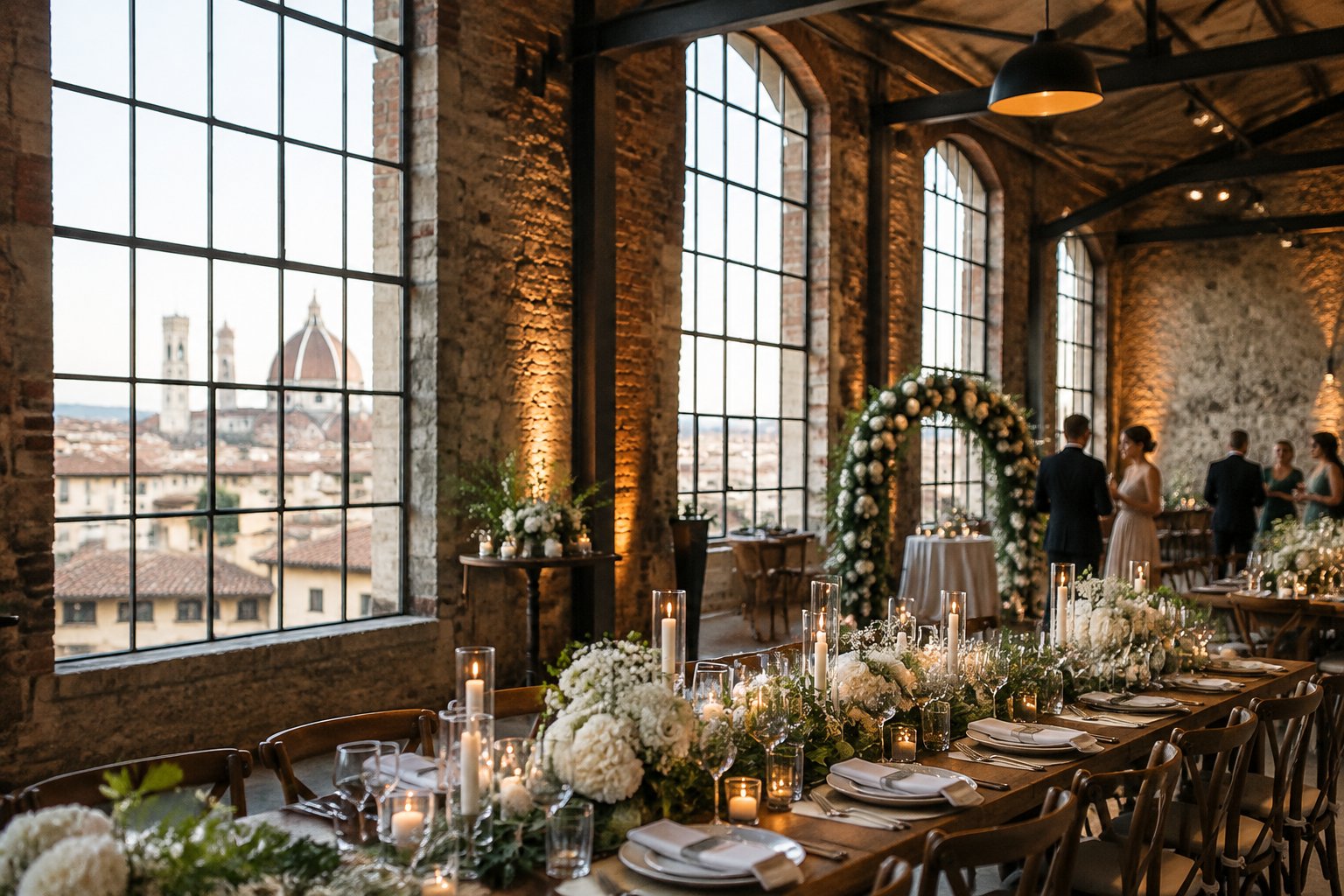
Purpose-built industrial wedding venues are less common in Florence than historic palazzi, villas, and other traditional spaces. You can still create an industrial mood by choosing an adaptable interior and building the look through tables, lighting, and décor.
What Does “Industrial” Mean for a Florence Wedding?
For a wedding in Florence, “industrial” can describe a room with exposed brick or stone, visible beams, metal fixtures, and a simple, open layout. A former workshop or warehouse could offer those features, while a historic building may provide just one or two of them.
Ask for current photos of the rooms available for your date. Check whether the space has enough power for your lighting plan and enough room for dinner, dancing, and guest movement.
Long tables, dark metal accents, and warm bulbs can add an industrial feel without hiding the building’s character. For more styling options, browse these industrial wedding table decoration ideas.
How Does Florence, Italy Differ From Florence, Alabama?
Florence, Italy, is a historic Tuscan city with Renaissance architecture and nearby countryside estates. Florence, Alabama, is a separate U.S. city with its own local venues and travel considerations.
Check the city and country on every listing before you contact a venue, especially when your search results mix both locations.
Can Historic Spaces Deliver an Industrial-Inspired Look?
Yes. A large hall with exposed masonry, timber beams, or a restrained color palette can support an industrial-inspired design, even when the building itself is historic.
Let existing details set the tone, then add modern fixtures and clean-lined furniture. Ask the venue which décor can be attached to walls or ceilings and what setup rules apply.
Which Florence-Area Venues Suit an Industrial-Inspired Wedding?
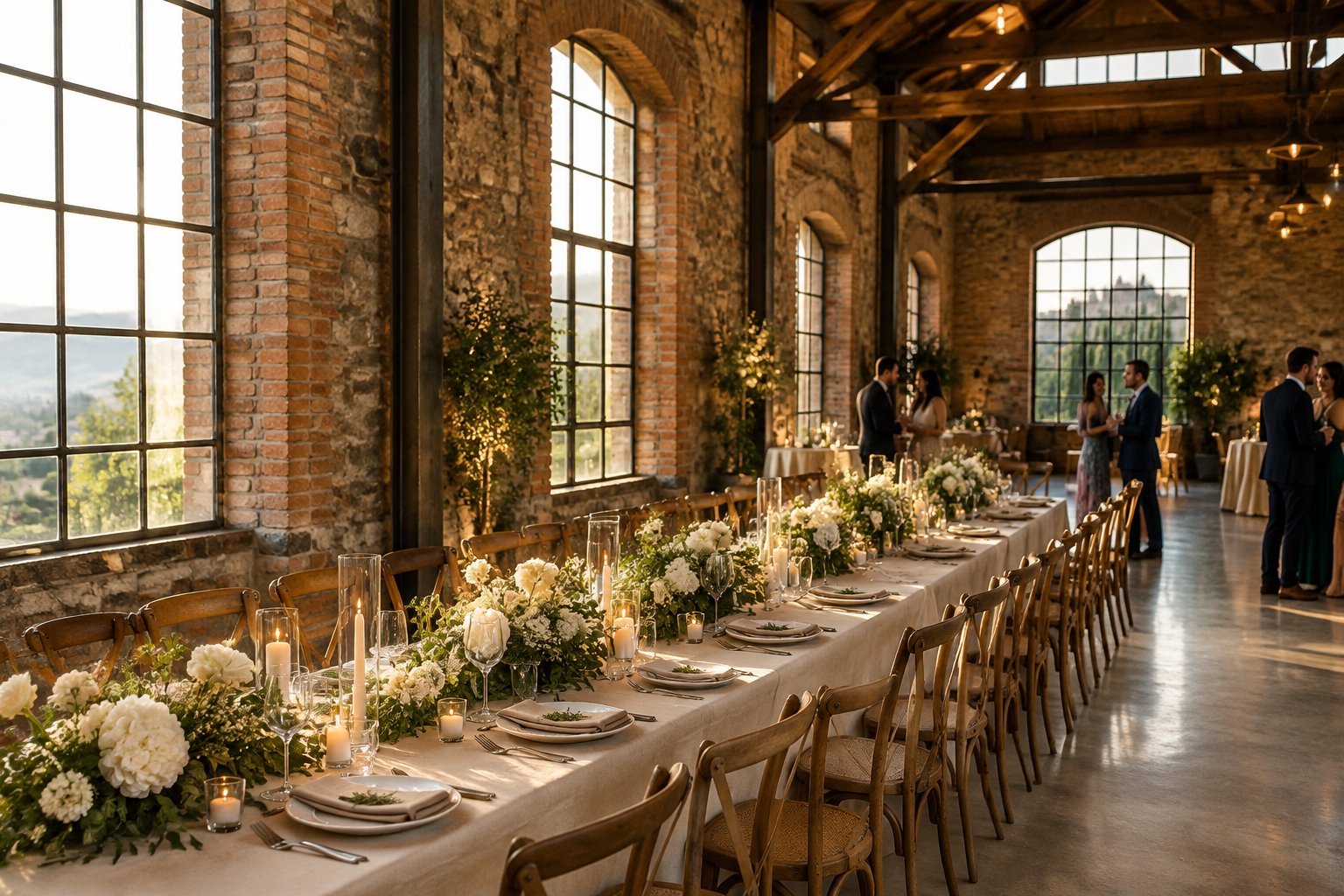
For an industrial-inspired celebration, compare city interiors with villa and estate venues, then focus on the spaces that offer a flexible layout. The names below give you a starting shortlist, while a site visit helps you judge the room, access, and styling rules for your own event.
What Should You Look for in a City Venue?
Look for open rooms with visible architectural details and enough space to create distinct dinner and dance areas. Ask for the seated guest capacity, the room’s dimensions, and the furniture included in the rental.
If your design relies on overhead lighting or hanging décor, confirm the venue’s installation rules before you book.
A city venue can also simplify guest plans when your group is staying in central Florence. Browse broader wedding venue ideas as you compare layouts and styles, then make a list of questions for each property.
Which Villa and Estate Venues Offer a Contrasting Style?
Villa Castelletti, Villa Dianella, Villa di Striano, Villa di Maiano, Villa Gamberaia, Villa Le Fontanelle, Villa Cora, Villa Tolomei, and Villa Medicea di Lilliano are names to consider as you explore the Florence area. These villa and estate settings bring a different backdrop from an urban industrial room, with historic architecture and grounds shaping the atmosphere.
Treat each as a venue to inquire about, not as a confirmed match for an industrial design. Ask which indoor rooms are available, whether the reception can move indoors in poor weather, and what furniture or lighting the venue supplies.
You can compare these options with other best wedding locations in Italy as you set your priorities.
How Can Lighting and Décor Add an Industrial Edge?
Use lighting to give a historic or neutral room a more contemporary character. Warm bulbs, simple metal candleholders, and uncluttered table settings can bring out brick or stone without competing with it.
Ask whether the venue allows freestanding fixtures, candles, or rented furniture, and get any restrictions in writing.
Would a City Ceremony or Tuscan Estate Fit Better?
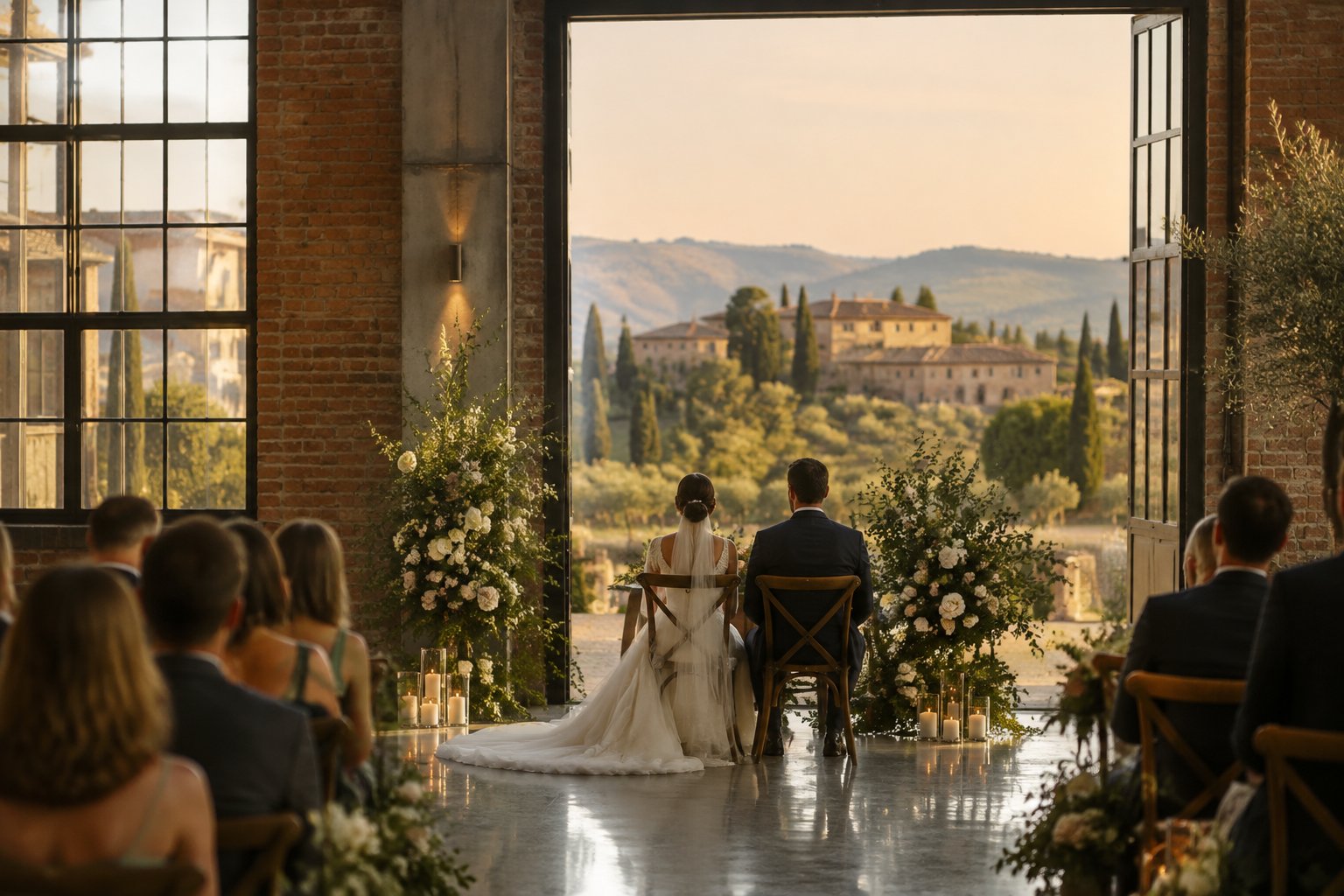
A city ceremony suits you if you want Florence’s civic and historic setting close at hand, while a Tuscan estate gives your celebration more room to unfold outdoors. You can also hold a city ceremony and host dinner at a separate reception venue, provided you plan enough time and transport between locations.
What Is a Ceremony at Palazzo Vecchio Like?
Palazzo Vecchio offers a formal civic setting in the heart of Florence. The Sala Rossa is one of the rooms used for civil ceremonies, with richly colored furnishings that make a strong contrast with a modern reception design.
Confirm current ceremony arrangements, guest limits, dates, fees, and paperwork with the city before making plans.
After the ceremony, the Ponte Vecchio and the Arno River can provide memorable city backdrops for a walk or photographs. Check access and timing with your planner, since public spaces have their own visitor flow and rules.
Can You Pair a Historic Ceremony With a Modern Reception?
Yes. You can hold a ceremony in a historic civic room, then move to a reception space where contemporary lighting and table design set a different mood.
Build in time for guest transfers and photographs, and share the full schedule with your transport provider. If you are planning a civil ceremony, confirm what the venue is authorized to host and whether your ceremony is legally binding or symbolic.
These civil wedding ideas can help you think through the ceremony format and guest experience.
What Do Gardens and Countryside Settings Offer?
Gardens and countryside venues give you outdoor space and a slower event pace. Boboli Gardens and other Italian gardens offer a formal green setting, while estates such as Castello del Trebbio, Podere La Specola, Le Fonti a San Giorgio, Villa La Palagina, Castello Lapi Goretti Miniati, Fattoria di Corsignano, Villa Pozzolo, and Castellare di Tonda offer countryside alternatives to a city reception.
Ask each property about event spaces, travel time, accommodation, and ceremony permissions. A garden ceremony also needs shade, accessible paths, and a nearby indoor option for changing weather.
What Should You Check Before Booking?

Before you pay a deposit, confirm guest access, backup spaces, and the venue’s rules for vendors and music. A Florence wedding planner can help you check details across the venue, ceremony site, and transport plan.
Use a destination wedding checklist to keep those decisions in one place.
How Will Guest Access and Transport Work?
Map the route from your guests’ hotels to the venue, including drop-off points and the return trip after the reception. Florence’s historic center has restricted-traffic areas, so ask how vehicles, shuttles, and suppliers can reach your location.
Give guests clear transport instructions before they arrange a rental car. For an estate outside the city, ask about road conditions, parking, shuttle space, and the drive time after dark.
Check those details against your guest list, including anyone who needs step-free access.
What Indoor and Outdoor Backup Spaces Are Available?
Get the rain plan in writing and ask how many guests it can hold for the ceremony and seated dinner. Check whether the backup room uses the same tables, lighting, and service setup as your first choice.
For an outdoor event, ask about shade and the time staff need to move everything indoors.
Which Venue Rules Affect Vendors, Music, and Setup?
Ask which vendors you can bring, when they can enter for setup, and when the room must be cleared. Confirm rules for amplified music, candles, hanging décor, and late-night events before you finalize your design.
For popular dates, use this guide on when to start booking wedding details to organize your timeline.
How Can You Shape the Guest Experience?
You can make your wedding feel welcoming by pairing Tuscan cuisine with a clear travel plan and time for guests to enjoy the city or countryside. For a Tuscany wedding, share the schedule and local transport details early so guests can plan their stay with confidence.
How Can Tuscan Cuisine Complement a Contemporary Setting?
Tuscan cuisine can bring a warm, regional feel to a clean-lined or industrial-inspired room. Ask your caterer about seasonal menus, local wines, and dishes that work well for your chosen service style.
These Italian wedding ideas can help you connect food, table design, and local traditions. If your reception includes outdoor dining, check the venue’s service plan for changing weather and evening temperatures.
Explore outdoor dining ideas for a wedding as you decide on table layout and lighting.
What Nearby Attractions Can Guests Enjoy?
Florence gives guests access to historic streets, museums, gardens, and cafés between wedding events. Share a short list of nearby places and practical notes, such as walk times or meeting points, so guests can choose what suits their schedule.
More ideas for keeping guests engaged at a destination wedding can help you plan optional group activities.
How Can You Balance City Time With a Countryside Stay?
Give guests a clear home base for each part of the weekend. A city stay works well for guests who want walkable sightseeing, while a countryside stay offers more time at the estate and its grounds.
If your events use both settings, arrange transport between them and share pickup times, addresses, and return plans in one message.