
Industrial Wedding Venues for Small Weddings: Intimate Picks
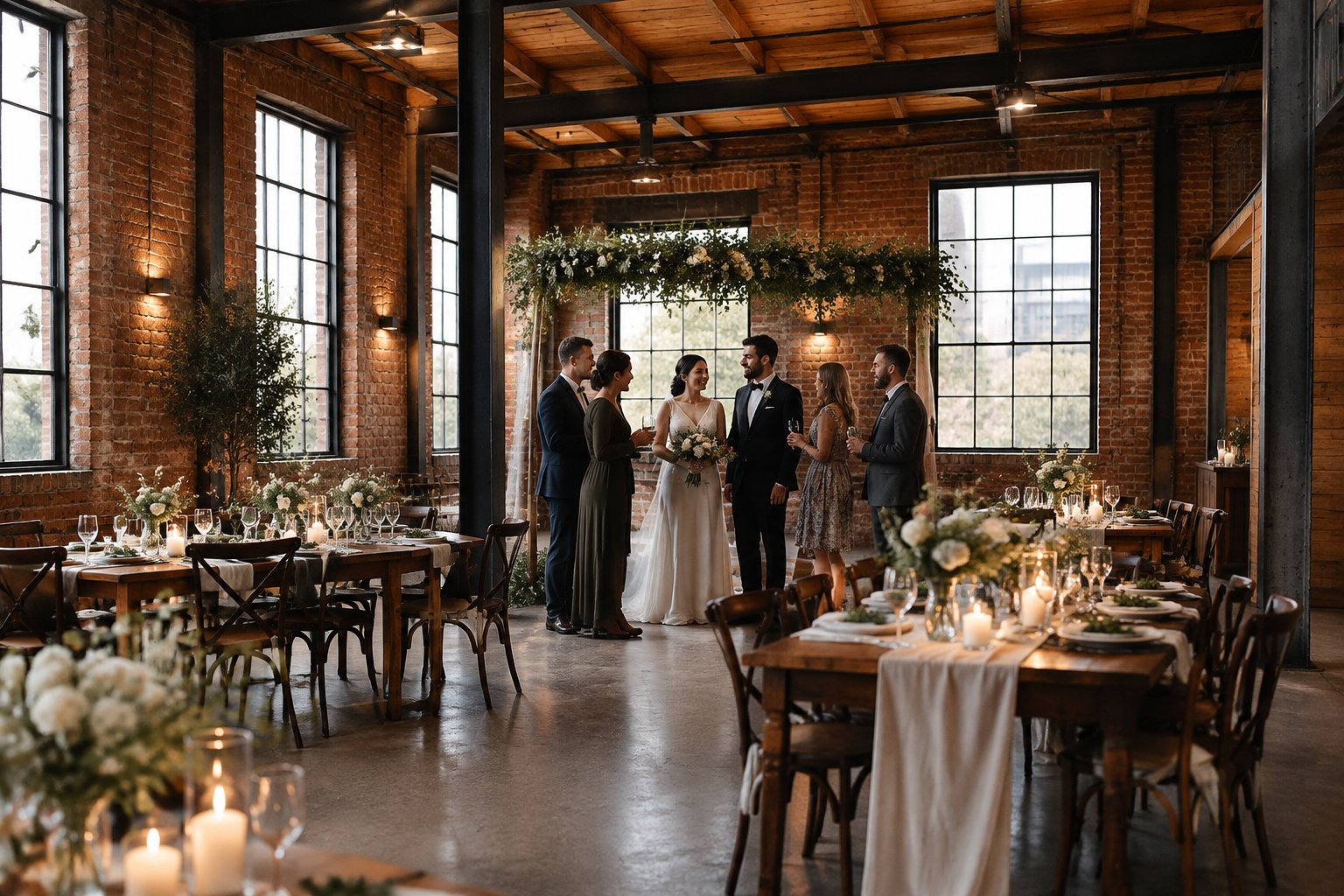
An industrial wedding venue can give your small celebration a memorable setting without requiring a large guest list. Industrial wedding venues for small weddings work best when the event space feels comfortable at your guest count and its architectural details help set the mood. A loft, converted warehouse, or restored factory can bring character to your industrial wedding while giving you room to shape the celebration around the people closest to you.
Your guest count, floor plan, and venue policies will help you narrow your choices. As you start comparing spaces, save the ones that fit your style and ask each venue for a sample layout built around your reception plans.
What Makes an Industrial Venue Work for a Small Wedding?
An industrial venue suits a small wedding when its scale, layout, and original features give your guests room to gather comfortably. A loft or converted warehouse can feel intimate with a focused seating plan and a few carefully chosen design details.
How Do Loft and Warehouse Spaces Feel More Intimate?
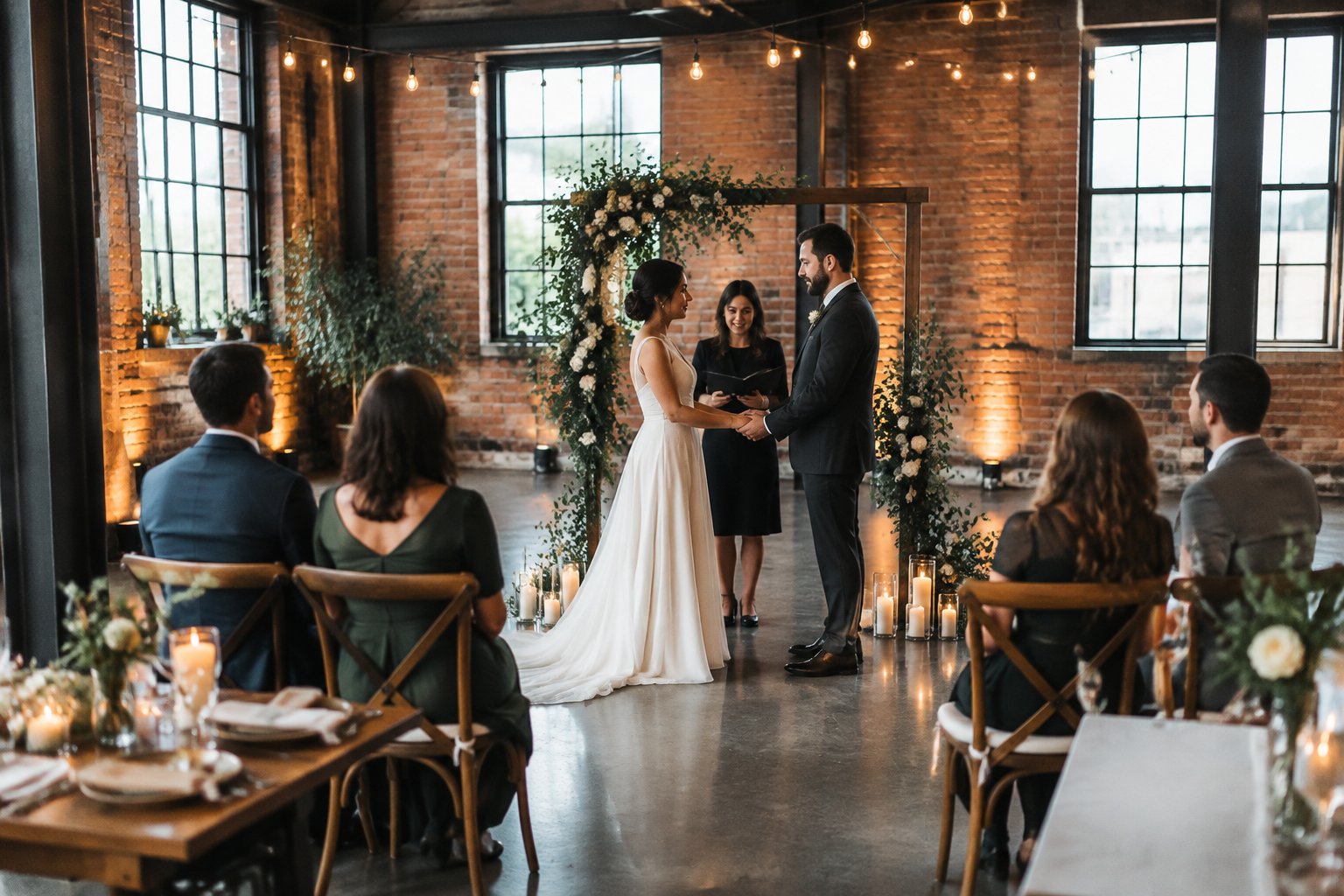
You can make a spacious warehouse wedding feel close-knit by setting up only the areas you plan to use. Arrange seating near the ceremony focal point, then create a dining area where guests can talk easily across the table. A smaller guest list also gives you room to leave clear paths and comfortable space around chairs.
A loft with large windows may feel bright and open during the day, while a smaller room or defined corner can make dinner feel cozy. When you tour, consider how the room looks with tables, chairs, and a dance floor in place. A venue’s empty-room capacity does not tell you how comfortable your planned layout will feel.
If you are deciding how many guests to invite, review what is classed as a small wedding as a starting point, then set a number that fits your plans.
Which Industrial Details Set the Scene?
Exposed brick, steel beams, and high ceilings give an industrial wedding venue a built-in sense of place. Large windows can bring in natural light for a daytime event, while concrete floors provide a simple backdrop for colorful florals, wood tables, or soft fabrics.
Look at which features will show in your ceremony and reception spaces. A brick wall can frame the vows, and a row of beams can help guide the eye toward the dining area. These details give you a strong foundation for decor while keeping the room’s character visible.
Which Venues Suit a Smaller Guest List?
The best venue candidates are those that can show you a layout suited to your guest count, meal style, and event flow. Treat the names below as a starting list, then ask each venue about current availability, capacity, and rental details.
Brooklyn and New York City Options
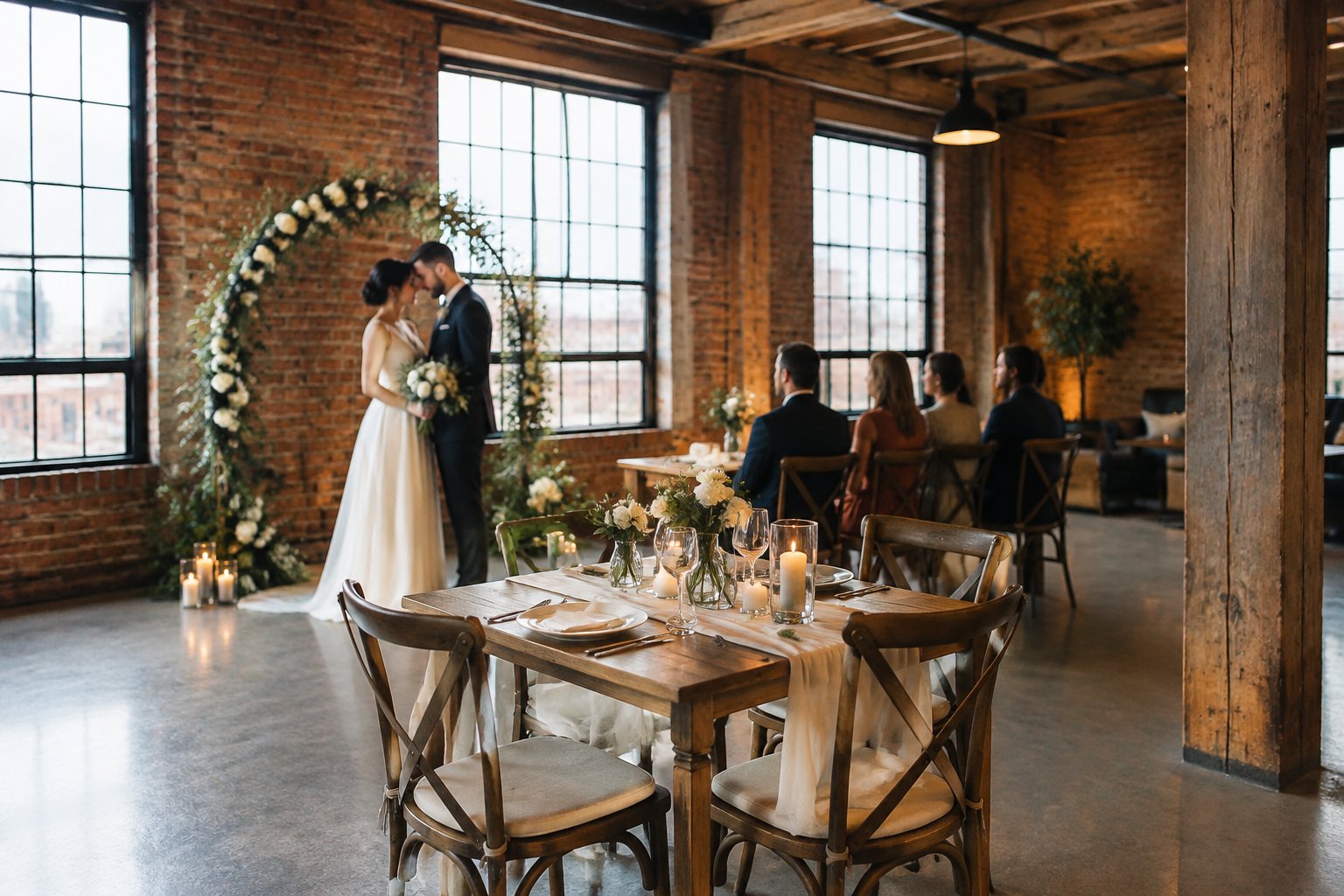
In New York City, The Green Building in Brooklyn and The Foundry are names to add to your search. Ask each venue how its rooms work for a smaller ceremony and reception, and whether you can see sample floor plans for your guest count.
Check how the space changes between ceremony and dinner. A room that feels inviting with a small group should give guests clear sightlines and easy access to their seats, bar, and restrooms. For more ideas to shape your celebration, browse wedding ideas for small weddings.
San Diego and Southern California Spaces
Moniker Warehouse in San Diego, California, is one option to research in Southern California. Ask about the room or event area available for your date, since the usable space and setup can shape whether a venue feels right for an intimate reception.
Compare the guest experience as well as the visual style. Find out how parking, arrival, and indoor transitions work, especially if guests will be traveling from different parts of the region.
Minneapolis, Seattle, and Other City Picks
For Minneapolis, look into Aria, The Century, and The Unique Space. In Seattle, Sodo Park and The Loft are options to investigate. You can also add Bloc and Mt. Washington Mill Dye House to a broader city search.
Ask for the seated dinner capacity, ceremony capacity, and a layout that includes your planned tables and dance area. To compare more options by style and setting, explore these wedding venue ideas.
How Do You Choose the Right Capacity and Layout?
Choose a capacity based on your full reception setup, not the venue’s largest advertised number. Your guest count, dining format, dance floor, and service areas all affect how much usable room you need.
Match the Guest Count to the Room
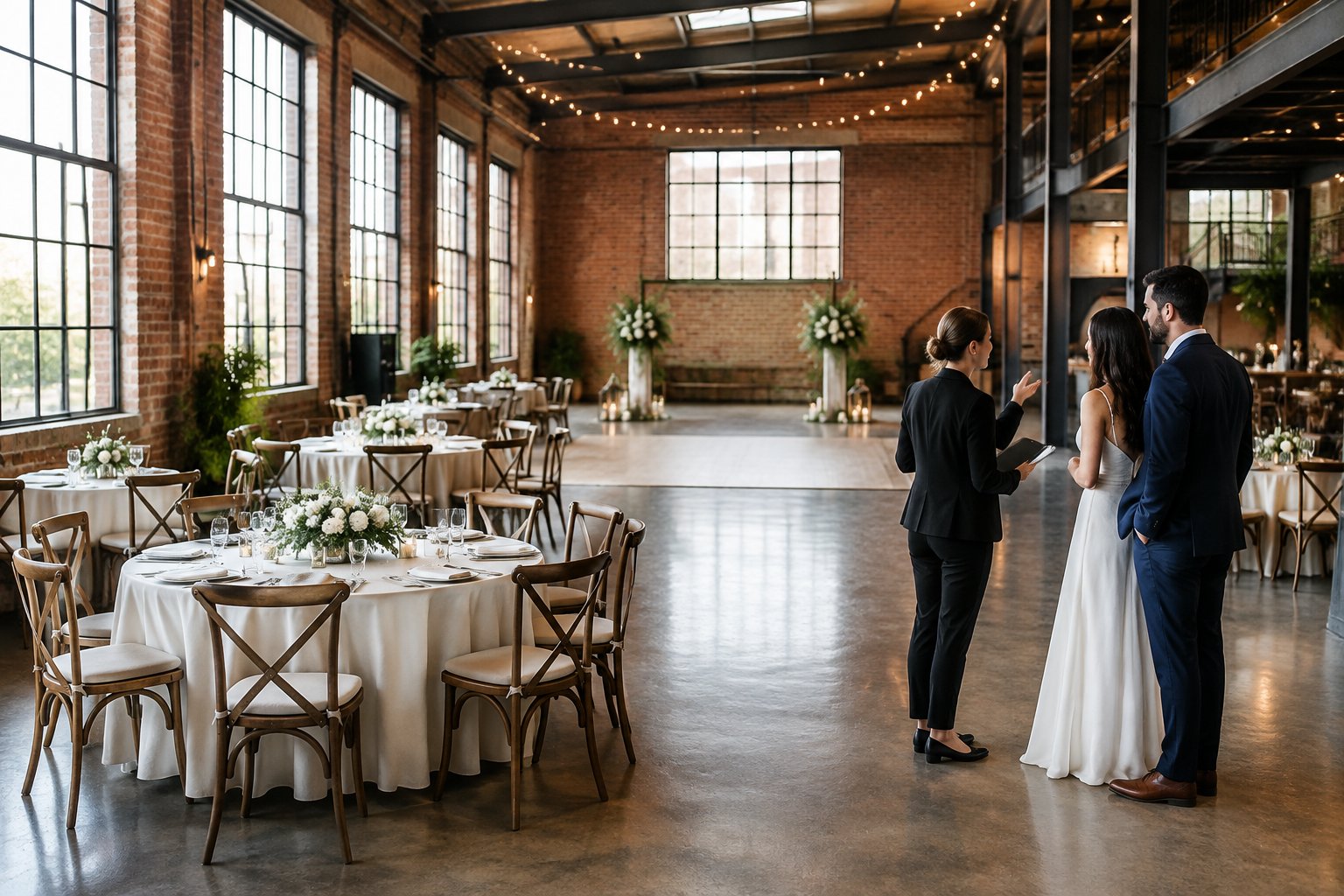
Ask the venue to show you a floor plan with your guest count and planned table style. Include the ceremony chairs, dinner tables, couple’s seats, bar, and dance floor if you plan to have one. This lets you see whether the layout gives guests enough space to move between areas.
A long table can make a small group feel connected, while smaller tables can suit a room with several distinct areas. Consider your guests’ comfort when choosing the arrangement, including how easily someone using a mobility aid can reach their seat.
A clear floor plan helps you coordinate the reception details, from table placement to entry paths. If you are new to the process, read about what a wedding layout includes.
Create Separate Zones Without Losing Intimacy
You can define ceremony, dining, and dancing areas with furniture placement, rugs, or lighting. Keep each zone close enough for guests to feel part of the same gathering, and leave open paths between the entrance, seating, and restrooms.
If your ceremony and reception share one room, ask how the venue handles the room reset and where guests can spend that transition. A simple plan for moving chairs and tables keeps the event flowing and helps you avoid crowding one part of the room.
How Can You Make a Raw Space Feel Warm and Personal?
Warm materials, personal details, and thoughtful lighting soften an industrial venue while preserving its character. Use the exposed brick, concrete floors, steel beams, large windows, and natural light as parts of your design plan.
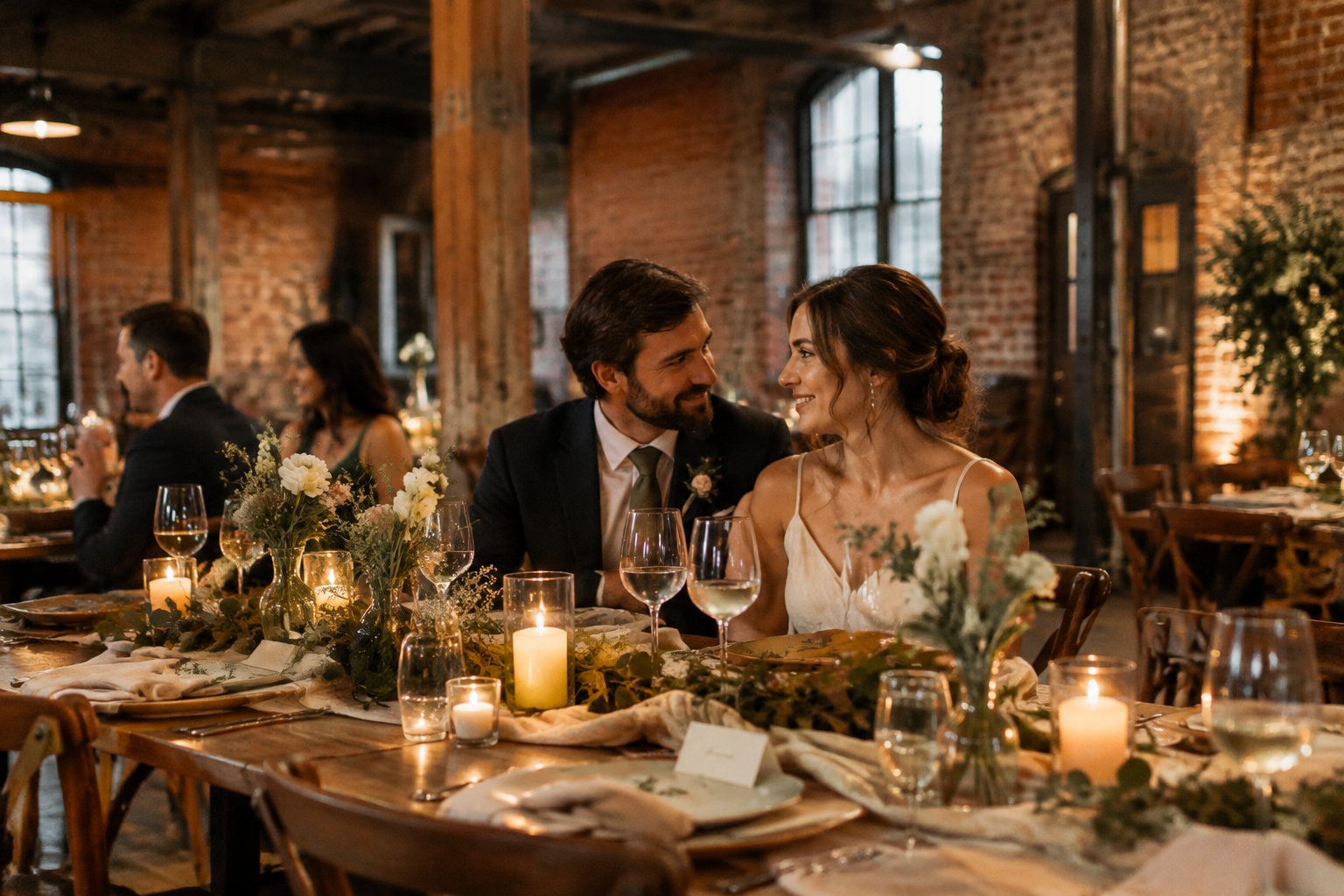
Balance Brick, Concrete, and Metal With Soft Details
Pair exposed brick and steel beams with fabrics, flowers, and natural textures. Soft linens on concrete flooring bring warmth to the tables, while greenery can add color against brick or metal. Choose a few key materials and carry them across the ceremony and reception areas for a pulled-together look.
Your table design can add warmth without hiding the venue’s details. Consider low centerpieces that keep conversation easy, then bring in candles or small personal touches where venue rules allow. Find more ideas for industrial wedding table decorations.
Use Lighting and Décor to Define the Celebration
Plan the lighting around the way you will use the space. Natural light from large windows can brighten a daytime ceremony, while warm lamps, candles, or approved string lights can help set a softer mood later. Ask the venue which fixtures and hanging points you can use before choosing décor.
You can also use lighting to make each area easy to recognize. A focal light near the ceremony spot and softer light around dinner tables help guests follow the flow of the event. For a room with few built-in details, ways to decorate an empty room for a wedding can help you plan without overfilling the space.
What Should You Check Before Booking?
Before you book, confirm that the venue’s minimums, total costs, guest access, and included services fit your plans. A site visit and a written breakdown of the terms help you compare industrial wedding venues with confidence.
Ask About Minimum Guest Counts and Rental Costs
Ask whether the venue has a minimum guest count, food or beverage spend, or rental fee. Request an itemized estimate that shows what the base price includes and which charges apply for staffing, setup, cleanup, or extra rental time.
Check the payment schedule and cancellation terms before you sign. Confirm how many hours your booking includes for vendor setup and breakdown, and ask what overtime costs. If you are planning a weekday or off-season wedding, ask whether the venue offers different rates for those dates.
Confirm Catering, Accessibility, and Included Amenities
Ask whether you can choose your own caterer or need to use an approved team. Confirm what the venue provides, such as tables, chairs, sound equipment, or a getting-ready room, and ask which items require an additional fee.
Walk through the guest route from arrival to ceremony, reception, and restrooms. Check for step-free access where needed, available parking or transit options, and a clear plan for guests who may need extra support. Before you commit, get the answers and any promised services in writing.