
Is 14k or 18k White Gold Better for a Wedding Band? A Helpful Guide for Your Ring Choice
Choosing between 14k and 18k white gold for your wedding band can feel overwhelming, but it really comes down to your personal preferences and lifestyle.
If you want a ring that balances durability with a beautiful appearance, 14k white gold may be the better choice. It has a higher alloy content, making it more resistant to scratching and bending, which is great for everyday wear.
On the other hand, if you seek a richer gold color and higher purity, 18k white gold might be the way to go. It is made up of 75% gold and offers a softer shine that many find appealing. However, keep in mind that it can be more prone to damage, so it may require more care to maintain its beautiful look.
As you weigh your options, think about how you plan to wear your wedding band and what qualities are most important to you. Whether you lean towards the durability of 14k or the luxurious feel of 18k, you will choose a ring that symbolizes your commitment.
Understanding Gold Purity and Karat System
When choosing between 14k and 18k white gold for your wedding band, it’s important to understand gold purity and the karat system. This knowledge helps you make an informed choice based on your preferences and lifestyle.
Differences Between 14k and 18k Gold
The main difference between 14k and 18k gold is their purity. 14k gold contains 58.3% pure gold and 41.7% alloy metals. In contrast, 18k gold has 75% pure gold with only 25% alloy content.
This difference in gold content affects color, durability, and price. 18k gold often has a richer, deeper color due to its higher gold content. While 14k gold is more affordable and durable, making it popular for everyday wear.
If you’re looking for a balance between affordability and quality, 14k might be a good fit. 18k is ideal if you prefer a more luxurious feel and can accommodate a slightly higher price.
Role of Alloy Metals in White Gold
Alloy metals play a crucial role in creating white gold. Pure gold itself is a bright yellow color. To achieve a white hue, it is mixed with metals like nickel, palladium, or silver.
In 14k white gold, the alloy content includes around 41.7% alloy metals, which help increase strength and enhance the white appearance. 18k white gold, with only 25% alloy, offers a softer look but may be more prone to scratches.
The choice of alloy can also affect the metal’s color and durability. Some people may be sensitive to nickel, so it’s important to consider how you might react to different alloys. The right combination can make your wedding band beautiful and long-lasting.
Comparing Durability and Wearability
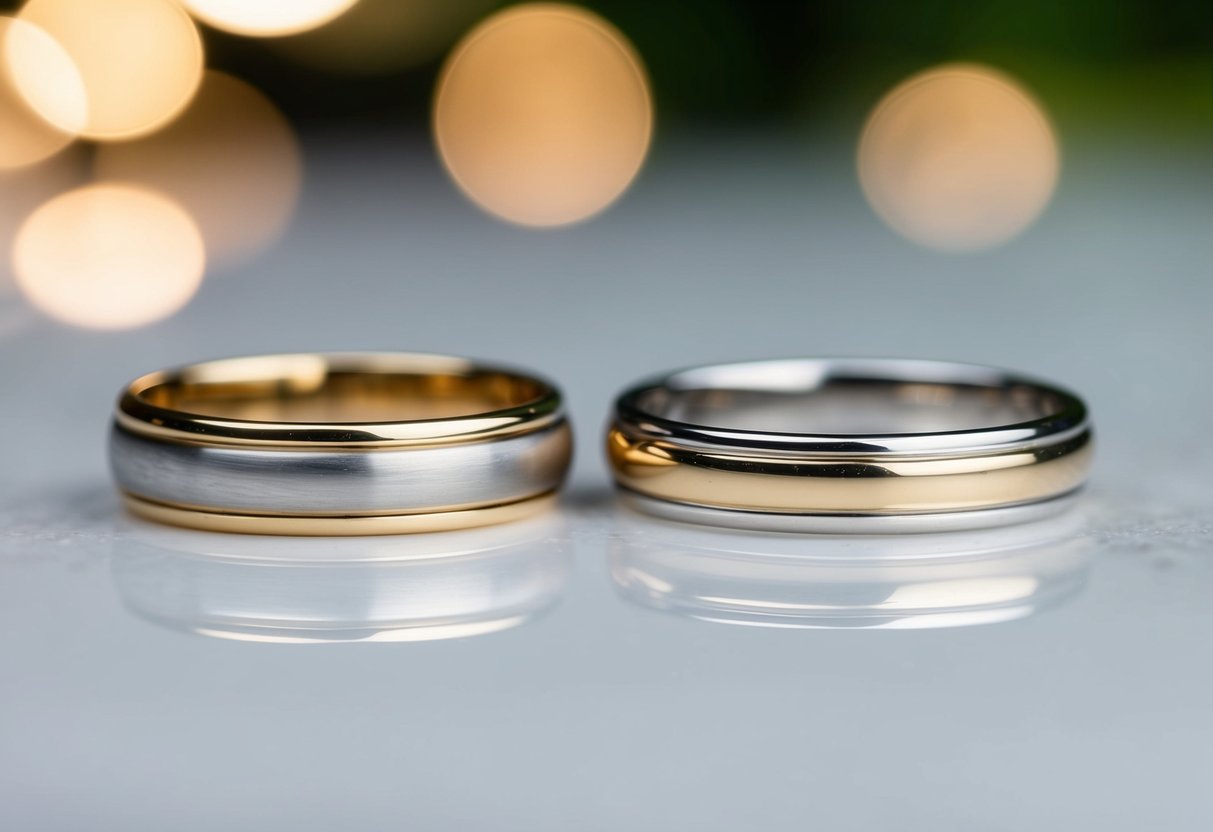
When choosing between 14k and 18k white gold for your wedding band, durability and wearability are key factors. Knowing how each option holds up in daily life can help you make the best choice for your needs.
Advantages of 14k Gold for Durability
14k white gold is a popular choice for engagement rings and wedding bands due to its strength. With about 58.3% pure gold, the remaining 41.7% consists of other metals, making it harder and more resistant to scratches. This durability is essential for everyday wear, especially if you lead an active lifestyle.
If you’re concerned about bending or damaging your ring during daily activities, 14k gold provides reliable protection. Its ability to withstand impacts and resist scratches means you can enjoy your ring without frequent worry. For those who may engage in activities that could damage softer metals, 14k is a smart choice that balances appearance and resilience.
18k Gold Wearability Concerns
While 18k white gold offers a richer gold content at about 75%, it comes with some drawbacks. Though it looks stunning, the higher gold level makes it softer. This means it is more susceptible to scratches, which can be a concern for everyday wear.
If you tend to use your hands a lot or lead an active lifestyle, your 18k wedding band may need more care. Regular cleaning and careful handling are necessary to keep its shine and beauty. You might find yourself more cautious and aware of your ring to avoid potential damage. This could impact your experience, especially if you want a ring that can endure daily wear without extra worry.
Aesthetics and Appearance Factors
When choosing between 14k and 18k white gold for your wedding band, color and shine significantly influence your decision. The differences in alloy composition and rhodium plating can affect how your ring will look and how well it maintains its appearance over time.
Influence of Alloy on Color and Shine
The alloy in white gold directly affects its color and shine. 14k white gold contains about 58.3% gold, mixed with other metals like silver and nickel. This results in a slightly less vibrant color compared to 18k white gold, which has 75% gold content. The higher gold percentage in 18k gives it a richer, warmer hue.
The alloy mixture also impacts durability. 14k is typically more durable and less prone to scratches. If you want a ring with a brilliant white shine, both options look great. However, 18k may require more care to keep its shine intact, especially in active lifestyles.
Rhodium Plating and Jewelry Appearance
Rhodium plating is a popular option for enhancing the appearance of white gold. This thin layer is applied to create a bright, shiny finish. It helps give white gold a polished, mirror-like look that many find appealing.
Both 14k and 18k white gold rings often receive rhodium plating. However, since 18k is softer, it might wear off more quickly. Regular maintenance, like re-plating, may be necessary to keep your ring looking its best.
Rhodium plating also protects against tarnishing. This means your ring will maintain its attractive appearance for longer, making it a worthy consideration when choosing your wedding band.
Cost and Value Considerations
When choosing between 14k and 18k white gold for your wedding band, cost and value are important factors. You’ll want to balance price with quality and durability while also considering any potential skin reactions.
Evaluating Price versus Quality
14k white gold is generally more affordable than 18k white gold. This is because 14k gold contains only 58.3% pure gold, while 18k gold is 75% pure. Since 18k gold has a higher gold content, it is usually priced about 20% higher.
Many people choose 14k gold rings for their lower cost, especially if you’re looking to save money without sacrificing quality. For example, a classic 14k wedding band might start at around $250, while the same design in 18k could be closer to $300 or more.
While 14k offers value and lowers the cost barrier, 18k gold can have a richer color and higher prestige. You’ll need to think about how much you want to invest in your wedding ring, weighing immediate costs against long-term value.
Allergic Reactions and Hypoallergenic Properties
When considering gold jewelry, you should think about potential allergies. Many 14k white gold pieces contain nickel, a common allergen that can cause skin reactions. This is especially important if you have a known nickel allergy.
On the other hand, 18k white gold often has a lower nickel content or may use alternatives like palladium, which can be more hypoallergenic. You may want to verify the alloy used in the specific ring you are considering.
Choosing hypoallergenic options means you can enjoy your fine jewelry without worry. If skin sensitivity is a concern, investing in 18k might provide added comfort and peace of mind.