
Is 3 Months Too Late to Send Out Wedding Invitations? Tips for Last-Minute Planning
Planning a wedding is exciting, but timing is crucial, especially when sending out your invitations. You might wonder if sending them out just three months before the big day is too late. The truth is, while it’s advisable to send out invitations earlier, three months can still give your guests enough time to make arrangements, especially for local weddings.

If your wedding is a short drive away, three months is often acceptable. However, you may want to consider your guest list and their travel needs. For destination weddings, aim for at least four to six months in advance to ensure everyone can join the celebration.
Understanding the right timing can help you avoid any last-minute stress and ensure a smooth planning process.
As you think about your wedding invitations, remember that clear communication is key. With a little planning, you can find the perfect balance to keep your guests informed and excited for your special day.
Understanding Wedding Invitation Timing
Timing is crucial when it comes to sending out wedding invitations. Knowing the best times to send your invites and understand the role of save-the-date cards can help ensure your guests have enough time to plan ahead.
Ideal Timing for Sending Invitations
You should aim to send your wedding invitations 3-4 months before your big day. This timeframe allows your guests to arrange their travel and accommodations. It also gives them enough time to manage their schedules.
If you have a longer engagement, you might still stick to this timeline. The key is not to send invitations too late, as it may cause issues for guests. Sending invites less than three months before the wedding can lead to low RSVP rates. Most guests need notice so they can adjust their plans accordingly.
Save-the-Dates and Their Role
Save-the-date cards play an important role in your wedding planning. They let guests know well in advance that you’re getting married, which can help with their scheduling.
It’s suggested to send these cards 6-8 months before the wedding. If you send save-the-dates, you can send your formal invitations a little later, around the 3-4 month mark.
Remember, if you don’t send save-the-dates, it’s essential to send invitations earlier. This way, everyone has the right time to prepare and celebrate your special day.
Factors Affecting Wedding Invitation Timing
Choosing when to send wedding invitations involves several important factors. Understanding these can help you make the best decision for your special day.
Destination Wedding Considerations
If you’re planning a destination wedding, timing becomes crucial. Your guests will need adequate notice to arrange travel plans. It’s often suggested to send invitations at least four to six months in advance.
This gives guests time to book flights, accommodations, and any additional activities. When inviting out-of-town guests, consider including information about local attractions. Doing so can make their trip more enjoyable.
Also, if you’re having international guests, they may need to go through additional steps like visas. By sending your invitations early, you’re helping everyone plan better and feel more comfortable about the journey ahead.
Local Wedding Versus Destination Wedding
For a local wedding, the timeline can be slightly different. Generally, three to four months before the big day is a common timeframe for sending invitations. This allows local guests to adjust their schedules without feeling rushed.
If you have many guests coming from nearby areas, sending invitations earlier can also be helpful. It allows them time to plan, especially if they’re juggling work or family commitments.
Remember, every couple has different needs. Tailor your invitation timing based on where your guests are coming from. This ensures everyone gets to celebrate your big day.
Impact of Unexpected Circumstances
Life can throw curveballs that affect your wedding planning. Unexpected circumstances, like health issues or travel disruptions, can change your game plan. If you’re faced with challenges, communicate openly with your guests.
If you must change the date or location, letting everyone know as soon as possible is key. Quick updates on invitations or through informal channels can keep everyone in the loop.
Being flexible and prepared for changes ensures guests feel respected. It also helps maintain their excitement for your special day, regardless of how plans might shift.
Etiquette and Best Practices
Sending out wedding invitations on time is crucial for ensuring a smooth planning process. Knowing the proper etiquette can help you avoid common mistakes and manage your guest list effectively.
Consulting with an Etiquette Expert
If you’re unsure about wedding invitation etiquette, consulting an etiquette expert can be very helpful. They can provide tailored advice based on your unique situation. An expert can guide you on the ideal timing for sending invitations, often suggesting 6-8 weeks before the wedding.
When discussing your wedding stationery, ask about save-the-dates and what information to include. It’s also wise to confirm the RSVP deadline to give guests adequate time to respond.
RSVP and Guest List Management
Managing your guest list is a vital part of wedding planning. Start by collecting addresses early to avoid last-minute scrambles.
Consider using a spreadsheet to track RSVPs and dietary preferences. Set an RSVP deadline about two to three weeks before your wedding date.
This gives you enough time to finalize your seating chart and make any necessary adjustments. Be mindful of invitation mistakes like misspellings or errors in dates. Make sure all your details are correct before sending out the invitations, as this reflects on your wedding etiquette.
Using a wedding website can streamline communication. You can share details about the venue, accommodations, and other important information for your guests. This helps everyone feel informed and welcomed.
Consequences of Late Invitations
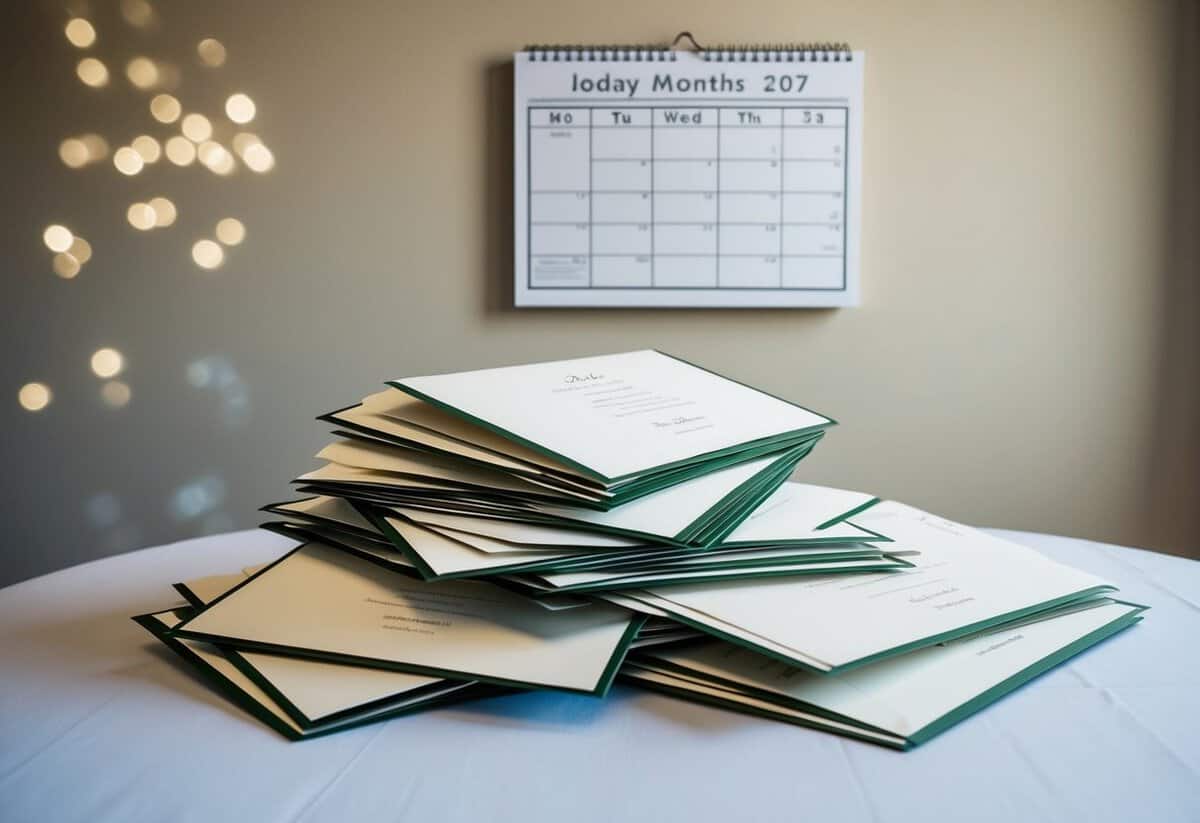
Sending wedding invitations late can lead to several challenges. This can affect your headcount, RSVPs, and planning for the big day. You want your celebration to be perfect, and addressing these issues early can help prevent last-minute stress.
Challenges with Headcount and RSVPs
When invitations are sent out too late, you risk having an inaccurate headcount. This can lead to issues with seating arrangements and catering.
Your wedding venue may charge per guest, so underestimating can mean a surprising bill. With fewer RSVP cards returned in time, you might scramble to finalize numbers.
Some guests may not be able to attend or may need more time to respond. This uncertainty can complicate your planning efforts and impact your decisions on the guest count.
Managing Last-Minute Changes
Late invitations often result in unexpected changes. You may discover that a vital guest cannot attend or that you need to accommodate additional friends or family.
Adjusting your plans last minute can be stressful. For instance, if you secure a wedding venue with a limited capacity, you must swiftly manage who can come.
Reaching out to guests individually can be overwhelming and can disrupt your focus on other aspects, like wedding favors and the bridal shower invitations. Planning your event is challenging enough without the added pressure of last-minute adjustments.