
Is a Celebrant Non-Religious? Understanding Their Role in Secular Celebrations
When planning a special event, you might wonder about the role of a celebrant. A celebrant is someone who officiates various ceremonies, including weddings. They can cater to your specific needs and beliefs.
If you prefer a ceremony that isn’t tied to a particular faith, a non-religious celebrant can help you craft a unique experience. They focus on what is meaningful to you, incorporating personal stories and rituals that resonate with your beliefs. This approach allows couples to celebrate their love in a way that feels true to themselves.
Choosing a celebrant gives you the flexibility to plan a ceremony that suits your vision. Whether you want a simple gathering or a more elaborate celebration, a non-religious celebrant can guide you in making your day special and memorable.
Understanding Celebrants and Their Roles
Celebrants play an important role in conducting ceremonies, especially non-religious ones. They offer a flexible and personalized approach that can fit various occasions. Let’s explore the differences between celebrants and officiants, the types of celebrants, and the unique role of humanist celebrants.
Differences Between Celebrants and Officiants
Celebrants and officiants serve distinct functions at ceremonies. An officiant is typically someone with religious authority, like clergy or justices of the peace. They often follow specific traditions and rituals set by religious beliefs. In contrast, a celebrant can perform non-religious ceremonies, creating a more personalized experience for couples or families.
While officiants commonly conduct weddings or funerals steeped in tradition, celebrants focus on tailoring the ceremony to reflect individual preferences. This includes incorporating personal stories, themes, and values into the event. Their flexibility is key for those seeking ceremonies that diverge from conventional religious frameworks.
Types of Celebrants
There are several types of celebrants, each with a unique style. Civil celebrants focus on secular events, suitable for people from any background. They embrace a range of ceremonies, from weddings to memorials. Independent celebrants function similarly, offering personalized services without religious ties.
Humanist celebrants specialize in ceremonies based on humanist values, emphasizing compassion and reason over religious beliefs. They create heartfelt events that resonate with those who prefer a non-religious approach. Each type of celebrant can adapt to the client’s wishes, making them excellent choices for any occasion.
The Unique Role of Humanist Celebrants
Humanist celebrants stand out for their non-religious perspective. They celebrate human life’s importance and the values that connect us. By focusing on personal stories and shared experiences, they craft meaningful ceremonies that resonate deeply with participants.
This type of celebrant often conducts weddings, naming ceremonies, and funerals. They strive to create a true reflection of the individuals involved. By understanding the preferences and beliefs of the people they serve, humanist celebrants enrich the experience for everyone present. Their approach can be refreshing for those seeking a connection without religious connotations.
Planning Non-Religious Ceremonies
When planning non-religious ceremonies, you have the freedom to create a meaningful event that reflects your values and beliefs. Whether it’s a wedding, funeral, or naming ceremony, each occasion can be tailored to your specific desires and needs.
Designing a Non-Religious Wedding
Designing a non-religious wedding allows you to focus on the love and commitment between you and your partner. Start by choosing a celebrant who specializes in non-religious wedding ceremonies. They can help craft a personalized ceremony that highlights your relationship.
Consider the location that feels right for both of you, whether it’s a beach, park, or your backyard.
Key aspects to include are:
- Vows: Write your own, expressing your love and promises.
- Readings: Choose texts that resonate with you.
- Rituals: Incorporate unique elements, such as a unity ceremony or a sand blending.
This is your moment to create lasting memories.
Organising a Non-Religious Funeral
Organizing a non-religious funeral can be a way to honor a loved one’s life. Focus on what they valued and enjoyed. A celebration of life offers a more uplifting alternative to a traditional funeral service.
In your planning, think about:
- Venue: Pick a place significant to the deceased, like their home or a favorite park.
- Order of Service: Create a meaningful program that reflects their personality.
- Personal Tributes: Encourage friends and family to share stories or memories.
This is a time to reflect, remember, and celebrate their unique life journey while also finding comfort together.
The Significance of Naming and Civil Ceremonies
Naming ceremonies serve as a beautiful way to welcome a child into the family. You can personalize the event with readings, music, and symbolic gestures.
Choose elements that reflect your values, such as:
- Speeches: Share thoughts on parenthood and hopes for the child.
- Rituals: Light candles or plant a tree to symbolize growth.
On the other hand, civil ceremonies affirm your partnership in a simple yet meaningful way without religious ties. These events focus on commitment and love, incorporating personal vows and shared promises.
Regardless of the ceremony type, the goal is to create a heartfelt celebration that resonates with you and your loved ones.
Legal Aspects of Non-Religious Ceremonies
Non-religious ceremonies have specific legal requirements you should understand. These include who can officiate and what legal authority they hold. Knowing these details can help ensure your ceremony goes smoothly.
Understanding Legal Requirements
Before planning your non-denominational wedding, check your local laws. Every state may have different legal requirements for weddings. A key part is ensuring the officiant you choose has the proper legal authority.
In many places, a wedding officiant can be a judge, a justice of the peace, or even a trained celebrant. Some ceremonies require the officiant to be ordained, while others may not. Always verify if your chosen officiant meets the requirements for your area to avoid any issues.
The Role of Justices of the Peace and Other Authorities
Justices of the peace are a common choice for officiating non-religious weddings. They are authorized to perform legal ceremonies, which makes them a reliable option. In addition to justices, court clerks and retired judges can also officiate these events.
It’s important to note that your officiant should understand the legal aspects involved. Make sure they know how to handle the marriage license and other paperwork. This will help everything go smoothly on your special day.
Personalizing Your Ceremony
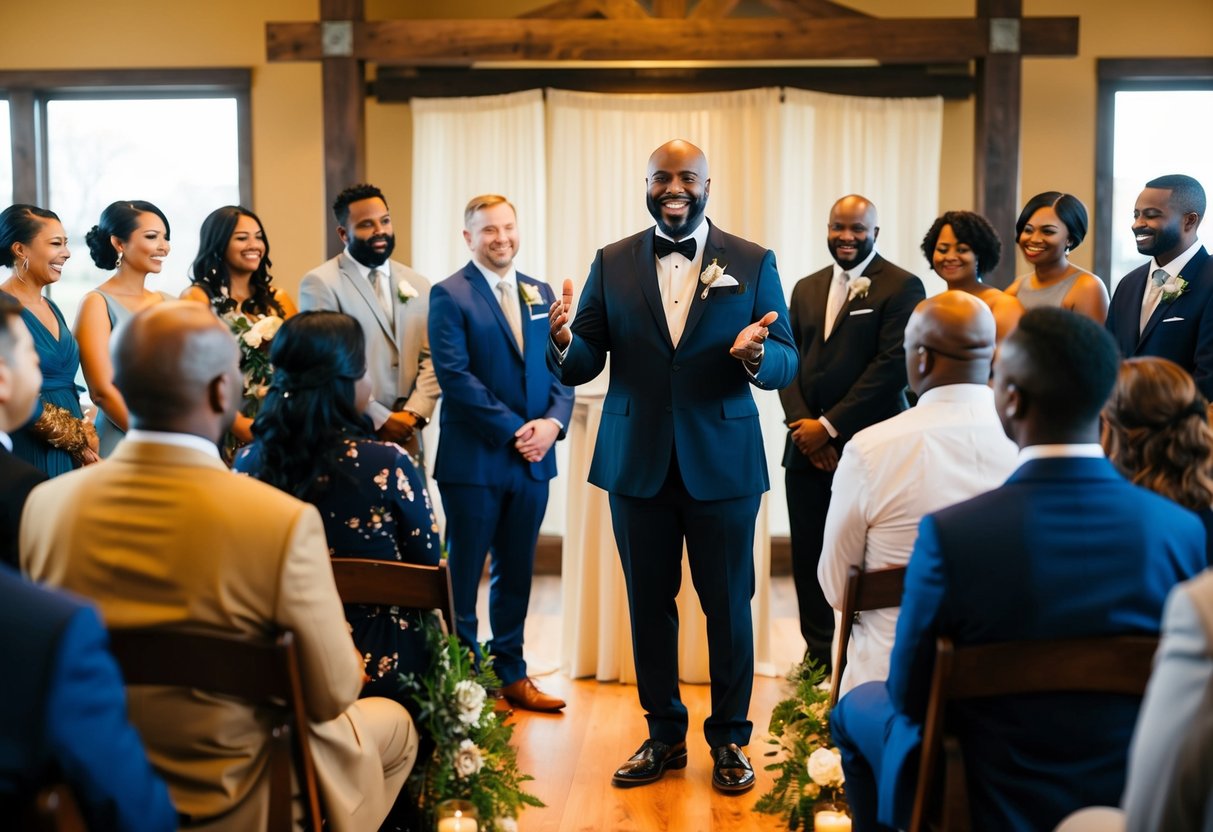
Your ceremony should truly reflect your style and values. Personalizing it makes the event more meaningful and memorable for you and your guests. Here are ways to incorporate personal elements and how a celebrant can help shape this unique experience.
Incorporating Personal Elements
Personal elements can transform your ceremony into a heartfelt reflection of who you are as a couple. Start by thinking about:
- Custom Vows: Write your own vows to express your unique love story.
- Rituals: Consider adding rituals such as a sand ceremony, where you blend different colored sands to symbolize your union, or a tree-planting ceremony to represent growth.
- Music: Choose songs that have special meanings to both of you.
These choices create a personal touch that connects you to your guests, making the ceremony more inclusive and relatable.
Role of the Celebrant in Personalization
A wedding celebrant plays a crucial role in bringing your vision to life. They can help you craft a ceremony that truly reflects your beliefs and style. Here are ways they assist:
- Customization: Celebrants are trained to incorporate personal stories, themes, and unique elements that resonate with you.
- Flexibility: Unlike traditional officiants, they work with you to design a ceremony free from religious constraints, allowing for greater creative freedom.
- Guidance: They provide templates and ideas for vows, readings, and rituals that align with your wishes.
Working with a celebrant ensures that every aspect of the ceremony feels authentic, creating a celebration that is uniquely yours.