
Is a Friday or Sunday Wedding Better? Costs, Guests, and Timing
A Friday wedding is the better fit if you want an evening celebration that opens into a full weekend; Sunday suits you better if you prefer a daytime gathering and your guests can manage Monday plans. Your wedding planning will feel easier when you choose the date that matches your celebration style and the schedules of the people you most want there.

Friday gives you a chance to celebrate late and leave Saturday open for a relaxed day with guests. Sunday can create a calmer daytime event, though some guests will need to return to work the next morning.
Start by listing your must-have guests and the kind of celebration you want, then ask your favorite venues for quotes on both dates. That simple comparison can show you which option fits your plans and budget.
The Main Trade-Offs at a Glance

Friday favors an evening reception and a full Saturday afterward, while Sunday works well for an earlier event with a quieter pace. Both dates can offer more venue choices than a Saturday wedding, depending on the season and location.
| What you’re comparing | Friday wedding | Sunday wedding |
|---|---|---|
| Common timing | Evening | Brunch, afternoon, or early evening |
| Guest schedule | Workday arrival | Monday workday afterward |
| Weekend feel | Celebration starts the weekend | Celebration closes the weekend |
| Pricing | Ask about off-Saturday rates | Ask about Sunday rates and minimums |
If you’re still choosing a wedding date, your priorities around guest schedules, timing, and budget can help narrow your options. For more factors to weigh, consider what day is best to plan a wedding.
When Does a Friday Celebration Make More Sense?
Choose Friday when an evening party and an open Saturday suit your plans. Your guests can celebrate after work, then use Saturday to rest, explore the area, or spend more time with you.
A Friday start time needs careful thought. If guests are coming from work or traveling that day, an evening ceremony gives them more time to arrive. You can also plan a casual Saturday activity, such as a brunch or group outing, for guests who stay nearby.
When Is a Sunday Event the Better Fit?
Sunday is a strong choice when you want a daytime ceremony, brunch reception, or relaxed finish to the weekend. Your guests can travel in on Saturday, and your celebration can wrap up early enough to make Monday travel easier.
A Sunday date may suit your priorities if Saturday availability is limited at your preferred venue. Check local travel times and work schedules before you set the start time.
How Do They Compare With Saturday Weddings?
A Saturday wedding gives guests the familiar option of attending without a weekday work schedule on either side. Friday and Sunday can bring more date options, and they may come with different venue rates.
Saturday remains the most common wedding day, which can make popular dates and venues harder to book. If you want to compare the usual choice with other dates, see what day of the week most couples get married.
What Are the Pros and Cons of a Friday Wedding?

A Friday wedding can give you an energetic start to the weekend and more choice of dates at some venues. The main planning challenge is helping guests arrive on time after work, especially if they need to travel.
Your wedding weekend can include time together after the reception, since Saturday remains open for a casual gathering or sightseeing. Ask vendors about their Friday availability early, as each business sets its own schedule and booking policies.
Why Couples Choose Friday
A Friday evening gives your celebration a lively start and leaves Saturday free for an informal get-together. That timing can work well if many guests live nearby or can take time off to travel.
Your venue may offer a different rate for Friday than for Saturday. Request a written quote that spells out the rental fee, food and beverage minimum, staffing, and any overtime charges. A lower starting price gives you a useful comparison when you review the full costs.
What Can Make Friday Challenging?
Guests who work Friday may need to leave early, change clothes quickly, or travel during rush hour. A ceremony that begins too early can make attendance harder for people with limited time off.
You can reduce that pressure by sending invitations well ahead of time and sharing hotel and transit details. An easy RSVP process also helps you track attendance and follow up with guests who have not replied.
What Are the Pros and Cons of a Sunday Wedding?

A Sunday wedding suits you when you want a relaxed daytime event and guests can plan around Monday work. The key choice is how early to end the celebration so guests have time to travel home and prepare for the week.
Sunday weddings can create a welcoming setting for brunch or an afternoon reception. Your chosen time of day shapes the meal, ceremony schedule, and length of the reception, so plan those pieces together.
Why Couples Choose Sunday
Sunday works well for a brunch reception, a garden ceremony, or an early dinner that ends before late evening. Guests traveling from out of town can arrive Saturday and share some time with you before the wedding day.
You may also find more date choices at venues that have limited Saturday openings. Ask about the available Sunday time slots and the event’s end time, then compare those details with your guests’ travel plans.
What Should You Consider About Monday?
Monday work schedules can affect how long guests stay, especially when they need to drive or catch an early flight. An afternoon ceremony and an early reception end can give guests a more comfortable trip home.
Think about your wedding day as a full schedule, including travel between the ceremony and reception. If you plan a late finish, tell guests early so they can arrange time off or book another night nearby.
How Do Costs and Availability Compare?
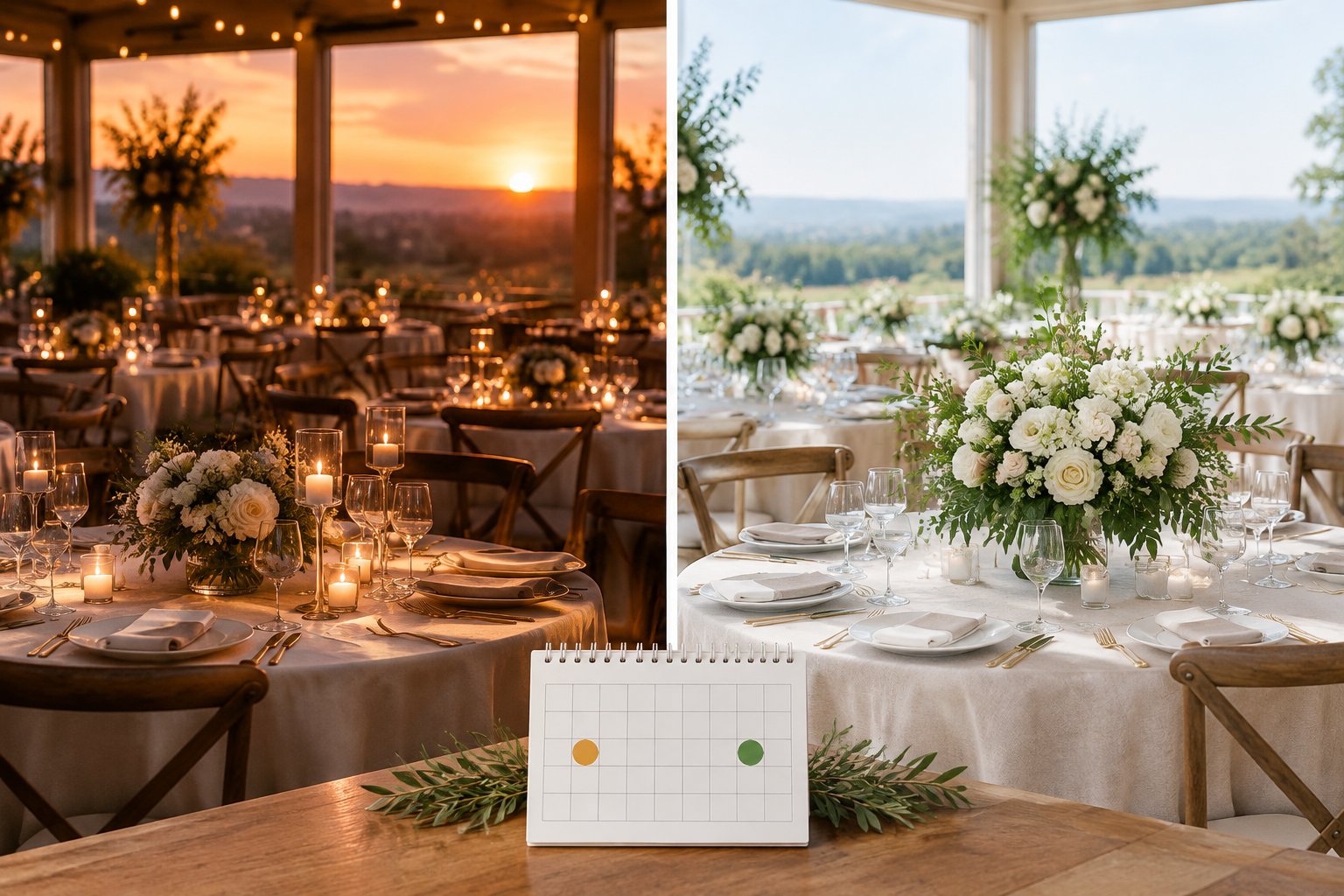
Friday and Sunday dates can bring lower venue rates or better availability than a high-demand Saturday, though prices vary by location and date. Your final cost depends on the venue’s terms, the guest count, and the services you book.
A weekday wedding can have a different price structure from a weekend event. Compare itemized quotes for the same guest count and service level, and use a wedding budget checklist to keep each offer easy to review.
Can a Friday or Sunday Date Lower Your Budget?
An off-Saturday date can lower your venue costs when the venue sets a reduced rental fee or a lower food and beverage minimum. Ask for the full price in writing, including taxes, service charges, staffing, and setup or cleanup fees.
Your vendor costs may stay similar even when the venue rate changes. Check each quote separately, since photographers, planners, and other vendors set their own rates and availability. For more ideas about trimming expenses, review what the cheapest option for a wedding may include.
How Does Wedding Season Affect Pricing and Choices?
Wedding season affects both price and availability. A Friday in a busy spring or fall month may still draw strong demand, while an off-season date may give you more choices and room to compare offers.
Your location also shapes the calendar. Check local weather patterns, daylight, and major events before committing to a date. If your plans include outdoor photos or a ceremony, build in a backup space and confirm when the venue allows setup.
How Can You Make the Weekend Easier for Guests?
A clear schedule, early notice, and practical travel details can make either date easier for guests. Share the ceremony time, travel options, hotel details, and RSVP deadline as soon as those plans are set.
Your wedding timeline should reflect the work and travel demands of the people you most want to attend. Leave breathing room between events, and make any optional activities easy to skip.
What Timing Works Best for Each Day?
For Friday, an evening ceremony gives local guests time to finish work and arrive. If many guests are traveling, consider a later start and keep the schedule simple so delays do not create stress.
For Sunday, a brunch or early afternoon event gives guests more time to travel home before Monday. Choose your ceremony time with the meal and reception end in mind, then allow enough time for photos and travel between locations. For ideas on timing, review the best time of day for a wedding.
How Should You Plan Travel and the Rehearsal Dinner?
Send save-the-dates early so guests can request time off and book travel. Include hotel information and transportation options with your invitation, and set a clear RSVP date so you can confirm your numbers.
Keep the rehearsal dinner manageable for guests who are traveling. A Friday wedding often calls for a Thursday rehearsal dinner, while a Sunday wedding can pair with a Saturday dinner. If many guests are arriving from far away, share a simple weekend schedule and note which gatherings are optional.
When Is a Nontraditional Date Right for a Destination Wedding?
A Friday or Sunday date can work well for a destination wedding when guests already plan to spend several days away. Your weekend can include time for guests to settle in, attend the celebration, and travel home on a schedule that suits them.
Give guests clear details about flights, lodging, local transportation, and the event start time. If you’re planning activities for guests at a destination wedding, choose a few easy options and share them in advance so people can plan around their own travel needs.