
Is It Customary to Give Money at a Wedding? Gift Etiquette
Yes, it is customary to give money at a wedding in the United States, and a cash wedding gift is a welcome choice for many couples. If you’re unsure what to bring, check the couple’s wedding website or registry for their preference; giving money at weddings is a normal choice.

Cash lets the couple decide how to use your gift, whether they’re saving for a home or planning a trip. You can make the gesture personal with a card and a note that shares your good wishes.
When Cash Makes More Sense Than a Registry Gift
Cash makes sense when the couple asks for it or when you want to give them flexibility. A registry item is a thoughtful choice when you find something the couple has selected and you’d like to give a tangible present.

Why Many Couples Welcome Money
Many couples welcome cash because they can put it toward a goal or use it for expenses that come up after the wedding. A cash gift also suits couples who already have household basics or prefer experiences to more belongings.
Check the couple’s wedding website for details about a cash fund, honeymoon fund, or preferred way to receive gifts. If they request money, following their wishes is a considerate choice. You can read more about wedding registry etiquette when you’re deciding how closely to follow the couple’s list.
When to Choose a Wedding Registry Item
Choose a registry gift when the couple has listed items you know they’ll use and you want to give something they can unwrap. The registry offers a direct way to match your gift to their needs, with options at different price points.
If the couple has a cash fund and a traditional registry, either option is appropriate. You can also choose an item when you have a personal connection to it, such as a cookbook you love or a serving dish that fits their style. A gift from the registry is a reliable pick when you want to give a specific, useful object.
How Much Should You Give?
Choose a wedding gift amount that fits your budget and your relationship with the couple. A common U.S. benchmark is around $150 per guest, though your own circumstances should guide the final amount.
What Is the Average Wedding Gift Amount?
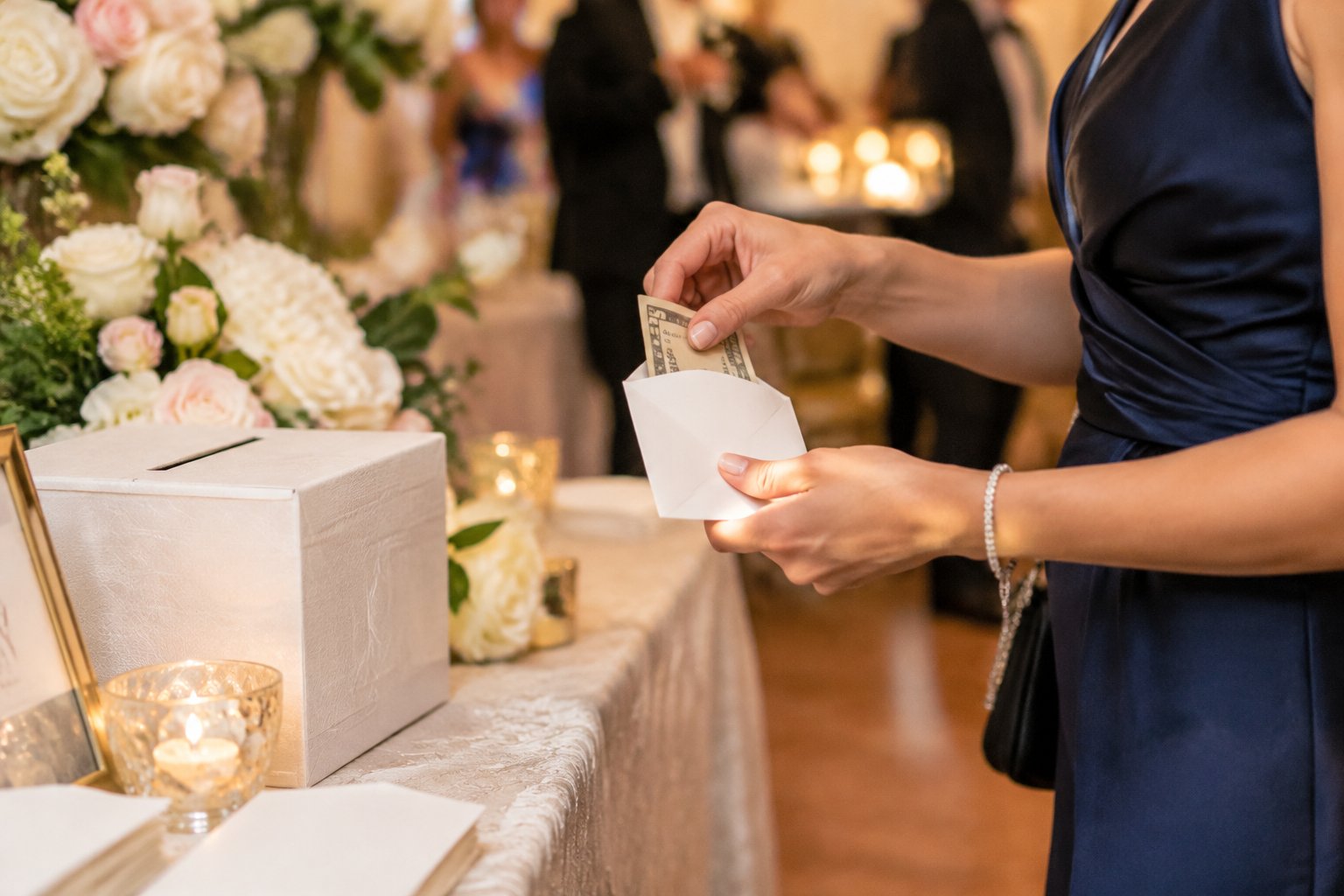
Recent U.S. guest survey data puts the average wedding gift amount at about $150 per person. Treat that figure as a reference point, not a required minimum. A smaller gift is still thoughtful when it’s what you can comfortably afford.
If you’re trying to decide how much money to give as a wedding gift, start with an amount that feels manageable, then consider how close you are to the couple. Your gift can be cash, a check, or a registry item of similar value.
How Your Relationship to the Couple Affects the Amount
You might choose to give more to a close friend or family member than to a coworker or casual friend. There’s no official price range tied to each relationship, so use your own judgment and budget.
If you’re unsure what feels right for a family member, think about your connection with them and what you can give without strain. A personal note can make a modest amount feel warm and considered. For a more focused look at how much to give a family member, keep in mind that family expectations vary from one household to another.
Why You Don’t Need to Cover Your Plate
You’re not responsible for paying back the couple for the cost of your meal. The “cover your plate” idea can put pressure on guests, especially when the reception is expensive or travel adds to the cost of attending.
Set your gift amount based on your finances and your relationship with the couple. The venue, menu, or size of the celebration does not set a required amount for you.
What Should Guide Your Gift Amount?
Your budget, relationship with the couple, and the traditions around the wedding can help you choose an amount. Travel, attire, and wedding-party costs also affect what you can comfortably give.

Your Budget and Other Wedding Expenses
Start with what you can afford after accounting for the costs of attending. A flight, hotel, rental car, outfit, or shower gift can add up, so include those expenses when you plan your wedding gift.
You can give a smaller amount if your travel costs are high or you’re attending several weddings in one season. If a larger gift would lead you to miss bills or borrow money, choose an amount that keeps your finances steady.
Cultural and Regional Traditions
Wedding customs differ across families and cultures. In some traditions, cash is the expected wedding gift; in others, guests may choose from a registry or give a physical present.
If you’re attending a wedding with customs you don’t know well, ask someone close to the couple for guidance. You can also check the wedding website for gift instructions. Respecting the couple’s stated preference helps you avoid guessing about local or family expectations.
Attending With a Plus-One or as Part of the Wedding Party
A plus-one does not automatically mean you must double your gift. If you’re attending with a partner, you can decide on one shared gift that reflects your combined budget and relationship with the couple.
As a wedding-party member, you may already be paying for attire, events, and travel. Those expenses are fair to consider when choosing your gift. You can find more guidance on wedding-party gift amounts if you’re balancing those added costs.
How Can You Send or Present Money Thoughtfully?
A card, clear sender details, and a secure delivery method make a monetary gift feel personal and easy to track. Follow the couple’s instructions if they list a preferred payment method or cash fund.
Cash, Check, or Digital Payment
Cash in a card is a familiar option, while a check gives you a record of the payment. If you’re deciding between them, consider whether the couple has shared a preference and how you’ll deliver the gift safely. This guide to cash or check for a wedding gift can help you weigh the two formats.
Digital payments through Venmo, PayPal, or Zelle can be convenient when the couple has shared an account or payment link. Confirm the recipient’s details before sending money, and add a note so the couple can identify your gift. For a registry contribution, use the payment method listed on the couple’s wedding website.
Adding a Personal Note or Card
Include a card with your names and a warm message. A short note such as “We’re so happy to celebrate you both. Wishing you a lifetime of joy” makes the gift feel connected to the occasion.
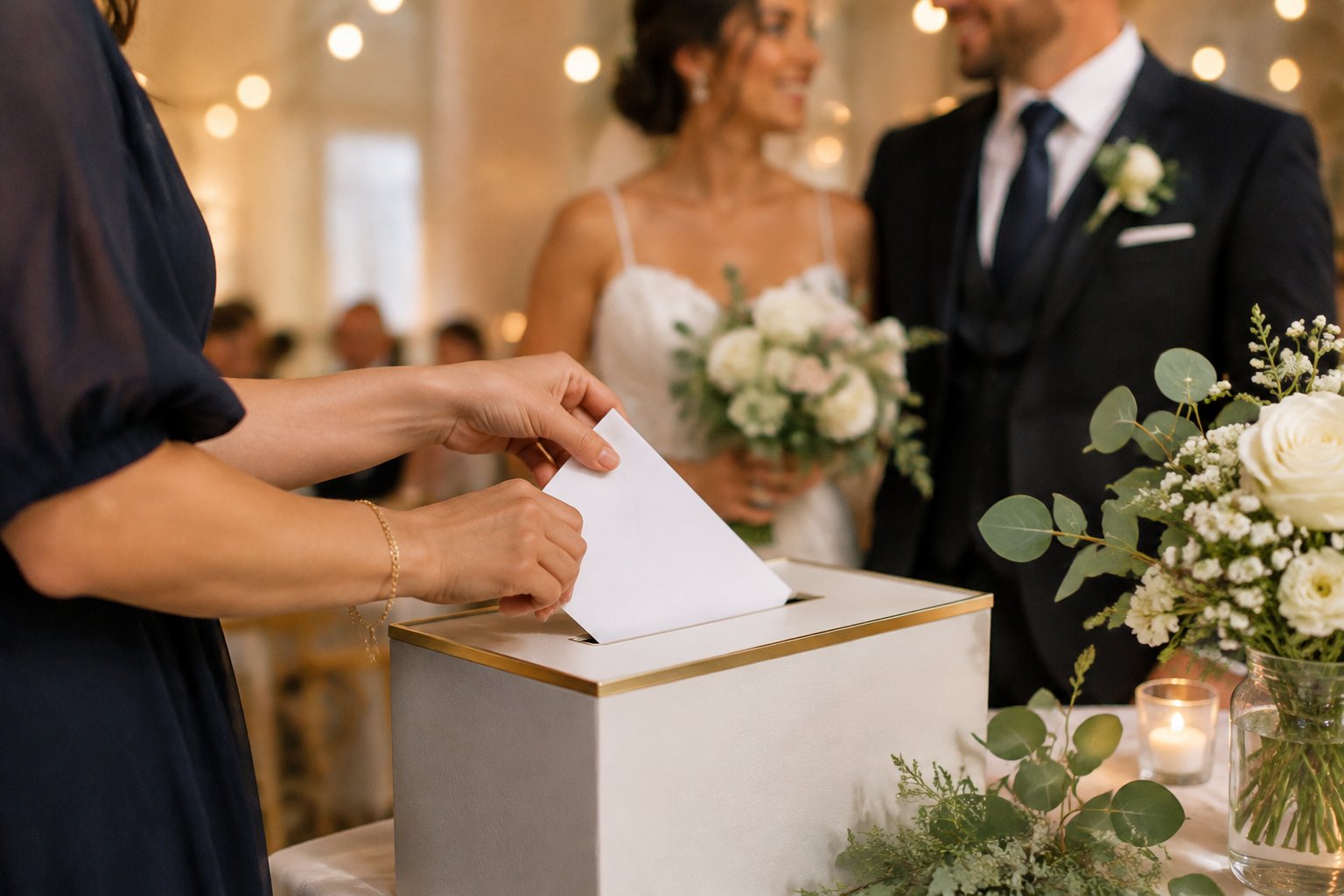
If you’re giving cash or a check in person, write your names clearly inside the card. Place it in the designated card box or give it to the person the couple has asked to handle gifts. You can also mail the card to the couple if you prefer to avoid bringing money to the reception.
Giving Through a Couple’s Cash Fund
A cash fund lets you contribute through a registry toward a goal the couple has chosen, such as a honeymoon fund or a home project. Follow the fund’s instructions and add a brief message if there’s a space for one.
If the couple has not shared a fund, you can ask a member of the wedding party or a family member where to send your gift. You can also learn how couples set up a wedding cash registry to understand the kinds of funds you might see on a wedding website.
What Wedding Gift Etiquette Should You Know?
Good wedding gift etiquette means following the couple’s wishes, giving your gift in a thoughtful way, and staying within your means. You can send a gift even if you can’t attend, and your presence at the wedding does not create a debt.
When and Where to Give Your Gift
Check the invitation or wedding website for gift instructions. If you bring a card to the reception, place it in the card box or give it to the designated person; the couple may be busy greeting guests.
You can also mail a gift to the couple’s home before or after the wedding. If you send money digitally, use the account or link the couple provided and include your name. For broader wedding gift etiquette, keep your delivery discreet and make sure the couple can tell who sent it.
What to Do If You Can’t Attend
You can send a card or gift if you decline the invitation. Choose an amount that fits your budget, and share your congratulations even if you’re unable to celebrate in person.
A gift is a kind gesture, not a condition of declining or accepting an invitation. If you cannot afford to send money, a heartfelt note still lets the couple know you’re thinking of them.
Why a Gift Should Never Strain Your Finances
Keep your wedding gift within your means. You don’t need to borrow money, miss a bill, or compare your gift with what other guests give.
If you’re facing a costly trip or several wedding expenses, give an amount that feels safe for your budget. A sincere card paired with a modest gift is a considerate way to celebrate the couple.