
Is It Ok to Sleep with Wedding Band On? Exploring Comfort and Care for Your Ring
When it comes to wearing your wedding band at night, many people wonder what the best choice is for their comfort and safety. Loose-fitting rings may pose a risk of damage or loss, so it’s important to consider your specific situation. Knowing the pros and cons can help you decide what works best for you.
Sleeping with your ring can sometimes lead to discomfort or pressure, especially if your hands swell during the night. It’s good to weigh these factors before making your decision. This article will explore whether you should keep your wedding band on while you sleep, providing tips for those who choose to do so and alternatives for those who may prefer to take it off.
Understanding the Symbolism of Wedding Rings
Wedding rings hold deep meaning, representing love and commitment. They are more than just jewelry; they signify a promise between partners. The types of materials used also carry unique significance, which can enhance the meaning behind your choice.
Cultural Significance of Wedding Bands
Wedding bands have been used in many cultures for centuries. In Western societies, the circle shape symbolizes eternity, as it has no beginning or end. This makes it a perfect symbol for everlasting love.
Different cultures have unique traditions regarding wedding rings. For example, in some cultures, the ring is worn on the right hand, while in others, it’s on the left. Understanding these traditions can deepen your appreciation for your own wedding band.
Moreover, the style of the wedding band can reflect personal values. Some couples choose plain bands for simplicity, while others may select intricately designed rings to showcase personality.
Wedding Ring Materials and Their Meanings
The material of your wedding ring can also convey special meanings. Gold is a popular choice and symbolizes wealth and prosperity. It has a long history of being used in wedding jewelry, representing the commitment that lasts a lifetime.
Platinum is another favored option. This metal is known for its durability and rarity, making it a fitting symbol of unbreakable bonds. Choosing platinum can express your intention for a lasting relationship.
Titanium is often chosen for its strength and lightweight nature. It’s a modern choice that signifies resilience and adaptability. Each material not only provides a physical look but also adds layers of meaning to your commitment.
Health and Safety Considerations
When deciding whether to sleep with your wedding band on, it’s important to think about potential health and safety issues. Two main concerns are skin irritation and allergic reactions, as well as the risk of injury, especially during hand-intensive activities.
Skin Irritation and Allergic Reactions
Wearing a wedding band while sleeping can sometimes cause skin irritation. This irritation may happen due to moisture and friction while you move at night. You might notice redness, itching, or a rash.
For some, allergic reactions can occur if your skin is sensitive to certain metals in the ring, such as nickel. If you wake up with any discomfort, consider removing your ring before bed.
To protect your skin, try giving it a break from your ring every so often. This can help prevent reactions and keep your skin healthy.
Risk of Injury in Hand-Intensive Activities
If you sleep with your wedding band on, it’s a good idea to consider the risk of injury. During the night, you might toss and turn, which could lead to your ring getting caught on something. This can potentially cause bruising or even damage the ring.
Additionally, if you engage in hand-intensive activities during the day, wearing your ring could increase your chances of injury. For example, if you play sports or do heavy lifting, your ring could snag or cause discomfort.
To avoid these risks, think about removing your ring at night, especially if you are active or prone to accidents. This simple step can keep both your hands and ring safe.
Practical Tips for Ring Care
Taking care of your wedding band can keep it looking beautiful for years. Knowing when to take it off and how to clean and store it properly is essential for maintenance.
When to Remove Your Ring
There are specific times when removing your ring is a good idea. For example, while sleeping, it’s better to take it off to avoid potential damage or loss. If you swim, especially in chlorinated pools or the ocean, consider leaving your ring behind. Chemicals and saltwater can harm some metals and stones.
You might also want to remove it when applying lotion or cleaning products. These substances can dull the shine. Some people opt for a silicone ring during physical activities or workouts. This keeps your original ring safe while you stay active.
Proper Cleaning and Storage Solutions
Maintaining your ring’s shine is important. Regular cleaning helps prevent buildup from lotions, soaps, and sweat. Use a soft cloth to wipe it down after wear. For deeper cleaning, a mild soap solution works well.
When you’re not wearing your ring, proper storage matters. Consider a ring dish or a soft pouch to keep it safe. This prevents scratches and keeps it from getting lost.
Investing in jewelry insurance can also be smart. This protects your valuable pieces against theft or damage. Taking these steps will ensure your ring stays a cherished item for years.
Personal Preferences and Alternative Options
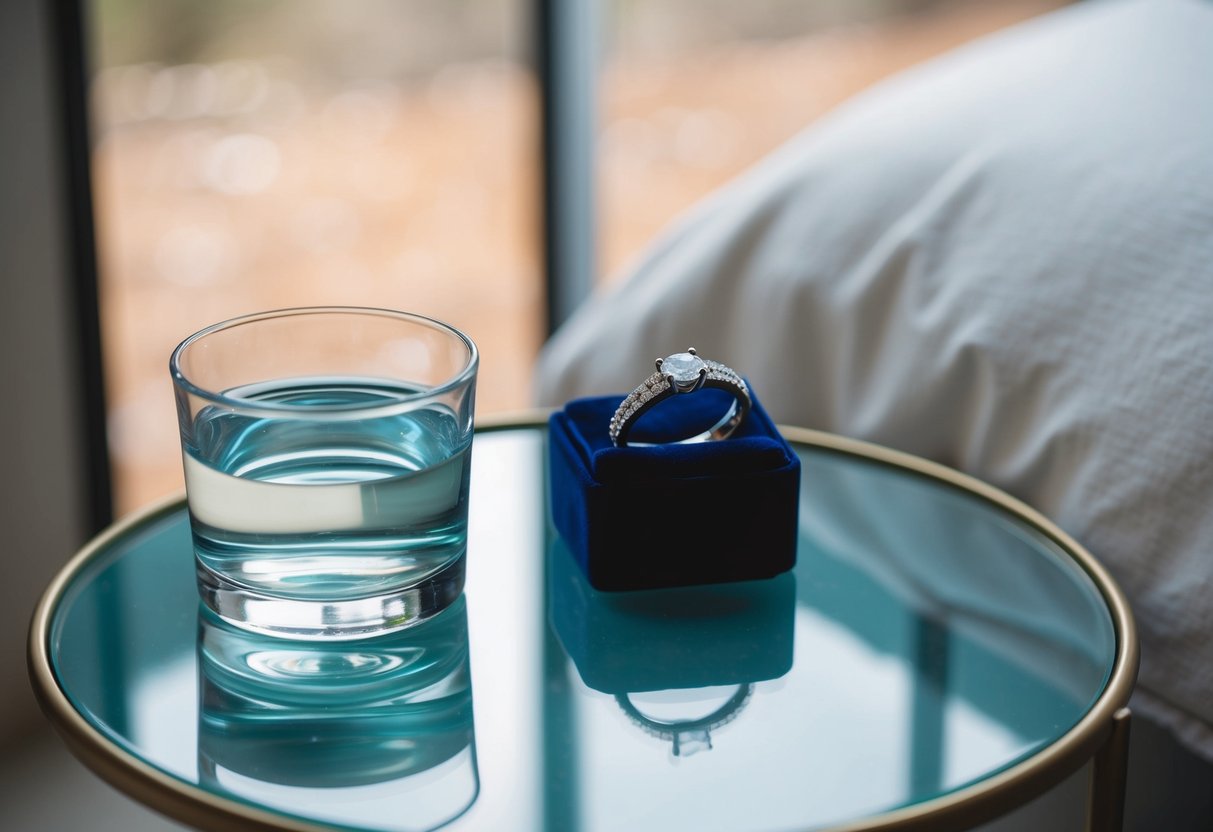
When it comes to wearing your wedding band at night, personal choice plays a big role. Comfort and safety are essential, so considering your lifestyle can help you decide what’s right for you.
Choosing the Right Ring for Your Lifestyle
Selecting a wedding ring that fits your lifestyle is key. If you often lead an active life, you might prefer a band that won’t get in the way, such as a sleek design that sits low on your finger.
You might also consider the metal. While some materials like gold and platinum are traditional, they may feel bulky while sleeping. An opal inlay can also provide a unique touch and is lighter. Think about where you sleep and the activities you do; this will help you choose a ring that feels right and stays safe.
Exploring Silicone and Other Material Options
Silicone rings are an excellent alternative for anyone worried about comfort while sleeping. They are flexible and lightweight, making them easy to wear even during the night.
Many people choose silicone because it’s a safe option for those who engage in sports or have jobs where jewelry might pose a risk. You can still express your style while protecting your ring, thanks to the various colors and designs available.
Other materials like titanium or stainless steel offer durability. These options can be less bulky than traditional materials, allowing you to keep your ring on comfortably while enjoying restful sleep.