
Is It Worth Getting a Wedding Coordinator? Costs and Benefits
If you’re asking, “Is it worth getting a wedding coordinator?” the answer is yes when you want a professional to manage the logistics while you celebrate. A coordinator can oversee vendor communication, setup, and timing so you and your guests can enjoy a more stress-free wedding day.
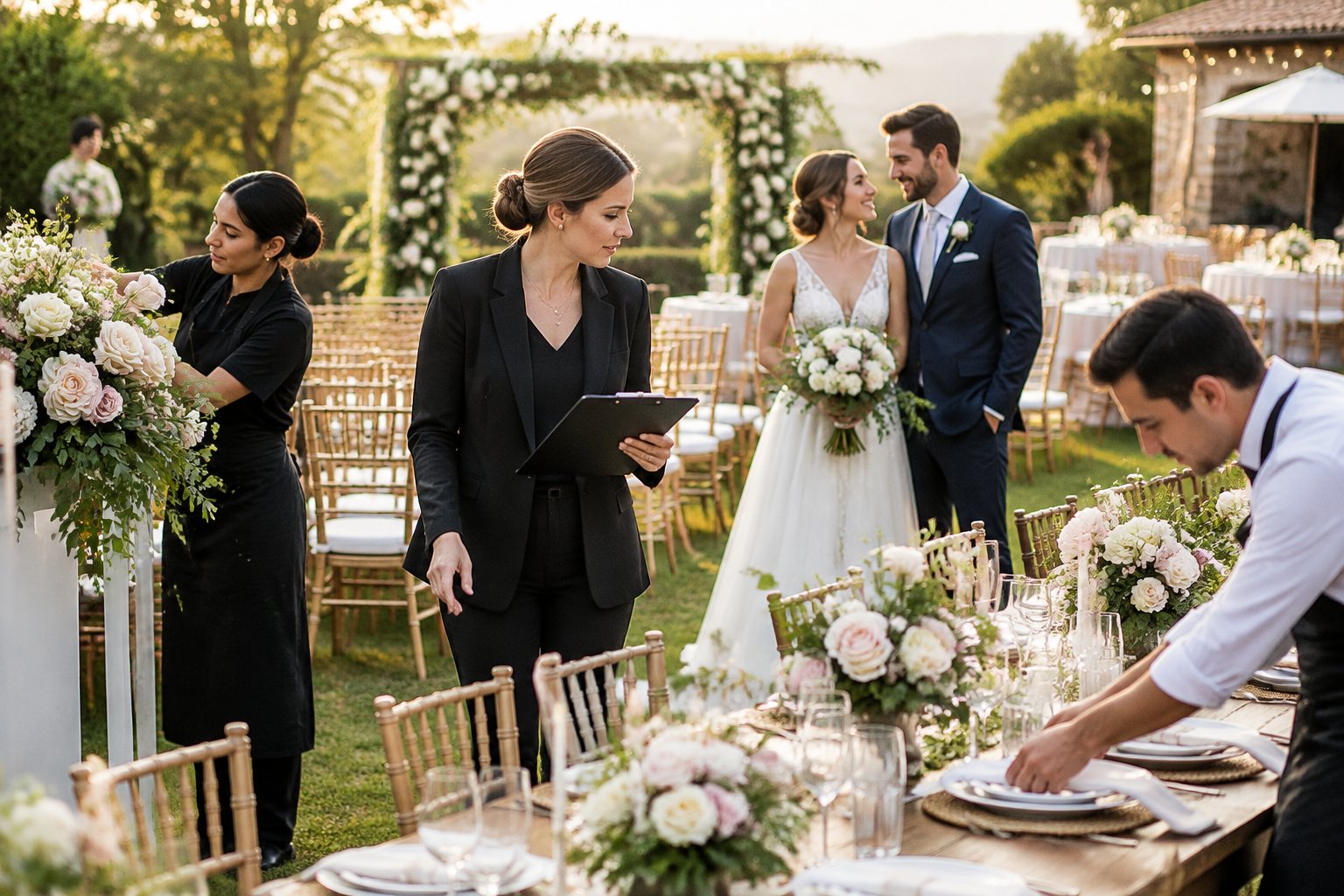
You can plan most of your wedding yourself and still hire help for the final stretch. Ask your venue which coordination services are included, then compare that offer with the tasks you want someone else to handle.
What Does a Wedding Coordinator Handle?
A wedding coordinator puts your plans into action and manages the event’s moving parts. Your package sets the scope, so check when the coordinator starts and which tasks they will take on.

A month-of coordination package often begins several weeks before the wedding, giving your coordinator time to review plans and confirm details. On the day, they follow the wedding day timeline, guide vendors, and handle practical issues as they arise.
What Happens Before the Wedding Day?
Before the celebration, your coordinator reviews your plans, gathers vendor details, and checks that key logistics are covered. Depending on your package, they may:
- Contact vendors to confirm arrival times, setup needs, and points of contact.
- Build or refine your wedding day timeline, including ceremony cues and reception events.
- Review the venue layout, setup instructions, and plans for breakdown.
- Lead or assist with the rehearsal.
- Flag missing details, such as who will bring personal items to the venue.
You can ask whether the fee includes vendor communication before the wedding, how many planning meetings you receive, and when the coordinator begins. If you need help with ceremony practice, ask who runs the wedding rehearsal and what the coordinator will cover.
What Does a Coordinator Manage During the Celebration?
On your wedding day, the coordinator keeps the schedule moving and gives vendors a clear point of contact. They may oversee setup, cue the ceremony, direct the wedding party, and coordinate transitions between events.
If a delivery arrives late or a detail needs attention, your coordinator can work on a solution while you stay with your guests. Ask whether your package includes cleanup, rental returns, or an assistant, since those duties can change from one contract to another.
How Is a Coordinator Different From a Planner or Venue Coordinator?
A wedding coordinator focuses on carrying out your plans, while a wedding planner can help create them and a venue coordinator focuses on the venue’s responsibilities. Each role has a different scope, so confirm who handles each task before you book.

The titles can overlap, so compare the written services in each package. A coordinator you hire works from your priorities, while a venue employee is responsible for the venue’s operations.
| Role | Main focus | When they help | Common tasks |
|---|---|---|---|
| Wedding planner | Building your event plan | Throughout planning | Budget guidance, vendor search, design, logistics |
| Wedding coordinator | Executing your plans | Final weeks and wedding day | Timeline, vendor contact, setup oversight |
| Venue coordinator | Venue operations | Venue planning and event day | Room access, venue staff, food service |
What Does a Full-Service Wedding Planner Do?
A full-service wedding planner supports you from early planning through the celebration. You can get help setting a budget, choosing vendors, shaping the design, and organizing the schedule. The planner may also manage contracts and coordinate the wedding day.
If you want help making many decisions or have limited time to plan, this wider service can fit better than month-of coordination. The difference between a wedding planner and a wedding organizer can also come down to how much planning and execution each person takes on, so ask for a clear list of services.
What Does a Venue Coordinator Handle?
A venue coordinator manages the venue’s part of your event. Their duties may include preparing the space, arranging venue staff, and coordinating the venue’s food and beverage service.
Your venue’s coordinator may not manage every vendor or personal detail in your plan. Ask who will answer questions from your florist, photographer, or entertainment team, and who will oversee items unrelated to the building. You can also clarify what a wedding venue manager is responsible for at your location.
What Makes a Wedding Coordinator Worth the Investment?
A coordinator is worth the investment when you want someone else to manage the schedule and logistics on your wedding day. You get a designated person to handle vendor communication, solve small problems, and keep the event moving.

That support frees you from being the person vendors contact for every decision. It also gives family and friends a chance to attend as guests instead of taking on event duties.
How Can Coordination Reduce Stress for You and Your Guests?
With a coordinator in charge of logistics, you can focus on getting ready and spending time with your guests. Your coordinator can answer vendor questions, watch the timeline, and guide people to the right place.
Without a designated lead, those tasks still need an owner. You might assign them to a relative or friend, though that person will spend time solving problems and checking details during the celebration. A coordinator gives you a professional point of contact with a defined role and agreed responsibilities.
When Does Professional Coordination Make the Biggest Difference?
Professional coordination can be especially useful when your plans involve many vendors, a detailed setup, or more than one location. It can also help when you are planning from a distance or expect family members to be busy on the day.
Guest count alone does not determine whether you need help. A smaller event with DIY décor, multiple deliveries, or a tight schedule can still require plenty of coordination. When you set your wedding priorities, consider whether you want to spend the day managing logistics or leave that work to a hired professional.
How Much Does a Wedding Coordinator Cost?
In the U.S., day-of or month-of coordination often costs about $700 to $2,500, with higher fees possible for complex events or high-cost locations. Your quote will depend on the service, the hours included, and the work your wedding requires.

Some couples report paying around $1,600 for day-of coordination and around $2,400 for month-of coordination. Treat those figures as reference points, since local rates and package details differ. Compare quotes with the tasks included, not just the listed price.
What Factors Affect the Fee?
Your wedding coordinator cost reflects the time and staffing needed to manage your event. Common pricing factors include:
- Service level: Month-of coordination includes more planning and communication than event-day coverage alone.
- Location: Rates vary by region and local demand.
- Event complexity: Multiple locations, extra events, and detailed setup can require more hours.
- Staffing: An assistant or larger coordination team can increase the fee.
- Travel and hours: Travel costs or extended coverage may be added to the package.
Ask each coordinator for a written scope of work, including start time, end time, setup duties, and any extra charges. If you are comparing a coordinator with broader planning support, review typical wedding planner fees to see how the services and price levels differ.
How Can You Fit Coordination Into Your Wedding Budget?
Set aside a coordination amount early in your wedding budget, then choose the level of help that matches your needs. If full-service planning is outside your range, month-of coordination can give you professional support during the final weeks and on the day.
You can also check your venue contract for included coordination before booking another service. Compare what each provider covers, such as vendor contact, setup, rehearsal, and breakdown. If the budget is tight, decide which tasks must be handled by a professional and assign any remaining duties to willing helpers before the wedding week.
How Can You Decide Which Level of Help You Need?
Choose support based on how much planning you have completed and who will manage the event logistics. A wedding planner can guide more of the process, while a wedding coordinator can take charge of carrying out your existing plans.
Month-of coordination suits many couples who have arranged the main details themselves. Before signing, confirm the coordinator’s start date, vendor communication duties, timeline work, and wedding-day coverage.
When Is Month-Of Coordination a Good Fit?
Month-of coordination is a good fit when you have chosen your venue and vendors but want help pulling the plans together. You stay involved in the choices you care about, while the coordinator reviews details and prepares to run the day.
This service can work well if you are organized and have time to plan, yet do not want to manage the timeline or vendor questions during the celebration. Check how early the coordinator joins your team, since packages may begin several weeks before the wedding or earlier.
What Should You Ask Before Hiring a Coordinator?
Ask questions that make the service and responsibilities clear:
- When do you begin working with us, and how many meetings are included?
- Will you contact each vendor and create or manage our wedding day timeline?
- Who will oversee setup, the rehearsal, and breakdown?
- How many hours of wedding-day coverage are included?
- Will you be on-site alone or with an assistant?
- What tasks are excluded, and what fees could be added?
Ask for a sample timeline and a contract that lists the duties, hours, staffing, and payment terms. That gives you a clear basis for comparing coordinators and checking that the role fits the plans you have made.