
Overwater Bungalow Quilt: Choosing a Tropical Bedding Set
An overwater bungalow quilt is a lightweight bed covering with a tropical or coastal print that brings a relaxed island feel to your room. Choose one with dimensions that suit your mattress, a fabric that feels comfortable in your climate, and care instructions that fit your routine.
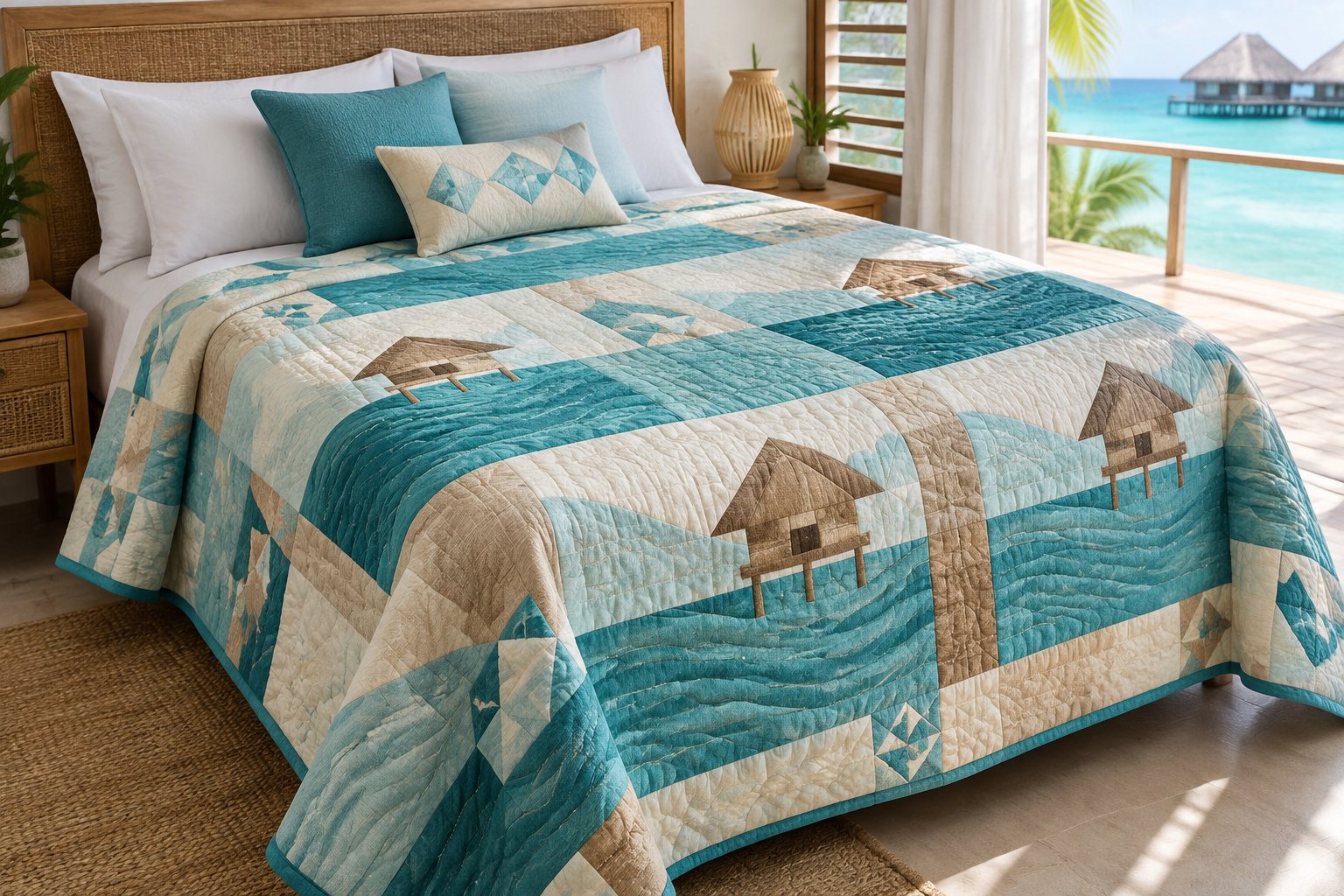
The right print can make your bed the focal point while keeping the room calm and comfortable. Start by measuring your mattress and picking a color palette you’ll enjoy seeing every day.
What Does an Overwater Bungalow Quilt Set Include?
A quilt set gives you a coordinated bed covering and matching accessories, though the exact pieces vary by listing. Check the item count and included pieces before you buy.
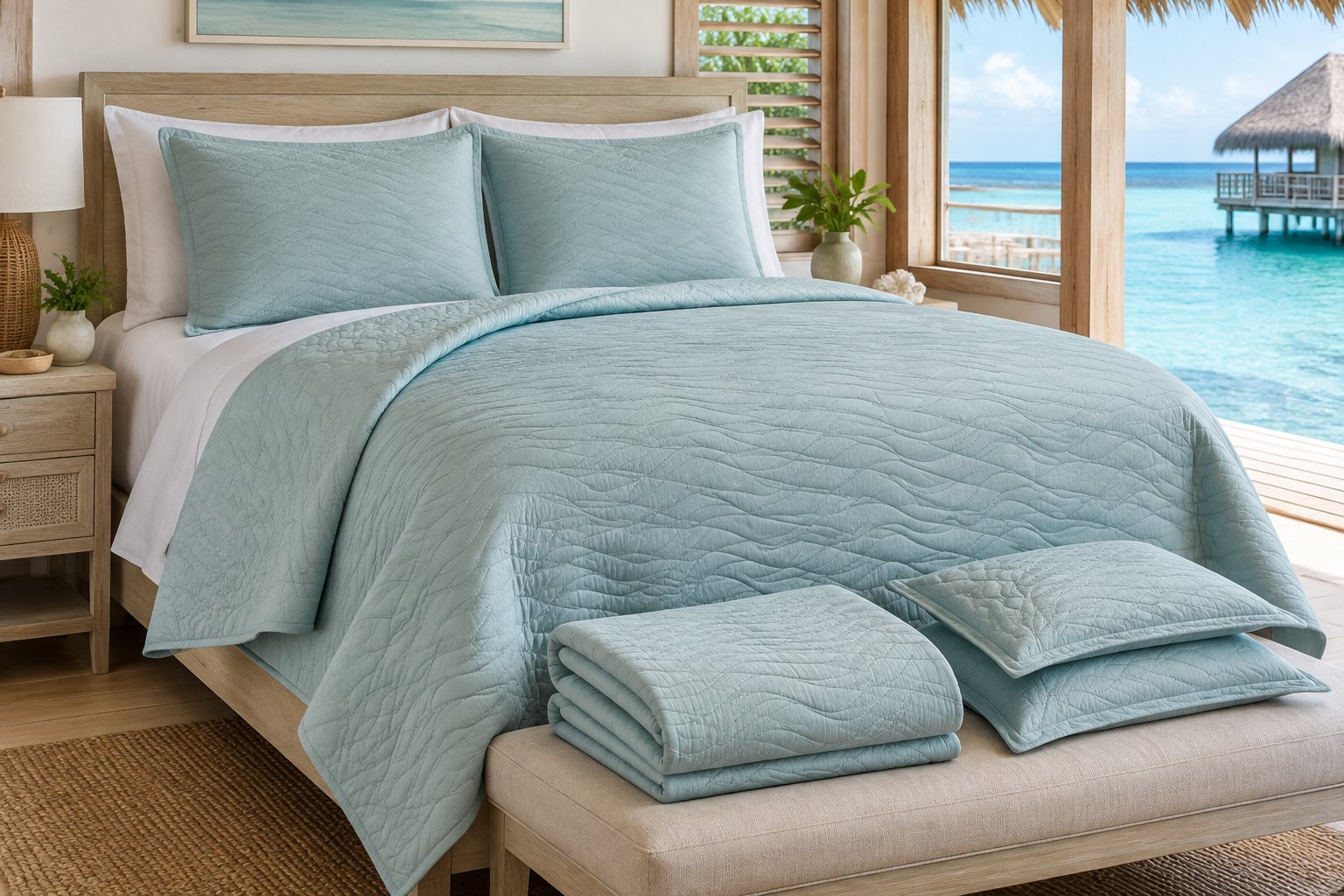
A set may include a quilt with one or more matching pillow shams. Product details also tell you whether the set includes pillowcases, which fit around pillows, or shams, which sit over them as decorative covers.
How Do Two-Piece and Three-Piece Sets Differ?
A two-piece set commonly includes one quilt and one sham. A three-piece set often includes one quilt and two shams, a useful match for a bed with two sleeping pillows.
The piece count can vary by size and seller. Read the included-items list closely, especially if you want matching pillowcases or have a larger bed with more pillows.
Is It a Quilt, Comforter, or Bedspread?
A quilt has a top layer, a backing, and a thin inner layer stitched together. A comforter has a thicker filled interior, while a bedspread is a covering designed to drape farther down the bed.
These terms can overlap in store listings, so check the product description for construction and thickness. If you want lightweight bedding with a stitched surface, look for the word “quilt” and details about its fill.
How Do You Choose the Right Quilt?
Choose a quilt by matching its measurements to your mattress and checking the listing for material, included pieces, and care details. Print photos and written color descriptions help you judge whether its look suits your room.

A clear product listing should help you compare the bedding size with your mattress and see how the printed design appears across the full quilt. Check the finer details before placing your order.
Which Size Fits Your Bed?
Start with your mattress size, then compare the quilt’s listed width and length with your bed. U.S. bedding labels such as Twin, Full, Queen, and King are useful starting points, though dimensions differ between brands.
Also consider mattress depth and how much fabric you want to hang over each side. A deep mattress or tall bed frame may need a wider or longer quilt for the coverage you prefer.
What Should You Check in the Product Listing?
Check the exact quilt dimensions, fabric content, fill material, set pieces, and care label. If the listing gives a weight or thickness description, use it to judge whether the quilt suits your room temperature and bedding needs.
Look for clear notes about whether the pictured pillows, sheets, or accessories are included. This helps you tell what arrives in the package and what you’ll need to coordinate separately.
How Can You Judge Print Quality and Color?
Look for close-up images that show the edges of the printed design and the quilt’s stitching. A sharp, even print and neat seams give you a better sense of the finished piece.
Screens can display color differently, so read the written color names and compare several product photos. If you’re choosing between a bright turquoise and a muted blue, check which tones appear beside white or cream in the listing.
Which Fabrics and Weights Work Best?
For a warm room, choose breathable fabric and lightweight bedding that feels comfortable against your skin. The fabric, fill, and quilt construction all affect how the quilt feels and drapes.
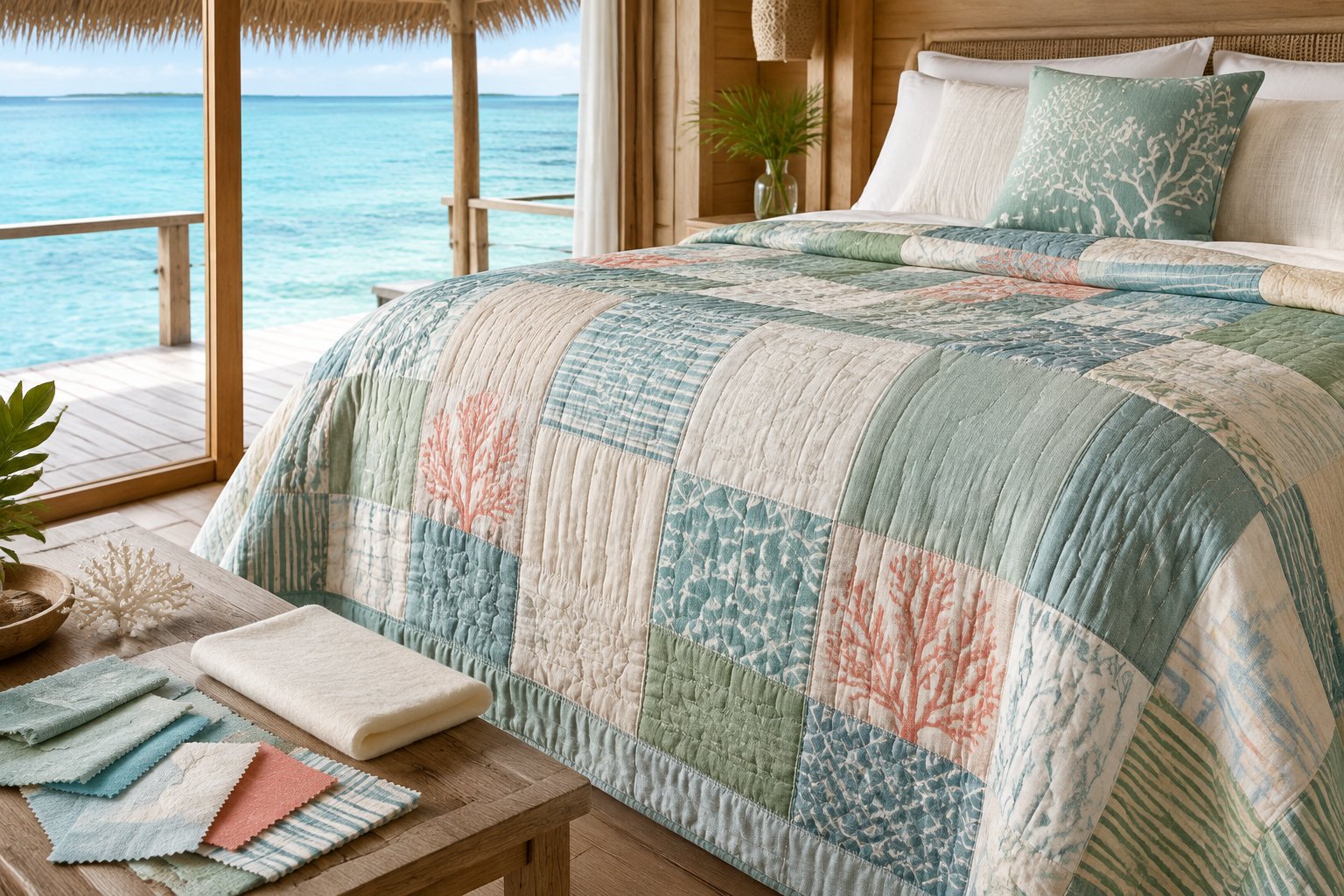
Cotton is a familiar option with a soft, natural feel, while polyester microfiber often feels smooth and is easy to care for. Check the fabric label and fill details to compare comfort and maintenance.
What Makes a Quilt Comfortable in Warm Weather?
A light quilt with breathable fabric gives you a covered feel without adding much bulk. Cotton and cotton blends are common choices, while a thin fill keeps the layers from feeling overly heavy.
Your room temperature and sleep habits also shape the best choice. If you use air conditioning or get chilly at night, a slightly fuller quilt can add comfort while remaining easier to layer than a thick comforter.
How Do Fill and Fabric Affect Softness?
The fabric that touches your skin shapes the quilt’s surface feel, while the fill affects its loft and drape. A quilt with a smooth face and a thin, even layer of batting tends to lie flatter across the bed.
Check whether the listing names the fill and gives care directions. Brushed microfiber can feel plush, while cotton often has a crisp feel that softens with washing. Stitching helps hold the layers in place, so look for even quilting lines and finished edges.
How Can You Style a Tropical Bedroom?
Use the quilt’s main colors as a guide for your sheets and accents, then keep the rest of the room simple. A tropical bedroom feels balanced when the print has space to stand out.

Pair busy prints with solid sheets, natural textures, and a few carefully chosen accessories. This approach brings coastal decor into the room without making every surface compete for attention.
Which Colors and Accessories Complement the Print?
Pull one or two colors from the quilt for your sheets, cushions, or a throw. Cream, white, soft blue, and leafy green work well with many tropical prints and keep the bed from looking crowded.
Add texture with a woven basket, a light wood bedside table, or a natural-fiber rug. A simple lamp and a small plant can complete the look while leaving the quilt as the room’s main pattern.
How Can You Create a Private Beach-Inspired Retreat?
Keep the palette light and the accessories relaxed to suggest the calm of a private beach. If you like the lagoon views and stilted rooms associated with Bora Bora overwater bungalows, echo that mood with blue-and-ivory bedding and understated wood accents.
Choose one focal print, then repeat its colors in small touches around the room. Open space on nightstands and walls helps your tropical bedding feel restful and easy to live with.
How Should You Wash and Store the Quilt?
Follow the care label for washing and drying, since fabric and fill affect the safest method. Gentle handling helps protect the stitching, print, and shape.
What Does Machine-Washable Care Usually Involve?
A machine-washable label means you can clean the quilt at home according to the listed settings. Use the recommended water temperature and cycle, and choose a washer with enough room for the quilt to move freely.
A mild detergent and a low-heat or air-dry option help limit stress on the fabric and fill. If your quilt is too bulky for your washer, use a larger-capacity machine and follow its care label closely.
How Can You Help the Print and Fabric Last?
Wash the quilt when it needs cleaning and spot-treat small marks to reduce full washes. Turn it inside out when practical, and use the care label’s settings to protect the colors and stitching.
Before storing it, make sure the quilt is fully dry. Fold it loosely and place it in a clean, breathable storage bag or linen closet so moisture does not linger in the layers.