
Professional Wedding Band Cost: 2026 Pricing Guide
A professional wedding band cost in the U.S. is about $3,000 to $8,000 for a typical four- to seven-piece group, with a national average near $4,500. A smaller lineup can cost less, while a large show band, a peak-date booking, or extra performance hours can push the quote higher.
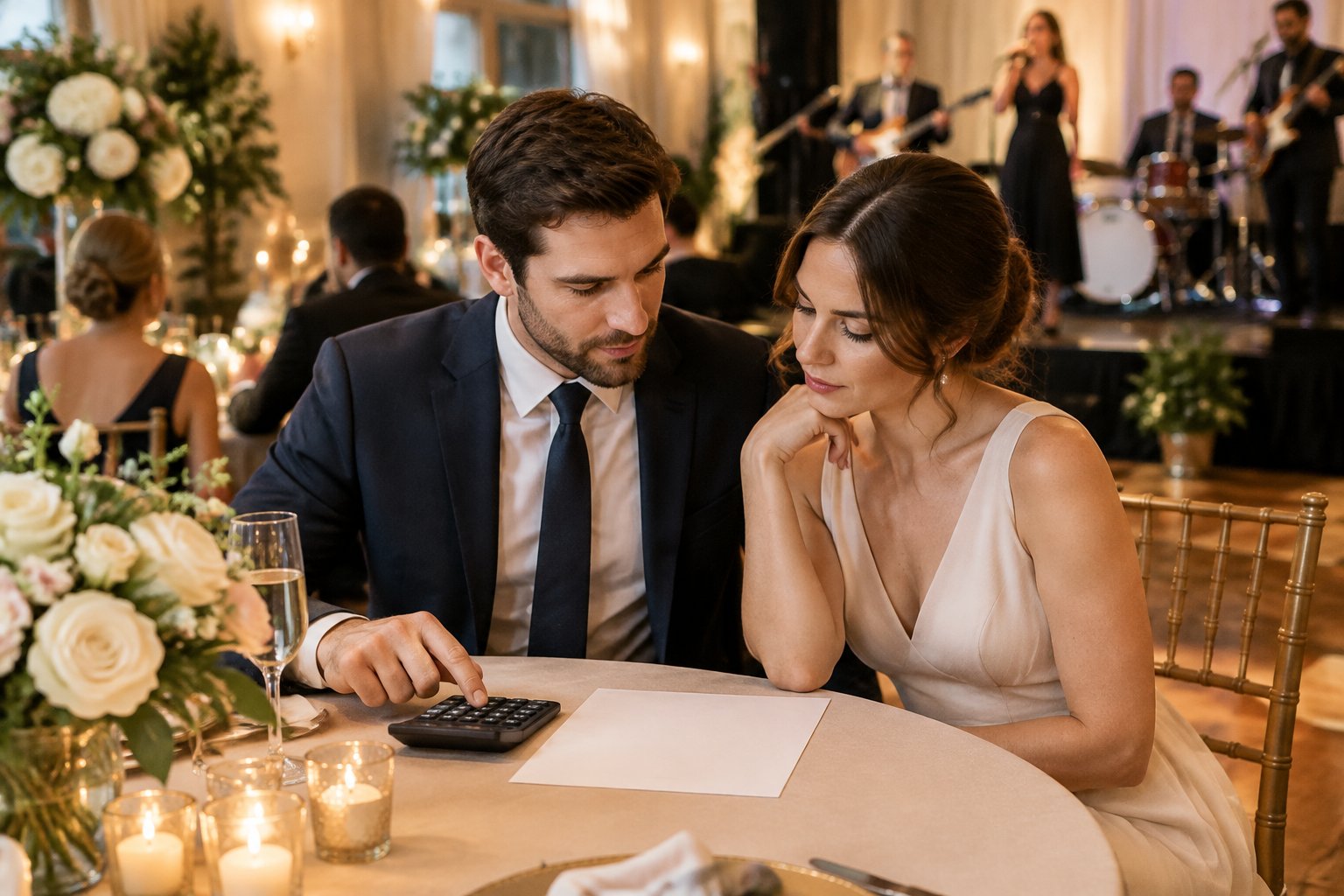
Your final price comes down to the lineup, performance time, venue location, and what the band includes. Start by setting a comfortable entertainment budget, then request itemized quotes for the same date, hours, and services so you can compare them fairly.
What Should Couples Budget for Reception Entertainment?
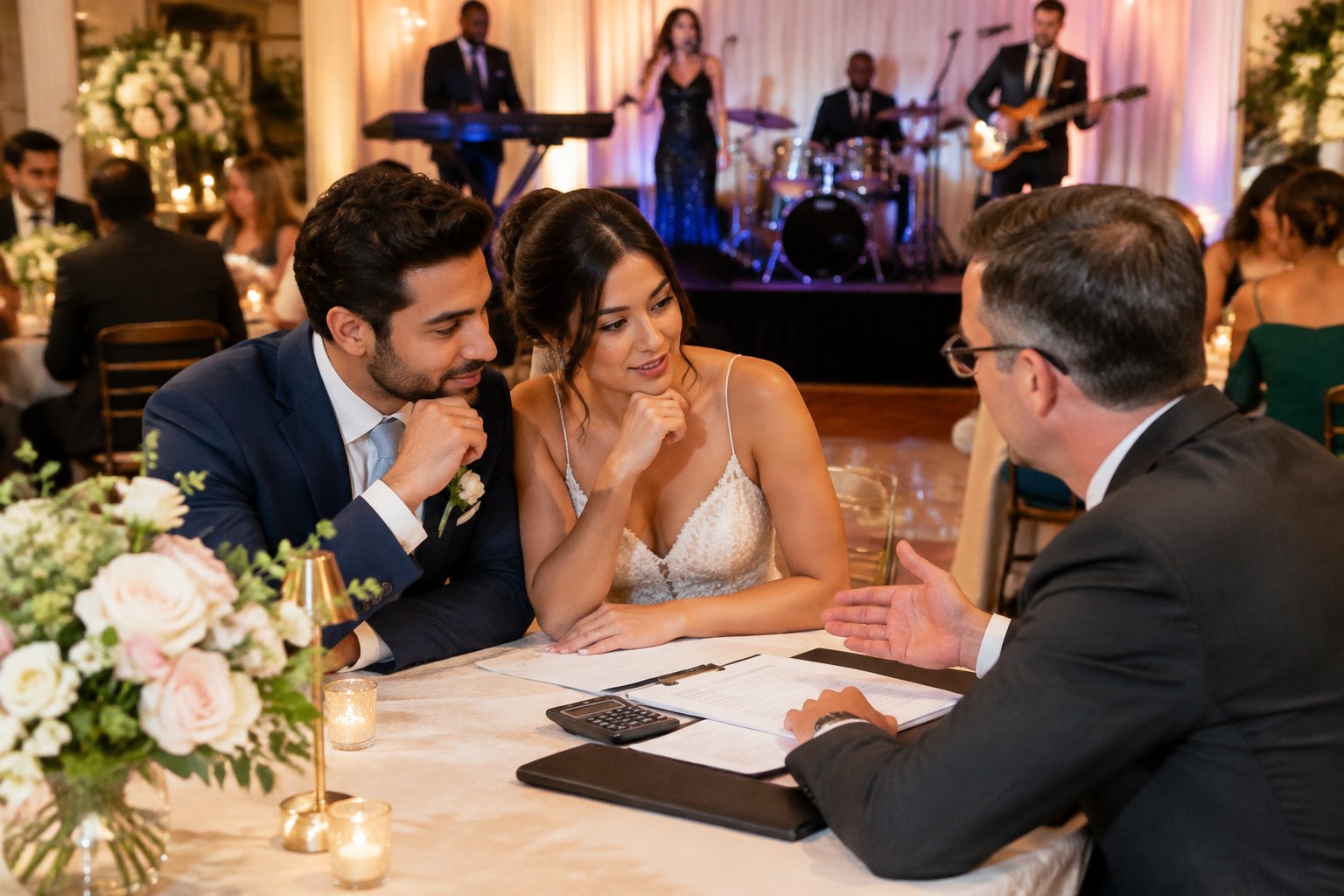
For a professional reception band, set aside roughly $3,000 to $8,000 as a planning range, with $4,500 as a useful national reference point. The lineup and package details explain why wedding bands cost different amounts even for events with similar schedules.
Typical U.S. Price Range for a Professional Band
A four- to seven-piece band booked for a reception often falls in the $3,000 to $8,000 range. A national average near $4,500 offers a starting point, while smaller groups and simple packages may come in below it. High-demand acts and large ensembles can exceed the range.
Use those figures to shape your first budget, then compare local quotes. Location affects rates, so a price in a smaller market may look different from one in a major city. If you’re choosing a target amount, a workable budget for a wedding band can help you weigh entertainment against your other wedding costs.
What a Standard Quote Usually Covers
A standard quote should state the number of musicians, performance hours, set schedule, and any breaks. It may also include the band’s sound system, microphones, basic lighting, setup, and teardown. Ask whether an emcee or music between live sets is part of the price.
Check how long the band is on site, not just how long it plays. Setup and sound check take time, and the contract may set a specific arrival window. When you compare live band costs for a wedding, make sure each quote covers the same services and schedule.
How Does Band Size Change the Quote?
More musicians usually mean a higher fee, since the band is paying more performers and coordinating a fuller setup. A small group can suit an intimate reception, while a larger lineup adds musical range and a stronger stage presence.
Duo and Trio Rates
A duo or trio may cost around $1,500 to $3,500, depending on experience, location, and performance hours. These smaller groups often work well for a compact venue or a relaxed reception. Ask for live video from a similar event so you can judge how the arrangement sounds with fewer players.
A duo or trio may also suit an acoustic set during dinner or a short dance block. The quote can change if you request extra instruments or special arrangements.
Four- to Six-Piece Band Costs
A four- to six-piece group commonly falls within the $3,000 to $8,000 planning range. This lineup can include a vocalist, guitar, bass, drums, and keyboard, with room for another singer or instrumentalist. The exact combination affects the sound and the fee.
Compare what each musician adds to the show. A group with several singers or a horn player may cost more than a band with a basic rhythm section. Your guest count and room size can help you decide how much sound and stage presence you need.
Show Band and Large Ensemble Pricing
A show band with multiple vocalists, horns, and added production can cost $8,000 to $20,000 or more. These groups bring a larger sound and a more elaborate stage setup, which suits grand receptions and larger dance floors.
Ask for the full lineup and production list before comparing prices. A large band’s quote can include sound staff, lighting, staging, or travel, so its headline price may cover more than a smaller act’s fee. For another reference on how much live wedding bands cost, compare the quoted lineup and package details.
Which Factors Can Raise or Lower the Price?
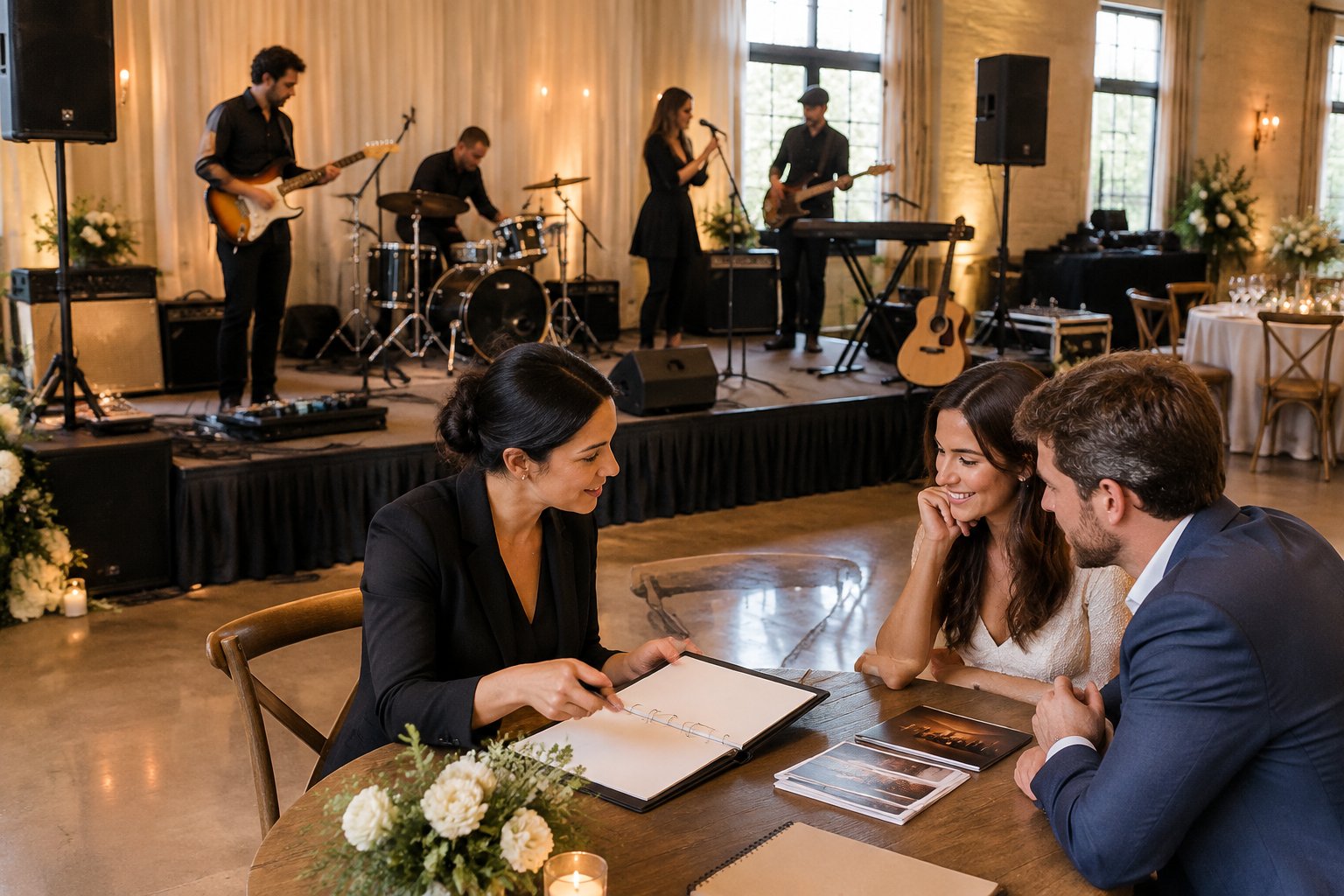
Your date, location, performance schedule, and venue setup all shape wedding band pricing. A clear event brief helps a band give you a quote that reflects the actual work required.
Location and Peak Wedding Dates
Bands in major cities may charge more due to local demand and operating costs. Travel distance also affects the quote, especially when the group needs several vehicles or an overnight stay.
Saturday dates during popular wedding months draw more demand. If your date is flexible, ask about Friday, Sunday, or off-season rates. Wedding services can carry different costs for reasons such as demand, staffing, and event logistics, so ask each band to explain any date or location surcharge.
Performance Hours and Custom Songs
More performance time raises the fee, and extended schedules may involve an hourly overtime charge. Confirm the number and length of live sets, the break schedule, and whether recorded music plays between sets.
A custom song request can add rehearsal or arrangement time. Share your must-play songs early and ask whether the band charges for learning them. For a long request list, choose a few priority songs and review how many songs to plan for a wedding reception as you build your schedule.
Sound, Lighting, and Travel Requirements
A venue’s size and layout affect the equipment a band needs. A large ballroom or outdoor space may call for stronger sound coverage, more microphones, or added lighting. Some venues also have sound limits or restricted setup times.
Send the band your venue details before you sign. Ask about stage space, power access, load-in rules, and sound-check timing. A quote that includes the right equipment and crew gives you a clearer picture of the full cost.
What Extras Can Increase the Final Invoice?
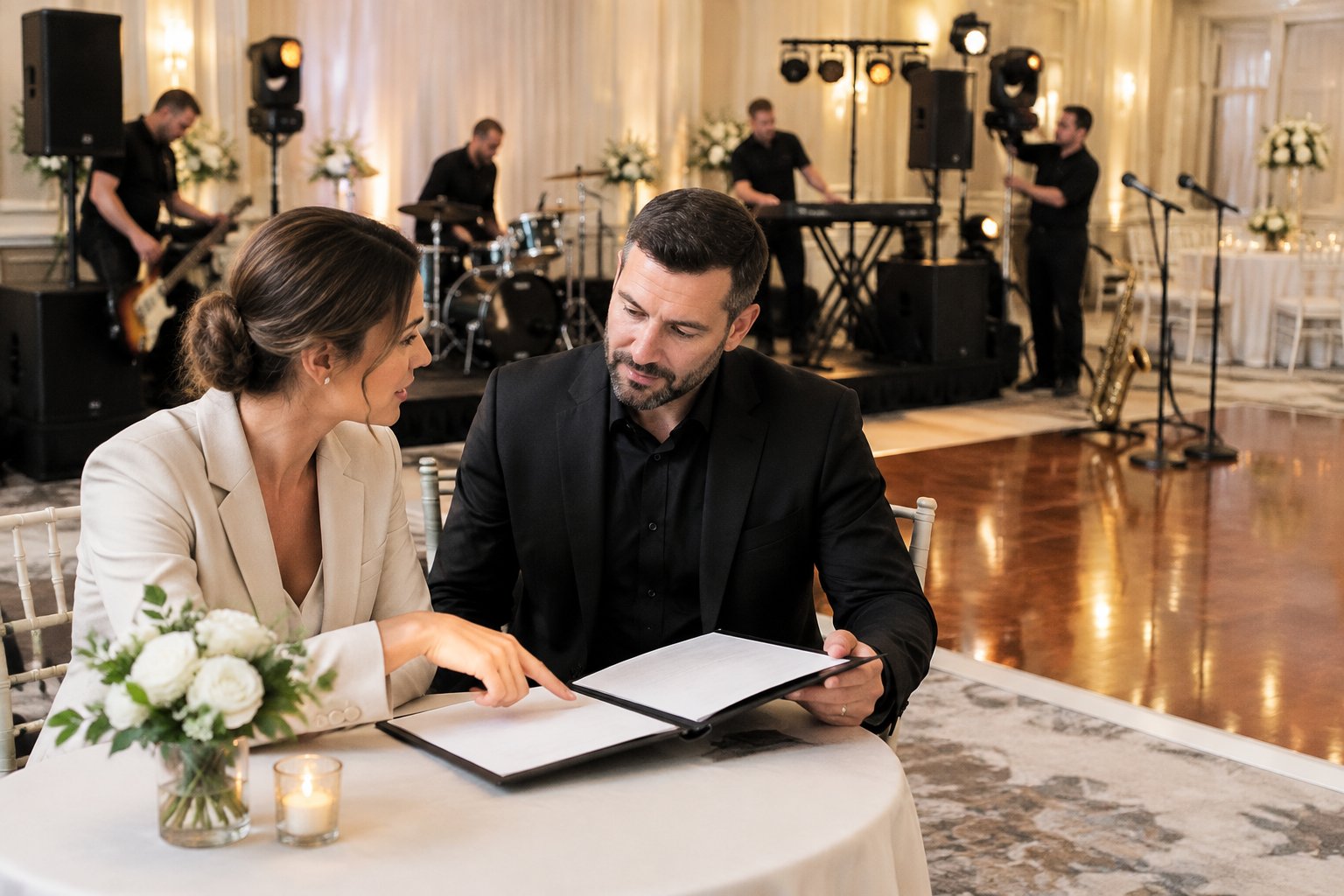
Add-ons can raise the total beyond the performance fee, especially when you extend the schedule or add music for more parts of the day. Ask for each extra as a separate line item before you book.
Overtime, Meals, and Gratuity
Overtime may cost about $200 to $500 per extra hour, though each band sets its own rate and billing terms. Confirm when overtime begins and whether the fee applies to the whole group.
Some contracts ask the couple to provide meals for performers during a long event. Gratuity policies vary, so ask whether a tip is expected, optional, or already included. Add any agreed amount to your budget before the wedding day.
Ceremony and Cocktail Hour Music
Ceremony and cocktail hour music may be priced as separate services. A band might offer a smaller acoustic lineup for these moments, with the full group performing at the reception. Ask whether the musicians, sound equipment, and setup time are included in the extra fee.
For cocktail hour music, confirm the location and timing. If the cocktail area is far from the reception space, the band may need a second sound setup or extra time to move equipment.
Travel and Production Add-Ons
Travel charges can include mileage, parking, lodging, or additional transport for equipment. Production add-ons may include upgraded sound, stage lighting, a sound engineer, or staging. Request a complete estimate that lists each item and states whether the price can change.
Check venue rules before agreeing to extra production. Your venue coordinator can confirm access times, space, power, and any limits on amplified sound.
How Can You Keep Live Music Within Budget?
You can lower the entertainment total by adjusting the lineup, date, or hours while keeping live music for the moments you care about most. Ask for package options that reflect those choices, then compare the cost and coverage side by side.
Choose a Smaller Lineup or Off-Peak Date
Ask whether the band offers a smaller configuration with the same lead singer or musical style. A flexible group may perform as a trio or quartet for a lower fee. Friday, Sunday, and off-season dates may also come with more favorable rates.
Share your budget directly and ask which changes would bring the quote closer to it. A smaller band or a shorter booking window may reduce the total without changing your reception plan.
Book Music Only for Key Moments
Focus live performance on the ceremony, cocktail hour, or reception dance block instead of booking musicians for the full event. You can use a playlist for dinner or other quiet periods, as long as the venue has suitable sound equipment.
Confirm the band’s arrival, setup, and finish times. A shorter performance schedule works best when the event timeline gives the musicians enough time to set up and play the agreed sets.
Compare a Live Band and DJ Hybrid
A hybrid plan pairs live music with a DJ, giving you a live performance for selected moments and recorded music for broader coverage. A national reference point puts a live band near $4,500 and a wedding DJ near $1,800, while a hybrid quote depends on the hours and services you book.
| Option | Reference cost | Music coverage | Best fit |
|---|---|---|---|
| Live band | About $4,500 average | Live sets with breaks | Live stage energy |
| DJ | About $1,800 average | Continuous recorded music | Broad song choice |
| Band and DJ hybrid | Custom quote | Live sets plus recorded music | A mix of both |
Ask whether the band provides music between sets or offers a DJ add-on. One provider may simplify timing and equipment planning, while separate bookings can give you more choice over each part of the event.
What Should You Confirm Before Booking?
Before you pay a deposit, get the lineup, package, schedule, and contingency terms in writing. A complete agreement makes it easier to compare professional wedding bands and gives you a clear plan for the day.
Included Services and Contract Terms
Check the total fee, deposit, payment dates, cancellation policy, and overtime rate. The contract should list the number of musicians, set times, equipment, travel costs, and any add-ons you selected.
Confirm whether the quote includes sound, lighting, emcee duties, and music during breaks. Ask for a revised written quote if any detail changes before you sign.
Breaks, Backup Musicians, and Insurance
Ask how long each set lasts and how the band covers breaks. Some groups provide recorded music between sets, while others leave that task to you or your DJ.
Confirm what happens if a musician becomes ill or cannot attend. Ask whether the band carries liability insurance and whether the venue needs a certificate of coverage. Make sure any substitute policy appears in the contract.
Setlist Planning and the Booking Contact
Share your favorite genres, special dances, and songs you want the band to avoid. Ask when the setlist needs to be finalized and how the band handles requests from guests.
Choose a main contact for schedule updates and share that person’s details with your planner. Send the band your final timeline, including ceremony or cocktail hour coverage, speeches, and the reception finish time.
Keep the approved song requests and event schedule with your signed agreement.