
Rustic Wedding Venues Tasmania: A Planning Guide
If you’re looking for rustic wedding venues, Tasmania offers working farms, heritage barns, vineyards, and country estates framed by pastoral scenery. You can find rustic wedding venues across Tasmania in settings that pair natural landscapes with welcoming spaces for your ceremony and reception.
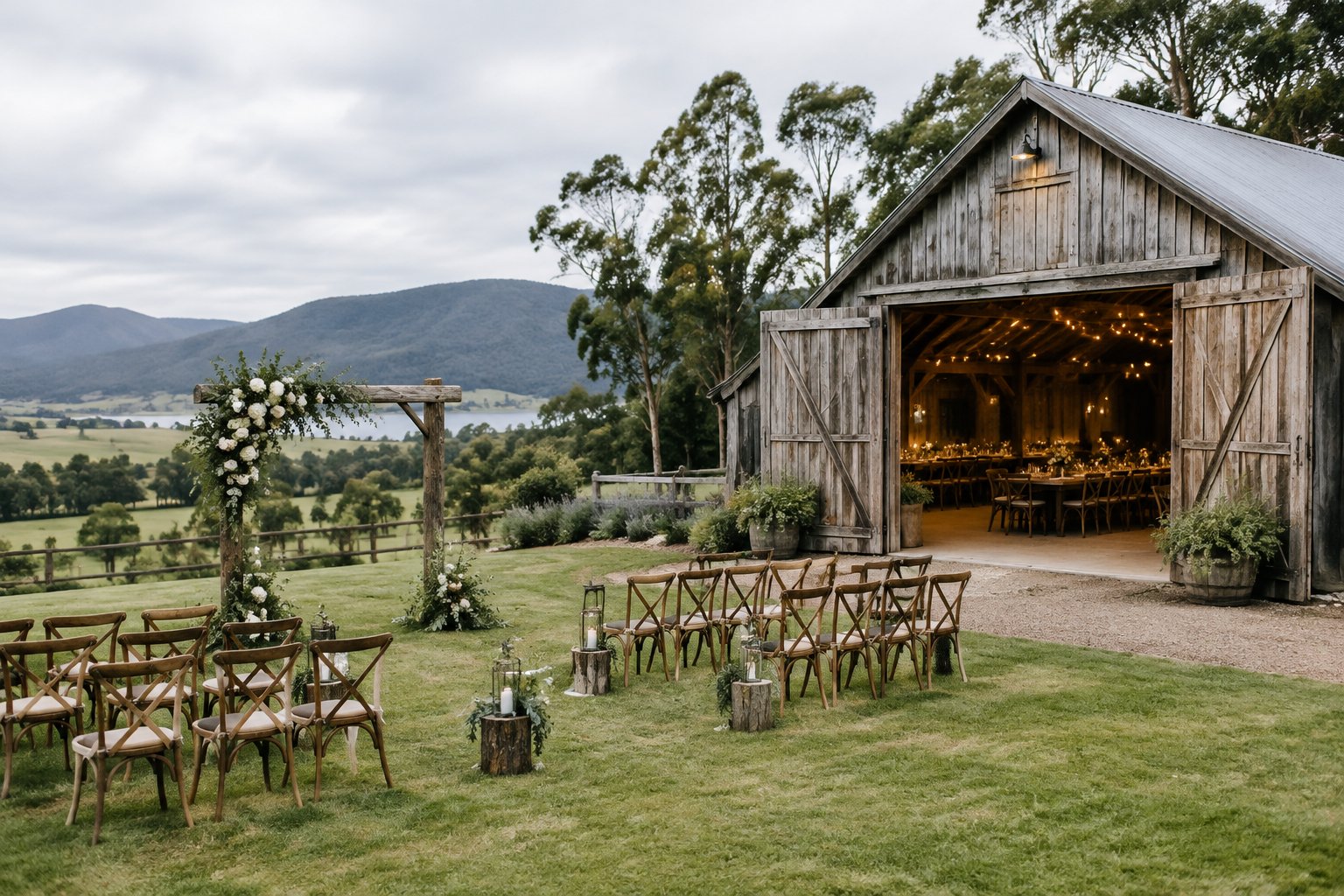
Your venue shapes the feel of the day, as well as the practical details your guests will notice, from travel time to shelter and accommodation. Start by choosing the setting that feels most like you, then contact your favorites to arrange a visit and ask for a current package.
What Counts as Rustic for a Tasmanian Wedding?
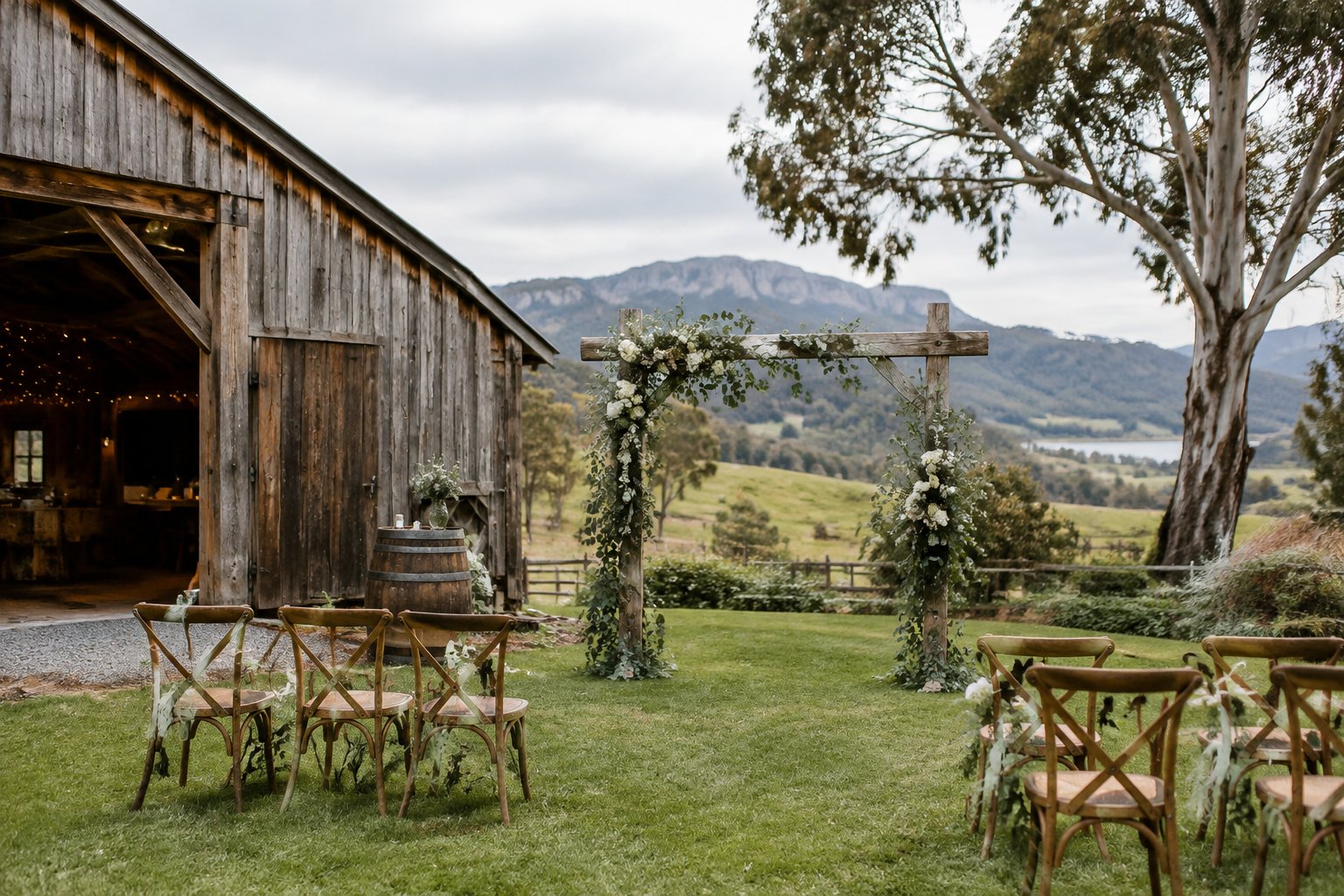
A rustic Tasmanian wedding brings rural character and natural materials together in a relaxed, comfortable setting. Your chosen venue might have historic rustic architecture, open paddocks, or a simple timber interior, with styling that gives the space warmth and personality.
How Do Rustic Details Shape the Look and Feel?
Rustic style draws on the textures and colors already present in the landscape. Timber beams, stone walls, weathered doors, and roughly finished surfaces add character, while greenery, linen, and soft lighting make the room feel welcoming.
A barn or log cabin gives you a strong starting point, so a few thoughtful details can carry the look. You can also lean into the setting with outdoor ceremony ideas such as a timber arch, simple chairs, and seasonal flowers.
For more inspiration, browse these rustic outdoor wedding ideas. Choose details that suit the venue’s materials and your comfort needs, including clear paths and sturdy seating.
How Can You Keep Rustic Style Warm Rather Than Rough?
Balance rusticity with comfort. Add soft lighting, comfortable chairs, textured fabrics, and considered table settings to keep an artless, natural look from feeling crude.
A space can be styled rustically without every surface looking unfinished; polished wood and clean linens sit well beside older beams or farm details. For a cohesive look, pick a small color palette and repeat it through your flowers, signage, and table decor.
These rustic wedding decor ideas can help you find accents that complement the space without covering its character.
Which Tasmanian Setting Suits Your Wedding?
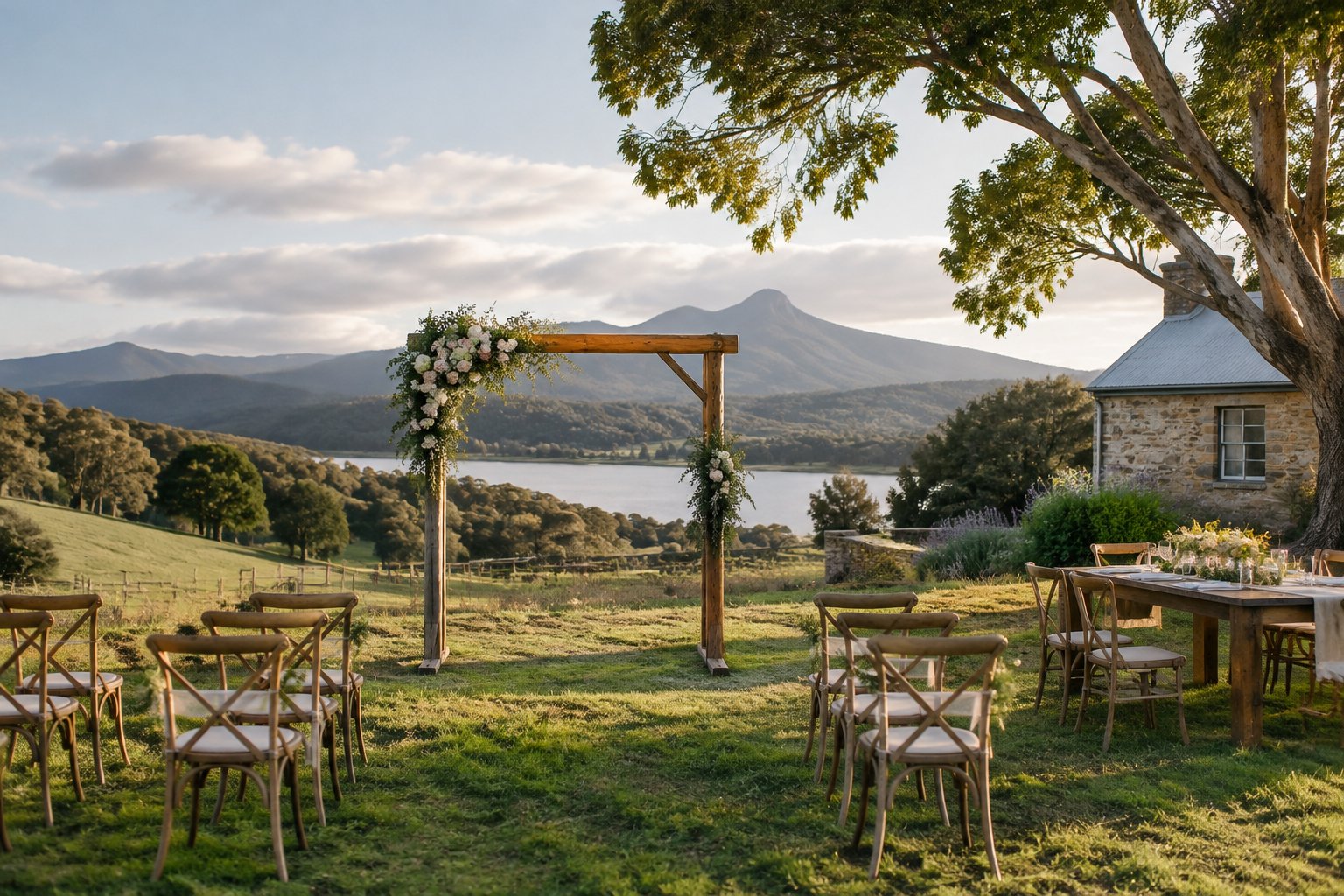
Choose a setting that fits your guest count, travel plans, and preferred atmosphere. A rural farm gives you open space and a pastoral feel, while a vineyard or country estate can offer a more formal backdrop and dedicated event areas.
Would a Farm, Vineyard, or Country Estate Fit Best?
A farm suits you if you want paddocks, heritage buildings, and a relaxed connection to the land. Rathmore, for example, offers ceremony and reception spaces across a 37-hectare farm in the Central Highlands, including gardens, a large shed, and an old barn.
The Old Farm is a working cattle property on the Tasman Peninsula, giving you a coastal rural setting. A vineyard works well if you want rows of vines and a dining-focused celebration.
A country estate can suit you if you’re after established gardens or historic architecture with a more formal feel. Compare how each property handles ceremony and reception areas, and review wedding venue ideas to sharpen your preferences before you tour.
Which Regions Work for Your Guests and Travel Plans?
Start with the place your guests will arrive, then estimate drive times to your shortlisted venues. Hobart and its surrounding valleys can work well if many guests are flying into the capital.
The East Coast, Huon Valley, Tamar Valley, Tasman Peninsula, and Central Highlands each offer a different landscape and travel experience. A remote location gives your celebration a destination feel, though guests may need more time to reach it.
Check road access, transport options, and nearby places to stay before you settle on a region. Share travel details with guests early, especially if the venue sits far from town.
Are Cabins or On-Site Accommodation Important?
On-site rooms or nearby log cabins make a rural wedding easier for guests who would otherwise need to drive after the reception. They also give you a place to get ready and a natural way to extend the celebration across a weekend.
Ask how many people can stay on the property, whether rooms are included in the hire fee, and when guests can check in. If a venue has limited beds, look for nearby lodging and confirm the travel time between it and the reception.
How Do You Compare Venue Features and Packages?
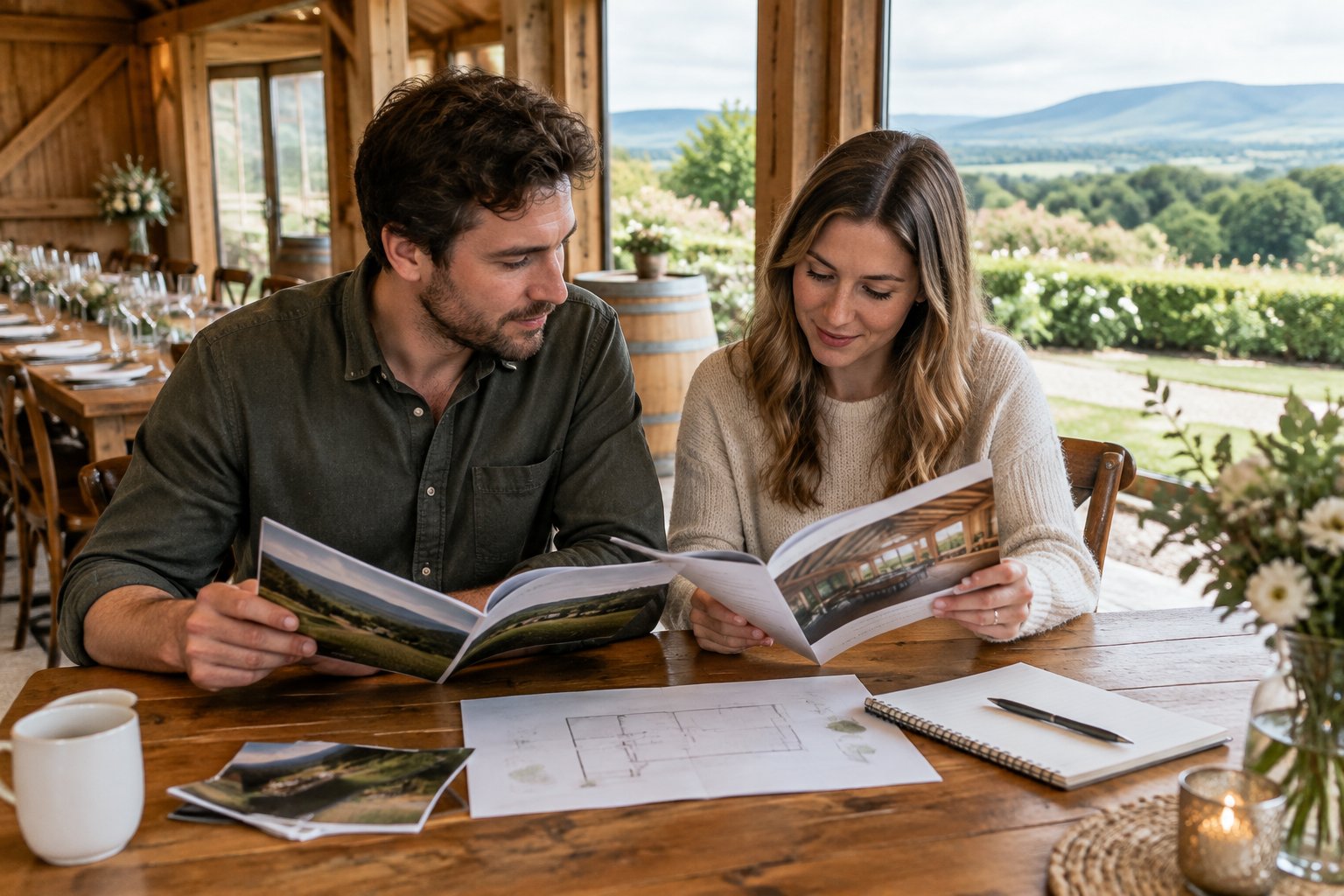
Compare venues using the same guest count, schedule, and service needs so you can judge each package on equal terms. A simple, well-kept space may need extra rentals, while a venue with rustic architecture could already include tables, chairs, and ceremony furniture.
What Are the Capacity and Ceremony Options?
Ask for the seated capacity and the standing capacity, since the figures can differ. Check whether the venue has separate spaces for your ceremony, drinks, dinner, and dancing.
If you want an outdoor ceremony, walk the route guests will take and check the surface underfoot. A venue’s maximum capacity does not tell you whether the room will feel comfortable.
Ask how the layout changes with your guest count and where the dance floor, bar, and food service will go. For a smaller celebration, confirm whether the venue can create an intimate arrangement without leaving large unused areas.
What Is Included in the Hire Fee?
Request an itemized list of inclusions and extra charges. Check whether the fee covers tables, chairs, lighting, setup time, cleaning, and access to getting-ready rooms.
Ask about catering rules, alcohol service, required vendors, and any fees for bringing in outside suppliers. Compare the written package with your actual plans, then ask for a revised quote if you need extra hours or equipment.
A clear list helps you compare what most wedding venues cost with each venue’s full price, rather than its starting rate.
What Happens if the Weather Turns?
Choose a venue with a rain plan you would be happy to use. Ask to see the indoor backup space and find out how quickly staff can move the ceremony or reception if conditions change.
Tasmanian weather can shift, so check what happens with wind, cold, or wet ground as well as rain. Ask whether the backup plan includes heating, shelter, and enough room for your full guest count.
Put the plan and any decision deadline in writing.
What Should You Budget for a Rustic Venue?
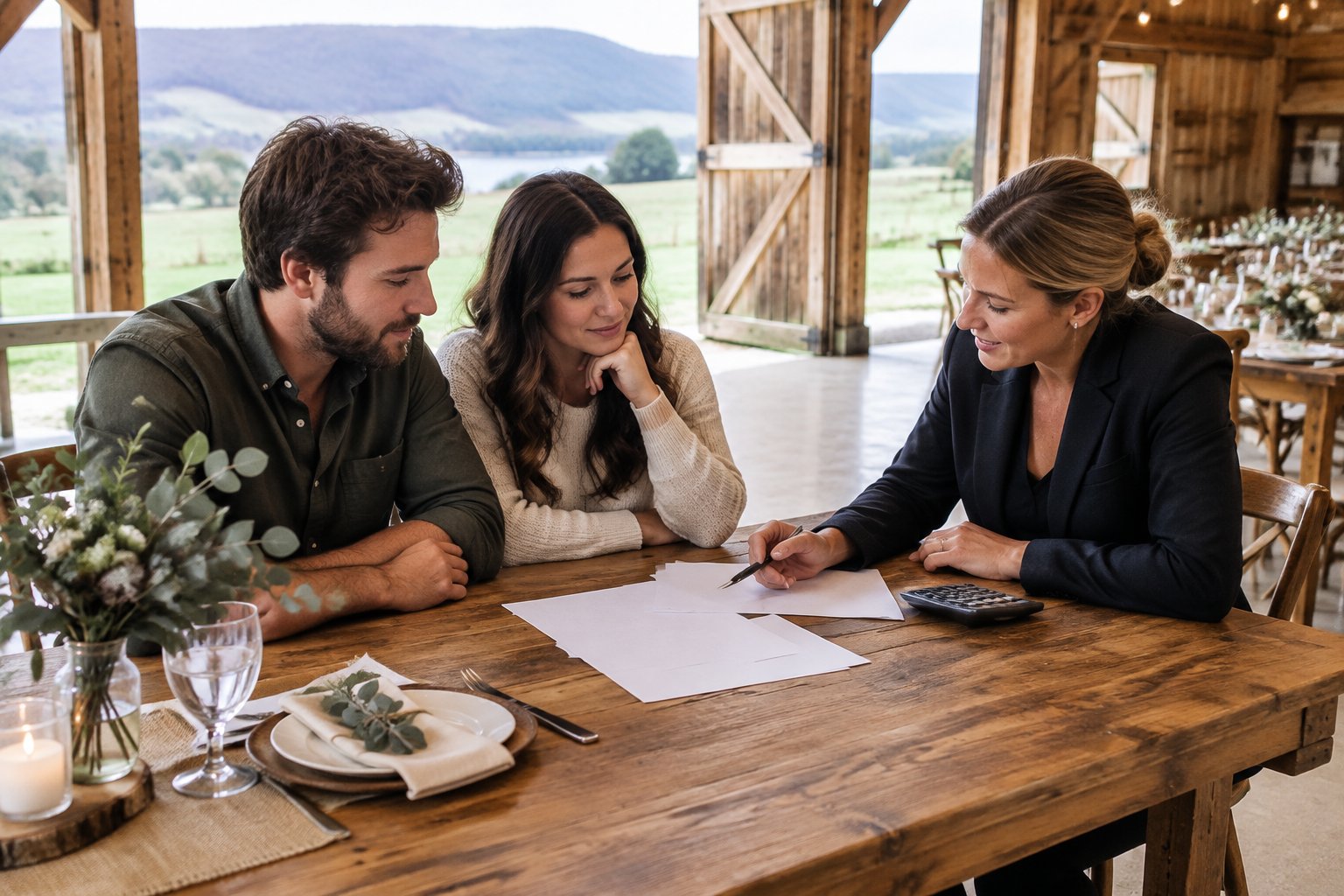
Set your venue budget around the full cost of hosting your celebration, including the hire fee and the services the venue does not provide. Ask for a quote based on your date, guest count, and event schedule, then compare the total with your planned spending.
Which Costs Are Usually Separate?
Your venue fee may cover the site and basic furniture, while catering, drinks, styling, and supplier costs are priced separately. Ask about extra charges for cleaning, security, late finishes, setup access, equipment hire, and accommodation.
Get the details in writing so you can track deposits and payment dates. If you’re working with a tight budget, consider a weekday date, a smaller guest list, or a venue that already has the essentials you need.
You can also weigh the package against how much of your wedding budget to spend on a venue and explore inexpensive rustic wedding venues as you compare options.
How Can the Season Affect Availability and Price?
Tasmania’s seasons fall opposite those in the United States: summer runs from December through February, while winter runs from June through August. Ask each venue which dates are available and whether its rates change by season, day of the week, or event length.
Summer brings long evenings for outdoor celebrations, while winter plans call for warm indoor spaces and a clear weather backup. Ask for prices across a few dates if your schedule is flexible, then check how each option affects travel and accommodation for your guests.
How Can You Vet a Venue Before Booking?
A careful site visit helps you check the rural setting, guest comfort, and day-of logistics before you sign. Bring your estimated guest count and a list of questions, then ask the venue to show you each space you would use.
What Should You Check During a Site Visit?
Walk through the ceremony and reception areas at the time of day you expect to use them. Check the light, wind exposure, ground conditions, restrooms, and the distance between spaces.
Look at the backup area in person, and ask how staff handle changes to the plan. Notice what the venue already provides and what you would need to bring in.
Take notes about furniture, power access, lighting, and signs that guests will need to find their way around.
How Accessible Is the Venue for Guests and Vendors?
Ask about the route from the main road, parking, drop-off points, and accessible paths. A rural venue may have gravel, slopes, or long walks between buildings, so check whether guests with mobility needs can reach the ceremony, restrooms, and reception comfortably.
Confirm how delivery vehicles reach the site and where vendors can unload. Ask about mobile phone coverage and transport options for guests who do not plan to drive.
Share clear directions with your guests before the wedding.
What Questions Should You Ask About Setup and Cleanup?
Confirm your access hours, who handles furniture setup, and when vendors can arrive. Ask whether you can decorate the day before, what restrictions apply to candles or confetti, and who takes down hired items after the event.
Check the cleanup rules and confirm which tasks are yours, your vendors’, or the venue team’s. Before booking, make sure the contract lists the agreed schedule, included spaces, payment terms, cancellation rules, and weather plan.