
Should Your Shoes Be Darker Than Your Outfit? A Simple Guide to Footwear Coordination
Choosing the right shoes can make or break your outfit. In general, a more polished look is achieved by making sure your shoes are darker than your outfit. This classic style tip helps create a nice visual balance while making sure that your footwear stands out without clashing with your clothes.

When planning your look, consider how the color of your shoes complements your style. Darker shoes often give a more formal appearance, which works well for business settings or dressy occasions. Meanwhile, lighter shoes can be fun and casual, but they might not always blend perfectly with every outfit.
By paying attention to the color contrast between your shoes and outfit, you can enhance your overall style. Whether you’re dressing up for a special event or seeking a chic everyday look, this simple guideline will help you make confident fashion choices.
Understanding Color Harmony in Outfits

Choosing the right shoe color plays a key role in creating a balanced outfit. It can enhance your look and ensure everything matches well. In this section, you will discover how shoe color, texture, and patterns affect your style.
The Role of Shoe Color in an Ensemble
The color of your shoes can either make your outfit shine or create disharmony. Darker shoes often provide a classic and formal look. For instance, black shoes pair well with cream trousers for a polished appearance. In contrast, tan or brown shoes can add a casual touch. If you’re wearing lighter pants, opt for shoes that are darker, like navy or charcoal, to create balance. Meanwhile, bright colors like yellow or green shoes can bring fun to a neutral outfit. Just remember, the key is to ensure a smooth transition between your shoes and clothing. Mixing colors can be stylish, but aim for complementary shades to avoid clashing.
Texture and Pattern Considerations
Texture and pattern are just as important as color in your outfit. When you pick shoes, think about what they are made of. For example, sleek leather shoes have a different vibe than casual suede ones. If your outfit has bold patterns, like stripes or florals, choose solid-colored shoes to keep the focus on your clothes. Alternatively, if you wear a simple outfit, textured shoes can add interest. A pair of patterned shoes can be exciting, but ensure they don’t overwhelm the rest of your look. Balancing texture and pattern with your shoe choice helps achieve harmony in your outfit.
Choosing the Right Shoes for the Occasion
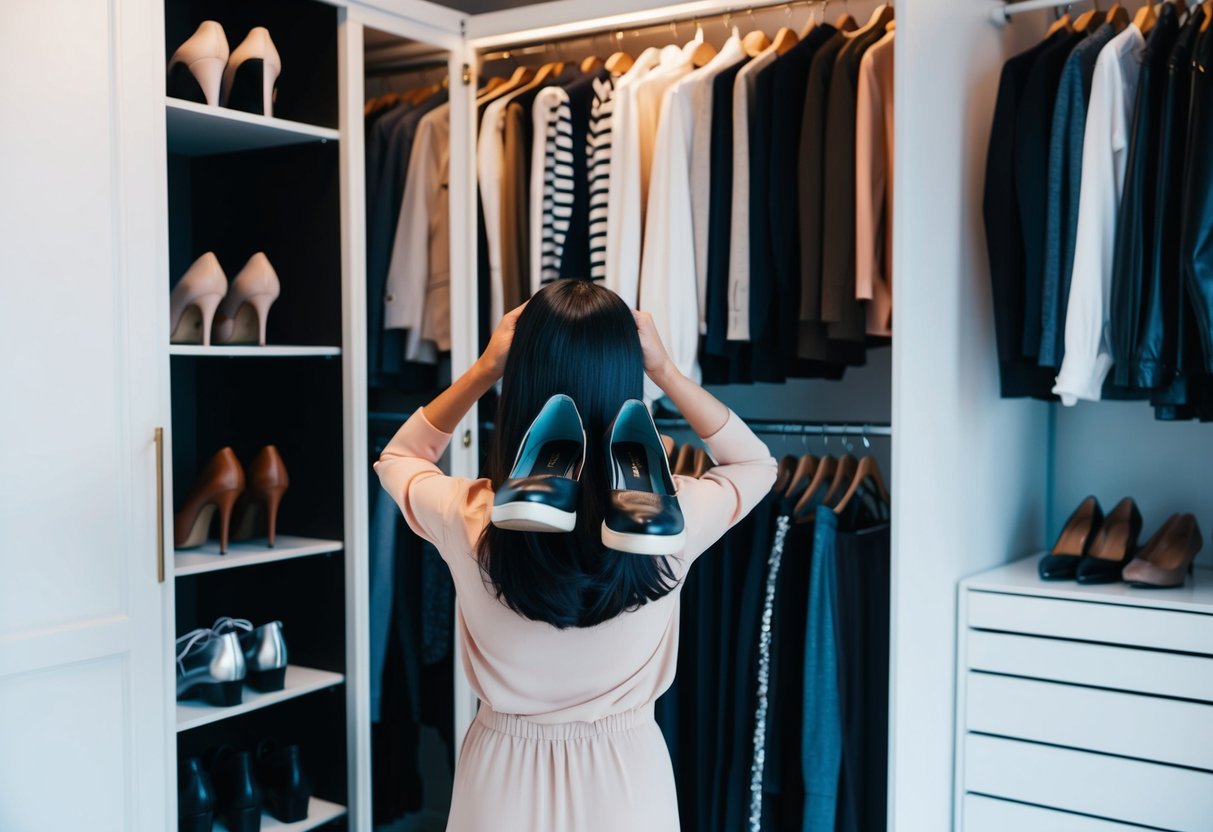
Selecting shoes that suit the occasion is key to completing your outfit. The style and color of your shoes can enhance your overall appearance, while also ensuring you feel comfortable and confident. Here are some important aspects to consider.
Formal vs Casual Settings
In formal settings, choose shoes like black loafers or dressy boots. These styles offer a polished look, especially when paired with a business suit or elegant dress. For men, wearing darker shoes that match the formality of your outfit is essential. Brown shoes can work well too, particularly with lighter suits. In contrast, casual settings allow for more relaxed choices. You might opt for sneakers or ballet flats for everyday outings. These shoes provide both comfort and style. Meanwhile, if you’re heading to a beach party, sandals are ideal, while boots might be your choice for outings in cooler weather.
Seasonal Footwear Choices
The season can greatly impact your shoe choices. In summer, light, breathable shoes like sandals or ballet flats are perfect to keep you comfortable. Opt for bright colors to reflect the sunny weather. As the temperature drops, switch to boots or closed-toe loafers. These options provide warmth and can still be stylish. Meanwhile, black or brown boots can easily match with various outfits, from jeans to dresses. Remember, during colder months, prioritize comfort and warmth while maintaining your fashionable look.
Shoe Selection Based on Outfit Color
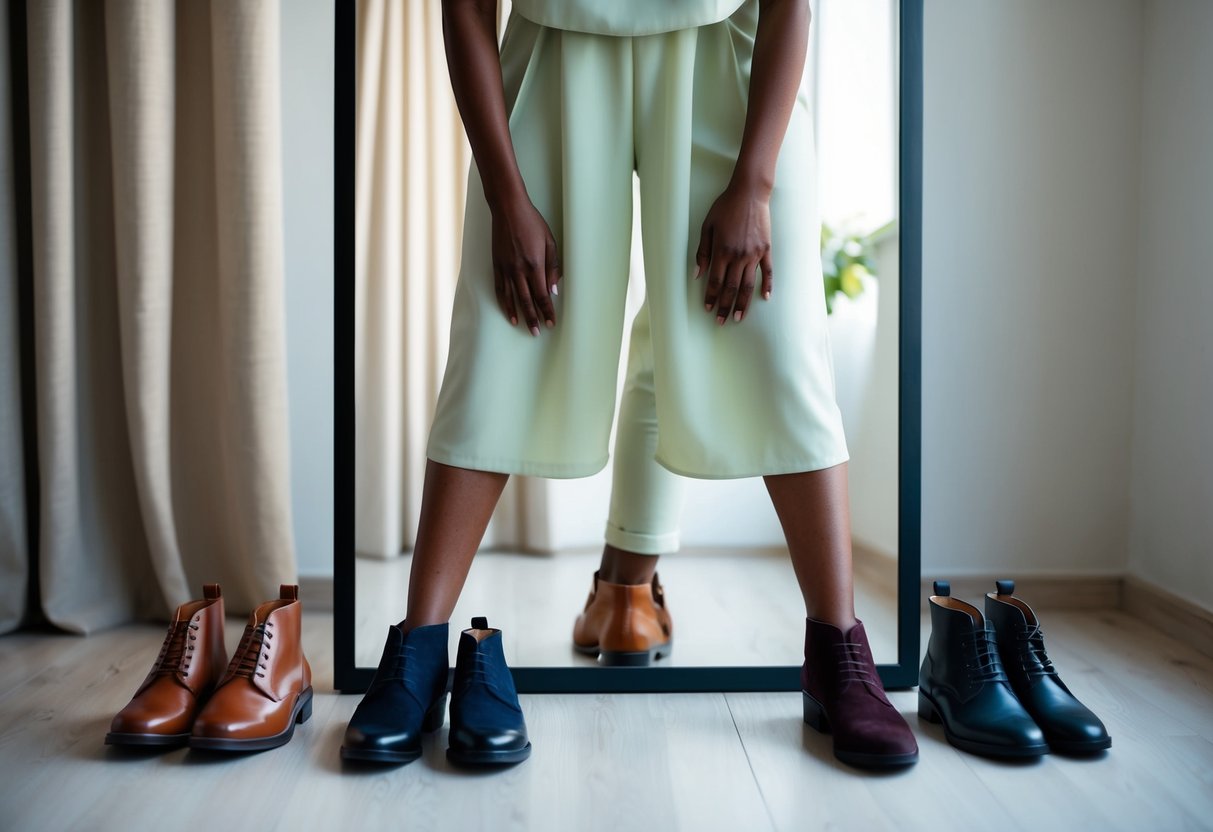
Choosing the right shoes based on your outfit color can enhance your style significantly. It’s important to consider whether your shoes should complement or contrast your outfit. You also need to think about which shoes work best with the trousers you plan to wear.
Complementing Versus Contrasting
When deciding on shoes, you can choose between complementing or contrasting your outfit. Complementing means finding shoes that are similar in tone to your outfit. For example, when wearing cream trousers, light brown shoes or white sneakers can create a harmonious look. On the other hand, contrasting can bring a bold flair to your outfit. If you wear charcoal trousers, pairing them with black shoes will offer a sharp contrast, making your outfit stand out even more. Finding the right balance is key. Go for a darker shade if you want your shoes to stand out more and create a focal point. This approach keeps your whole look cohesive and stylish.
Ideal Pairings for Different Trouser Colors
Pairing your shoes with the right trouser color is essential. Here are some ideal matches:
-
Cream Trousers: Light brown shoes or classic white sneakers work well to keep your outfit light and fresh.
-
Mid-Grey Trousers: Opt for either brown shoes for warmth or black shoes for a sleek appearance.
-
Charcoal Trousers: Black shoes are the go-to choice, as they match perfectly and add sophistication.
This simple guide helps you create stylish and well-coordinated outfits. Choose wisely to ensure all elements work together effectively!