
String Quartet Wedding Music Cost: 2026 Pricing Guide
Your string quartet wedding music cost will often fall between $800 and $1,500 for a ceremony-only booking and $1,200 to $2,500 for a ceremony plus cocktail hour in many U.S. markets. High-demand dates, major cities, and custom music can push the quote higher.
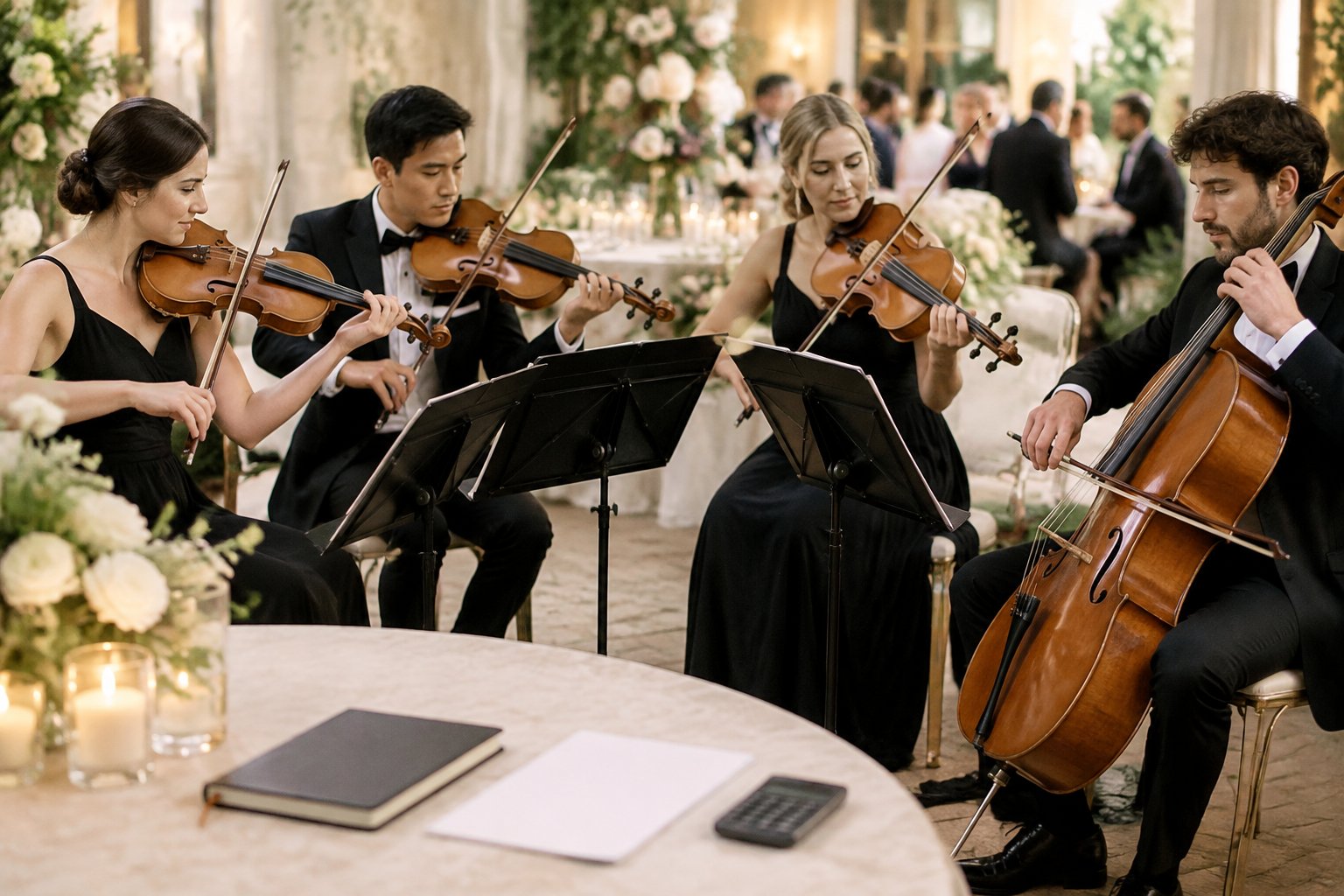
Your final price reflects the musicians’ time, travel, ensemble size, and any special requests. As you build your music budget, ask for a written quote that matches your schedule and venue, then compare it with your other wedding costs using a wedding budget plan.
What Should You Budget for Ceremony and Reception Music?
For a professional quartet, set aside roughly $800 to $1,500 for a ceremony and $1,200 to $2,500 for a ceremony with cocktail-hour music. Your city and date can shift those estimates, so use them as planning ranges before you request quotes.
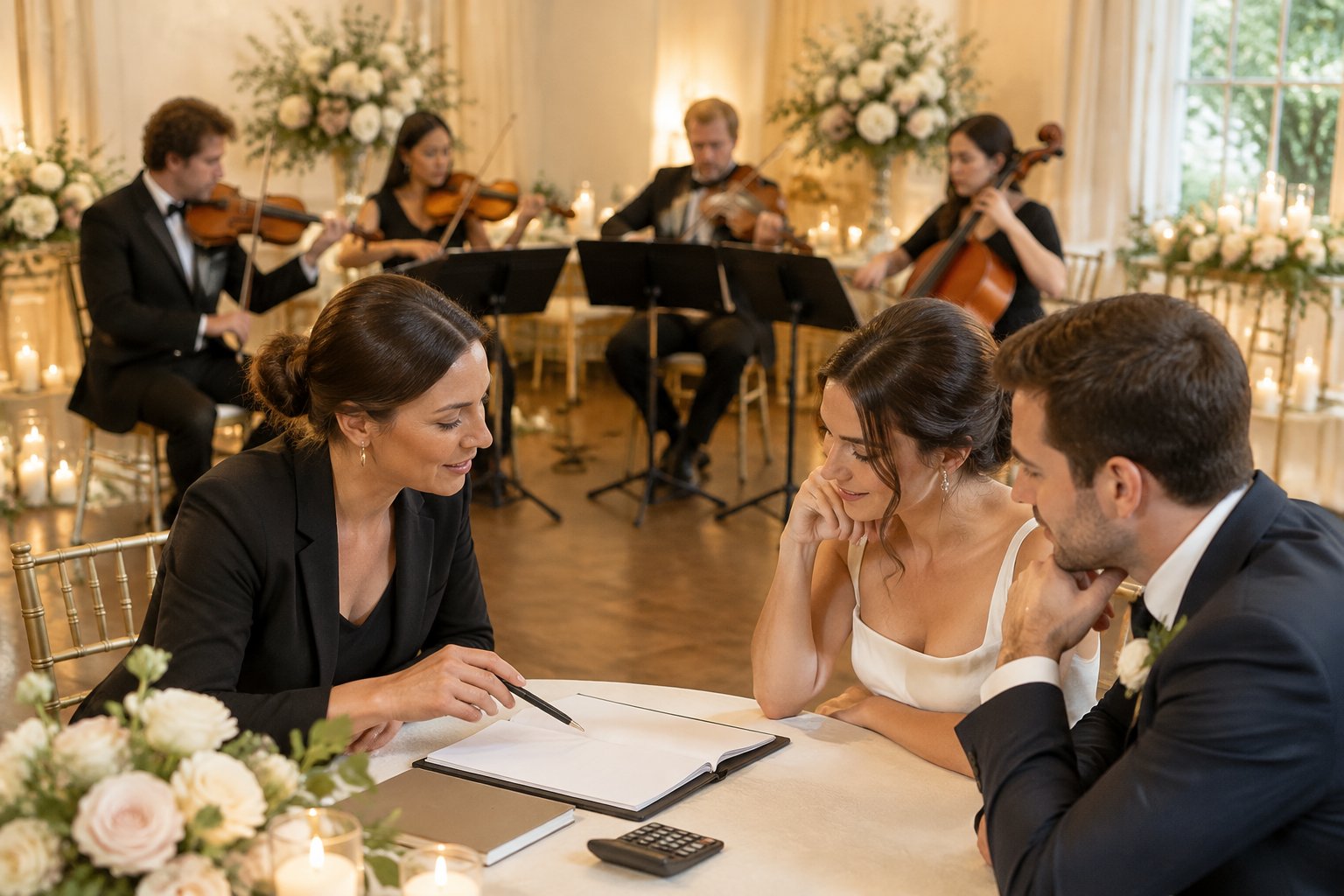
Typical U.S. Price Ranges by Ensemble
String quartet pricing often starts near $1,000 for the first hour, with added time charged in blocks. One published 2026 rate schedule, for example, lists a quartet at $1,000 for the first hour and $280 for each additional 30 minutes. Its peak-season first-hour rate is $1,275.
That example shows why you should check the date-specific rate, not just a vendor’s standard price. The price for your event could sit below or above these figures. A smaller market, a weekday wedding, or a short booking may bring the quote down.
A major city, peak Saturday, or experienced ensemble may raise it. Include music in your full wedding budget early so you have room to adjust the coverage or ensemble.
Ceremony-Only vs. Ceremony-and-Cocktail-Hour Packages
A ceremony package covers music before guests arrive at the seats, during key moments, and as you exit. Many quotes include a short prelude, the processional, any planned interludes, and the recessional.
A ceremony plus cocktail-hour package adds another hour or more of playing time, so the total rises with the musicians’ schedule. Ask whether the price covers the full time on site or only the playing time. If you want live music as guests arrive and during cocktails, share those start and end times when requesting a quote.
What Factors Change the Final Quote?
Your quote changes with the musicians’ total commitment, travel needs, wedding date, and requested repertoire. Sharing your schedule and venue details early helps you get a price that fits the actual event.
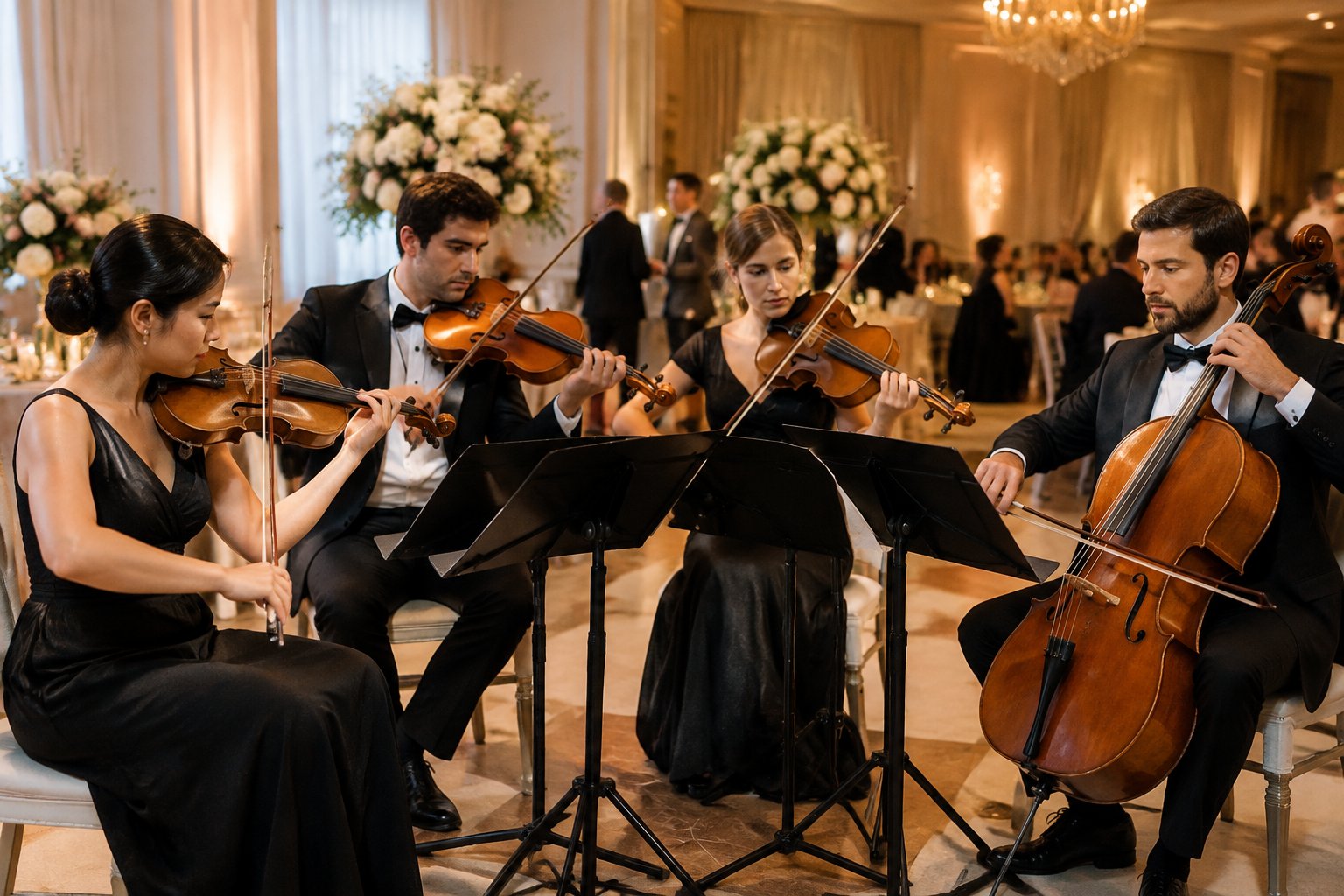
Performance Time and Breaks
The booked time may include setup, waiting, and travel between ceremony and reception spaces, along with the performance itself. A short ceremony still requires the musicians to arrive early, tune, and be ready before guests enter.
Longer coverage adds musician time, and a long gap between ceremony and cocktails may affect the quote. Give the ensemble your full timeline, including any room change or planned break. This lets them price the full commitment instead of estimating from the ceremony length alone.
Location, Travel, and Venue Logistics
Travel distance can add fees, especially when the venue sits far from the musicians’ home area or requires extra transport. Difficult access, parking limits, and a move between spaces can also affect setup time.
Outdoor events need a sheltered spot that protects instruments and sheet music from sun, wind, and rain. A large or open venue may also need amplification. Review these wedding music tips with your planner and venue so the musicians know what to expect.
Date, Season, and Musician Experience
Saturday weddings during popular months can cost more because musicians receive more booking requests for those dates. Holiday weekends and major local events can also affect availability and rates.
Experienced performers with strong event skills may charge more than newer groups. Ask whether the quote is tied to your exact date and whether the rate includes any seasonal premium. If you have flexibility, request prices for a weekday or an off-peak month.
Custom Song Arrangements
A quartet may charge an extra fee to prepare a song that is outside its existing repertoire. The work involves arranging the music for the instruments and preparing parts for each player.
Share your requested songs before signing so the quote includes any arrangement costs. If you have several choices in mind, narrow them to the songs that carry the most meaning for you. Your musicians can confirm which pieces they already play and which require extra preparation.
Which Ensemble Size Is Right for Your Wedding?
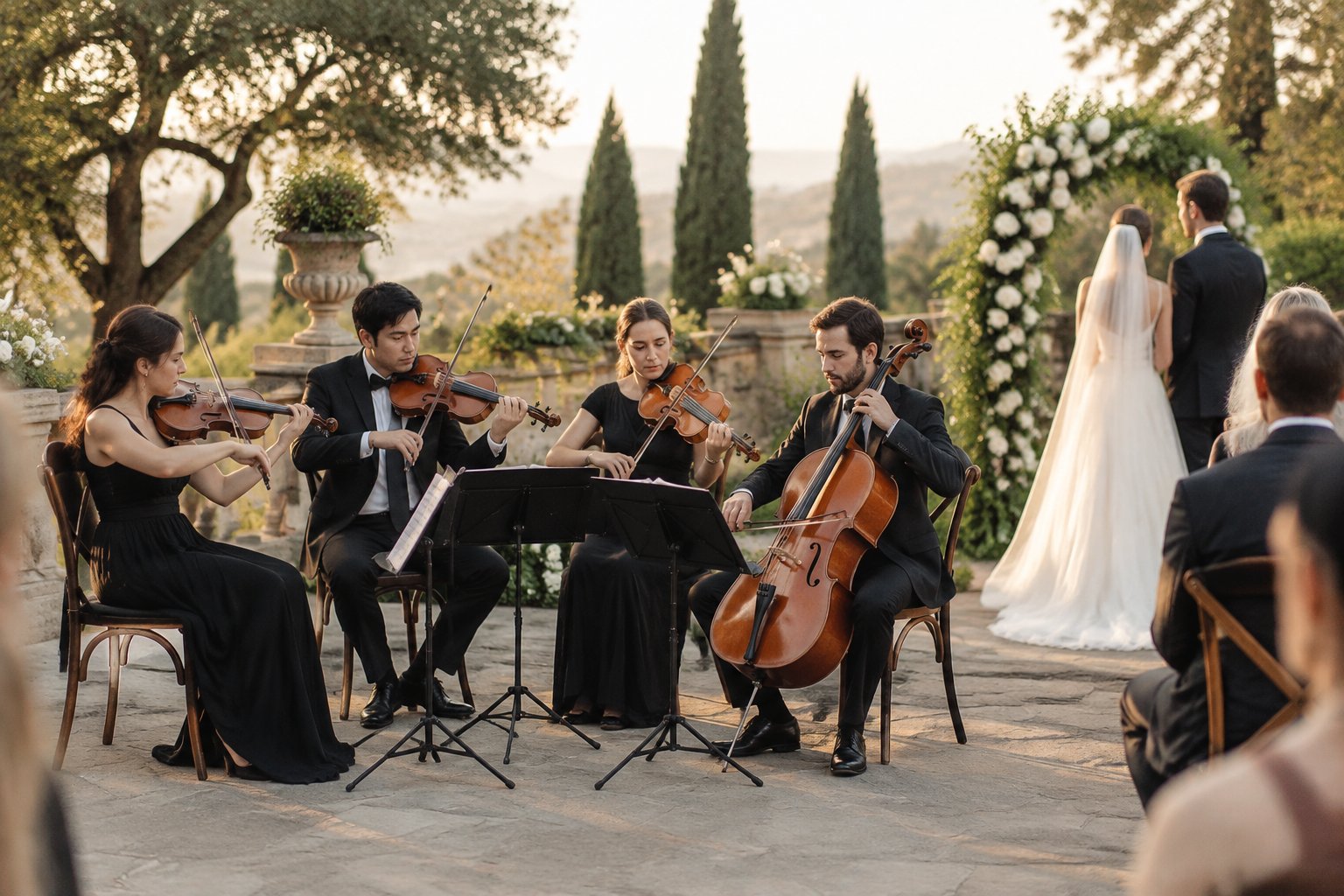
A quartet gives you a full, layered sound, while a duo, trio, or solo violinist can suit a smaller space or a tighter budget. Choose the group that fits your guest count, venue acoustics, and the atmosphere you want.
| Ensemble | Sound | Relative cost | Good fit |
|---|---|---|---|
| Solo violinist | One melodic line | Lowest | Small, intimate ceremony |
| String duo | Light and intimate | Lower | Small indoor wedding |
| String trio | Fuller than a duo | Mid-range | Mid-sized event |
| String quartet | Rich, layered sound | Highest | Larger ceremony or cocktail hour |
A variety of wedding music ideas can work across these ensemble sizes, though the arrangement and sound will differ.
String Duo: An Intimate, Lower-Cost Option
A string duo often pairs violin with cello. It uses fewer musicians than a quartet, which can lower the fee and make setup easier in a small ceremony space. The sound feels close and personal, with melody and bass supporting the music.
String Trio: A Fuller Sound for Mid-Sized Weddings
A string trio adds a third part for a warmer, more layered sound than a duo. It can fit a mid-sized ceremony or cocktail hour where you want more musical depth while keeping the ensemble smaller than a quartet.
Wedding String Quartet: The Classic Four-Piece Sound
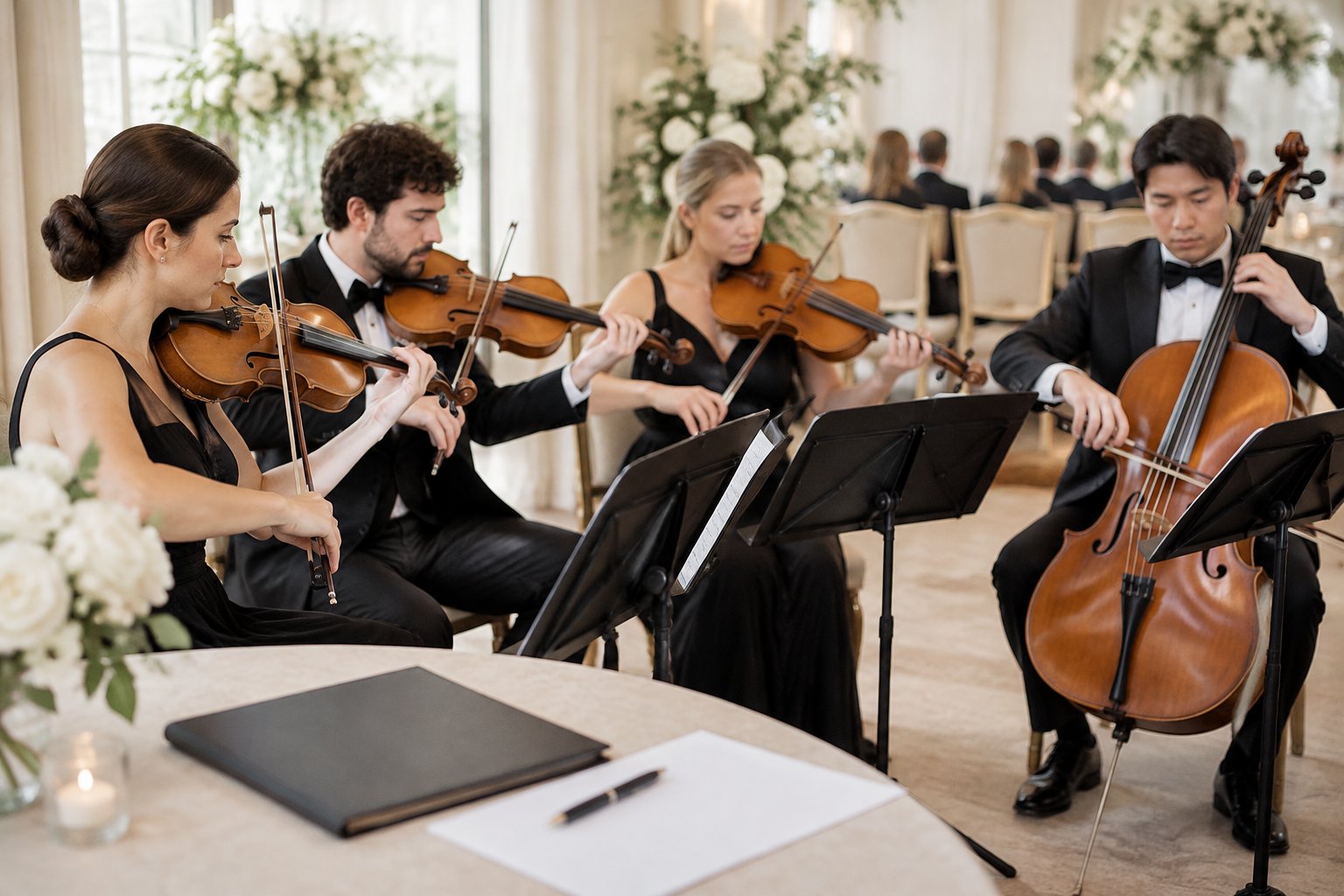
A wedding string quartet usually includes two violins, a viola, and a cello. Those four parts create a broad range of tones and fuller arrangements, which suit larger gatherings and open spaces.
A professional string quartet also brings four musicians, so its fee and space needs are higher than those of smaller ensembles.
Solo Violinist: Live Music for Smaller Budgets
A solo violinist offers live melody with the simplest setup and lowest ensemble cost. This option suits an intimate ceremony, especially in a compact indoor venue. For a large or open space, ask how the sound will carry to guests seated farther away.
What Should a Wedding Music Quote Include?
A clear quote spells out the musicians’ time, music support, travel, and any extra charges. Review the details against your schedule before you compare totals.
Arrival, Setup, and On-Site Waiting Time
Check when the musicians will arrive and whether setup time is part of the booked window. Ask how the quote handles waiting between the ceremony and cocktail hour, especially if those events take place in separate areas. Confirm the space, chairs, and weather cover the musicians need.
Consultation, Repertoire, and Included Arrangements
Ask whether music planning and song selection are included. Confirm how many special requests the group will accommodate and whether existing arrangements are part of the fee.
For extra song ideas, check how many songs are played at a wedding ceremony and give the musicians your choices early.
Travel Fees, Overtime, and Other Possible Extras
Request a breakdown of travel charges, overtime rates, amplification, and custom arrangements. Ask what happens if the event runs late and how the group handles additional playing time. Confirm any deposit, payment dates, cancellation terms, and gratuity expectations in writing.
How Can You Plan and Book Within Your Budget?
You can stay on budget by comparing quotes for the same schedule, choosing the moments where live music adds the most, and reserving musicians before popular dates fill. A written timeline and contract help keep the final price clear.
Compare Quotes by Coverage, Not Just the Bottom Line
Send each ensemble the same details: your date, venue, guest count, performance times, and requested music. Then compare what each quote includes, such as setup, travel, breaks, and arrangements.
A lower total may cover fewer hours or a smaller group, so check the service details before choosing. If you are still looking for musicians, use a wedding music search plan to organize your options and gather comparable quotes.
Choose Music and Performance Time to Match Your Priorities
Decide which moments matter most to you, such as guest arrival, the processional, or cocktail hour. You can book the quartet for those parts of the day and keep the schedule focused. Select songs from the ensemble’s current repertoire when you want to limit arrangement costs.
When to Reserve Musicians and Confirm the Contract
Start contacting musicians as soon as you know your date and venue, especially for a peak-season Saturday.
Once you choose a group, make sure the contract lists the ensemble, coverage window, arrival time, fee, payment schedule, and extra charges. Confirm the final timeline and song selections with the musicians before the wedding.