
What Documents Do I Need to Get Married in the UK? Essential Guide for Your Big Day
To get married in the UK, you need to gather a few important documents. Typically, you will require proof of identity, such as a passport or driver’s license, along with documents showing your current address. If you or your partner are from abroad, you may also need a marriage visitor visa if you’re not planning to stay permanently.

If you’re planning a civil partnership, it’s essential to notify the local register office. You will then need to provide documents that may include your birth certificate and, if applicable, evidence of any previous marriages ending in divorce. Once everything is in order, you can proceed with the ceremony. Don’t forget, after the wedding, you’ll want to obtain your marriage certificate for legal purposes.
Understanding these requirements helps ensure your special day goes smoothly. Take the time to check with your local authority for any specific rules that may apply to your situation. Your joy and preparation for this new chapter should be the main focus!
Legal Requirements for Marriage in the UK
Getting married in the UK involves specific legal requirements. You need to ensure you meet eligibility criteria and understand the necessary steps for giving notice before your wedding.
Eligibility and Immigration Status
To marry in the UK, you need to be legally free to marry. This means you must not be already married or in a civil partnership.
Your immigration status plays a big role too. If you’re a British or Irish citizen, marrying is usually straightforward. If you have settled status or indefinite leave to remain, you can also marry without extra steps.
If you have pre-settled status from the EU Settlement Scheme, you may need to apply for a visa to get married. This is important for ensuring you follow the rules set by the Home Office. If you’re unsure about your situation, it’s best to seek advice.
Notice Period and Marriage Notice
Before your wedding, you must give notice of marriage. This is a legal declaration made at your local register office.
You or your partner must be resident in the area for at least seven days before giving notice. The notice should be given at least 29 days before the ceremony. During this time, your notice is displayed to ensure there are no legal reasons to prevent the marriage.
When you give notice, you’ll need to provide specific documents. This includes proof of identity and your immigration status. If applicable, show your visa, settled status, or any other documentation required by the register office.
Proof of Identity and Nationality
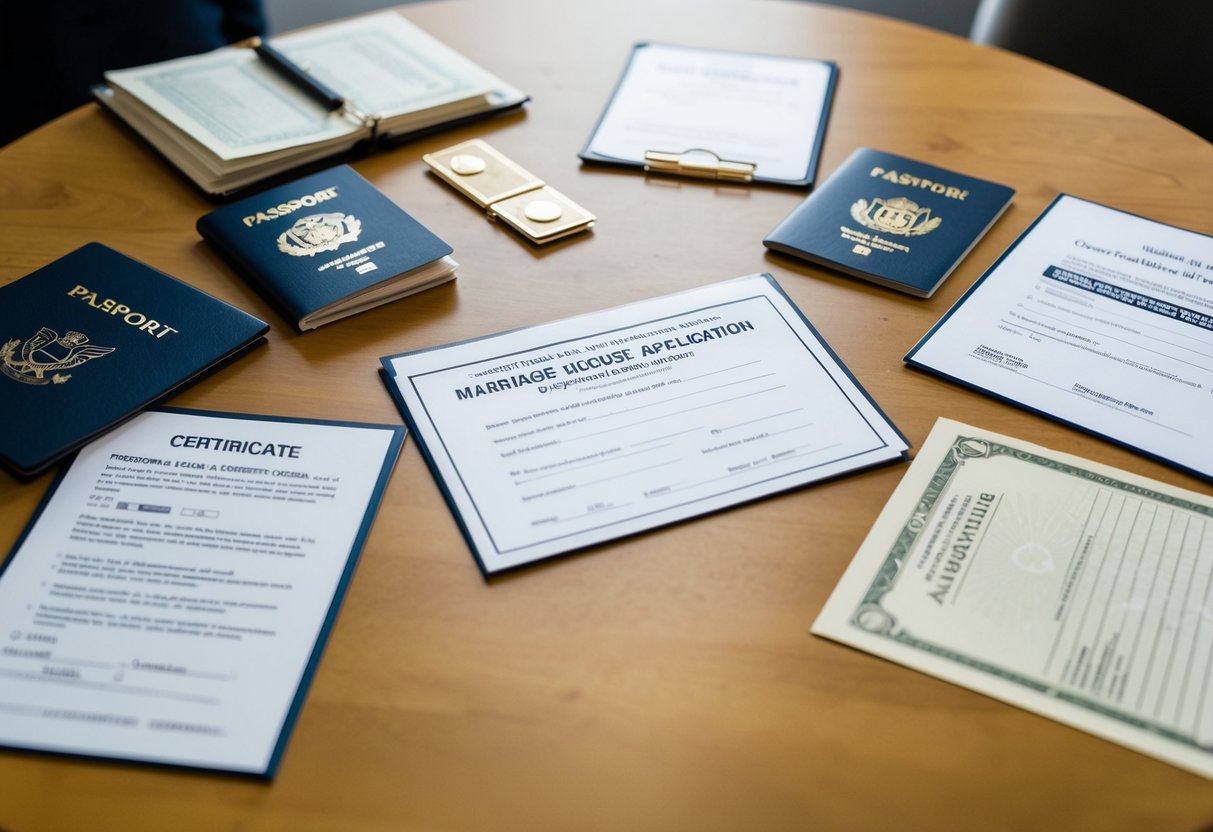
When you plan to get married in the UK, you need to provide proof of your identity and nationality. This helps ensure that both parties meet the legal requirements to marry. The documents required can vary, so it’s essential to know what you need.
Primary Identification Documents
To prove your identity and nationality, you must provide primary identification documents. The most accepted forms include:
- Valid Passport: If you have a passport, it is the best proof of identity and nationality.
- Birth Certificate: Your birth certificate shows your full name, date of birth, and place of birth.
- Driving License: A current UK driving license also serves as a valid form of identification.
Make sure your documents are original, not photocopies. If you were born outside the UK, you may need additional documents, like a certificate of application or a citizenship document to confirm your status.
Additional Supporting Documents
In addition to your primary identification, you might need to provide additional supporting documents. This can include:
- Proof of Address: Use documents like a recent bank statement, council tax bill, or utility bill to show where you live.
- Tenancy Agreement or Mortgage Statement: These documents can help verify your living situation.
- Previous Relationship Documents: If applicable, you may need to present a divorce decree absolute or death certificate to confirm your status.
Planning the Ceremony
When planning your wedding ceremony, you’ll want to consider two main aspects: the venue where the ceremony will take place and the type of ceremony you prefer. Understanding these points will help ensure your special day goes smoothly.
Choosing the Venue
Selecting the right venue is crucial for your ceremony. You can choose from various options like a local register office, a church, or even an outdoor location. Each venue type will have different requirements.
For a civil ceremony, you can book a local register office or a licensed venue. You need to give notice of your marriage at least 28 days prior. This involves providing personal details and any documents requested, like ID.
If you prefer a religious ceremony, contact your chosen place of worship. Make sure the venue is recognized for wedding services. Some locations may have special requirements, like attending pre-marriage classes.
Civil vs. Religious Ceremony
Next, you’ll need to decide between a civil or religious ceremony.
A civil ceremony is often simpler and held at a register office or licensed venue. It’s typically non-religious and focuses on the legal aspects, including exchanging vows and signing the marriage schedule.
On the other hand, a religious ceremony may involve specific rituals, blessings, and scripts. You can include traditional vows, and you might want to discuss any religious customs with your officiant.
Also, if you are a same-sex couple, both types of ceremonies are available to you and will meet legal requirements. If you intend to change your name after the wedding, look into the deed poll process to make it official.
After the Wedding
After your wedding, there are important next steps to take, including obtaining your marriage certificate and considering any name changes. These steps can affect personal, legal, and practical matters in your new life together.
Obtaining the Marriage Certificate
To officially register your marriage, you need to obtain your marriage certificate. This document is crucial as it proves your marital status. You can apply for it through your local registry office.
Typically, you’ll need:
- Your full names
- The date of the ceremony
- The place of the marriage
Most couples receive the certificate within a few weeks. It’s advisable to get multiple copies, especially if you need one for changing your name or for any immigration authorities.
If you are a British citizen or have refugee status, the marriage certificate will be a key document for any future immigration applications.
Changing Your Name Legally
If you decide to change your name after marriage, you can do so easily. You have several options, like simply adopting your spouse’s surname or creating a double-barreled name.
To change your name legally, you may need to use a deed poll if it involves a significant change. The process can vary depending on your situation, so check the guidelines carefully.
Changing your name can affect various documents. You will need to update your passport, bank accounts, and utility bills.
If you are seeking humanitarian protection or have specific immigration needs, consult with immigration authorities. That way, you can ensure all your documents align correctly with your new name.