
What Does a Wedding Cake for 100 People Look Like? A Guide to Size and Design
When planning a wedding, one of the most exciting choices you’ll make is the cake. A wedding cake for 100 people typically features a classic tiered design that looks stunning and provides enough servings for your guests. These cakes usually include three or more tiers, allowing for a beautiful presentation and ample pieces to enjoy.
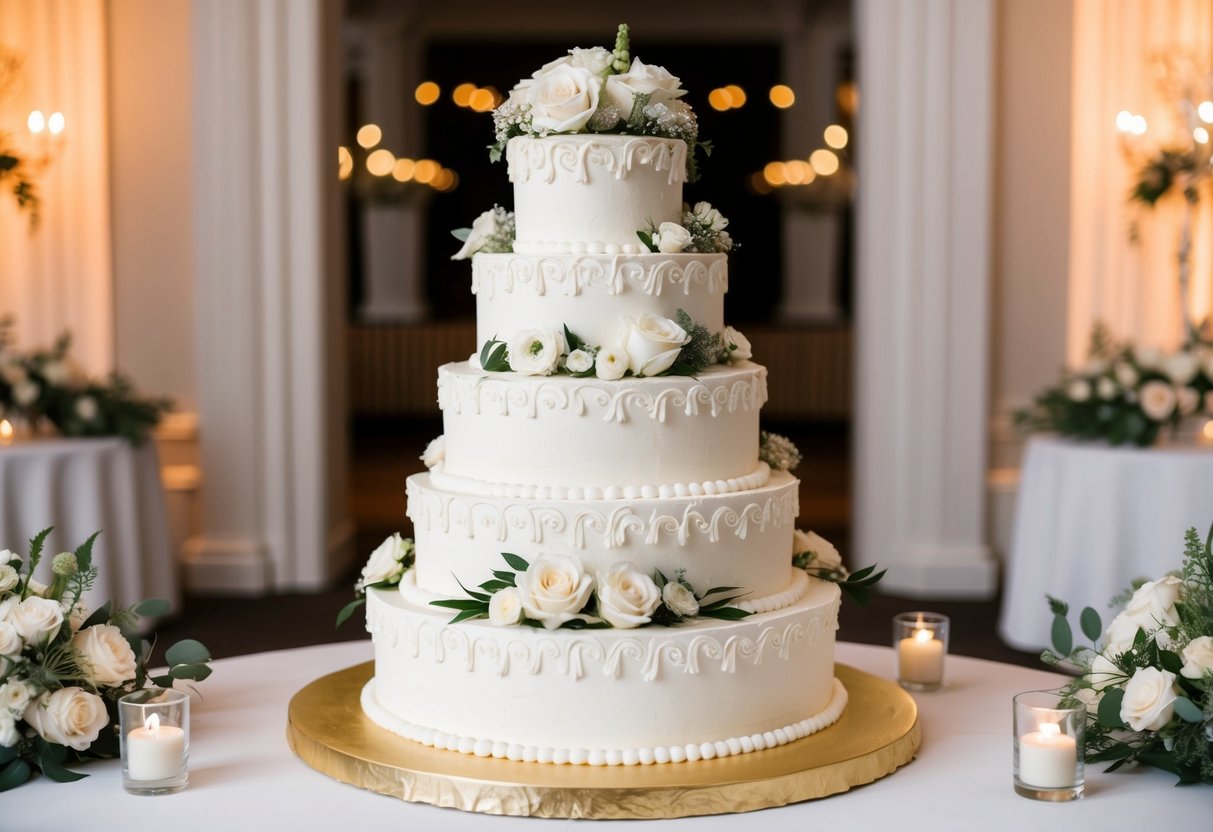
Think about the size and shape of each tier as you choose your cake. A popular option is a three-tier cake, which not only creates an impressive focal point but also helps accommodate the number of servings needed.
Each slice is generally about 1 inch by 2 inches, so it’s important to choose a cake with the right dimensions to satisfy everyone at your celebration.
Don’t forget the flavors and decorations! You can personalize your cake to match your wedding theme while keeping it delicious. Whether you prefer classic vanilla, rich chocolate, or something more adventurous, the right wedding cake can leave a lasting impression on your special day.
Determining the Right Size
Finding the right size for your wedding cake is crucial. You want to ensure that everyone gets a slice while also fitting the style of your celebration. Here are some key aspects to consider.
Understanding Cake Servings
When planning for 100 guests, you need to know how many servings are in your cake. A standard wedding cake serving is usually 1 inch by 2 inches. This means if you have a cake with multiple tiers, you can calculate how many slices each tier can provide.
For instance, if you choose a 3-tier cake, selecting the right sizes will help you meet your needs. If you decide on a larger party-style slice of 1.5 inches by 2 inches, you’ll need less cake than with the standard size. Understanding these portion sizes is essential for determining how much cake to order.
Selecting the Appropriate Tier Sizes
Choosing the right tier sizes is important for both aesthetics and serving. Many bakers suggest using at least two tiers, as this adds height and elegance to your cake.
For 100 guests, a combination of tiers can help. For example, you might have a bottom tier that is 10 inches, a middle tier of 8 inches, and a top tier of 6 inches. This size distribution often yields enough servings and looks great on display. Keep in mind that tall tiers can create more servings, while wider tiers may be better if you want elaborate designs.
Using a Wedding Cake Calculator
A wedding cake calculator can simplify the planning process. These tools allow you to input your guest count and preferences to suggest the perfect cake size and structure.
Many calculators will provide you with a list of recommended cake servings based on your input. You can enter tier sizes and see how many slices each will offer, helping you find the best combination for your needs. This way, you won’t have to guess how much cake you need for your big day!
Exploring Cake Designs and Flavors
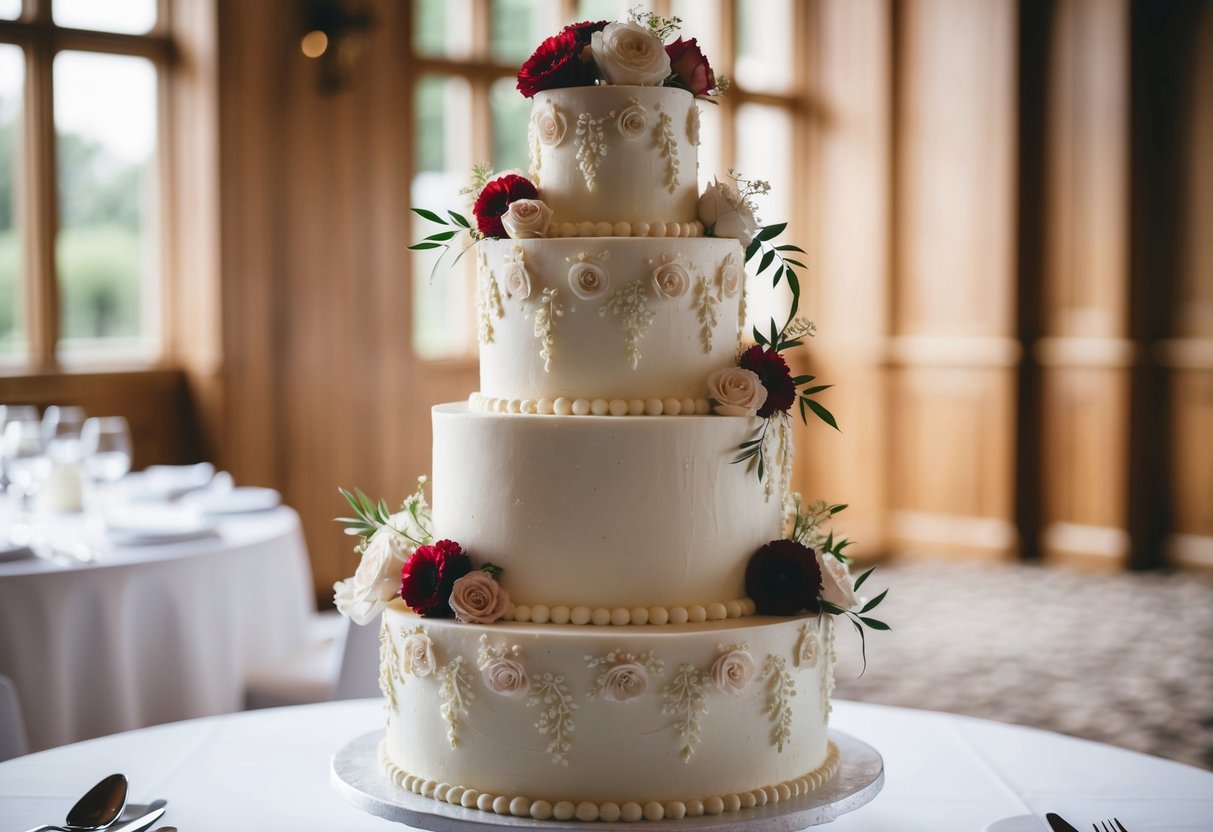
When planning a wedding cake for 100 people, it’s essential to think about the design and flavors. Your choices can enhance the overall look and taste, making your celebration memorable. Here are some important aspects to consider.
Choosing Between Buttercream and Fondant
The choice between buttercream and fondant is crucial for both taste and appearance. Buttercream is creamy and delicious, offering a homemade feel. It’s easy to spread and can be colored for beautiful designs. However, it may not hold intricate decorations as well as fondant.
On the other hand, fondant provides a smooth surface ideal for intricate decorations. Fondant can be molded to create stunning designs, like sugar flowers or elegant patterns. While it looks fabulous, some find the taste less appealing than buttercream. Consider what matters more to you: taste or design.
Incorporating Decorative Elements
Decorative elements can elevate your wedding cake, making it a true centerpiece. Think about adding sugar flowers, which can be customized to match your wedding theme. These can range from simple blossoms to detailed replicas of your favorite flowers.
Other options include ribbons or edible glitter for a touch of glamour. You might also consider a tiered cake with each layer decorated differently to add visual interest. However, balance is key. Too many decorations can overwhelm your cake instead of enhancing it.
Selecting Cake Flavors and Fillings
Choosing flavors that appeal to your guests is vital. Popular cake flavors include classic choices like vanilla, chocolate, or red velvet. You can also opt for more unique flavors like lemon or almond for a special twist.
Fillings can add another layer of flavor. Consider options like raspberry jam, chocolate ganache, or cream cheese. Mixing flavors can create a delightful experience for your guests. Remember to check for any dietary restrictions among your guests to accommodate everyone’s needs.
Planning Your Cake Display
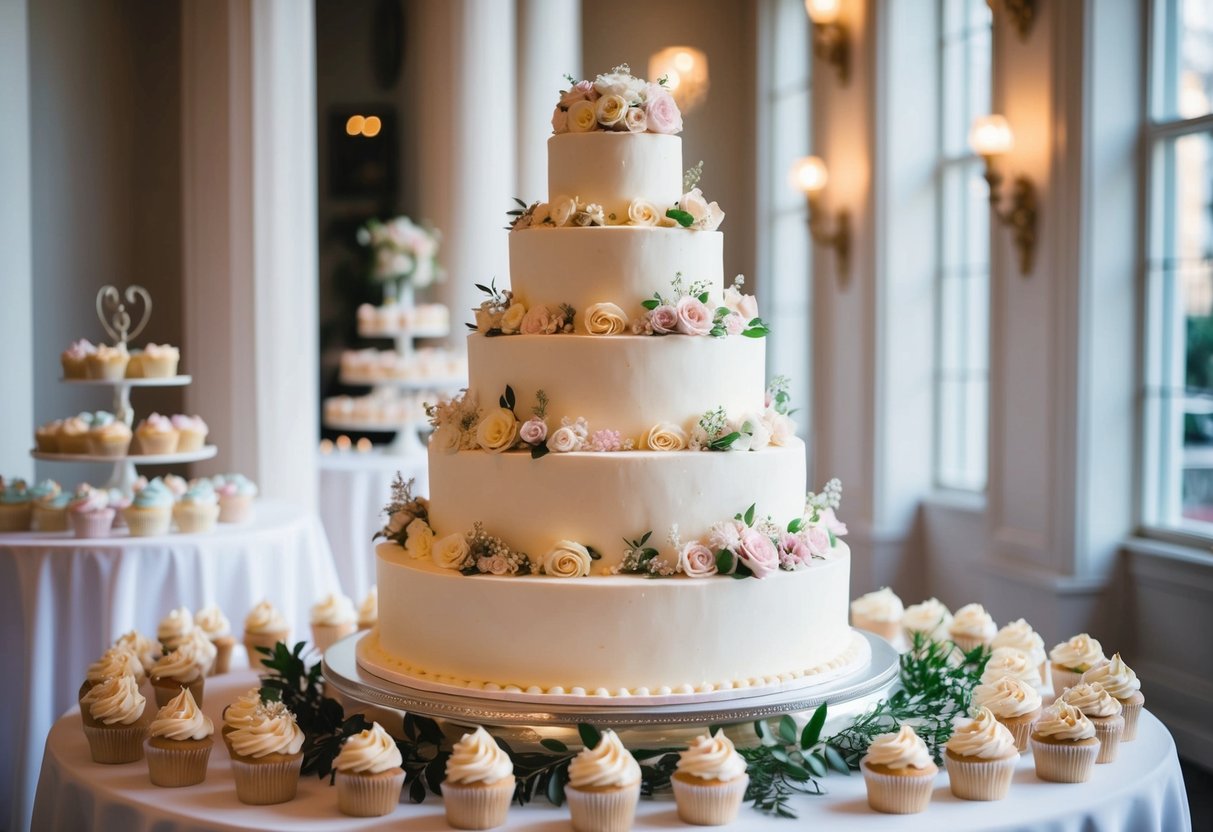
Creating a beautiful cake display is key to making your wedding memorable. It should highlight your cake while being practical for your guests. Here’s what you need to consider.
The Dessert Table Layout
When planning your dessert table, think about the flow and visibility. Place the wedding cake as the centerpiece. Make sure it’s at eye level for guests to appreciate. Surround the cake with decorative elements like flowers or candles to enhance its beauty.
Organizing the table is important. Use different heights for the cake and other desserts to create interest. For example, consider using a cake stand for your wedding cake and smaller pedestals for additional desserts. This helps draw attention without overwhelming the space.
Additional Desserts and Portions
In addition to your main cake, offering a variety of additional desserts is a great idea. Think about including options like cupcakes, cookies, or brownies. These can provide guests with choices and cater to different tastes.
For cake portions, plan to serve each guest a piece that is about 1 inch by 2 inches. Since you expect around 100 people, ensure your cake can provide at least 100 portions. A three-tier cake often works well for this number. Pair the cake with some delicious additional desserts to balance the dessert table and keep everyone’s sweet tooth satisfied.
Saving the Top Tier Tradition
A lovely tradition is saving the top tier of your wedding cake. This tier is often a symbolic part of the day. It’s usually saved for your first anniversary or for the birth of your first child. Consider this when designing your cake.
Make sure the top tier is safely packaged for storage. In addition, choosing a flavor that you both love makes it even more special when you eat it again. It’s a sweet reminder of your beautiful day and adds a unique touch to your celebration.
Managing Logistics and Costs
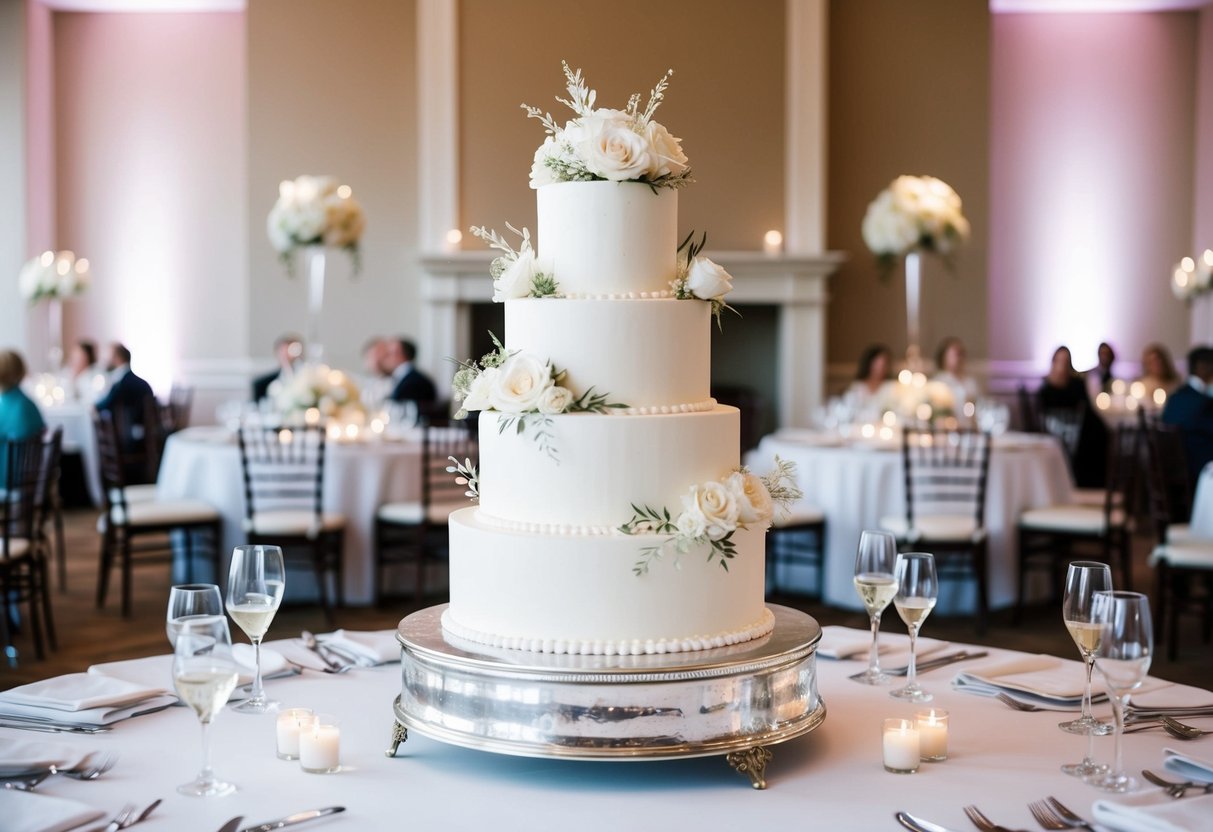
When planning your wedding cake for 100 guests, paying attention to logistics and costs is key. This includes understanding dietary needs, arranging tastings with your baker, and calculating your cost per slice. These steps will help ensure that your cake meets the taste and budget you desire.
Accounting for Dietary Restrictions
You want to accommodate all your guests. Be sure to ask about dietary restrictions when you create your guest list. Common restrictions include allergies to nuts, gluten, or dairy.
Consider offering various options, such as gluten-free or vegan cake. Discuss these needs with your cake baker early on. They can suggest suitable flavors and ingredients to create delicious alternatives for everyone.
A simple way to manage this is by including a note on the RSVP card for guests to list dietary preferences. This allows you to better plan and creates a more inclusive experience for your wedding.
Arranging Cake Tasting and Baker Consultation
Once you have a baker in mind, scheduling a cake tasting is essential. This step gives you a chance to try different flavors and find the perfect one for your celebration.
During the consultation, share your vision for the cake design and size, especially since you’re serving 100 guests. A three-tiered cake is popular for this number, but your baker can recommend the best option based on preferences and trends.
Don’t forget to ask about any additional costs during the tasting, such as fees for special flavors or intricate designs.
Understanding Cost Per Slice
Calculating your cost per slice is a straightforward yet important step. The average cost for a wedding cake serving is between $5 and $7, but it can vary based on design and ingredients.
For a cake serving 100 guests, the total cost can range from $500 to $700.
Here’s how you might break it down:
- Total cost of the cake: $600
- Number of slices: 100
- Cost per slice: $6
This calculation helps ensure you stay within budget while still providing an enjoyable treat for your guests. Understanding these costs can also help you make informed decisions to balance taste and expense.