
What Does Officiant Mean in a Wedding? Understanding Their Role and Importance
When planning a wedding, you might wonder about the role of an officiant. The officiant is the person who leads the wedding ceremony, making it a key part of your special day. They help create a personal and memorable experience, whether through traditional vows or unique elements that reflect your relationship.
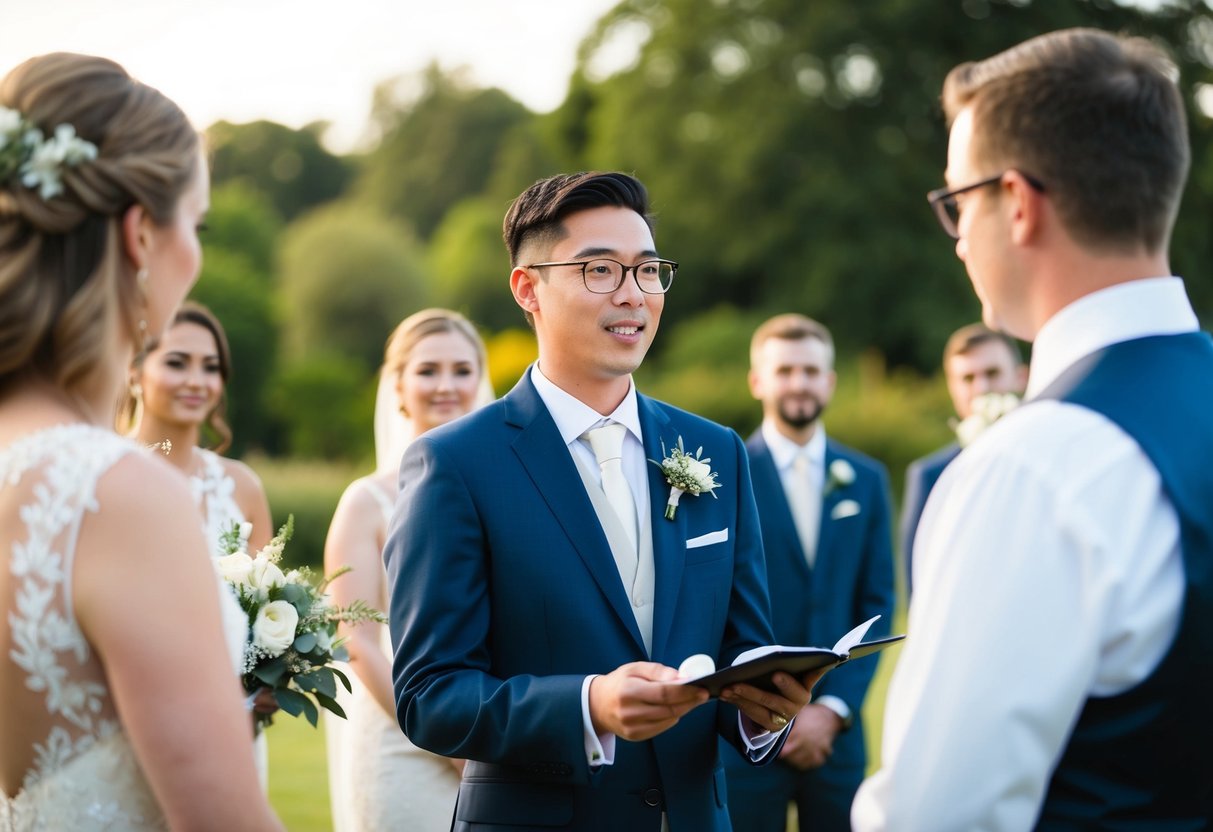
Choosing the right officiant can set the tone for your wedding. They are responsible for guiding you through the ceremony, ensuring all legal requirements are met, and often providing support in crafting your vows and readings. Understanding what an officiant does will help you make a more informed decision about this important role in your celebration.
As you prepare for your wedding, knowing what to expect from your officiant can ease some of the stress. You’ll want someone who matches your vision and helps bring your dream ceremony to life. Not only do they officiate, but they also play a significant role in making your day unforgettable.
Understanding the Role of an Officiant
An officiant plays a key role in your wedding by ensuring that the ceremony is both meaningful and legally binding. They guide you and your partner through the vows while fulfilling specific duties and responsibilities.
Duties and Responsibilities
The officiant is responsible for conducting the marriage ceremony. This includes preparing the script, which reflects your personal story and values. They help you write your vows and can suggest readings or rituals that resonate with you.
Before the ceremony, the officiant checks that you have obtained a marriage license, as this is vital for the marriage to be legal.
During the ceremony, the officiant leads participants, ensuring everyone knows where to stand and what to do. Afterward, they submit the signed marriage license to the appropriate authorities.
Types of Wedding Officiants
There are different types of officiants to choose from for your wedding. A religious officiant, like an ordained minister, typically leads ceremonies with a spiritual focus. They often incorporate religious traditions and symbols, which can be comforting for couples with shared faith.
A civil officiant can include a justice of the peace or a professional wedding officiant who conducts secular ceremonies. Many provide personalized services, allowing you to create a ceremony that reflects your values.
Additionally, a certified celebrant specializes in crafting unique ceremonies. They work closely with couples to include personal touches in their wedding. Each type of officiant brings different strengths, so it’s essential to choose one that aligns with your vision for the ceremony.
Legal Aspects of Officiating
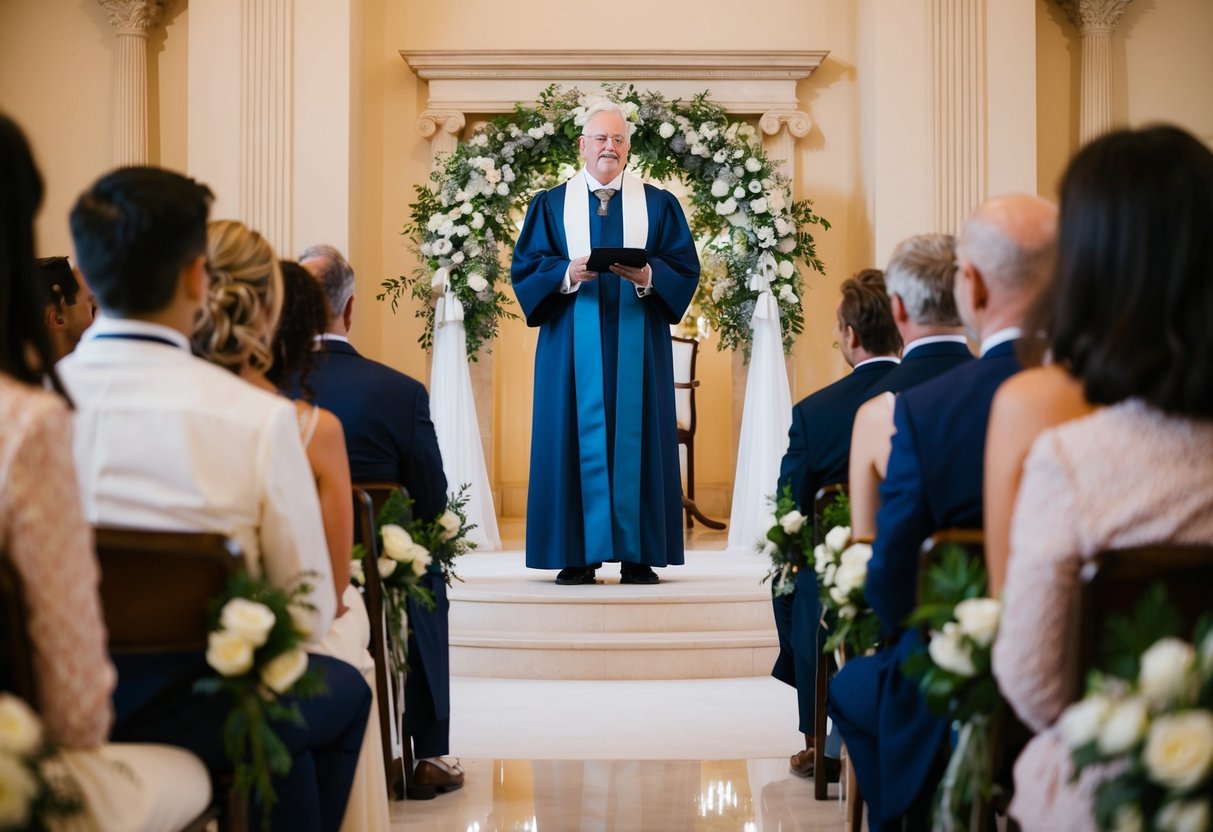
When you’re considering the role of a wedding officiant, understanding the legal requirements is crucial. This section will cover essential aspects like the marriage license and certificate, and the differences between civil and religious officiants.
Marriage License and Certificate
Before a wedding, you need to ensure the couple obtains a marriage license. This document is usually issued by a government authority and gives couples the legal right to marry.
The couple must meet certain criteria, such as age and identification. It’s important for you to remind them to apply ahead of time, as some regions have waiting periods.
Once the ceremony is complete, you must sign the marriage certificate. This document officially verifies the marriage and is filed with local authorities. It’s a key requirement because it serves as the legal proof of the union.
Civil vs. Religious Officiant Requirements
The requirements to officiate a wedding can differ between civil and religious officiants. For civil ceremonies, you might become an officiant through a simple online ordination. Many states recognize online ordination as valid, allowing you to perform marriages legally.
In contrast, religious officiants may need to follow specific guidelines set by their faith. This can include obtaining certification or being part of a recognized religious organization.
Understanding these differences helps you guide the couple accurately based on their preferences—whether they choose a secular or spiritual ceremony. Each type has its own nuances, so being informed will keep the process smooth for everyone involved.
Planning the Wedding Ceremony
Planning a wedding ceremony involves careful thought and creativity. You’ll want to create a script that captures your love story and allows for personal touches. This makes your ceremony unique and special.
Creating the Ceremony Script
Start by outlining the main parts of the ceremony. This typically includes the welcome, readings, vows, and the pronouncement of marriage.
You can consider including a personal story about how you met or memorable moments in your relationship. This makes the ceremony feel more intimate and connected.
When crafting your wedding vows, think about what you love most about each other. Highlight specific promises that reflect your commitment.
If you have a religious affiliation, include traditional prayers or readings that resonate with your beliefs. Collaborating with your officiant is crucial to ensure the script flows well.
Integrating Personal Touches
Personalizing your ceremony can make it truly memorable. Consider involving family and friends in meaningful ways. You might have a family member do a reading or participate in a special ritual.
You can also include unique elements that reflect your shared interests. For example, a favorite song might be played, or a special unity ceremony can take place. Each detail helps tell your love story.
Additionally, include symbols of your values and beliefs. A personalized ceremony can deepen the connection between you and your guests. Whatever you choose, these personal touches will create lasting memories for you and your loved ones.
Final Touches for the Special Day
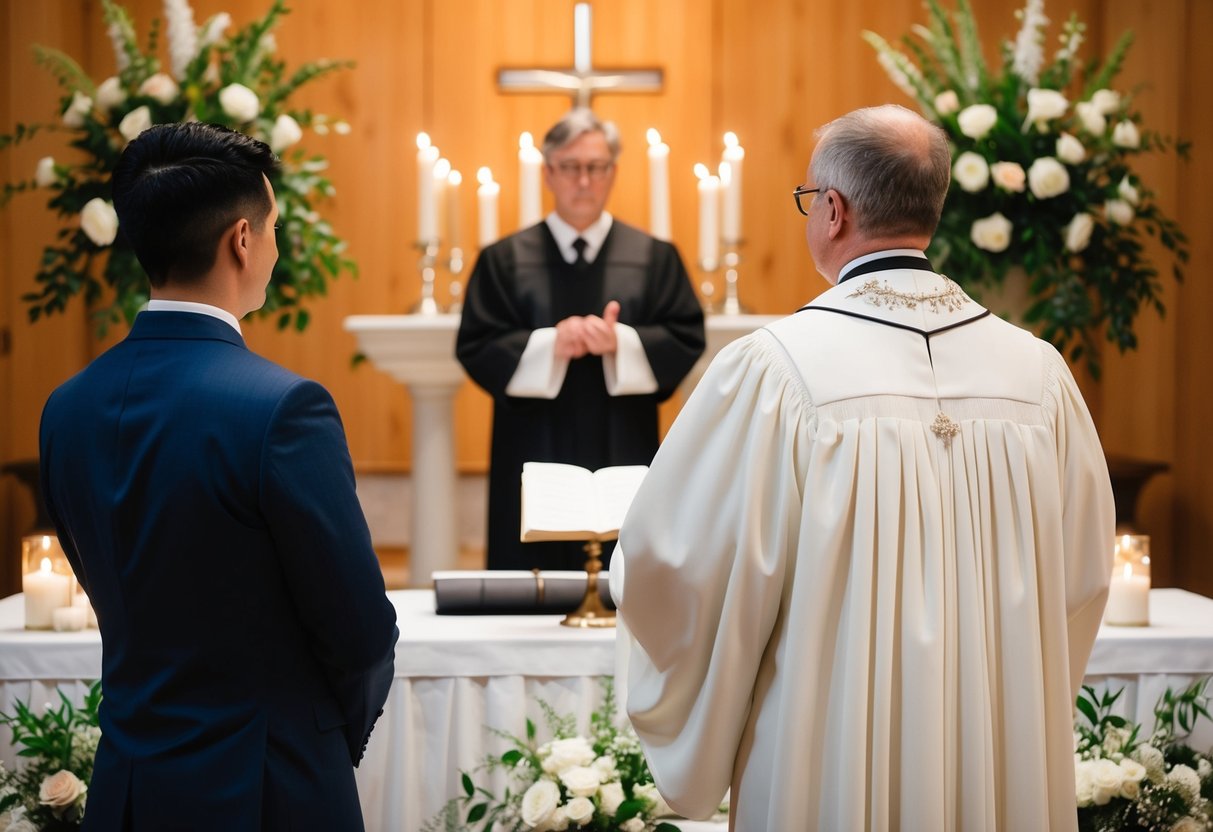
The little details can make a big difference in your wedding ceremony. Focusing on professionalism and incorporating symbolic acts can elevate the experience for you and your guests.
Professionalism and Public Speaking
When choosing an officiant, consider their professionalism and public speaking skills. A good officiant helps set the tone for the ceremony. They guide you and your guests through the experience smoothly.
Look for someone who feels comfortable speaking in front of a crowd. It’s essential for them to engage everyone, making the ceremony memorable.
An experienced officiant will also know how to handle unexpected situations. They can keep the mood light and relaxed, especially during pivotal moments like the first kiss.
Don’t forget to discuss your preferences with your officiant. Share any specific stories or themes that are important to you. This connection helps them personalize your ceremony.
The Symbolic Acts
Symbolic acts play a significant role in wedding ceremonies. These include rituals that represent your love and commitment to one another.
Common examples are the unity candle or sand ceremony. These activities bring meaningful visuals to your special day. They can also provide a memorable moment for you and your guests.
Consider including traditional practices like exchanging rings or personalized vows. These gestures add depth to your ceremony.
If you’re considering courthouse weddings, ask your officiant about including these elements. They can guide you on how to incorporate meaningful symbols even in simpler settings.
Make sure that your officiant understands your vision for these acts. After all, it’s your day to shine!