
What Happens to the Engagement Ring After the Wedding? Exploring Its Meaning and Future
After your wedding, you might wonder what to do with your engagement ring. Typically, people continue to wear their engagement ring alongside their wedding band. This practice is common, but choices can vary based on personal preference and cultural traditions.
Some couples choose to wear the rings stacked on the same finger, while others may move their engagement ring to a different hand or finger. This allows you to keep both rings close while also honoring the journey of your marriage. Understanding these options can help you decide what feels right for you.
Your engagement ring represents a special promise and the start of a new chapter in your life. Embracing this new tradition can enhance the significance of your wedding band and reflect your ongoing commitment to each other.
The Role of the Engagement Ring in Marriage Traditions
Engagement rings hold special meaning in marriage traditions, often symbolizing commitment and love. They differ from wedding bands in purpose and significance, influenced by cultural practices and personal choices.
Cultural Significance of Engagement Rings
Engagement rings carry deep cultural significance in many societies. Traditionally, they symbolize a promise of marriage. The ring serves as a visible commitment from one partner to another.
In the West, it’s common for an engagement ring to be worn on the left hand, close to the heart. This symbolizes love and intimacy. Many cultures have their own unique customs regarding engagement rings. In some places, it is common to wear the ring after the wedding, while in others, it may be set aside in favor of the wedding band.
Engagement Rings vs. Wedding Bands
While both rings signify love, they serve different roles in a marriage. The engagement ring usually features a prominent stone, often a diamond, representing the promise made before marriage.
On the other hand, the wedding band is exchanged during the ceremony. It symbolizes the vows taken and is typically simpler in design.
Some people choose to wear both rings together. This arrangement can represent layers of promise and commitment. Whether you decide to wear both or just one is a personal choice influenced by your style and cultural practices. Wearing both rings can also be a stylish way to express your unique love story.
What to Do With the Engagement Ring After the Wedding
After your wedding, the fate of your engagement ring is in your hands. You can choose to wear it, store it away, or even create a unique stack with your wedding band. Here’s how to decide what works best for you.
Wearing the Engagement Ring Post-Wedding
On your wedding day, you might wear both your engagement ring and wedding band together. You can position the wedding band closest to your heart on your left hand, followed by your engagement ring. This keeps the tradition while allowing you to enjoy both rings.
Some people prefer to wear just the wedding band after the ceremony. You could store your engagement ring safely as a keepsake. It can hold great sentimental value, allowing you to look back on your engagement memories whenever you wish.
Stacking and Ordering Wedding Jewelry
Stacking rings is a popular trend. You can wear your engagement ring and wedding band together or even add additional bands for a unique look. Many choose to have their rings soldered together to create one piece.
If you want to change things up, consider wearing your engagement ring on your right hand. This is a fashionable alternative and gives you flexibility. Make sure the stacking order feels comfortable and reflects your personal style.
Sentimental and Emotional Considerations
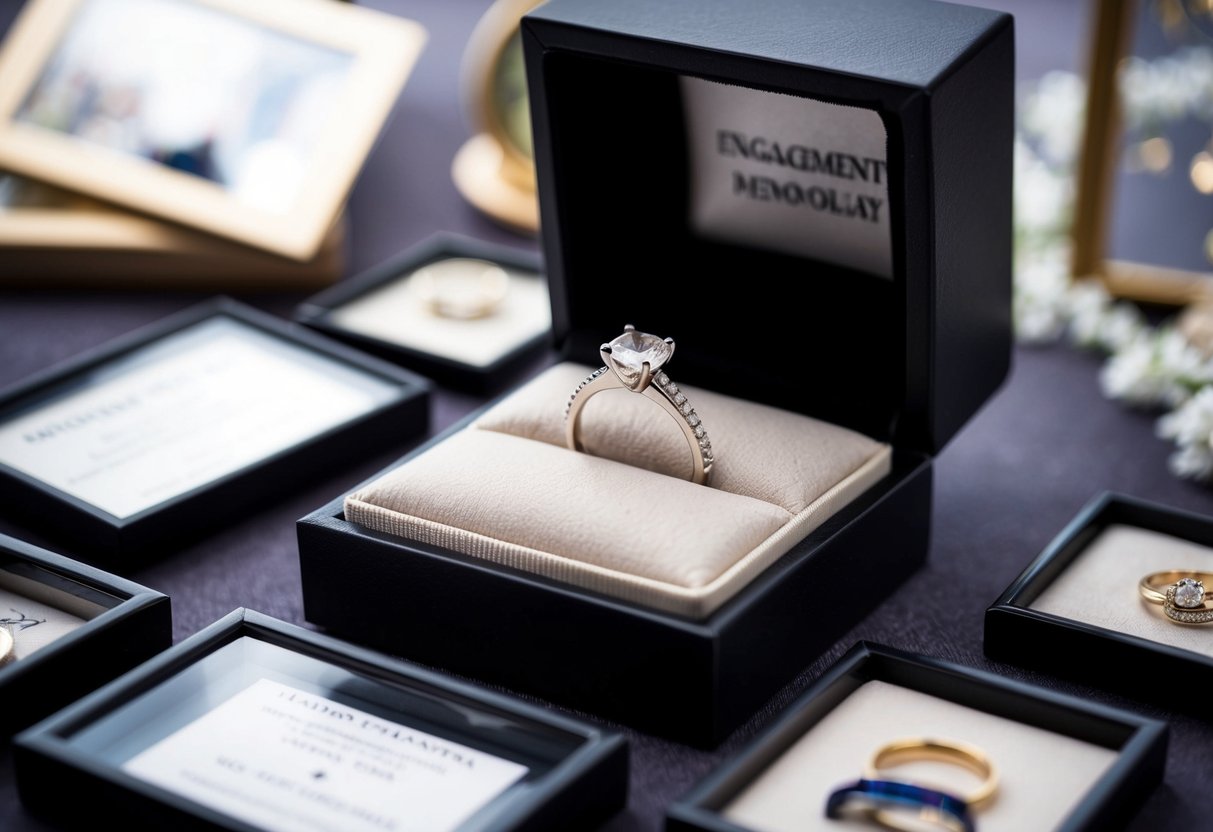
After your wedding, the engagement ring often holds deep sentimental and emotional value. You may have strong feelings tied to this special piece of jewelry, which can influence what you choose to do with it.
Engagement Rings as Sentimental Keepsakes
Your engagement ring is more than a piece of jewelry; it symbolizes love and commitment. It may remind you of the moment you got engaged or the journey you took as a couple. Many couples keep their engagement rings as treasured keepsakes, cherishing the memories attached to them.
Some people wear both the engagement ring and wedding band together, preserving that connection. If you pass it down as a family heirloom, it can carry the love stories of generations. Keeping it in a safe place or displaying it in a meaningful way can also help maintain its sentimental significance.
Repurposing or Redesigning the Engagement Ring
If you’re seeking a fresh start, consider repurposing your engagement ring into a new piece. You might work with a jeweler to transform it into a necklace, bracelet, or even earrings. This allows you to keep the emotional ties while giving the ring a new life.
For special occasions and anniversaries, you could redesign it into a pendant that you can wear close to your heart. This way, you take the memories with you in a new and beautiful form, allowing the connection to evolve while you create new memories.
Practical Aspects of Engagement Rings After Marriage
After your wedding, you may wonder what to do with your engagement ring. There are a few practical considerations to keep in mind, including whether to upgrade or exchange your ring and what to do if an engagement doesn’t go as planned.
Deciding to Upgrade or Exchange the Engagement Ring
Upgrading your engagement ring can be a personal choice for some couples. You might decide to buy a wedding ring that reflects your evolving style or has more meaning.
If you go this route, consider how the new ring complements both the wedding band and the original engagement ring.
When making these decisions, think about your lifestyle and how much you’ll wear the rings.
Also, keep in mind that engagement rings are often seen as conditional gifts, meaning the original ring may not need to be returned if you decide to upgrade.
When An Engagement is Broken: The Etiquette of Returning Rings
Returning the engagement ring can feel awkward if an engagement is broken. Generally, the expectation is to return the ring to the giver. This is because the ring is a conditional gift, tied to the promise of marriage.
When considering the return, think about your feelings and the relationship. If it’s a mutual decision, handling the return calmly can help.
If you’re uncertain, it may help to talk it over with a trusted friend or family member.
Ultimately, the act of returning the ring should feel respectful and appropriate for both parties involved.