
What Is a Celebrant for a Non-Religious Wedding? Understanding Their Role in Your Special Day
A celebrant plays a unique and important role in a non-religious wedding ceremony. They are trained to create and lead personalized ceremonies that reflect your values and story without focusing on religious elements. Instead of following a traditional religious script, a celebrant can work closely with you to craft a ceremony that matches your style and beliefs.
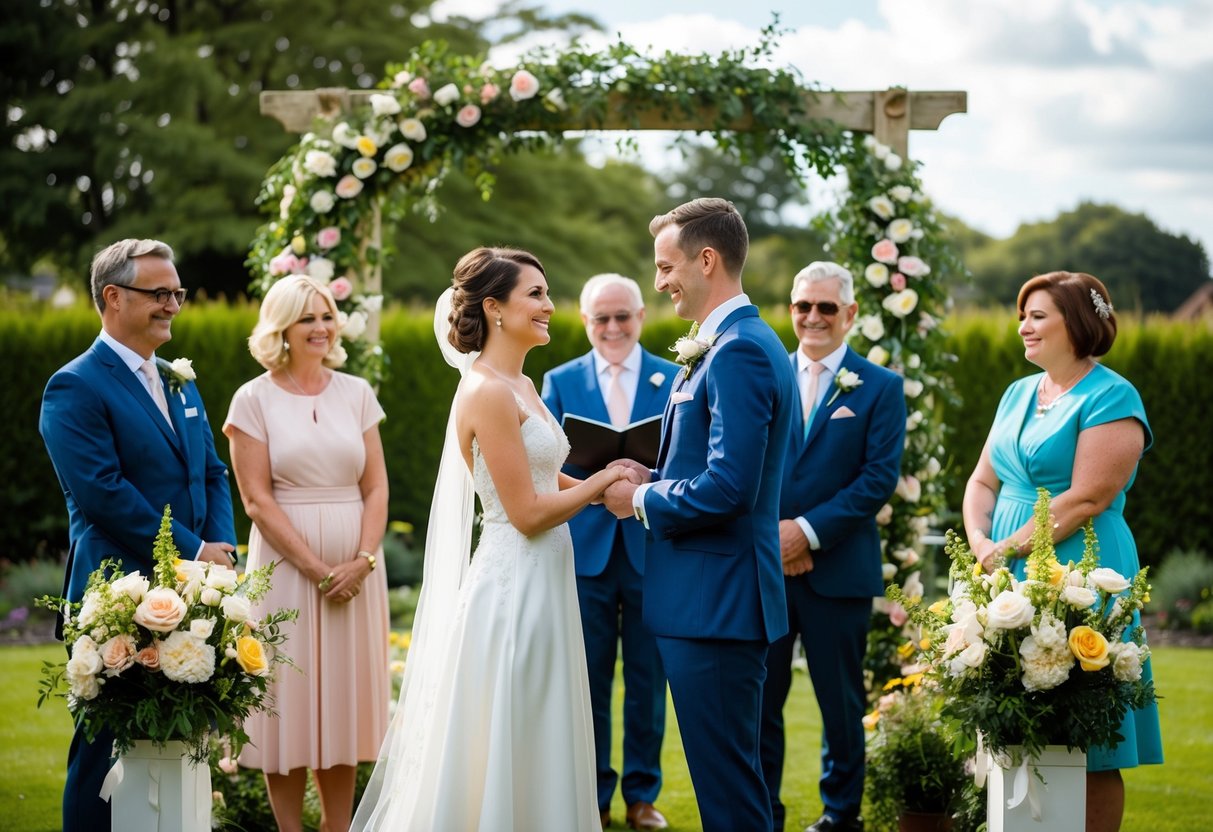
Choosing a celebrant gives you the freedom to incorporate meaningful traditions, personal vows, and special readings that resonate with you and your partner. This flexibility allows you to celebrate your love in a way that feels authentic and true to who you are. Whether you envision an intimate gathering or a larger celebration, a celebrant can help bring your dream ceremony to life.
Understanding Celebrants and Their Role
When planning a non-religious wedding, understanding the role of a celebrant is key. They help create personalized ceremonies that reflect your values and beliefs. Let’s explore who celebrants are, the different types available, and their specific roles in your special day.
What Is a Celebrant?
A celebrant is a trained professional who leads ceremonies, especially non-religious ones. They craft meaningful events tailored to your wishes. Celebrants can be humanist celebrants, secular officiants, or independent celebrants.
You should choose a celebrant who aligns with your vision for the wedding. This person will help you with the ceremony script, rituals, and overall flow of the day. Their job is to make your day as special and memorable as possible.
Different Types of Celebrants
There are several types of celebrants to consider for your wedding.
- Humanist Celebrant: Focuses on human values and ethics without religious beliefs. Ideal for couples wanting a secular approach.
- Secular Officiant: Conducts ceremonies that prioritize personal beliefs without religious elements. Perfect for those who want a more traditional feel without religion.
- Independent Celebrant: Can blend religious and non-religious elements based on your preferences. They are flexible and creative, offering many options for ceremonies.
Knowing the type that suits you best is crucial for a smooth ceremony planning process.
The Role of a Celebrant in a Non-Religious Ceremony
A celebrant plays a vital role in non-religious wedding ceremonies. They work closely with you to understand your story and values.
The celebrant creates a ceremony that includes themes and personal touches unique to you. They can suggest readings, music, and rituals that reflect your journey together.
Your celebrant also manages logistics on your wedding day, ensuring everything flows smoothly. They will guide you and your guests through the ceremony, making it a memorable experience.
Choosing the right celebrant is an important step to help you celebrate your love in a way that feels authentic to you.
Planning Your Non-Religious Wedding Ceremony
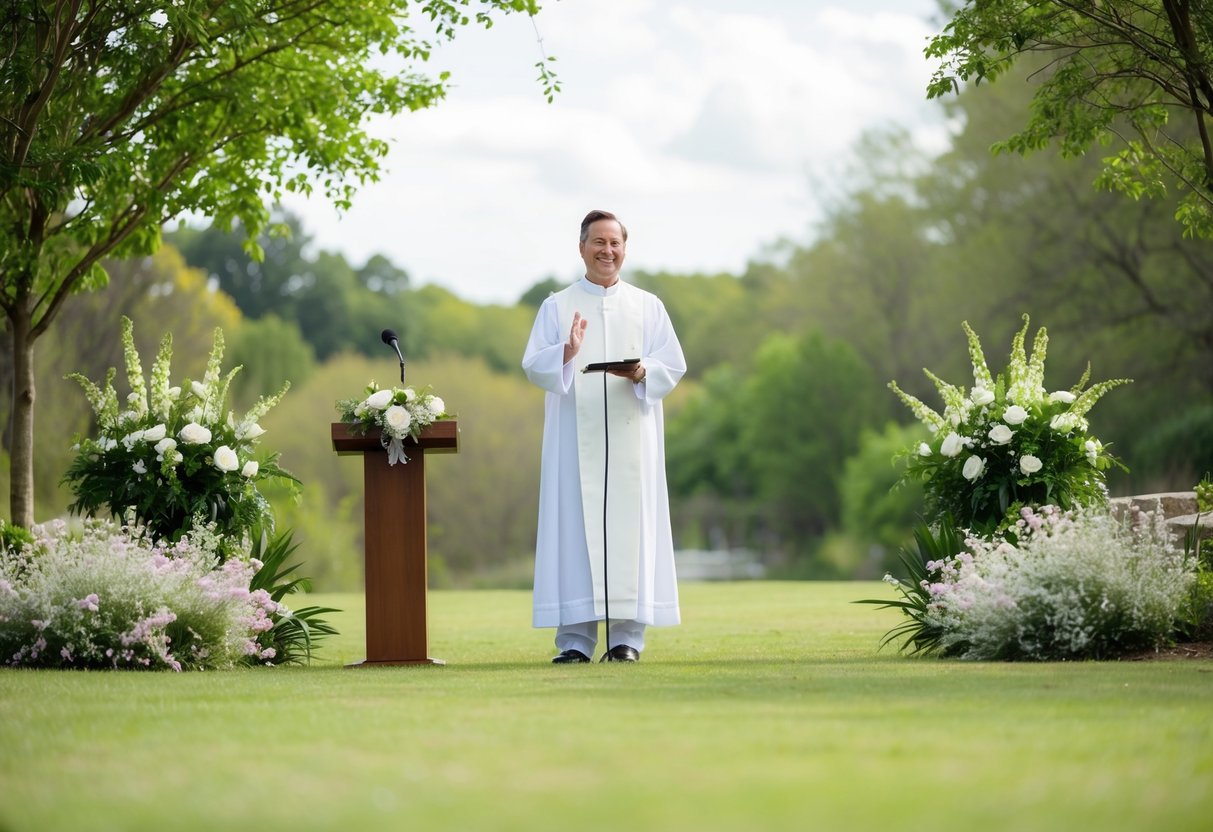
Creating a non-religious wedding ceremony allows you to fully express your love and relationship. By personalizing your ceremony, considering inclusivity, and choosing the right celebrant, you can ensure a meaningful experience that reflects your values and beliefs.
Personalizing Your Ceremony
Your wedding ceremony should tell your story. Think about what aspects are most important to you, such as rituals like a handfasting or a sand ceremony.
You can include personalized vows that express your love and commitment. This makes your ceremony distinctive and heartfelt.
Incorporate music, readings, or even cultural traditions that resonate with both of you. Reflect on your journey together and share that with your guests to create a memorable atmosphere.
Inclusive Ceremonies for All Couples
A non-religious wedding ceremony can be tailored to be inclusive for everyone. This is especially important for same-sex couples and those from diverse backgrounds.
Make sure that your choice of words, vows, and readings respect and reflect all identities involved.
Consider inviting family and friends to share their thoughts or wishes during the ceremony. This helps everyone feel like they are part of your special day and adds to the warmth of the occasion.
Your ceremony can be a celebration of love in all forms.
Selecting the Right Celebrant for Your Wedding Day
Choosing the right celebrant is crucial for your ceremony’s success. Look for someone who shares your vision and understands your values. It’s essential that they respect your desire for a non-denominational wedding.
Meet with potential celebrants to discuss their experience and approach. Ask about how they handle personalization and inclusivity.
Check for reviews and testimonials from other couples to get a sense of their style. A good celebrant will be open to collaboration, ensuring your ceremony is a reflection of you, making your wedding day even more special.
The Legalities Handled by a Celebrant
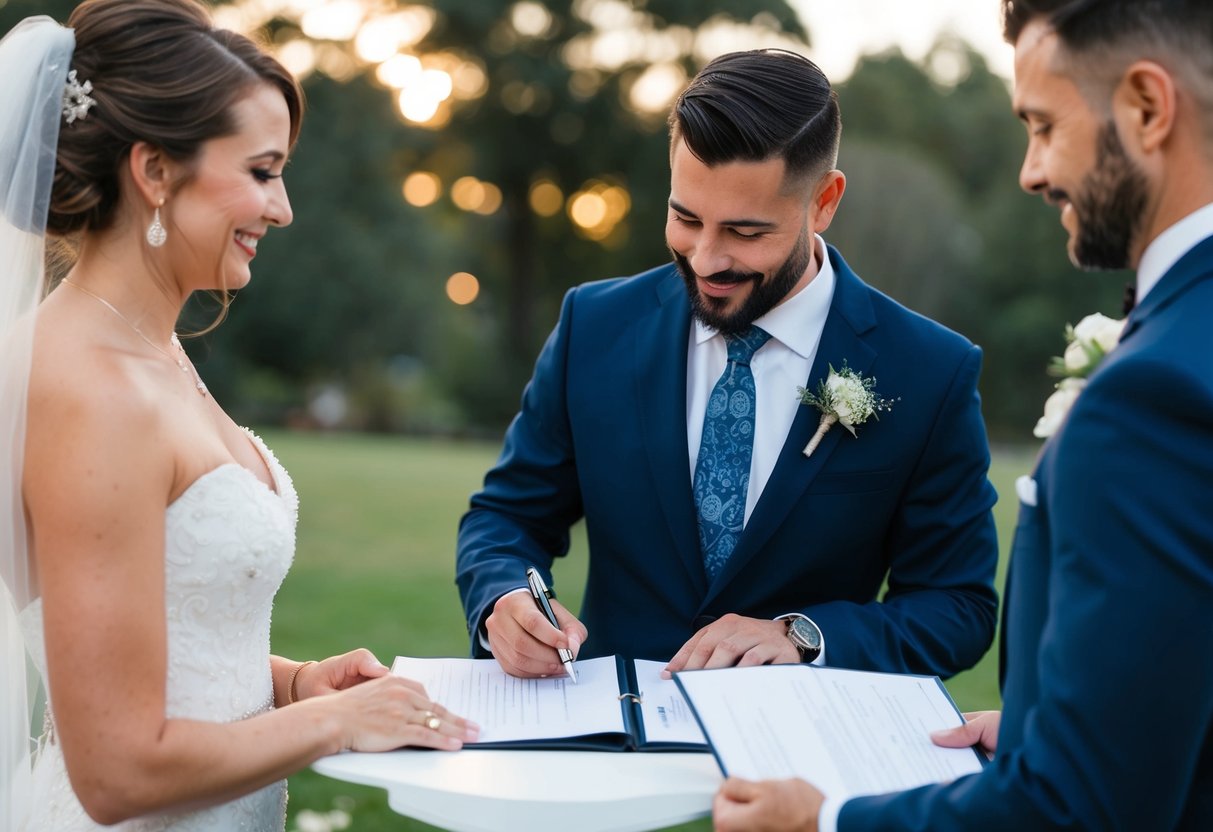
When you choose a celebrant for your non-religious wedding, understanding the legalities involved is crucial. Celebrants can help you navigate legal requirements, marriage licenses, and certification.
Understanding the Legal Requirements
Before your wedding, it’s essential to know the legal requirements in your area. Celebrants may have the authority to officiate weddings, but this can vary by location.
In many places, you will need to obtain a marriage license before the ceremony. This document is typically issued by a local government office. It often requires both partners to apply in person, provide identification, and pay a fee.
Be sure to check your state’s specific rules. Some areas may require a justice of the peace or a licensed officiant. Understanding these details will ensure your ceremony is legally valid.
Certification and Online Ordination of Celebrants
Many celebrants gain their authority through certification and online ordination. This process allows them to officiate weddings legally.
Online ordination is available through various organizations, often for a modest fee. Celebrants generally must complete specific courses or training to ensure they understand the legal obligations of officiating a wedding.
When selecting a celebrant, ask about their credentials. A qualified celebrant will be knowledgeable about the local laws and help make your big day smooth and enjoyable.
Elements of a Modern Non-Religious Ceremony
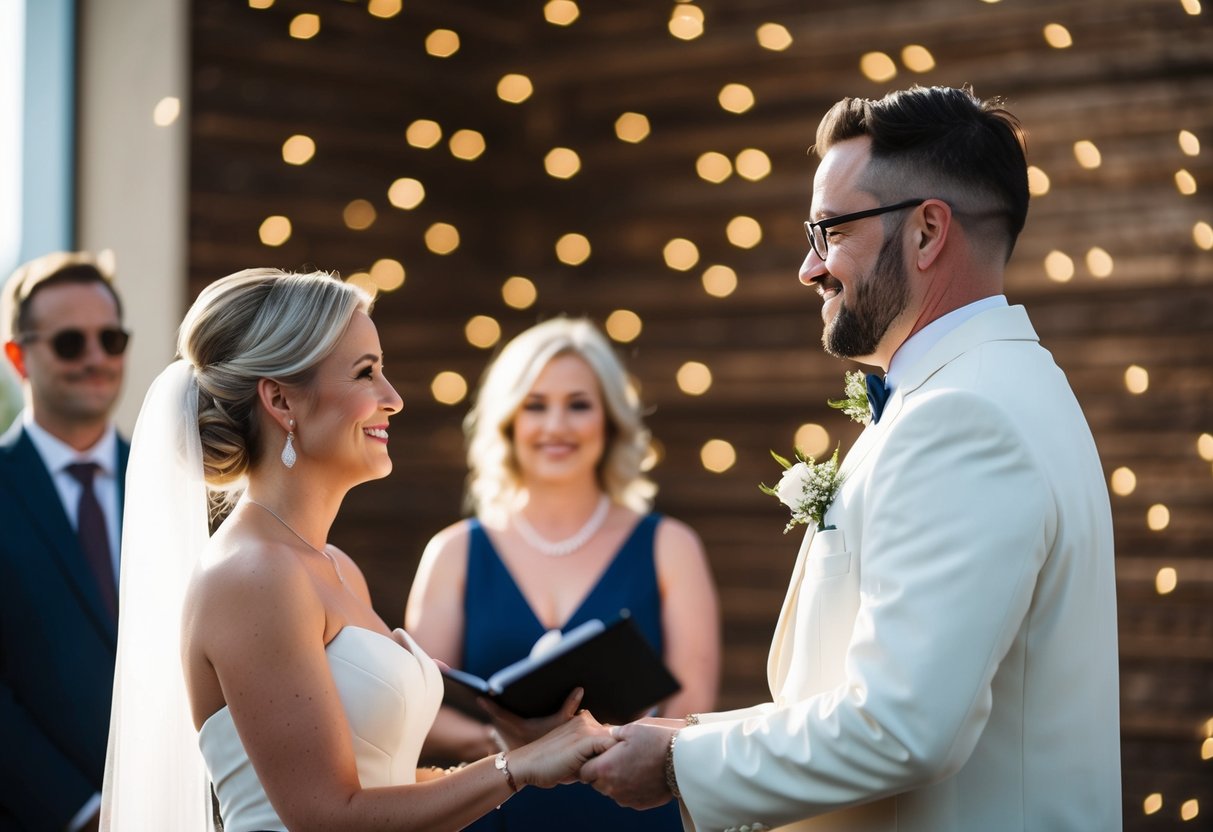
A modern non-religious ceremony invites creativity and personalization. You can include innovative rituals and tailor the event to reflect your values and relationship. This section explores unique elements that can make your ceremony truly special.
Innovative Rituals and Traditions
In a humanist or secular wedding ceremony, you have the freedom to choose rituals that resonate with you as a couple. Popular options include tree planting, unity candles, or sand ceremonies. These acts symbolize your commitment and can be designed in ways that are meaningful to you both.
You could also consider including personal stories or meaningful quotes. This adds depth to your ceremony, making it feel unique. If music is important to you, select songs that represent your journey together. Each element contributes to creating a warm and personal atmosphere.
Creating a Unique and Modern Ceremony
When planning, focus on your wedding vows. You can tailor your promises to each other to express your feelings and hopes for the future. Writing your own vows adds a personal touch, making the moment even more special.
Working with a professional officiant can help you craft a cohesive wedding ceremony script. Discuss your vision and preferences to ensure that every detail reflects your relationship. Whether you choose a civil ceremony or a more informal setting, the key is to celebrate your love in a way that feels authentic to you.