
What Is a Simple Sentence for Invitation? Easy Examples and Tips to Use
Invitations play an important role in social interactions, helping to bring friends and family together. When you want to celebrate a special event, sharing an invitation makes it clear that you want others to join in the fun. A simple sentence for invitation could be: “I sent you an invitation to my birthday party.” This straightforward approach effectively conveys the message while keeping it friendly and inviting.

Using a simple sentence helps eliminate confusion, making it easier for others to understand your message. Whether it’s a gathering or a casual get-together, your invitations create a sense of connection. You can use phrases like “You’re invited to join us” or “I would love for you to come” to extend a warm invite that encourages participation.
As you explore more about invitations throughout this article, you will discover various examples and tips that can enhance your social interactions. Whether you’re crafting an invitation for a wedding or a casual dinner, knowing how to express your invitation clearly will make your gatherings even more special.
Understanding Invitations

Invitations play a vital role in bringing people together for various events. They can come in different styles and formats, depending on the context and purpose. Knowing the types of invitations and their components can help you create the perfect invite for your occasion.
Types of Invitations
There are several types of invitations you can choose from, each suited for different events.
-
Formal Invitations: These are typically used for events like weddings or corporate gatherings. They often have a set format and include elegant wording.
-
Personal Invitations: These are more casual and friendly, used for welcoming friends and family to events like barbecues or get-togethers.
-
Open Invitations: These are less specific and allow anyone to join. They work well for casual parties where a large group is welcome.
-
Party Invitations: When planning a party, clarity is key. You might specify if it’s a birthday party, holiday celebration, or just a casual gathering.
-
Dinner Invitations: These are usually less formal and invite guests to share a meal. They can range from a simple phone call to a designed card.
Components of an Invitation
Knowing what to include in your invitation ensures that all necessary details are covered. Key components often include:
-
Event Title: Clearly state what the event is, like “Sarah’s 10th Birthday Party.”
-
Date and Time: Specify when the event will take place. For example, “Saturday, March 15, 3 PM.”
-
Location: Provide the address or venue details so guests can find you easily.
-
RSVP Information: Let guests know how to confirm their attendance. This could be a phone number or email address.
-
Dress Code: If necessary, mention if there’s a specific attire required, especially for formal events.
Each of these components is important to ensure your invitation is informative and inviting.
Crafting Your Invitation
Creating an invitation involves clear wording, appealing design, and choosing between digital or physical formats. Each aspect is crucial for making your invite stand out and effectively reaching your desired audience.
Invitation Wording
When writing your invitation sentence, focus on clarity and excitement. Start by addressing the recipient directly, as this makes your message feel personal. For example, for a gathering, you might say, “You are invited to join us for a fun evening!”
Include essential details like the date, time, and location. Don’t forget to include RSVP instructions to help you plan better. For an invitation to dinner, you could write, “Join us on Saturday at 7 PM at our home for a delicious meal. Please let us know if you can make it!”
Invitation Design
The design of your invitation can set the tone for the event. Choose colors and images that match the theme. For a formal event, elegant fonts and a simple layout work best. For casual gatherings, bright colors and fun graphics can make it more inviting.
Consider adding personal touches like a photo or a special quote. You might also want to highlight the main details using bold text. A well-designed invitation can create excitement and encourage your guests to attend.
Digital Vs. Physical Invitations
Deciding between a digital invitation and a physical one depends on the event and your audience. Digital invitations are quick to send and easy to organize. They often come with RSVP options that let you track responses easily. Tools for designing digital invites make it simple to create something beautiful.
Physical invitations, on the other hand, offer a personal touch. They can be saved as keepsakes and often feel more formal, which is ideal for events like weddings or milestone birthdays. Weigh the pros and cons, and choose the option that fits best for your gathering!
The Art of Social Gatherings

Understanding social gatherings involves knowing how to set the right tone with invitations. Whether you’re celebrating a birthday, attending a business conference, or throwing a charity gala, the invitation plays a crucial role.
Party Invitations
When planning a birthday party or a casual get-together, your invitation should reflect the fun and excitement of the event. Use lively colors and fonts to grab attention. Include key details like date, time, place, and RSVP information.
For example, you might say:
“Join us to celebrate [Child’s Name]’s birthday with games and cake!”
This approach makes your invitation inviting and sets the right mood. You can also add a theme to engage your guests, like a costume or color scheme.
Professional Events
For professional events like networking events or business conferences, your invitation should be clear and formal. Focus on the purpose of the event and the benefits of attending.
A great example is:
“We invite you to our annual business conference to connect with industry leaders and gain insights.”
Make sure to include details on logistics, like dress code and parking options. This helps guests plan ahead and ensures a smoother experience.
Special Occasions
Special occasions, such as a charity gala or a company anniversary, require a blend of formality and warmth in your invitations. Consider making the invitation elegant. Use nice card stock or digital designs that reflect the event’s significance.
You could write something like:
“Join us for a night of celebration at our charity gala, supporting local families.”
Remember to add RSVP details prominently. This allows you to manage attendance and prepare accordingly, making your gathering memorable for everyone.
Post-Invitation Etiquette
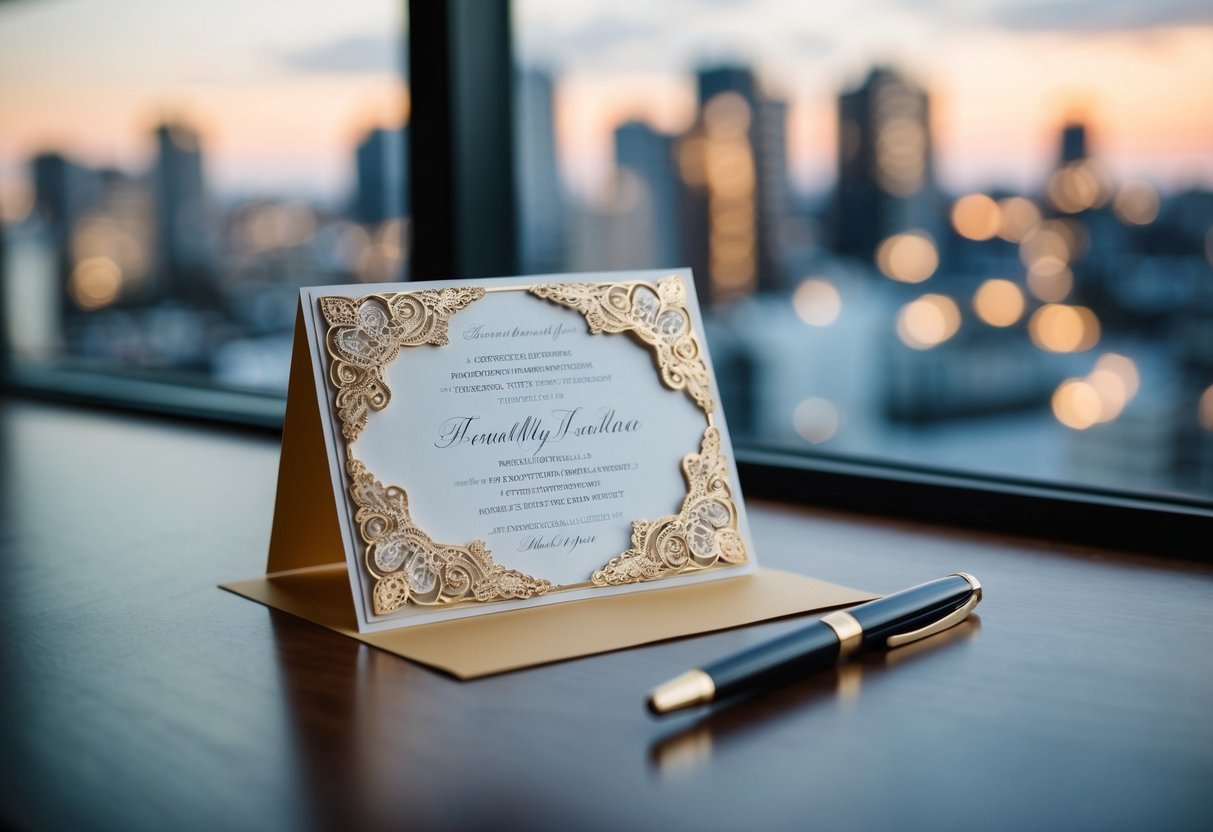
After you send out your invitations, it’s important to manage responses and keep track of your guest list. This ensures that your event runs smoothly and that you are prepared for your celebrations.
Managing RSVPs
When you send out formal or party invitations, be sure to include an RSVP request. This helps you know how many guests to expect. You can choose a method for responses, like a phone number or email address.
It’s helpful to set a clear deadline for when you need responses. This encourages guests to reply on time. Keep track of the responses you receive. If someone doesn’t respond, a gentle follow-up can help.
Remember, the average response rate for events can vary. For weddings, a typical response rate is around 70-85%. Knowing this can help you plan better.
Guest List Considerations
Your guest list is the backbone of your celebrations. Think about who to invite and why. For formal invitations, consider prioritizing close friends and family.
When you review your guest list, reflect on the space available and your budget. It’s also fun to think of guests who might not know each other. You want to create a mix that shines.
Lastly, be considerate with standing invitations. If you’re inviting someone repeatedly, let them know it’s always a pleasure to see them. This adds a personal touch and helps maintain friendships.