
What Is Not Appropriate to Wear as a Wedding Guest? Essential Fashion Tips to Avoid Faux Pas
When you receive a wedding invitation, choosing the right outfit can feel overwhelming. You want to look your best while respecting the couple’s big day. Remember that wearing white is the biggest no-no for guests, as it’s traditionally reserved for the bride.

Beyond just the color, wedding etiquette suggests steering clear of overly casual attire. This means no shorts, flip-flops, or graphic t-shirts, even if the wedding is laid-back. Instead, think about wearing something that makes you feel confident and comfortable while still matching the occasion.
It’s also important to consider the wedding’s theme and venue. Attire that fits a beach wedding might not work for a formal event or a black-tie affair. Paying attention to the dress code can save you from standing out for the wrong reasons. By being mindful of what not to wear to a wedding, you can enjoy the celebration without a worry!
Understanding Wedding Dress Codes
Knowing the dress code for a wedding is important. It helps you choose an outfit that fits the occasion and shows respect for the couple’s wishes. Here’s a breakdown of different dress codes and what they mean for you as a guest.
Decoding Dress Codes for Weddings
Wedding invitations often include a specific dress code. Common terms include “black tie,” “formal,” “cocktail,” and “semi-formal.” Each has its own style rules.
-
Black Tie: This is the most formal option. Men typically wear tuxedos, while women often choose long evening gowns or elegant dresses.
-
Formal Attire: Similar to black tie but slightly less strict. Men might wear a dark suit and tie, while women can opt for a long dress or a dressy cocktail dress.
-
Cocktail Attire: This is stylish but not as formal. For women, a cocktail dress or a chic skirt and top works well. Men can wear dress shirts with dress pants, often adding a blazer.
-
Semi-Formal: This is a bit more relaxed. Women can wear mid-length dresses or nice skirts, while men can choose lighter suits or dress pants without a tie.
Navigating Black Tie and Formal Attire
When attending a black tie wedding, your outfit should exude elegance. Women should look for full-length gowns made from luxurious fabrics. Accessories can enhance your look, such as statement earrings or a clutch.
Men are expected to wear tuxedos. Typically, the shirt is white, and the bow tie is a classic black. Make sure your shoes are polished and formal.
For formal attire, the guidelines relax a bit. Women can wear knee-length dresses or sophisticated separates, while men can choose a dark suit and tie, which can be less formal than a tuxedo. Always remember to dress according to the venue and season.
Cocktail and Semi-Formal Guidelines
Cocktail attire is a popular choice for many weddings. For women, fun and flirty dresses that fall above the knee are a great option. Think about outfits that are vibrant or have some sparkle.
Men should aim for dress shirts and dress pants. Adding a blazer elevates the style. Accessories like ties or pocket squares can add a nice touch without being overly formal.
Semi-formal attire is your chance to express personal style. Women can choose a sundress or elegant pants with a stylish top. Men may skip the tie and wear a smart shirt with tailored pants. It’s all about looking polished yet comfortable.
Colors and Patterns to Avoid
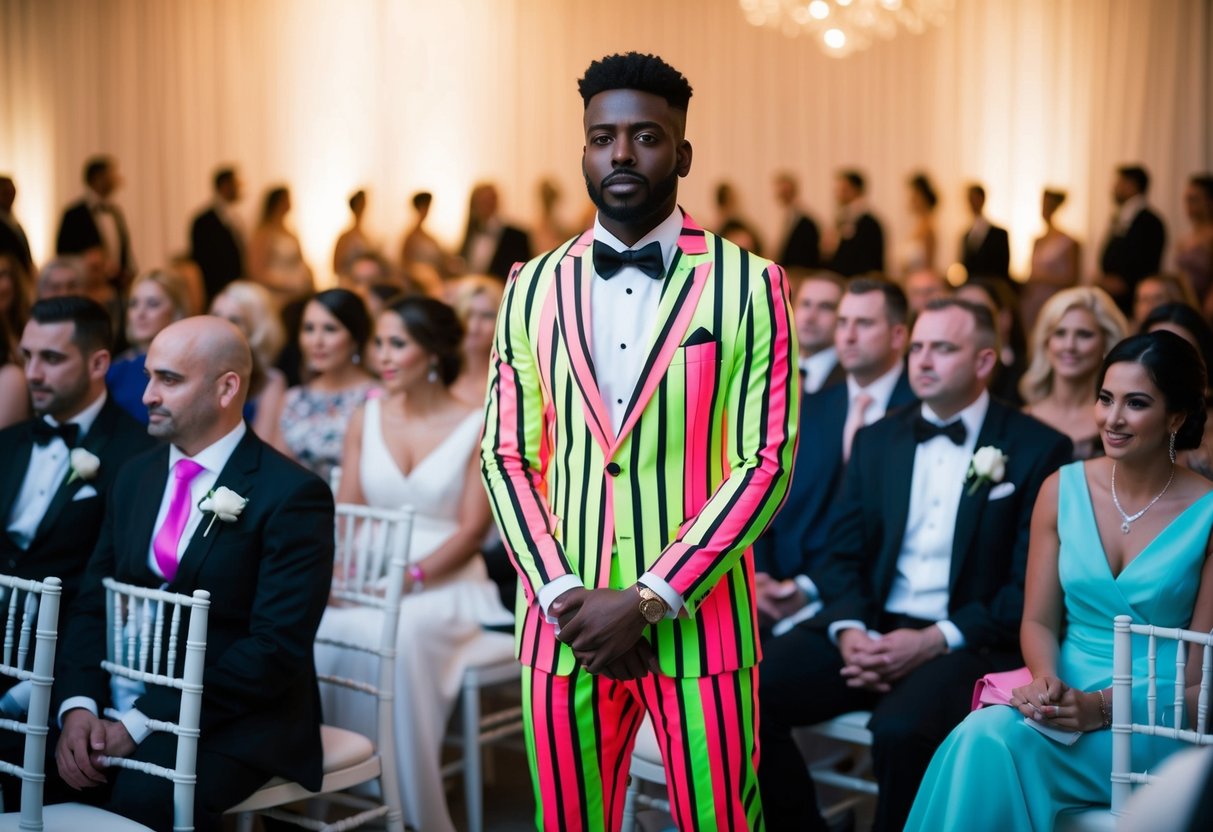
Choosing the right colors and patterns for a wedding can be tricky. It’s important to know which hues to skip and how your outfit can affect the day’s vibe. Here’s what to keep in mind when selecting your attire.
The Significance of Avoiding White
You should always avoid wearing white to a wedding. This color is traditionally reserved for the bride. Wearing white can make you look like you are trying to outshine her, which isn’t good etiquette. It can create an uncomfortable situation for everyone involved.
If you want to look elegant, consider off-whites or soft pastels instead. This way, you can stay away from the spotlight while still looking beautiful. Remember that keeping the focus on the bride is key!
Choosing Appropriate Colors
Besides white, there are other colors you should think twice about before wearing. Avoid very bright colors or neon shades, as they can steal attention from the main event. These choices may come off as too flashy.
Dark colors like black have become more acceptable at weddings, but use caution. If the wedding is formal, a black dress may be fine. However, check with the couple’s preferences first. Earth tones, soft blues, and gentle pinks often work well for most weddings.
Patterns and Prints Consideration
When it comes to patterns, it’s best to keep them subtle. Loud or busy prints can draw too much attention, detracting from the bride and groom. Try to choose simple floral designs or classic patterns like stripes.
Avoid anything that resembles a wedding dress, such as long lace or elaborate patterns. These can confuse guests and give the impression that you’re part of the bridal party. Opt for patterns that compliment the wedding’s theme instead, ensuring you fit in while still standing out.
Appropriate Styles for Wedding Guests
When attending a wedding, choosing the right outfit is essential. You want to look stylish while adhering to the event’s dress code. Here are some key considerations for selecting appropriate styles for wedding guests.
Selecting the Right Silhouette
Choosing the right silhouette can make a big difference in your overall look. A-line dresses, fit-and-flare gowns, and tailored suits are all excellent choices. These styles flatter different body types, ensuring you feel confident throughout the event.
For men, a well-fitted blazer with dress pants creates a polished appearance. Opt for fabrics like cotton or linen for a timeless look. Avoid overly baggy or too-tight clothes, as they may give off an unkempt vibe. Aim for a balanced silhouette that complements your figure.
Comfortable and Suitable Footwear
Your choice of footwear is more important than you might think. Weddings often involve standing or dancing for long periods, so comfort is key. Choose stylish yet supportive shoes, like pointed-toe flats or block-heeled sandals for women. For men, loafers or dress shoes that fit well are ideal.
Avoid wearing sneakers or overly casual shoes, as they can clash with your outfit. Also, remember to check the venue; if you’re on grass or sand, consider wedges or other stable footwear. Comfortable shoes will help you enjoy the celebration without any discomfort.
Avoiding Revealing and Everyday Outfits
Revealing outfits can draw unwanted attention, so it’s important to steer clear of them. Wedding attire should be elegant and respectful. Aim for dresses or suits that are knee-length or longer. Also, avoid low-cut tops or shorts that may not be suitable for the occasion.
Everyday attire, like jeans and t-shirts, is also not appropriate for a wedding. Instead, look for outfits that elevate your style while still being comfortable. Proper wedding guest attire shows respect for the couple and the event, ensuring you blend in beautifully with the celebration.