
What Is the Alternative to the M on the RSVP Card? Discover Your Options!
When planning your wedding, every detail matters, including the RSVP cards you send to your guests. You might have noticed the letter “M” on these cards and wondered if there are alternatives. You can choose to leave it out or replace it with a simple line for guests to write in their titles, like Mr., Mrs., or Miss.

This approach keeps your RSVP cards friendly and inviting while ensuring that your wedding invitation is still respectful of all your guests.
If you prefer a more modern take, some couples opt for a completely customized response card that aligns with their wedding theme. This can lead to creative ways to ask for responses without the traditional “M.”
Remember, clear communication is key in wedding planning. After all, the goal is to make it easy for your guests to respond and help you keep track of who will be celebrating with you on your special day.
Understanding RSVP Cards in Wedding Invitations

RSVP cards play a key role in the process of wedding planning. They help couples get a clear idea of how many guests will attend. You’ll find that these cards come with specific details that guide your response.
Traditional Format of RSVP Cards
A wedding RSVP card usually follows a traditional format. It typically includes a few key elements. You’ll see a section for you to indicate whether you can attend.
The card often states “Accepts with pleasure” or “Regrets with sadness.” Below that, there is commonly a space for the guest’s name.
Don’t forget the “M” line! This line is for you to write your title, such as Mr., Mrs., or Ms. The outer envelope usually matches the RSVP card’s style, maintaining an elegant look.
Significance of the ‘M’ Line
The “M” line on the RSVP card might seem small, but it carries important meaning. It stands for “Monsieur” or “Madame” in French, guiding you to fill in your title.
For example, you might write “M. John Smith” or “M. Jane Doe.” If you’re unsure, it’s best to ask for clarification. Properly filling out this line shows respect for the couple’s wedding etiquette and helps personalize your response.
Etiquette for Wedding Guests
When filling out your response card, keep etiquette in mind. Always respond promptly! It helps the couple finalize their guest list and make arrangements.
Be honest about your attendance. If you can’t go, kindly express regrets. For those attending, it’s great to mention if you’re bringing a guest.
Also, remember to return the RSVP card in the wedding invitation suite. Mail it back in the provided envelope, ensuring the couple can plan effectively. Following these tips helps keep the wedding planning smooth!
Alternative Ways for Guests to Respond

There are many creative options for guests to confirm their attendance at your event without using the traditional “M” line on RSVP cards. These alternatives can enhance the guest experience and make it easier for everyone involved.
Online RSVP Options
Using online RSVP options is a modern and convenient way for guests to respond to wedding invitations. You can create a dedicated website or use platforms like RSVPify or Google Forms.
These options allow you to:
- Collect Responses: Easily track who is attending, along with any meal preferences.
- Provide Updates: Share important details, like changes in schedule or venue, directly with your guests.
- Include Guest Information: Guests can fill out their names, and for unmarried couples, they can indicate their plus ones.
Setting a clear reply date encourages timely responses and helps you plan accordingly.
Alternative Wording for Response Cards
If you’re looking to change things up a bit, consider using fun and inviting wording for your response cards. Instead of the usual “M” line, you might say:
- “Count Us In!” for those attending.
- “Wish We Could Be There!” for those who can’t make it.
For single guests, you could use friendly prompts like “I’ll be there solo” or “Bringing a guest.” This friendly approach adds a personal touch and helps guests feel more involved.
Creative Response Card Ideas
Exploring creative ideas for your response cards can make the process enjoyable for your guests. Here are a few suggestions:
- Postcard Design: Turn your RSVP card into a postcard. This format is fun and can be easily mailed.
- Theme-Based Prompts: Use themes that reflect your wedding. For example, if you have a beach wedding, ask guests to write their favorite beach activity.
- Interactive Elements: Include small activities like a checklist for dietary preferences or a line for guests to share song requests.
These fun designs not only collect information but also engage your guests and set the tone for your big day.
Managing Guest Information and Preferences

Managing guest information is key to hosting a successful event. It helps you keep track of how many guests to expect and their specific preferences.
Tracking the Number of Guests
Knowing the number of guests is essential for planning your event. Set a clear RSVP deadline to encourage guests to reply promptly. Use digital tools or apps to track responses easily.
Consider creating a simple table to organize responses:
| Guest Name | RSVP Status |
|---|---|
| John Doe | Coming |
| Jane Smith | Not Coming |
With this method, you can quickly see who will attend and adjust your plans accordingly. The guest count will help with seating arrangements and catering needs.
Accommodating Dietary Requirements
Dietary needs can vary greatly among guests. To ensure everyone enjoys the meal, ask for dietary requirements on the RSVP card. You might include options like vegetarian, vegan, gluten-free, or food allergies.
Create a separate section in your guest list to note any special requests:
| Guest Name | Dietary Requirements |
|---|---|
| John Doe | Vegetarian |
| Jane Smith | Gluten-Free |
This process will help you order the right meals and show your guests that you care about their preferences.
Including Meal Choices and Song Requests
To make your event more enjoyable, consider allowing guests to choose their meal options. You can list meal choices on the RSVP. This approach helps ensure everyone gets a meal they like.
For an interactive twist, ask guests for song requests too. You can include a section for songs on the RSVP card, allowing guests to contribute to the playlist.
Keep everything organized by tracking meal preferences and song requests together:
| Guest Name | Meal Choice | Song Request |
|---|---|---|
| John Doe | Chicken | “Uptown Funk” |
| Jane Smith | Pasta | “Shake It Off” |
This way, you cater to individual tastes, creating a more personal and fun experience for everyone.
Considerations for Unique Wedding Scenarios
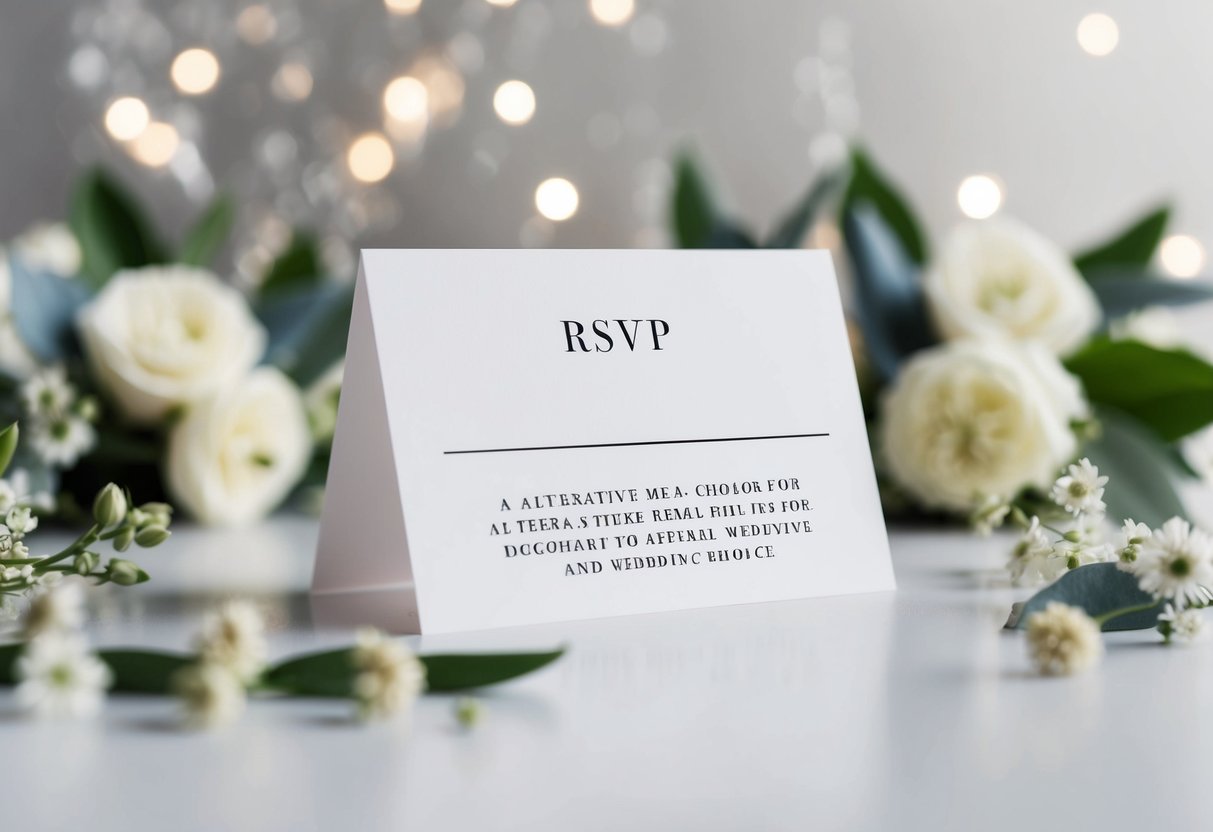
Weddings can vary greatly based on location and cultural traditions. It’s important to handle RSVP cards thoughtfully in these situations. Here are some key factors to consider for destination weddings and cultural variations in responses.
Destination Wedding RSVPs
For a destination wedding, you may want to adjust how you handle RSVPs. Since guests often must travel, it’s crucial to provide clear information on the RSVP card.
Key points to include:
- Travel Details: Include a brief note about travel logistics, like airport options.
- RSVP Card Size: Consider a size that allows space for additional info, as guests need to plan their trip.
- Deadline: Set an earlier response deadline, as guests may need time to arrange their travel plans.
By providing these details, you help ensure that your guests feel comfortable attending your special day.
Cultural Variation in Wedding Responses
Unique wedding traditions in different cultures can affect how guests respond. Understanding these customs can enhance your planning process.
Important considerations include:
- Formal Titles: Some cultures may prefer specific titles beyond the typical Mr. or Ms.
- Language Options: If you have guests from diverse backgrounds, consider offering responses in their native languages, if possible.
- Response Style: Certain traditions may call for a more elaborate response, such as including family names or other titles.
Being aware of these differences can help you accommodate your guests and honor their customs effectively.