
What is the Average Time to Send Out Wedding Invitations? Tips for Timely Planning
Sending out wedding invitations is a key part of your wedding planning. The average time to send out wedding invitations is 6 to 8 weeks before your wedding date. This timeline allows your guests enough space to make travel arrangements or take time off work if needed.

If you’re planning a larger wedding or a destination event, you might want to consider sending your invitations even earlier, around 3 months in advance. This extra time helps ensure all your loved ones can join you on your special day.
Knowing the right timeline for your wedding invitations can take some stress out of the planning process and make everything flow more smoothly.
Understanding Wedding Invitation Timelines
Receiving wedding invitations at the right time helps your guests make plans to join in your special day. It’s essential to know when to send them and consider the RSVP deadline to keep everything organized.
Optimal Timing for Sending Invitations
It’s best to send your wedding invitations 6-12 weeks before the big day. If you plan a more formal event, aim for the 8-12 weeks mark. This timing allows guests to manage schedules, travel, and accommodations.
If you send out save the date cards, do this 4-6 months in advance. This gives guests ample time to mark their calendars. Remember to include important details like the date, location, and any special notes.
When sending invitations, consider your guest list. For more distant friends or relatives, an earlier invitation can help. This ensures everyone has enough notice to attend.
RSVP Deadline Considerations
Setting an RSVP deadline is crucial for planning. A good rule is to request responses 3-4 weeks before your wedding date. This timeframe helps you finalize numbers for catering and seating arrangements.
Make it easy for guests to respond by including clear instructions. You could use response cards, or ask for RSVPs via email or a wedding website.
Be sure to specify whether they can bring a plus-one, too. Including this information can reduce uncertainty and help you get accurate counts. Remember to follow up with anyone who hasn’t responded as your deadline approaches. This will ensure you have the right numbers in time for your celebration.
Wedding Invitations and Guest Management
Managing your guest list effectively is key to a successful wedding. You’ll want to ensure that your invitations reach everyone on time, gather RSVPs, and plan seating arrangements thoughtfully. Here are some important aspects to consider.
Building Your Guest List
Start by creating a comprehensive guest list that includes all your loved ones. Consider those who live nearby and those who might need extra time to travel, especially international and out-of-town guests.
Organize your list in a spreadsheet, making it easy to track contact information. You can categorize guests by family, friends, and other relationships. This will help when planning the seating chart later on.
Be mindful of the venue’s capacity. This ensures you send invitations to only those you can accommodate. Remember to keep a backup list in case some guests decline the invitation.
RSVP Tracking and Follow-Up
Sending RSVP cards with your invitations is a great way to get a head count for your wedding. Make sure they have clear instructions and a deadline for responses. This helps you finalize your plans in a timely manner.
Once the RSVPs start coming in, keep track of responses in your spreadsheet. You can add notes for guests who have special needs or dietary requirements.
If some guests don’t respond by the deadline, feel free to follow up with a friendly reminder. A simple text or email can go a long way in helping you finalize your guest count.
Seating Chart Strategy
Creating a seating chart is a crucial step that requires careful planning. Start by identifying groups of guests who know each other. This can make for a more enjoyable experience for everyone.
Consider placing out-of-town guests close to the dance floor or bar to encourage mingling. You might also want to seat families together, especially those who haven’t met before.
Once you have a rough layout, you can use online tools or apps to help visualize your seating chart. Printing a large version for the venue can ensure everything flows smoothly on the big day. Remember, flexibility is key, as last-minute changes can happen.
Design and Content of Invitation Suite
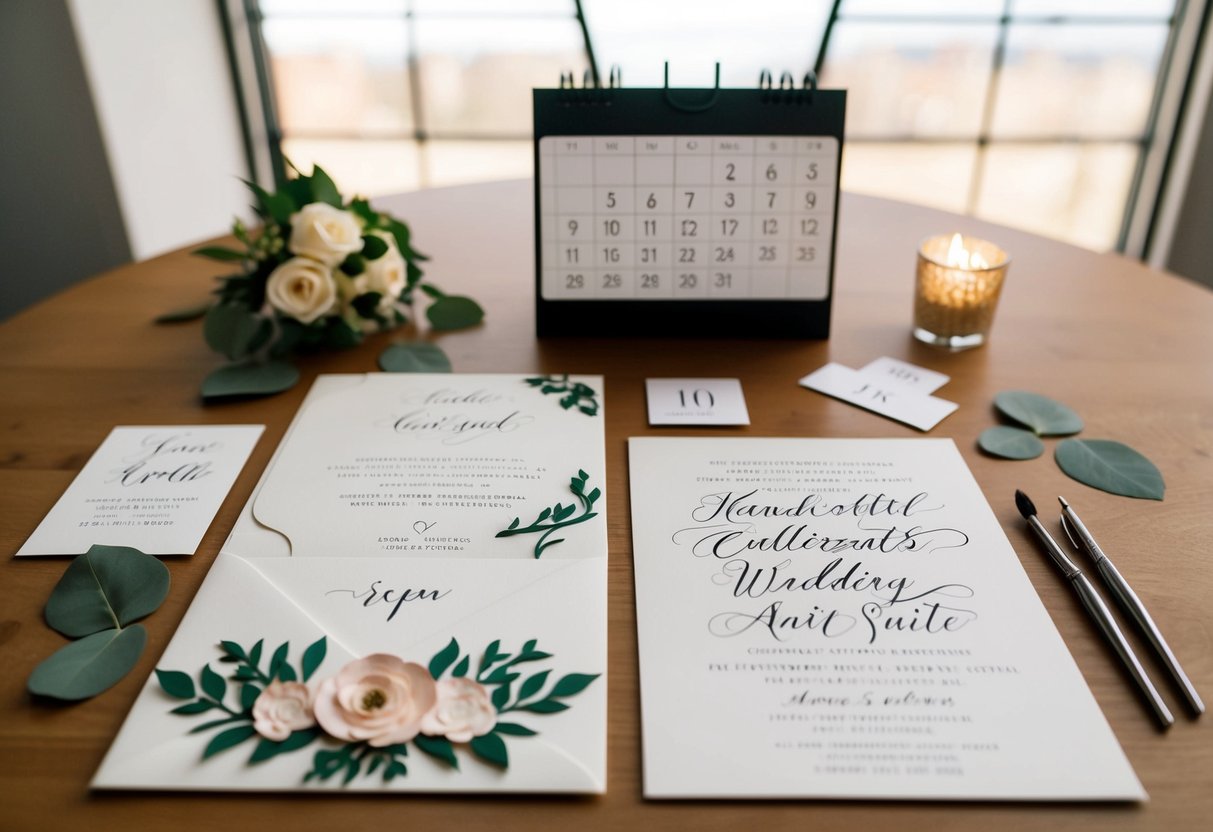
Creating your invitation suite involves multiple elements that highlight your wedding theme and provide essential information to your guests. Focus on choosing the right design, crafting the wording with etiquette in mind, and considering additional elements that can enhance your invitations.
Choosing the Right Invitation Design
When selecting your invitation design, think about your wedding theme. Do you want something classic, modern, or whimsical? The design should reflect your style and set the tone for your special day.
Consider colors, fonts, and graphics that match your overall theme. You might choose elegant script for a formal wedding or playful typography for a casual event.
If you’re tech-savvy, digital invites are an option too. They can be beautiful and more budget-friendly, offering animation and multimedia elements.
Wording and Etiquette
The wording of your invitation is crucial. It should clearly communicate the event details like the date, time, and venue. Start with a line inviting guests to your celebration, followed by a formal introduction.
Be mindful of etiquette. Use full names and include proper titles. Phrases like “together with their families” set a warm tone. Don’t forget to ask for RSVPs!
Add any additional information, such as dress code or special instructions, at the bottom. Keeping your wording concise helps ensure the invitation is easy to read.
Additional Elements in an Invitation Suite
Your invitation suite can include several additional elements that enhance the overall presentation. This might involve RSVP cards, envelopes for sending, and even mailing labels with your addresses.
Consider including escort cards for guests to find their seats easily. Menu selections can highlight the delicious offerings at your reception.
Including thank-you notes in your suite can streamline your gratitude after the event. Each element should coordinate with your invitation design for a cohesive look.
Logistics and Additional Considerations
Planning your wedding involves many details. As you prepare to send out invitations, keep in mind the logistics for your guests, especially if you’re hosting a destination wedding.
Accommodation and Travel Arrangements for Guests
When guests receive their invitations, they’ll need to make travel arrangements. Provide them with helpful details about local accommodations. Consider creating a list of nearby hotels, including options for various budgets.
You might also want to include links to booking websites or even set up a wedding website. This resource can make planning easier. Include information about transport options like shuttles or public transport with your invitations.
Remember, timely communication about these details will help your guests feel more at ease.
Managing a Destination Wedding
If your wedding is in a different location, it’s crucial to send invitations early. Aim for at least 3 months prior. This gives guests enough time to book travel and accommodations.
You can also share details about local attractions. Mention fun activities for guests who arrive early. Providing this information can create excitement and help them plan their stay.
You might consider partnering with local vendors for group rates or package deals on accommodation. This can simplify logistics and make it easier for everyone involved.
Postage and Budgeting for Invitations
Postage can add up, especially with larger invitations. Factor this into your wedding budget.
Don’t forget to weigh your invitations before buying postage to ensure correct pricing.
If you are sending invitations to faraway guests, consider sending them well ahead of time.
For destination weddings, sending invites 3 to 6 months in advance is often best.
You may also want to look into electronic invites for some guests. This can save money and is quick.
Regardless of what you choose, make sure every detail aligns with your vision and budget.