
What is the Best Color for Stage Backdrop? Tips for Choosing the Perfect Hue
Choosing the right color for your stage backdrop is crucial for creating the desired mood and atmosphere. The best color often depends on the theme of your performance and the emotions you want to evoke in your audience.
Color theory can help you understand how different hues affect feelings and perceptions.

For example, deep blues and purples can create a feeling of calm or mystery, perfect for dramatic scenes. On the other hand, bright reds and yellows can energize the space and attract attention.
By understanding how colors work together, you can enhance your production and draw your audience into the experience.
As you plan your stage backdrop, consider not just the aesthetics but also how color can influence the mood of your performance. Whether you’re aiming for a vibrant or subdued effect, the right choice will make all the difference in captivating your audience.
Understanding Color Theory and Stage Design
Color plays a vital role in stage design, influencing mood, focus, and emotional responses. By understanding color theory, you can create effective backdrops that enhance your production’s message and atmosphere.
The Role of Color in Set Design
In set design, color influences how the audience feels and reacts to a performance. Different hues can evoke various emotions; for example, warm colors like red and yellow can create excitement or urgency.
Cool colors such as blue and green tend to have a calming effect. Depending on your production’s theme, you can use these colors to guide audience feelings. Think about how the backdrop complements characters and actions on stage.
Choosing the right colors enhances storytelling, making it essential to explore what colors resonate with your audience. Using the right hues can create a compelling visual narrative.
Color Wheel Basics
The color wheel is a tool that helps you understand how colors relate to one another. It consists of primary colors (red, blue, yellow), secondary colors (green, orange, purple), and tertiary colors.
Familiarizing yourself with the color wheel allows you to make informed choices.
You can create harmonious designs by using complementary colors, which sit opposite each other on the wheel, such as blue and orange. These combinations create contrast that can draw attention.
Additionally, using analogous colors, which are next to each other on the wheel, can create a cohesive and pleasing backdrop.
Color Schemes and Emotional Impact
Different color schemes can affect audience emotions in unique ways. A monochromatic scheme uses various shades of one color, which creates unity and can evoke a specific mood.
Complementary color schemes, using opposing colors, can generate excitement and vibrancy. For example, a blend of yellow and purple can grab attention and enhance dramatic moments.
Consider the emotional impact of your chosen scheme on the audience. Using color effectively can amplify the storytelling aspects of your production, allowing viewers to connect more deeply with the performance.
Choosing the Right Color for Your Stage Backdrop
Selecting the right color for your stage backdrop is essential for creating the desired atmosphere. The color influences how the audience feels and interacts with the performance.
Consider how lighting, textures, and color saturation all play a role in setting that mood.
The Importance of Lighting Design
Lighting can dramatically change how colors appear on stage. Different lights can make a hue look vibrant or muted.
Use warm lights to enhance reds and yellows, creating a cozy feel. Cooler lights, like blues and greens, can project calmness.
You should test your backdrop colors with the actual lighting setup. Observe how the brightness affects the appearance of the backdrop.
The same color can look completely different under various lighting conditions.
Influence of Textures and Materials
When choosing a backdrop, think about the textures and materials. Textured backdrops add depth and interest to the visual experience.
For instance, a fabric backdrop may absorb light differently than a smooth surface. Consider materials like canvas, which can show color variations due to its texture.
This can create an engaging visual effect. It’s helpful to test samples in the actual performance space to see how they interact with lighting.
Considering Color Saturation and Brightness
Saturation refers to the intensity of a color. A highly saturated hue grabs attention and creates energy. On the other hand, pastel colors can evoke softness and tranquility.
Pay attention to brightness as well. A bright backdrop can create a cheerful mood, while darker shades may invoke drama.
Adjust your backdrop choice based on the emotional tone you want to set for your audience.
Be sure to consider how the audience will perceive the backdrop from different angles. It all comes together to create a compelling visual narrative that supports your performance.
Innovative Backdrop Solutions and Visual Dynamics
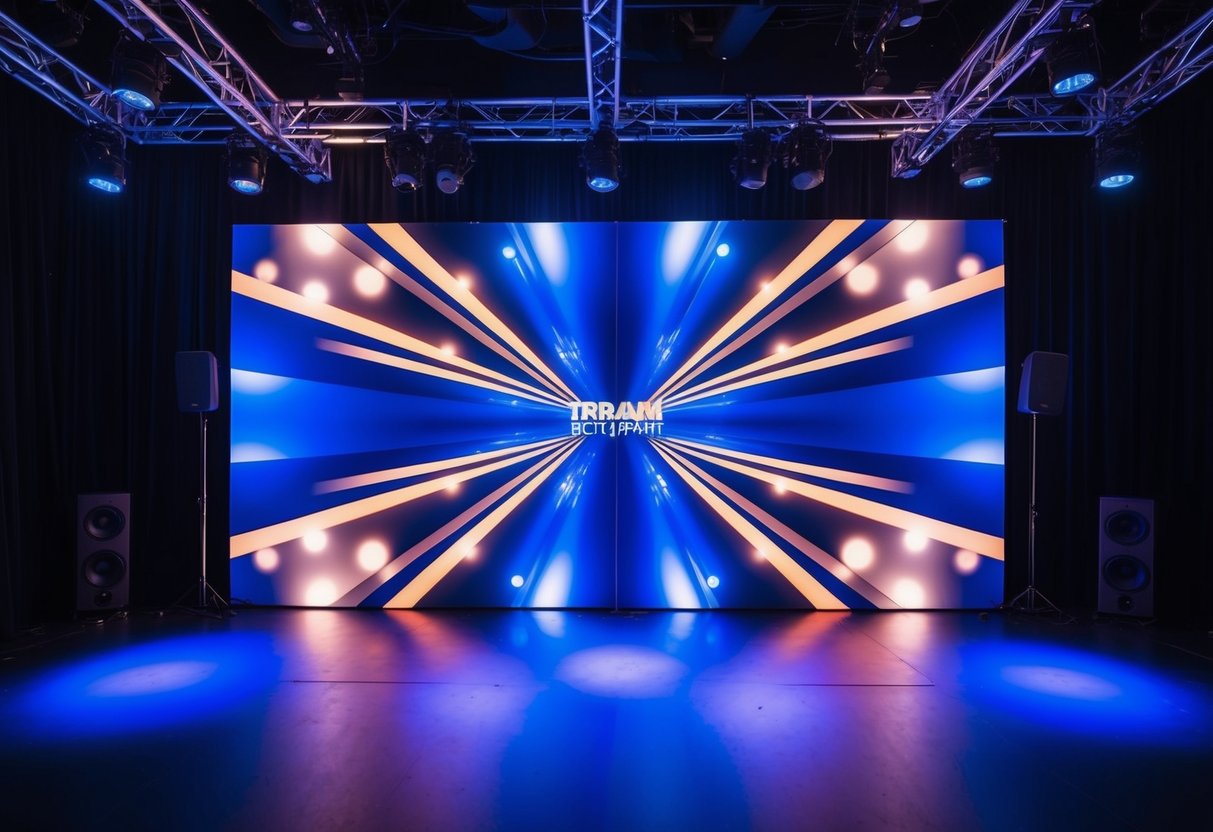
Creating an engaging stage backdrop involves using modern technologies that add depth and excitement. You can enhance visual elements by choosing the right colors and techniques, which directly influence the audience’s experience.
LED Backdrops and RGB Technologies
LED backdrops have transformed stage design by offering vibrant colors and flexibility. With RGB (Red, Green, Blue) technology, you can create a wide range of hues to match your event’s theme.
These backdrops can change colors or patterns with ease, allowing you to adjust the mood throughout the performance.
The dynamic lighting options make it simple to keep the audience’s attention while enhancing the emotional impact of the presentation. You’ll find that the combination of LED technology and creative design can significantly elevate the experience of your event.
Projection and Visual Interest
Projection technology can add layers of visual interest to your backdrop. By projecting images, animations, or videos onto a surface, you can create engaging scenes that complement your performance.
This method allows easy updates and changes, making it perfect for events that require adaptability.
You could project scenic views, artistic designs, or even brand logos onto the backdrop. As a result, this approach transforms a simple backdrop into a dynamic piece of art that interacts with the performance.
Monochromatic and Color Mixing Techniques
Using monochromatic colors can set a sophisticated tone for your backdrop, providing a clean and cohesive look. By sticking to variations of a single color, you can create depth through different shades and textures.
On the other hand, engaging in color mixing techniques allows you to combine multiple colors to create stunning effects.
For instance, blending complementary colors can draw attention and evoke specific emotions. Experimenting with these techniques can help you find the perfect backdrop that aligns with your vision.
Event-Specific Backdrop Considerations
Choosing the right backdrop color plays a significant role in making your event memorable. Different events have unique needs that can guide your color selections. Here are some key factors to consider based on the type of event you are hosting.
Branding and Logos for Corporate Events
For corporate events, your backdrop should be a canvas for your brand. Incorporate your company’s logo and brand colors prominently.
This not only enhances your brand visibility but also creates a professional atmosphere.
Using a neutral backdrop allows your logo to stand out, often utilizing colors like white, gray, or beige. If your branding leans towards vibrant colors, consider a solid backdrop that won’t overshadow your logo.
Remember, consistency is key. Make sure your backdrop aligns with other visual elements at the event, like brochures and signage. This unified look strengthens your brand’s visual impact.
Choosing Colors for Weddings and Celebrations
Weddings and celebrations are all about personal expression and emotion. When selecting backdrop colors, choose shades that reflect the couple’s personality or the event theme.
Soft pastels work beautifully for romantic settings. Consider colors like blush pink, lavender, or mint green for a delicate look.
Alternatively, if the event calls for more energy, saturated colors like deep red or royal blue can create a vibrant atmosphere.
Think about how these colors will interact with other elements, such as flowers and table arrangements. A well-chosen backdrop can enhance the overall decor, making the event feel cohesive and special.
Bright Colors in Theatrical Productions
In theater and performances, bright colors often draw attention and set the mood. Vibrant backdrops can set the scene, whether it’s an energetic play or a dramatic musical.
Using bold, saturated colors can evoke emotions and captivate the audience. For instance, a bright red backdrop can suggest passion, while a blue can convey calmness.
Make sure your backdrop complements the costumes and lighting design. The goal is to achieve a visual impact that enhances storytelling without overshadowing actors. Bright colors can create dynamic visuals, but finding the right balance is crucial for a polished look.