
What is the Groom’s Family Supposed to Pay For? A Guide to Wedding Responsibilities
Understanding the roles and financial responsibilities of each family can help ease some of the stress when planning a wedding. Traditionally, the groom’s family is responsible for paying for the rehearsal dinner and sometimes the honeymoon, along with specific expenses at the reception like alcohol. Knowing these traditions can guide you as you navigate who pays for what.

Many couples today are finding ways to split wedding costs more evenly. This means both families, as well as the couple, might contribute to various expenses. Understanding these customs will help you communicate effectively with your partner and families while creating a memorable celebration that fits your vision and budget.
As you plan your wedding, it’s essential to keep open lines of communication. Discuss your expectations and preferences with your family and your partner’s family to ensure that everyone is on the same page.
So, let’s explore what the groom’s family typically covers and how you can make these traditions work for you.
Groom’s Family Financial Responsibilities
As the groom’s family, you have several financial responsibilities to consider during wedding planning. These include paying for various events, attire, and gifts, which can help alleviate costs for the couple. Here’s a breakdown of what typically falls under your duties.
Engagement Party and Ring Costs
Traditionally, the groom’s family may contribute to the engagement party. This celebration is often hosted to announce the couple’s commitment. You can coordinate with the bride’s family on expenses to make it a joint effort.
Additionally, the engagement ring is typically a purchase made by the groom. However, some families opt to cover these costs to ease the financial load on the couple. This gesture shows support and can create lasting memories as part of the engagement celebration.
Rehearsal Dinner
The rehearsal dinner is another significant expense for the groom’s family. This dinner usually takes place the night before the wedding and involves close family and friends.
Costs can vary based on the venue and guest list, making planning essential. It is customary for you to select a location, handle reservations, and pay for the food and drinks. This gathering helps everyone relax and bond before the big day, making it an important part of the wedding festivities.
Groom’s Attire
As the groom’s family, you may also help with the groom’s attire. This often includes buying the tuxedo or suit he will wear on the wedding day.
You’ll want to discuss options and budgets with him to find something that fits both his style and the wedding theme. Basic accessories, such as shoes, ties, and cufflinks, may also fall under your responsibilities, ensuring he looks sharp for the occasion.
Marriage License and Officiant Fee
The marriage license fee is a small but necessary expense. While many couples handle this together, some families choose to cover this cost.
Overall, the licensing process typically involves paperwork and a fee that varies by location. Additionally, the officiant fee is something you might consider. This includes what you pay the person who will perform the ceremony. Coordinating these two expenses can make planning smoother.
Groomsmen Gifts
Showing appreciation for the groomsmen is another important aspect of your duties. You may wish to cover the cost of gifts for these close friends.
Gifts can vary from personalized items to practical tools, like custom flasks or cufflinks. These tokens help express your gratitude for their support during the wedding. It’s a sweet way to thank them for being part of such an important day in your family’s life.
Wedding Ceremony and Reception Contributions
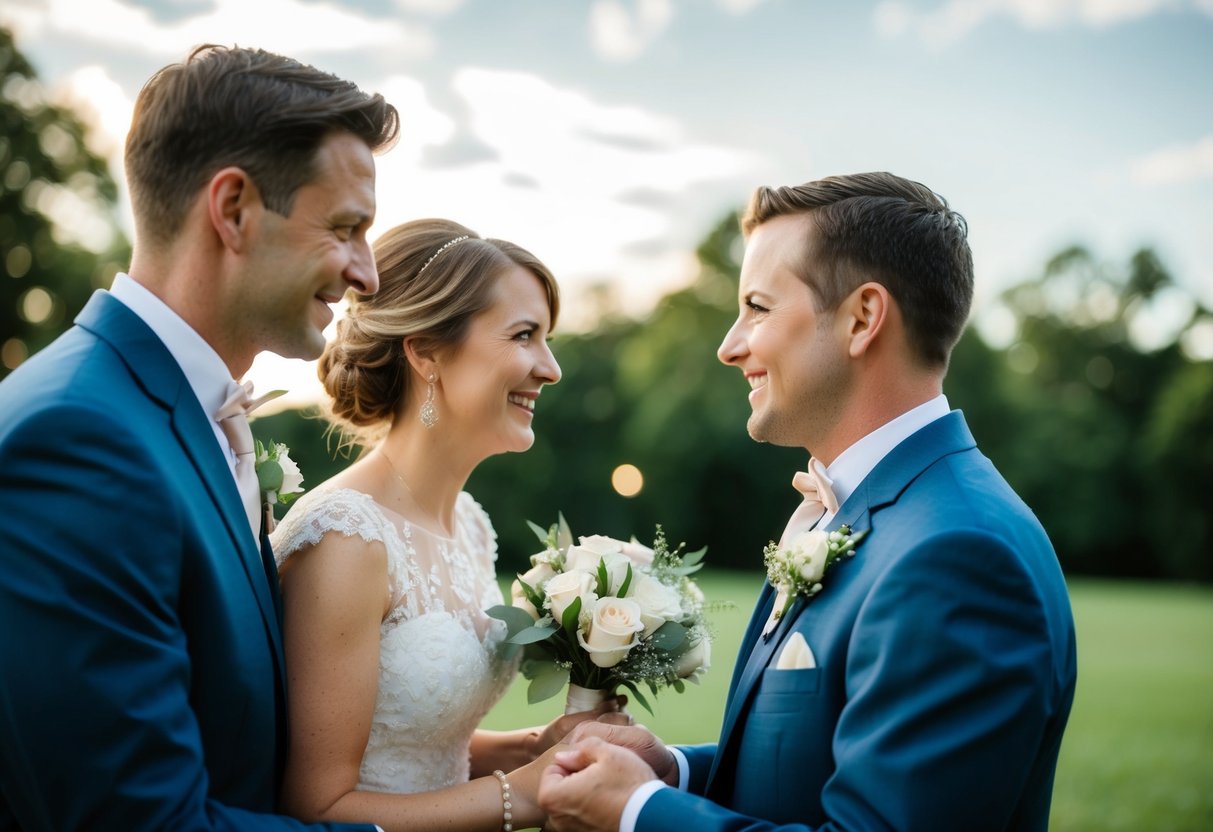
The groom’s family plays a key role in contributing to various aspects of the wedding ceremony and reception. These contributions can include flowers, corsages, and support for the reception. Understanding these responsibilities can help ensure a beautiful and seamless event.
Corsages for the Immediate Family
One important tradition is providing corsages for the immediate family of the groom. This usually includes mothers, grandmothers, and any special female relatives. Corsages are lovely flowers worn on the wrist or pinned to clothing.
Typically, the groom’s mother and both grandmothers receive corsages to celebrate their special roles. The groom’s father may also receive a boutonniere, which you can coordinate with the flowers in the corsages. Planning these floral details adds a nice touch to the day.
Boutonnieres and Wedding Flowers
In addition to corsages, the groom’s family is often responsible for the boutonnieres. These are small flower arrangements worn by the groom and the groomsmen. Choosing flowers that match the bride’s bouquet enhances the wedding’s overall look.
You might consider selecting flowers that reflect the couple’s style. This can range from classic roses to more unique blooms. Also, include any extra wedding flowers needed for the ceremony, such as altar arrangements or petal pathways.
Wedding Reception Support
At the reception, the groom’s family may also contribute by covering some costs, especially for alcohol and food. Many families choose to host the rehearsal dinner, which is a wonderful way to gather everyone before the big day.
This meal usually includes drinks and sometimes entertainment. If the groom’s family opts to assist with the reception alcohol, it’s a meaningful gesture for guests to enjoy.
The groom’s family may also help with other reception details, like seating arrangements or decorations. These contributions create a memorable event for everyone involved.
Post-Wedding and Additional Expenses

After the wedding, there are a few expenses that the groom’s family might help with. These can include contributions to the honeymoon and hosting a welcome party for guests. Understanding these responsibilities can make things smoother for everyone involved.
Honeymoon Contribution
Traditionally, the groom’s family may provide financial help for the honeymoon. This could include covering some of the costs for travel or accommodations. Many couples appreciate this support, as honeymoon expenses can add up quickly.
You might also want to consider other aspects like special experiences on the trip. Financial contributions from the groom’s family can help cover things such as activities or even romantic dinners. Discussing these options early can help ensure everyone is on the same page.
Welcome Party
A welcome party often greets guests who traveled for the wedding. The groom’s family may organize this event. They cover the costs for food, drinks, and possibly entertainment.
Planning a relaxed atmosphere is important, so guests feel at home. You could choose a casual setting, like a local restaurant or even the groom’s family home. Making arrangements early ensures that your guests have a great time before the wedding day.