
What is the Time Etiquette for Invitations? A Guide to Timing Your Events Perfectly
When you send out invitations, timing plays a vital role in making your event a success. To ensure your guests have enough time to prepare, you should mail formal invitations at least six weeks before the event. This is especially important for weddings and other significant occasions where your guests will need to make travel arrangements or clear their schedules.

Understanding the right time to send invitations can help prevent the stress of last-minute planning. While there are general guidelines, it’s helpful to consider the nature of your event. For more casual gatherings, you may send invitations closer to the date, but for weddings or formal events, earlier is always better.
Getting the timing right not only shows good invitation etiquette but also demonstrates respect for your guests’ schedules. So, whether you’re planning a birthday party or a wedding, being mindful of when to send your invitations goes a long way in ensuring everyone can join in the celebration.
Understanding Invitation Etiquette
When you send out invitations, knowing the right timing and how to handle RSVPs is key. Following proper etiquette ensures your guests feel welcomed and informed.
The Role of Time in Invitations
Timing is essential for invitations. When planning an event, especially a wedding, sending invitations at the right time sets the mood and helps guests prepare.
Typically, wedding invitations should be sent 6-8 weeks in advance. This allows guests to mark their calendars and make travel arrangements if necessary.
For casual events, aim for about 3-4 weeks ahead. Always consider special circumstances, like holidays, that might require earlier notice.
Don’t forget to include necessary information like the date, time, and location clearly. It’s best to spell out the time, such as “two o’clock in the afternoon,” for formal invitations.
Decoding RSVP Requirements
RSVP is short for “Répondez, s’il vous plaît,” which means “Please reply.” You want your guests to respond at their earliest convenience.
Include an RSVP card for their convenience. It should ask them to confirm their attendance, and if possible, include a meal choice. A stamped RSVP envelope makes it easy for them to send it back.
Set an RSVP deadline about one week before the event. This gives you time to finalize your guest list and make necessary arrangements. Make sure RSVP instructions are easy to understand to encourage responses.
Including an RSVP helps you gauge attendance and ensure you prepare adequately for your guests.
Crafting Your Invitations
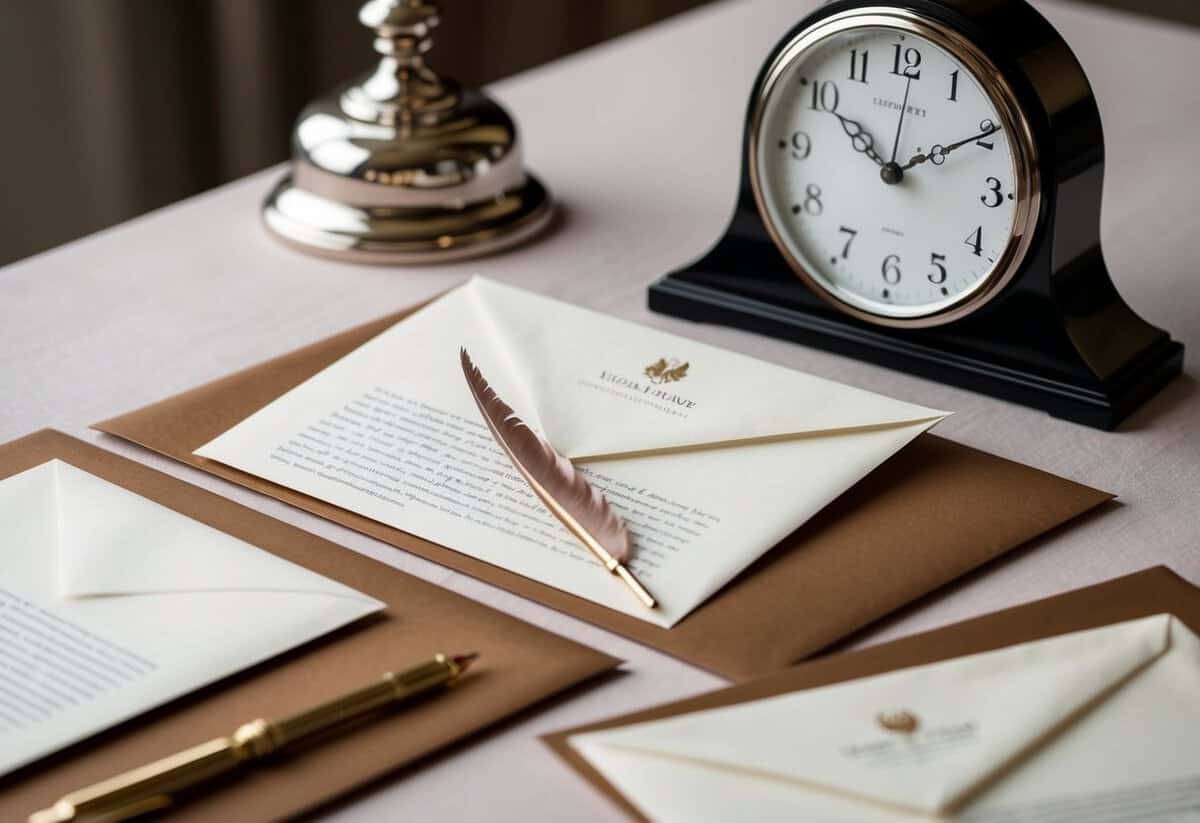
When you are preparing your invitations, the key elements to focus on are the wording and the design. Both aspects help set the tone for your event, making it clear what your guests can expect.
Selecting the Right Wording
The wording of your invitation is crucial. It should reflect the style and formality of your event. For formal occasions, use traditional phrases like “request the honor of your presence” for weddings. For informal events, you might say “join us for a celebration” instead.
Include important details such as the date, time, and location. If your ceremony starts at a specific time, make sure to check if guests will need to arrive early. Consider adding a dress code to help your guests dress appropriately. For example, you can specify “cocktail attire” or “casual.”
Also, don’t forget to include RSVP instructions to ensure you have an accurate headcount.
Designing Your Invitation
The design of your invitation can enhance the overall feel of your event. Choose colors and fonts that align with your theme. For formal events, elegant fonts and classic colors like gold and navy work well. For casual gatherings, feel free to be creative with bright colors and fun designs.
Pay attention to the layout. Ensure all information is easy to read and clearly separated. Consider adding personal touches like illustrations or motifs related to your event.
Whether you choose digital invitations or printed ones, make sure the quality reflects your desired tone. High-quality paper or an attractive digital design will leave a good impression on your guests.
Scheduling and Sending Invitations
When planning an event, knowing when to send invitations is essential for ensuring your guests can attend. You’ll want to pick the right time to send out these important messages and include the key details to keep everyone informed.
Choosing the Optimal Send-Off Time
The best time to send invitations can vary based on the type of event. For formal occasions, such as weddings, aim to send invitations 8 to 10 weeks in advance. This gives guests time to make travel plans and adjust their schedules.
For more casual parties, sending invites 3 to 4 weeks ahead is usually enough. If your event is a destination wedding, consider sending Save the Date cards even earlier, perhaps six months in advance. These help your guests reserve that time on their calendars.
Be mindful of the time of day you choose to send out your invitations. Mornings or late afternoons are ideal, as people are more likely to check their emails or mail at those times.
Key Information for Guests
Your invitations should contain all the important details your guests need. Start with the who, what, when, where, and RSVP deadline.
Include the date and time clearly, mentioning if it’s in the morning, afternoon, or evening. For example, “5:30 PM” is better than “evening.” If it’s a wedding, use formal wording like “ceremony starts at noon.”
Also, mention if you’re using a digital RSVP method on your wedding website or stationery. Don’t forget to list any dress codes or special instructions if needed. Keeping everything clear will enhance your guests’ experience and make planning easier for everyone.