
What Is Too White to Wear to a Wedding? Navigating the Dress Code Etiquette
Choosing what to wear to a wedding can be tricky, especially when white is often seen as off-limits. You might wonder if you’re unsure about the shade of your outfit, it’s best to avoid wearing white altogether. While some couples have relaxed the traditional rules, many still hold to the etiquette that white is reserved for the bride.

Wedding guest fashion etiquette can vary, and knowing what’s too white to wear is essential.
For instance, wearing a gown that is predominantly white or has a large amount of white detail can be viewed as inappropriate. Subtle patterns with white can be acceptable, but you should be cautious with colors that are very light or similar to white.
Your goal is to celebrate the couple without drawing attention away from the bride. Keep this guideline in mind as you prepare for the big day, and you’ll feel confident in your outfit choice.
Understanding Wedding Attire Etiquette
Knowing the rules of wedding attire can help you avoid fashion faux pas.
The main guideline is the “no-white rule,” which is vital to understand when planning your outfit. However, there are some modern exceptions that might apply in certain situations.
The No-White Rule
Traditionally, wearing white to a wedding is reserved for the bride. This rule helps keep the bride as the centerpiece on her special day.
Wearing white, ivory, or cream as a guest can take attention away from her, which is considered disrespectful.
While some weddings may ask for more relaxed dress codes, it’s essential to be cautious. If you feel unsure about your outfit’s whiteness, it’s best to choose something else.
Avoid outfits that are predominantly white or light-colored and opt for brighter or darker hues instead.
Common Exceptions
Despite the no-white rule, there are exceptions where wearing white might be acceptable.
In some casual or themed weddings, the couple may encourage guests to sport white attire, especially if it fits their event’s vibe.
You might see brides who are open to family or close friends wearing white as a show of unity. Always check the invitation or ask the couple directly if you’re unsure. Remember to keep your outfit tasteful and respectful to the day’s main events.
Appropriate Alternatives to White
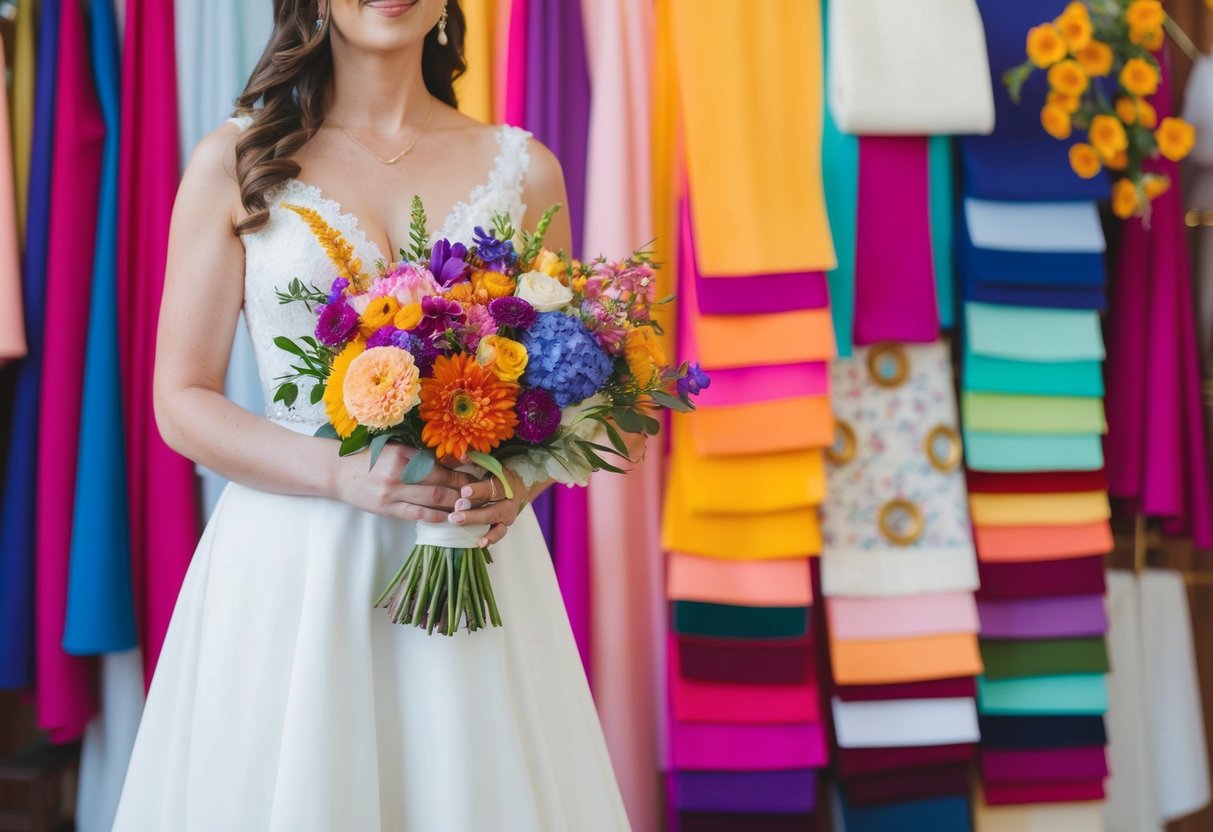
When attending a wedding, you may want to avoid white and similar shades. Fortunately, there are many stylish alternatives that can help you look great while staying respectful of the occasion.
Color Recommendations
Choosing the right color can make a big difference.
Red is a bold option that stands out and adds vibrancy to the celebration. It’s a classic choice for special occasions.
Other options include ivory and champagne. These shades are softer than pure white and can be just as elegant. They allow you to maintain a formal look without overshadowing the bride.
If you prefer darker tones, black can also be an excellent alternative. It is chic and versatile, perfect for evening weddings. Just ensure the rest of your outfit is festive to avoid looking too somber.
Prints and Patterns
Floral dresses are a fantastic choice for weddings. They add whimsy and can be tailored to different seasons.
Look for white floral prints—a design that incorporates white flowers on a colored background can be both beautiful and appropriate.
Stripes or polka dots in fun colors can also work well. These patterns add visual interest while keeping you in line with wedding dress codes. Remember to choose prints that are not overly casual, as you want to respect the occasion.
By choosing thoughtful colors and prints, you can enjoy the celebration while looking your best!
What to Avoid Beyond Color
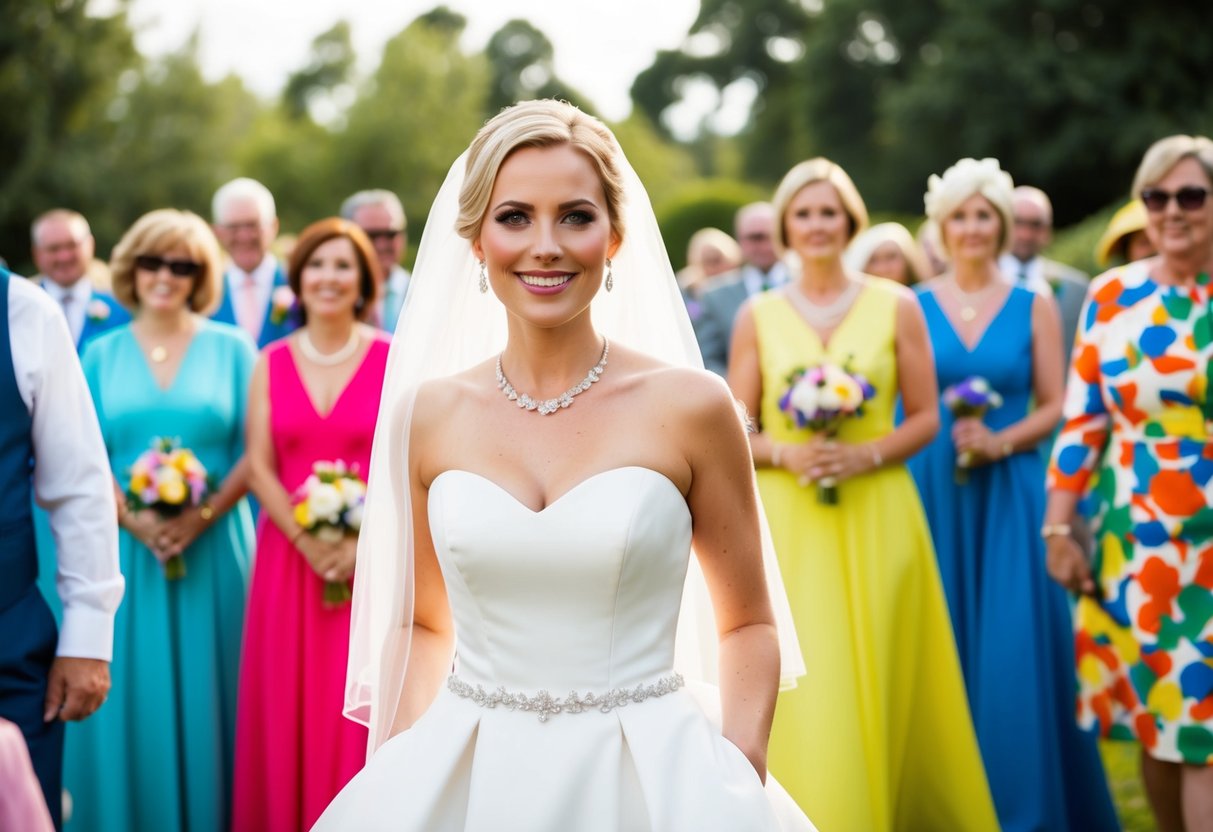
When choosing your outfit for a wedding, color isn’t the only factor to consider. You should also think about the overall style and vibe of what you wear. Here are two key areas to focus on: avoiding overly casual items and distracting styles.
Overly Casual Wear
Weddings are special occasions, so your outfit should reflect that.
Steer clear of overly casual items like denim shorts, t-shirts, and flip-flops. These can make you look out of place. Instead, opt for a smart dress or a tailored suit.
It’s best to avoid neon colors that can draw too much attention. Stick to softer, elegant tones that fit the wedding theme. If it’s formal, consider wearing dress shoes instead of sneakers. Dressing appropriately shows respect for the couple and the event.
Distracting Styles
In addition to color, be mindful of styles that might steal the spotlight.
Avoid outfits with large, flashy patterns or bright, distracting accessories. For example, clothes with a white background or excessive glitter can be too eye-catching.
Choose a wedding guest look that complements the event rather than overshadowing it. A subtle dress or suit with understated jewelry will work well. This way, you’ll celebrate the couple without drawing attention away from their special day.
Navigating Wedding Invitation Codes
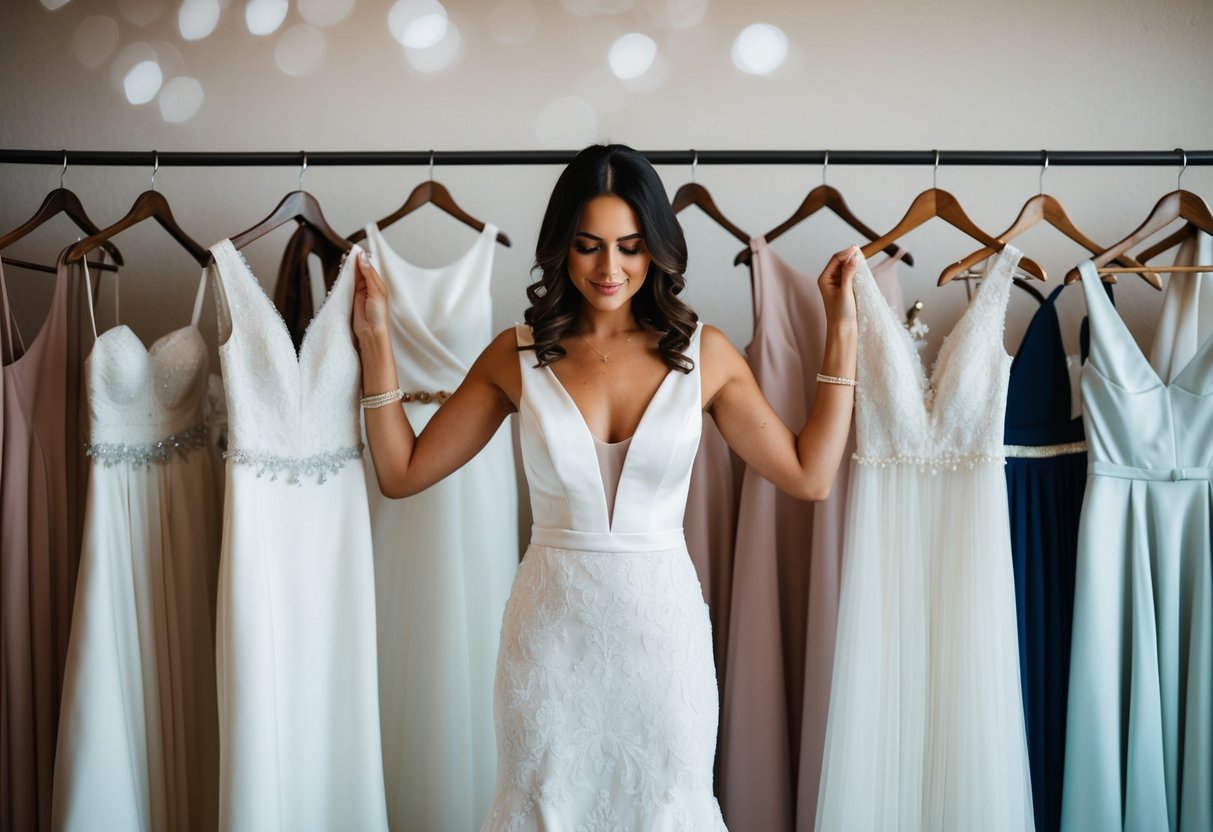
Reading wedding invitations can be tricky, but understanding the dress code is important. It helps you choose the right outfit.
Common Dress Codes
Here are some typical dress codes you might see:
- White Tie: This is the most formal. Think long gowns and tuxedos.
- Black Tie: Evening wear, like tuxedos for men and elegant dresses for women.
- Formal or Black Tie Optional: Similar to black tie but with flexibility. A dark suit is acceptable.
- Cocktail Attire: Dressy but not overly formal. A nice dress or suit works well.
- Casual: You can wear smart casual outfits. Still, avoid anything too laid back like shorts.
What to Look For
Pay attention to the wording on the invitation. Phrases can give clues about the expected attire:
- If it says “formal” or “elegant,” lean towards dressier outfits.
- “Dressy casual” means you can be stylish but not too formal.
Attire and the Bridal Party
If you’re close to the couple, ask them if they have specific ideas about what the bridal party will wear. As a guest, you want to complement their style without overshadowing them.
In any case, when in doubt, dress more formally. It shows respect for the event and makes a great impression!