
What Order Do Names Go on a Seating Chart? A Simple Guide to Arranging Your Guests
When planning a wedding, creating a seating chart can feel overwhelming. You might wonder about the best order for guest names on the chart. The most effective way is to list names alphabetically, as this helps guests quickly find their seats during the wedding reception.
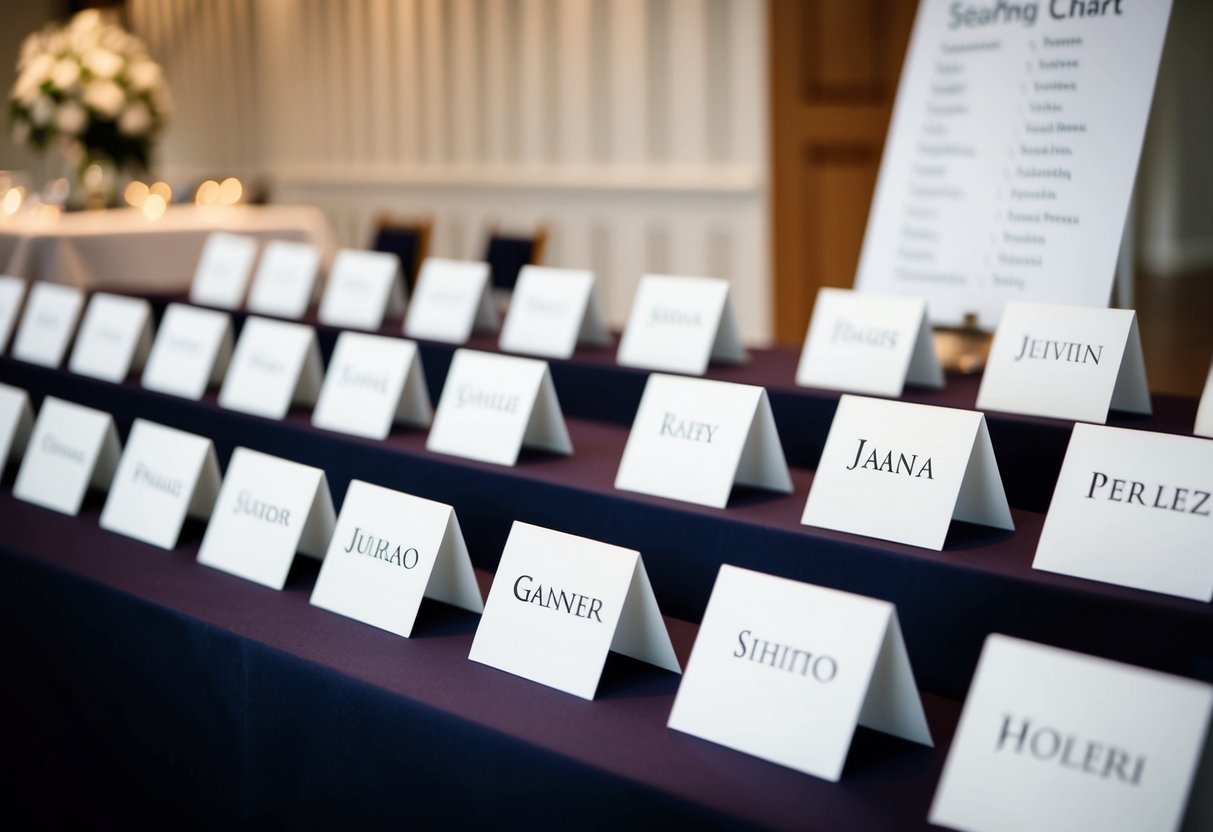
Organizing your guest list in this way not only simplifies the process but also ensures that everyone feels comfortable as they navigate their seating arrangements. Guests appreciate knowing where they will sit and with whom, making it an essential part of your wedding planning. By establishing a clear and easy-to-read seating chart, you can avoid confusion and make the celebration smoother for everyone involved.
As you dive deeper into wedding planning, think about how this simple order can enhance the experience for you and your guests. Your seating chart is a key element that contributes to a relaxed atmosphere, allowing everyone to enjoy your special day.
Essentials of a Seating Chart
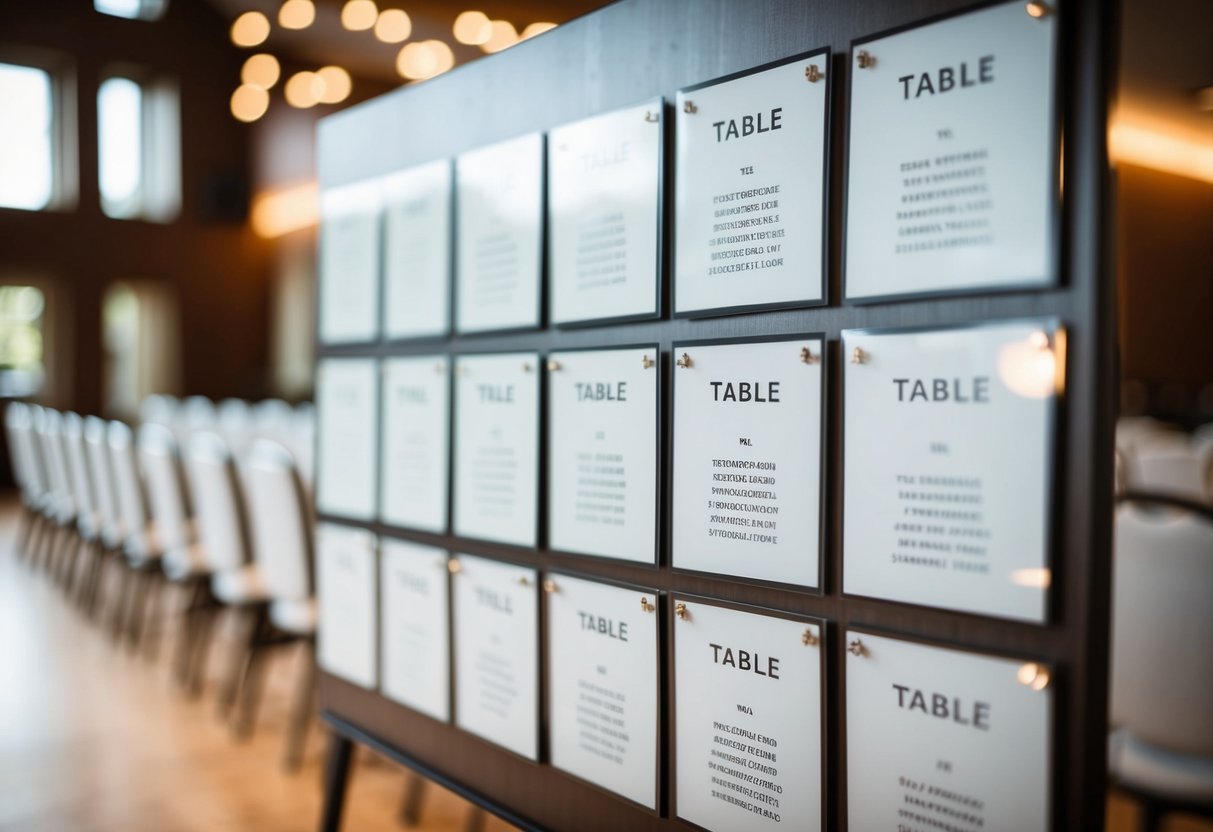
When creating a seating chart, it’s important to think about how tables are arranged and what formats you’ll use. Knowing these basics helps you create a chart that is both functional and easy to navigate for your guests.
Deciphering Table Layouts
Understanding the layout of your venue is key to making an effective seating chart. You should start by knowing how many tables you will have and where they will be located.
Common table arrangements include:
- Head Table: This is where you and your partner sit. It usually has a good view of the guests.
- Sweetheart Table: A smaller, more intimate table for just the two of you.
- Family Table: This is for close family members, giving them a chance to sit together during the celebration.
Make sure your tables aren’t overcrowded. Guests need space to move around comfortably, especially during dining.
Understanding Seating Chart Formats
There are a few formats you can choose from for your seating chart. The most popular format is an alphabetical list of guest names paired with their table numbers.
- Example Format:
- Column One: Names
- Column Two: Table Numbers
Some couples prefer a visual layout of the venue showing where each table is located. This option can help guests see where they should go at a glance.
Using a combination of these formats ensures clarity and helps your guests find their seats easily. A clear seating chart reduces confusion and allows for a smoother flow at your event.
Organizing Guests Effectively
Getting your seating chart right can make a big difference for your guests. Organizing names effectively helps everyone feel comfortable and enjoy the event. Here are two important ways to arrange your guests.
Sorting by Relationship and Groups
When creating your seating chart, consider grouping guests by their relationships or connections. This can make it easier for everyone to enjoy the event. For example, you might put high school friends together and keep family members at the same tables.
Table Groupings could look like this:
- Table 1: Family
- Table 2: College Friends
- Table 3: Coworkers
By organizing this way, you help guests feel more at ease. Plus, they’ll have familiar faces nearby, encouraging fun conversations.
Accommodating Special Needs
Think about any special needs your guests may have when making your seating arrangements. This is especially important for elderly guests or those with mobility issues. Ensure their tables are close to exits, restrooms, and food.
When creating your seating chart, acknowledge your guest count. If you have a larger number of guests, make sure that everyone can be seated comfortably. Provide some extra seating for unforeseen issues, like last-minute plus-ones or invited friends who bring an unexpected guest.
Making these arrangements shows you care about your guests’ comfort and enjoyment at your event.
Details and Decorations
When creating a seating chart, the details and decorations can enhance the overall experience for your guests. Naming cards and personal touches add charm to your setup, making it memorable and welcoming.
Creating Name Cards and Place Cards
Using name cards and place cards is essential for guiding your guests to their seats. Name cards usually include the full name of the guest in larger letters, ensuring clarity. You can choose a font that aligns with your wedding theme or venue style.
Place cards are often set at each seat, while escort cards can be displayed at a central location, like a reception sign set. Consider using elegant materials like cardstock or even wood for a unique feel.
Tip: You can also color-code cards based on table groupings for easy identification.
Adding a Personal Touch
Adding a personal touch to your seating arrangement can make your wedding feel unique. Think about personalizing each card with small notes or meaningful quotes. You might even include a photo of the couple on the escort cards.
Using decorative elements that reflect your style, such as ribbons or flowers, can enhance the overall aesthetic. You can also coordinate colors with your wedding theme.
Remember, the goal is to create an inviting atmosphere. This thoughtfulness helps guests feel special and connects them to your celebration.
Finalizing and Displaying Your Seating Chart

Once you have assigned seats and organized names, it’s time to finalize your seating chart. Make sure to check your RSVPs carefully to confirm who will attend. You can use a simple spreadsheet to track this information.
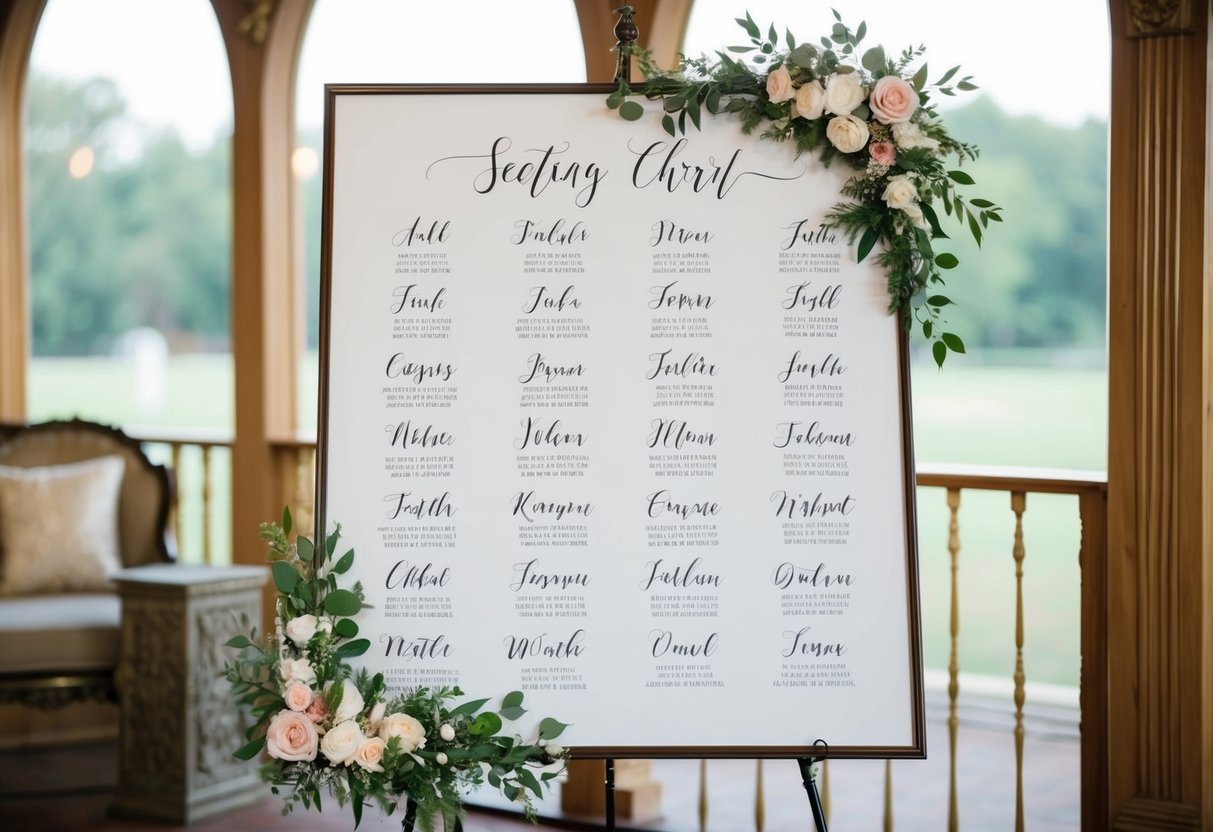
For a DIY seating chart, choose a style that matches your wedding theme. This could be a poster board, framed print, or even a creative display using materials like wood or fabric.
When you display your chart, make sure it’s easy to read. Place it at the entrance of the reception venue so guests can quickly find their names. You should also consider using a larger font to enhance visibility from a distance.
Follow some etiquette guidelines when seating guests. Group close friends and family at the same table. Also, avoid placing guests who might not get along together, as this can create tension.
If you have a mix of family and friends, think about how to make everyone comfortable. You want all guests to enjoy the celebration.
Remember to set an RSVP deadline. This helps you finalize your chart and avoid last-minute changes, ensuring a smooth seating arrangement.