
What Percentage of Brides Take Their Husband’s Last Name? Exploring Modern Trends in Marriage Choices
When it comes to marriage, one question many people ponder is what happens to a bride’s surname. Recent studies reveal that about 80% of brides take their husband’s last name after tying the knot. This tradition has deep roots and continues to be common, even as modern views on marriage evolve.
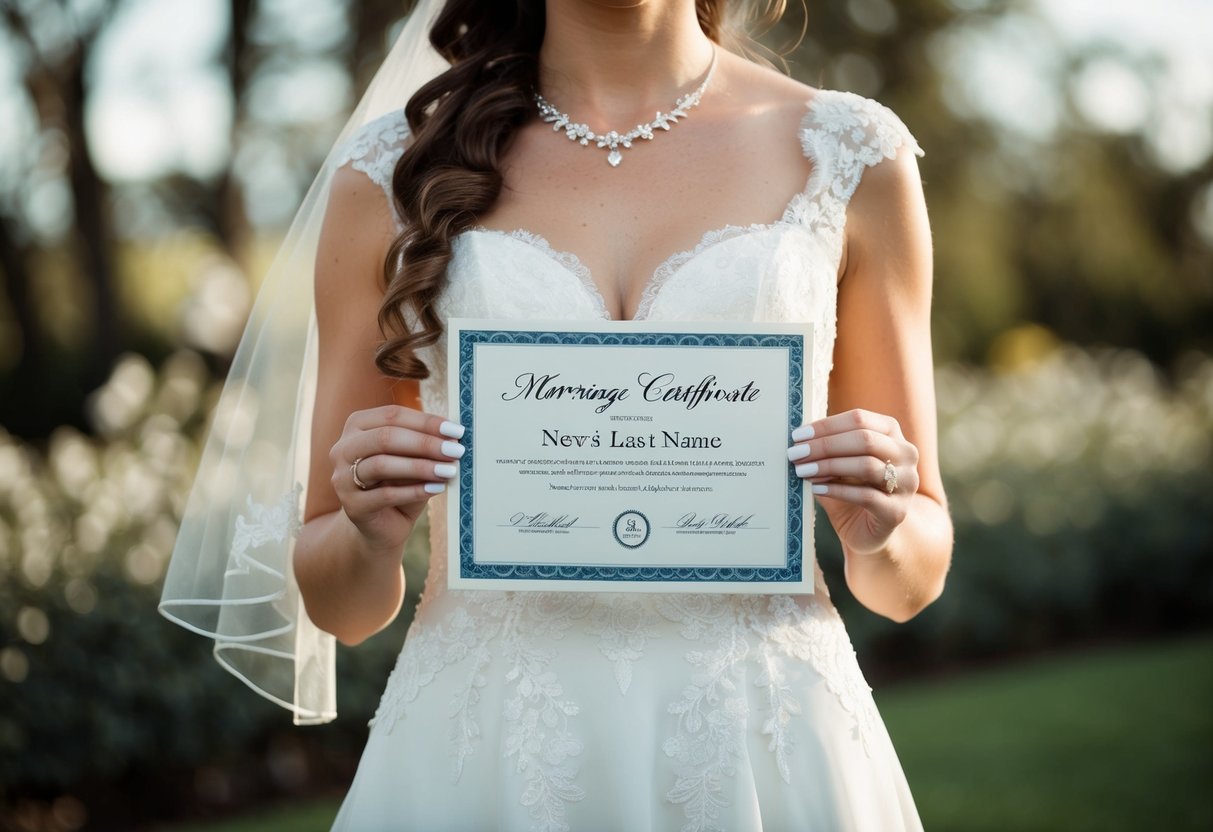
As you think about the implications of a name change, consider how it connects to identity and personal choices. While a significant number of married women adopt their spouse’s surname, some choose to keep their own or even hyphenate. This choice often reflects individual values and cultural backgrounds.
Understanding this trend can shed light on changing societal norms and personal preferences in relationships.
Historical Context of Name Changing
Changing a woman’s last name to her husband’s has deep roots in history. This practice stems from legal traditions and societal norms that shaped women’s identities over centuries. Understanding the historical context will shed light on current practices and demographic differences in name changing today.
Coverture and Common Law
Coverture was a legal doctrine that existed in common law. Under this system, a married woman’s legal identity was subsumed by her husband’s. This meant that she could not own property or enter contracts independently.
When a woman married, her last name changed to signify this new legal status. It symbolized her transition from being part of her family to being part of her husband’s. Many women felt pressure to reinforce this bond through name changing.
Evolution of Traditions
Over time, the reasons for name changing have evolved. Historically, adopting the husband’s surname served as a marker of union and commitment. Many believed it reflected the couple’s solid partnership.
In recent years, attitudes have shifted. While about 80% of women still adopt their husband’s last name, demographic differences are emerging.
Younger generations are more likely to keep their maiden names or choose hyphenation. Individual preferences now reflect personal values and equality, changing the tradition for many couples.
Statistics on Surname Adoption Post-Marriage
Understanding the statistics around surname adoption after marriage can help you see trends and differences among various groups. This section highlights findings from reputable surveys and demographic patterns.
Pew Research Center Findings
According to a Pew Research Center survey, approximately 79% of women in opposite-sex marriages opted to take their husband’s last name. This statistic shows that many brides continue to follow this traditional practice.
In contrast, about 14% kept their maiden name, while only 5% chose to hyphenate their names. Among men in these marriages, the situation is quite different. About 92% retained their last name, indicating that name changes are primarily a female practice.
Such findings highlight that while societal norms are evolving, many women still embrace this tradition when tying the knot.
Demographic Variations
Demographic differences play a significant role in surname adoption rates.
For example, white women are generally more likely to take their husband’s last name compared to black and Hispanic women.
Among Hispanic women, around 73% report taking their husband’s name, which is lower than the overall average. For black women, the percentage is even less, reflecting a trend toward retaining their own surnames in marriages.
These variations suggest that cultural backgrounds influence decisions around surname changes. Understanding these differences can provide valuable insight into social trends and individual choices.
Social and Cultural Factors
Your choice to take a husband’s last name often reflects social and cultural influences. Various factors, including the type of marriage and the broader socioeconomic landscape, play a role in these decisions.
Influence of Marriage Type
In opposite-sex marriages, around 80% of brides typically choose to adopt their husband’s surname. This trend largely stems from traditional beliefs surrounding marriage. Many see it as a symbol of unity and family.
In contrast, the landscape changes with same-sex marriages. Couples often prioritize equality and shared identity. Some may hyphenate or create a new last name altogether. The decisions in same-sex marriages can show a shift away from conventional norms.
Political and Socioeconomic Trends
Political views can influence how women regard taking a husband’s last name. Democratic women might lean more towards keeping their maiden names or hyphenating. Their views about gender equality shape their decisions differently than those in conservative circles.
Socioeconomic factors are crucial, too. Studies show women with higher education levels may prefer to maintain their surnames. This can reflect their professional identity, which they are keen to preserve.
The decision involves a mix of personal and cultural beliefs. You may find that society’s view on marriage continues to evolve, shaping how modern couples approach this choice.