
What Percentage of Wedding Guests Actually Attend? Key Insights for Couples
When planning your wedding, one of the biggest questions you might have is about your guest list and how many people will actually show up. Typically, you can expect around 75-85% of invited guests to attend your wedding. Knowing this percentage can help you better plan your venue, catering, and other important details.
Sending out RSVP requests well in advance can also increase your chances of having a fuller guest list. Guests often appreciate having time to prepare for the big day. Understanding how many people are likely to attend will help you make informed decisions throughout the planning process.
By keeping these factors in mind, you’ll navigate the guest list and RSVPs with confidence. This will ensure that your wedding day is everything you dream it to be, surrounded by the people you care about most.
Understanding RSVP and Attendance Rates
When planning a wedding, it’s important to grasp how RSVP and attendance rates work. Knowing what influences these rates can help you anticipate how many guests will attend your special day.
Factors Influencing Attendance
Several factors can impact whether guests will attend your wedding. The size of your wedding plays a significant role; larger weddings often see a lower percentage of attendees. This is because some guests may feel overwhelmed or think they can skip an event with many invitees.
The location also matters. Local guests typically show up at a higher rate than those traveling long distances. For example, around 85% of local guests might attend, while only about 55% of out-of-town guests will make it.
Additionally, the timing of your wedding can affect attendance. Holidays or busy seasons may lead to scheduling conflicts. Keep in mind that clear communication is key; sending invitations well in advance can improve your chances of receiving positive RSVPs.
Calculating Expected Attendance
To calculate expected attendance, start with the average percentage of guests who usually respond positively. Research suggests that around 75-85% of invitees typically attend weddings. You can apply this percentage to the number of invites you send out.
For example, if you invite 100 guests, you can reasonably expect between 75 and 85 of them to attend. Consider using a simple formula:
- Expected Attendees = Total Invites × Estimated Attendance Rate
This helps set your expectations. As you gather RSVPs, you can adjust preparations accordingly. Tracking positive RSVPs and following up with guests can also help fine-tune your attendance estimates.
Dynamics of Guest List Size and Venue
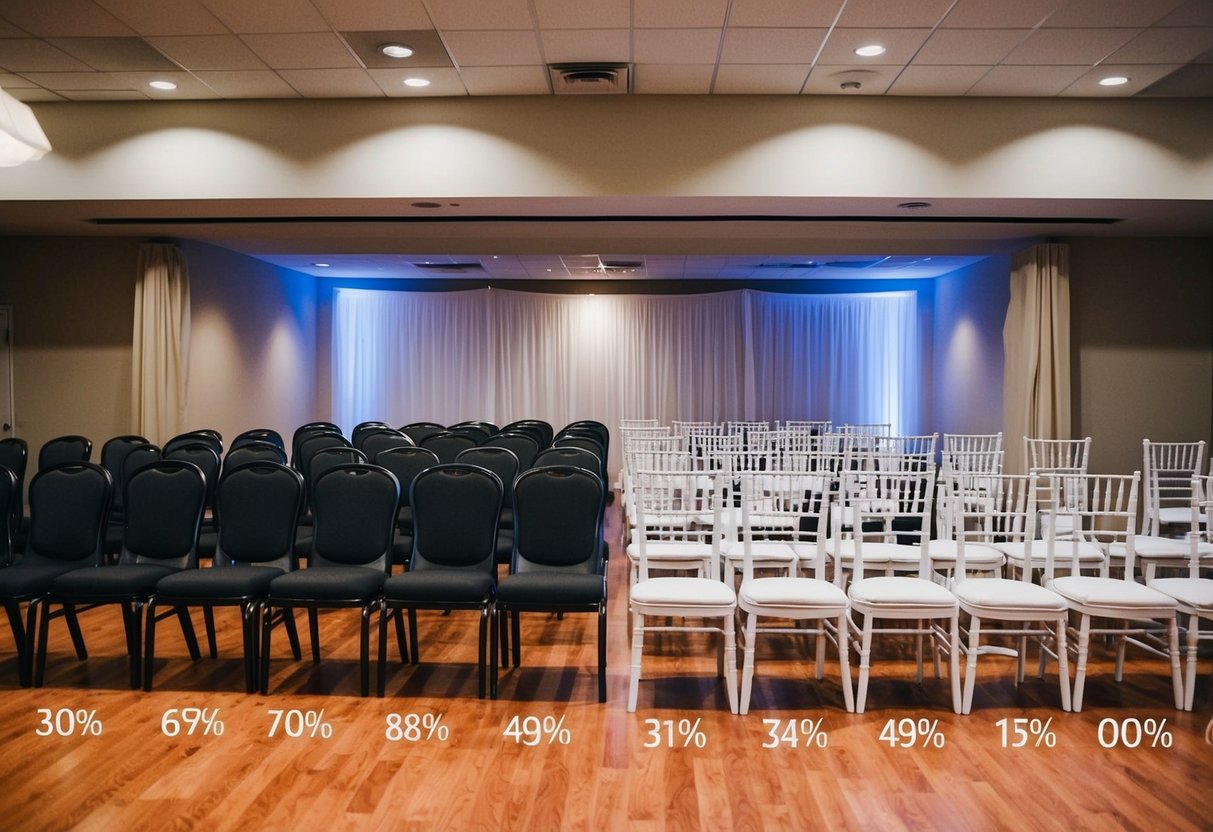
The size of your wedding guest list directly influences the choice of venue. Understanding the dynamics between these two factors helps you plan a memorable celebration that suits your preferences and expectations.
Small vs. Large Weddings
Small weddings typically have guest lists of under 75 attendees. They create an intimate atmosphere where you can connect with each guest. When planning, consider your relationships with those you invite. A small guest list allows for personalization, making each guest feel special.
In contrast, large weddings often feature guest lists of 150 or more. These gatherings can foster a lively and festive vibe. However, the larger the guest list, the more complex logistics become. Venue size, seating arrangements, and catering need careful planning to accommodate everyone comfortably.
The average wedding guest list size often falls between 100 to 167 guests. This balance gives you the spirit of a larger wedding while still allowing for meaningful connections with friends and family.
Choosing the Right Venue
Selecting the right venue is key to successfully hosting your wedding. First, think about your total guest count. If you expect around 100 guests, choose a venue that comfortably accommodates that size. You want your guests to feel relaxed during the celebration.
Another crucial factor is the venue’s location. Choose a place that is accessible for your guests. If many guests are local, you can easily expect higher attendance rates. For those traveling long distances, that might not be the case.
Lastly, pay attention to the venue’s ambiance to match your wedding theme. Whether it’s a classic ballroom or a cozy outdoor space, the right venue enhances the overall experience. Consider all these factors to ensure your special day goes smoothly.
Special Considerations for Destination Weddings

Planning a destination wedding comes with unique factors to consider, especially regarding guest attendance. Understanding the differences between local and out-of-town guests can help you manage expectations and logistics effectively.
Local vs. Out-of-Town Guests
When you invite guests to a destination wedding, it’s important to recognize who they are. Local guests usually have a higher attendance rate, often around 85%. This is because they have fewer travel concerns and costs.
In contrast, out-of-town guests tend to attend in lower numbers, typically around 55%. Factors like travel expenses and time off work can limit their ability to celebrate with you.
Catering to both groups can boost attendance. Provide local recommendations for accommodations and activities for out-of-town guests while suggesting activities for local guests. This helps everyone feel included and valued.
Managing Destination Logistics
Managing logistics for your destination wedding requires careful planning. First, consider the location. Is it easy to reach? If it’s a remote venue, expect more challenges for your guests.
Next, keep budgets in mind. Travel costs can vary greatly. Assemble a list of nearby hotels with different price ranges to accommodate all guests.
Make sure to share key travel details well in advance. Information about flights, local transport, and directions to the venue can help ease concerns. Use group discounts whenever possible to reduce costs for attendees.
By addressing these aspects, you can create a positive experience for your destination wedding guests.
Best Practices for Guest List Management
Managing your guest list can help ensure a successful wedding day. It involves careful planning and consideration of various factors. Here are some tips to help you craft the perfect guest list and handle common issues that might arise.
Crafting Your Guest List
Start by listing everyone you want to invite. Consider close family, friends, and important people in your life. Use a spreadsheet to keep track. Make columns for names, contact information, and their RSVP status.
When creating your list, think about plus-ones for guests who are in a relationship. Decide if you want to allow them or not. This can affect your overall guest count.
Don’t forget to send out save the dates 6 to 12 months before the wedding. This gives guests time to clear their schedules and helps ensure better attendance. As you build your list, remember to set a response date for the RSVP. A typical timeframe is about 3-4 weeks before the wedding.
Dealing with Common Issues
Family issues can complicate your guest list. Try to stay neutral and avoid conflicts. If a family member has a feud with another, you might need to discuss how to handle this gently.
Illnesses among guests may affect their ability to attend. Keep in mind that some guests may need to cancel last minute. It’s important to stay flexible with your numbers.
As you manage your wedding guest list size, be prepared for changes. People may drop out or add guests as the date approaches.
Communicate clearly about who is invited and keep track of RSVPs. Adjustments will be part of the process, so stay organized and patient.