
What Should Not Be Included in a Wedding Invitation? Essential Tips for a Perfect Design
When planning your wedding invitations, it’s easy to get caught up in what to include, but knowing what to leave out is just as important. Avoiding certain details will help keep your invitations clear and elegant.
For instance, never add registry information directly to the invitation, as this can come off as impolite and may detract from the celebration itself.
Another thing to watch for is including too much information about the ceremony and reception locations. Instead, provide essential details to help your guests arrive on time, but leave out long directions or maps.
Keeping your wedding invitation straightforward allows your style to shine through and sets the right tone for your big day.
Lastly, remember that wedding invitation etiquette encourages focusing on the couple’s names, the date, time, and location of the event. Including unnecessary details could overwhelm your guests.
Keeping it simple not only reflects good taste but also makes it easier for your loved ones to join you in celebrating your special day.
Essential Details to Include

When planning your wedding invitations, including the right information is crucial. These details help set the tone for your big day and ensure that your guests know where to be and when.
Basic Information of the Big Day
Start with the essentials: the date and time of your wedding. Clearly state the day of the week, month, date, and year. For example, “Saturday, June 12, 2025” gives a precise idea for guests.
Next, include the time. Be specific—use “at 3:00 PM” instead of just “afternoon” to avoid confusion. This helps guests plan their day better.
Finally, mention the type of ceremony. Whether it’s a religious, civil, or casual gathering, sharing this information helps set expectations.
Location and Logistics
The venue is one of the most important details. Clearly write the full name and address of the location. For example, “The Grand Ballroom at Oak Park, 123 Main St, Springfield.” This eliminates any guesswork.
Consider adding directions or unique instructions if the place is hard to find. Including parking details can also be helpful. If valet service is available, let your guests know. Ensure that there are no surprises about how to get there!
RSVP and Additional Cards
An RSVP card is essential. It allows you to know how many guests will be attending. Request guests to respond by a specific date, like “Please reply by May 1, 2025.” This helps you finalize your headcount.
You might also want to include a details card. This is where you can provide information about the reception, accommodations, or any other pertinent details without crowding the main invitation.
If there are multiple events, such as a separate brunch or rehearsal dinner, make sure to mention it on the additional cards so guests can plan accordingly.
Things to Omit from Your Wedding Invitations

It’s important to keep your wedding invitations clear and straightforward. There are certain details you should avoid including to ensure your guests feel comfortable and welcome.
Registry Information
You should not include registry information in your wedding invitations. Many people find it improper to ask for gifts directly. Instead, you can share this information on your wedding website or through word of mouth. Providing details about your registry this way keeps your invitations elegant and focused on the event, not the gifts.
Exclusive Guest Information
If you’re planning to have a smaller, intimate wedding, leave out any mention of exclusivity in your invitations.
For instance, avoid wording that suggests certain guests can’t bring their children or a plus-one. Instead, simply address your invitations in a way that naturally indicates who is invited. If you have a no-kids policy, communicate that through your wedding website or a personal note.
Personal Details and Preferences
Avoid sharing personal details that could make guests uncomfortable. For example, don’t include your wedding theme or color choices in the invitation. Keep the focus on the celebration itself rather than your personal preferences.
Sharing personal anecdotes or preferences can be more suitable for a wedding website or in casual conversations with guests. This helps maintain a formal but friendly tone in your invitations.
Envelope and Postage Essentials
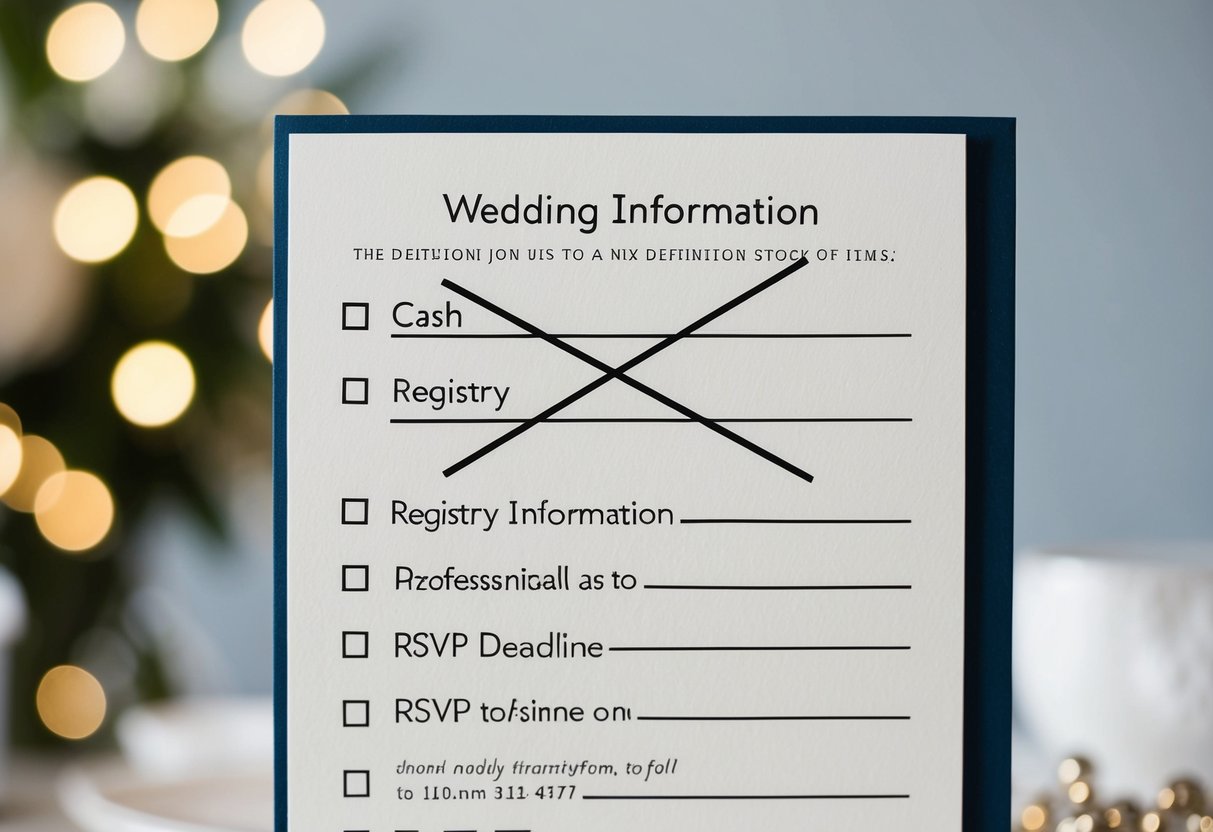
Getting your envelopes and postage right is crucial for your wedding invitations. It’s not just about what goes inside; the way you prepare the envelopes also sets the tone for your big day. There are several elements to consider, including etiquette and practical details.
Understanding Envelope Etiquette
Your wedding invitation typically includes two envelopes: the outer envelope and the inner envelope. The outer envelope displays your guests’ names and addresses, while the inner envelope usually lists the names of those invited.
Make sure to address the envelopes clearly. Use titles like Mr., Mrs., or Dr. as appropriate.
When addressing the inner envelope, you can choose to use just first names, which adds a personal touch.
Consider whether you will use inner envelopes at all. While they are traditional, they are not mandatory. If you skip the inner envelope, simply place the main invitation inside the outer envelope.
Postage and Return Address
Postage for wedding invitations can vary based on size and weight. Always check that you have the correct postage by visiting your local post office.
Heavier invitations or square envelopes, for example, may require additional postage.
Don’t forget about the return address. This is usually placed on the back flap of the outer envelope. Including a return address ensures that any undelivered invitations find their way back to you.
Using a clear and professional font for your addresses helps avoid confusion. This small detail goes a long way in making everything look polished.
Inserts and Their Specifics
In addition to the main invitation, you may want to include inserts. Common types are reception information cards or RSVP cards.
Make sure your inserts match the theme and design of your invitation. They should be properly placed within the inner envelope, if you are using one.
Each insert should have concise information. For RSVP cards, include clear instructions on how and when to respond.
Also, consider an enclosure card to share additional details like accommodation options or wedding website links. This card helps guide your guests without cluttering the main invitation.
Finalizing Your Invitation Design
When finalizing your invitation design, it’s important to carefully choose your stationery and decide on the wording and font. These elements will set the tone for your wedding and inform your guests about essential details.
Choosing the Right Stationery
Selecting the right stationery is crucial. It helps reflect your wedding theme and personal style.
Consider options like cardstock, linen, or recycled paper, each offering a different feel.
Think about colors that match your wedding palette. If you have a formal wedding, classic whites and golds might work best. For a casual event, brighter colors and unique textures can add personality.
Budget is also a factor. You can find beautiful stationery at various price points, so decide what works for you.
Don’t forget to order extra invitations for keepsakes or any last-minute guests.
Deciding on Wording and Font
Make sure the wording on your invitation is clear and concise. Include your names, ceremony start time, venue, and RSVP details. It’s essential to avoid unnecessary information to keep it elegant.
For font choice, aim for readability. Pair a decorative heading with a simple body font to ensure clarity. Avoid overly complex scripts that can be hard to read.
Also, mention any dress code or attire expectations. This helps guests know how to prepare for your special day. Using a light, approachable tone can create excitement, helping your loved ones look forward to celebrating with you.