
When to Ask for RSVP for Wedding in the UK: A Helpful Timeline for Couples
Choosing the right time to ask for RSVPs can really help you keep your wedding plans on track. It’s best to set your RSVP deadline about 4 to 8 weeks before your wedding day. This gives your guests enough time to check their schedules and respond without feeling rushed.
When you send out your wedding invitations, including a clear RSVP date can make things easier for everyone. If you’ve also sent out save-the-dates, your guests will have a good idea of when your big day is coming, so they can plan accordingly.
Having a firm deadline helps you finalize your guest list, which is essential for making arrangements with your venue and caterer.
Remember, clear communication is key. When your guests know when to reply, they can respond in a timely manner, making your wedding planning smoother and more enjoyable.
Understanding RSVP Timing
Getting the RSVP timing right is important in ensuring your wedding day goes smoothly. You want to have enough time to finalize your guest list while allowing guests to respond comfortably. Here are some key points to consider.
Setting the RSVP Deadline
When planning your wedding, set an RSVP deadline that is typically 4 to 6 weeks before your wedding day. This allows you time to confirm numbers with your venue. For a destination wedding, you might want to ask for responses a bit earlier, as guests may need to arrange travel and accommodations.
Make sure to include the RSVP deadline clearly in your invitations. You can use phrases like, “Please respond by [date]” or “Let us know if you can join us by [date].”
A well-defined RSVP deadline helps you create a precise guest list, making your wedding planning less stressful.
Factors Influencing RSVP Timeline
Several factors can influence your RSVP timeline. For example, if your wedding is during a busy season or on a holiday, guests may need extra time. Consider their schedules when setting your deadline.
Also, think about how far away your venue is. If it’s a destination wedding, guests may require more time to make travel plans.
Providing a way for guests to RSVP online can also make it easier for them to respond promptly.
Lastly, keep in mind that some guests may need to discuss plans with family. Offering a flexible RSVP option can encourage quicker replies.
Crafting Your Invitation Suite
Creating an invitation suite can be a fun and important part of your wedding planning. You want to include all necessary elements to ensure your guests feel informed and excited about your big day.
Components of a Wedding Invitation
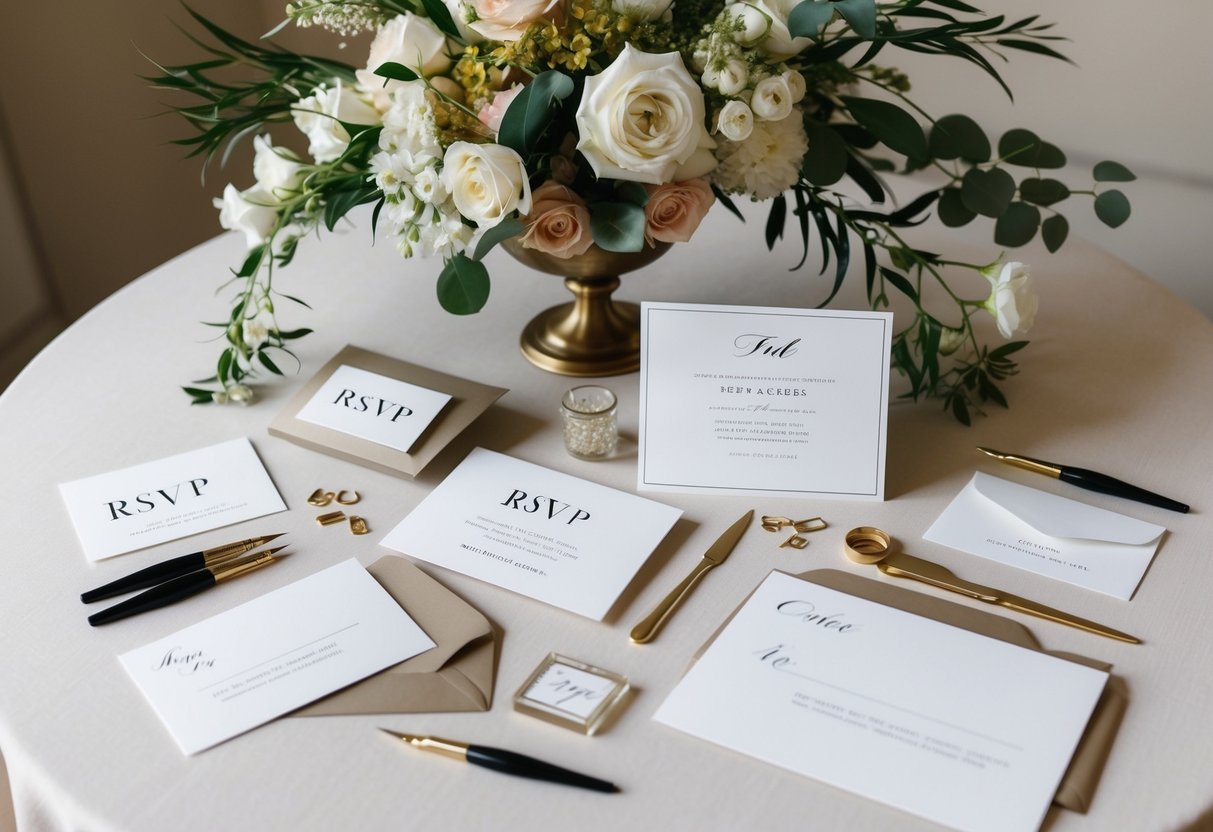
Your wedding invitation suite should include several key components. At a minimum, your suite will feature the wedding invitation itself, which details the event’s date, time, and location.
You may also want to include a separate RSVP card. This allows your guests to confirm their attendance easily. Be sure to include an RSVP envelope to make it easy for them to send back their responses.
Additional elements can enhance your suite. Consider adding a reception card if the venue differs from your ceremony location. You might also want to include accommodation information or directions.
Don’t forget to personalize your suite with your wedding theme or colors. This helps set the tone for your celebration and makes a memorable impression.
Wording Your RSVP Card
Wording your RSVP card is crucial to ensure clarity. Start by clearly stating the response deadline. This helps you manage your guest list effectively. You might phrase it like, “Please RSVP by [date].”
Next, include options for meal choices if you’re offering them. You could ask guests to select their preferred dish from a few options, providing a straightforward way to collect preferences.
Make sure to add a space for guests to write their names. This is especially helpful for large weddings where families may RSVP together. Including a simple note like “We hope you can join us!” adds a friendly touch to your RSVP card.
Keep your wording simple and direct, so everyone understands what you need from them.
Managing Guest Responses
Managing guest responses is an important part of planning your wedding. Knowing how to track RSVPs and handle late replies can help you finalize your guest list smoothly and ensure your big day goes as planned.

Tracking and Organizing RSVPs
Keeping track of your guests’ responses can be simple if you stay organized. Start by creating a list with key details such as names, contact information, and RSVP status.
You might consider using a spreadsheet or a digital tool designed for event planning. This way, you can easily update responses as they come in.
Make sure to categorize your guests: those who are attending, those who cannot make it, and those who haven’t replied. This will help you closely monitor your final headcount.
If you’re using physical invitations, keep a folder for returned RSVP cards. For digital invites, keep your email or messaging app handy to track responses.
Handling Late RSVPs and Reminders
Some guests may reply late, and that’s normal. When this happens, send a friendly reminder about your RSVP deadline. You can do this via text, email, or even a quick phone call. Just keep it light and polite.
You might say something like, “Hi! I hope you’re well. Just a quick reminder to please let me know if you can make it to our wedding!” This can prompt them to respond while showing you care.
Having an extra week after your RSVP deadline is helpful for chasing down those last few replies. This way, you can finalize your guest list sooner.
Final Details and Arrangements
As your wedding day approaches, focusing on the final details is essential. Proper planning will help ensure everything runs smoothly, from creating your seating chart to coordinating the final guest count with your venue.
Creating the Seating Chart
Your seating chart is an important part of wedding planning. Start by listing all your guests and grouping them by relationships. Consider family dynamics and friendships to make everyone comfortable.
Using escort cards is a great way to direct guests to their seats. These cards can be simple yet elegant, complementing your wedding theme. You can create a display to showcase the escort cards at the reception entrance.
Be mindful of dietary restrictions or special needs when arranging seats. This ensures all guests feel welcome and happy at your event. Taking care of these details helps set the tone for a joyful celebration.
Final Guest Count and Venue Coordination
Once your RSVP deadline passes, you should finalize your guest list. Contact those who haven’t responded and make sure your numbers are accurate. This count is crucial for your venue and caterer.
Your venue may require the final guest count at least a month before the wedding. Share this number with your wedding planner and caterer so they can prepare appropriately.
The final count should also account for any last-minute changes, such as additional guests or unexpected cancellations. After that, confirm details like space arrangements, seating layouts, and any wedding favors you may want to provide. Clear communication with your venue will help ensure a seamless experience for you and your guests.