
Where Does the Mother and Father of the Bride Sit at Reception? A Guide for Wedding Seating Arrangements
When planning a wedding reception, deciding where to seat the parents of the bride is an important detail. Traditionally, the mother and father of the bride sit at the front of the reception. They usually sit at a table closest to the newlyweds. This placement honors their special role in the ceremony and highlights their support during the celebration.
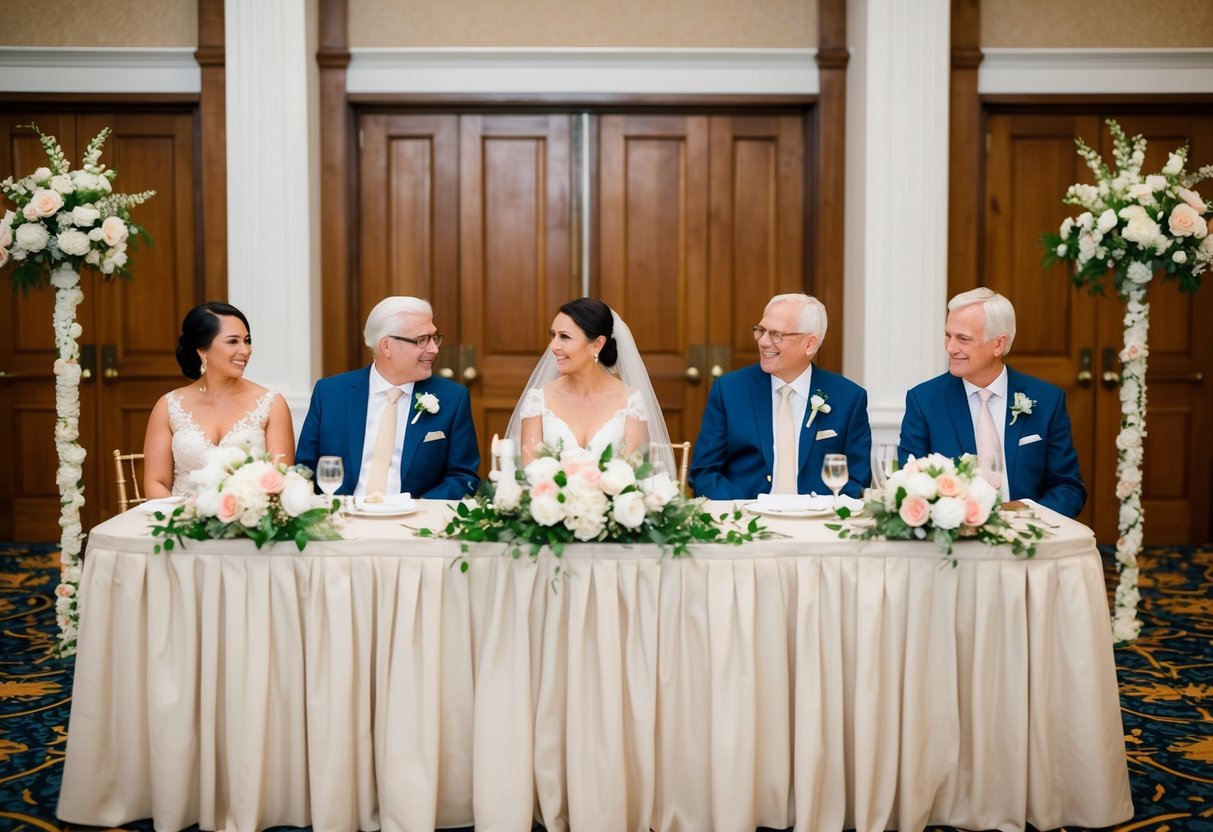
Understanding wedding etiquette can help you create a comfortable atmosphere for everyone. You might choose to seat the bride’s parents together at a designated table, or perhaps they would prefer to mix with close friends. Whatever you decide, it’s essential to communicate with them to ensure they’re happy with the seating arrangements.
As you think about the layout of your reception, keep in mind the balance between tradition and personal preference. By thoughtfully planning your seating arrangements, you can make this special day enjoyable for all your guests, especially the parents who have played a significant role in your life.
Understanding Wedding Reception Seating Basics
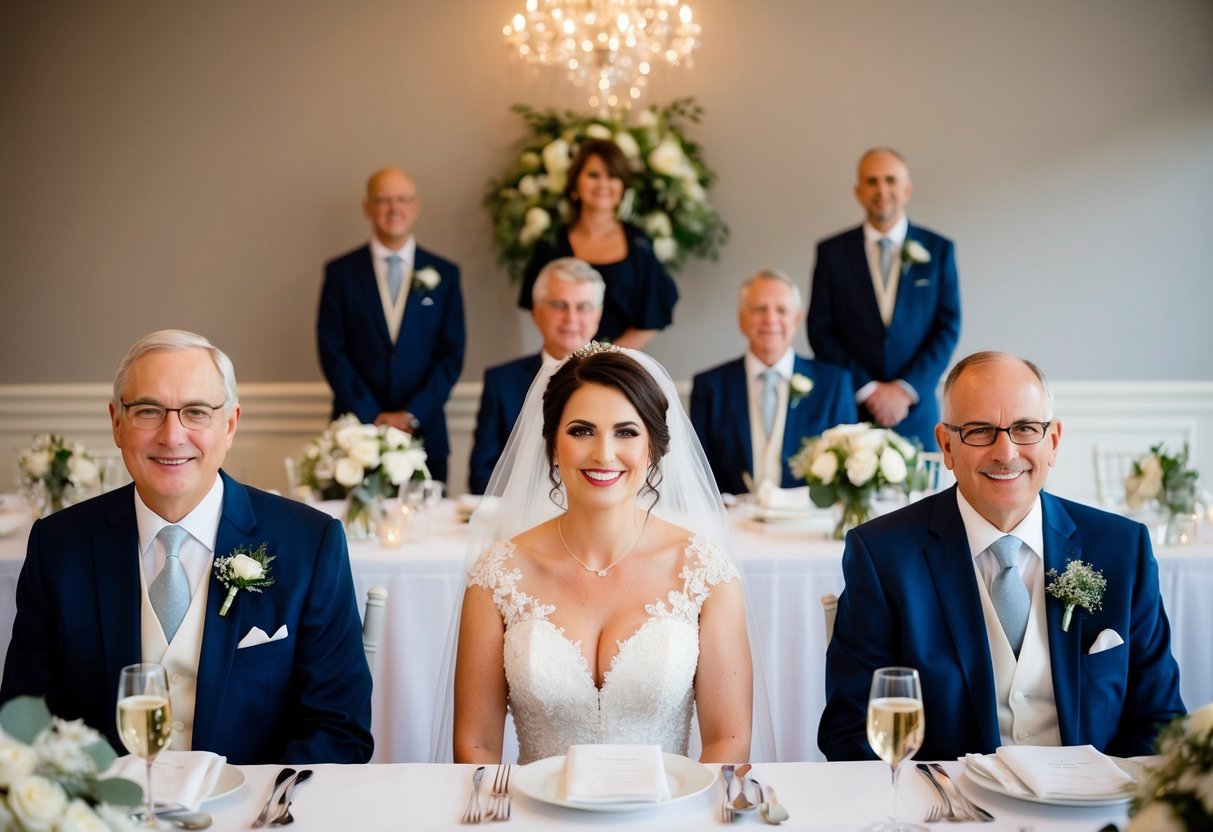
Seating at a wedding reception can set the mood for the celebration. Understanding the different seating options and arrangements helps ensure everyone is comfortable and included.
The Head Table and Its Significance
The head table, often referred to as the top table or table of honor, is where the couple and their closest loved ones sit. This table is typically positioned at the front of the reception room, making it a focal point during the event.
Traditionally, the bride and groom sit at the center, flanked by their parents or wedding party members. This arrangement highlights the importance of family and support. It also allows for easy visibility when speeches or toasts are made.
You can personalize the head table with special decorations or centerpieces, creating a unique experience for the couple during the celebration.
Options for the Bride and Groom: Sweetheart vs. Head Table
When planning your seating, you have two primary options: the sweetheart table or the head table. A sweetheart table is a more intimate setting for just the bride and groom. It’s a great choice if you want some alone time amidst the festivities.
In contrast, the head table includes other family members or friends. It fosters a sense of unity and connection, allowing loved ones to share in the couple’s joy. Choosing between these options depends on whether you prefer intimacy or a larger gathering.
Many couples love to use the sweetheart table for part of the night and then join the head table for the speeches.
Seating Arrangements for the Wedding Party
Seating your wedding party can be a thoughtful way to show appreciation for their roles. The wedding party typically sits at tables near the head table. This ensures they are close to you but still allows for a fun and social atmosphere.
Creating a seating chart can help organize this arrangement. List all guests and assign them to tables based on relationships. Consider grouping by families or friends to encourage conversation.
Be mindful of anyone who might need special seating, such as elderly guests or those with disabilities. Clear seating assignments will guide your guests without confusion and enhance the overall experience at your reception.
Navigating Family Dynamics
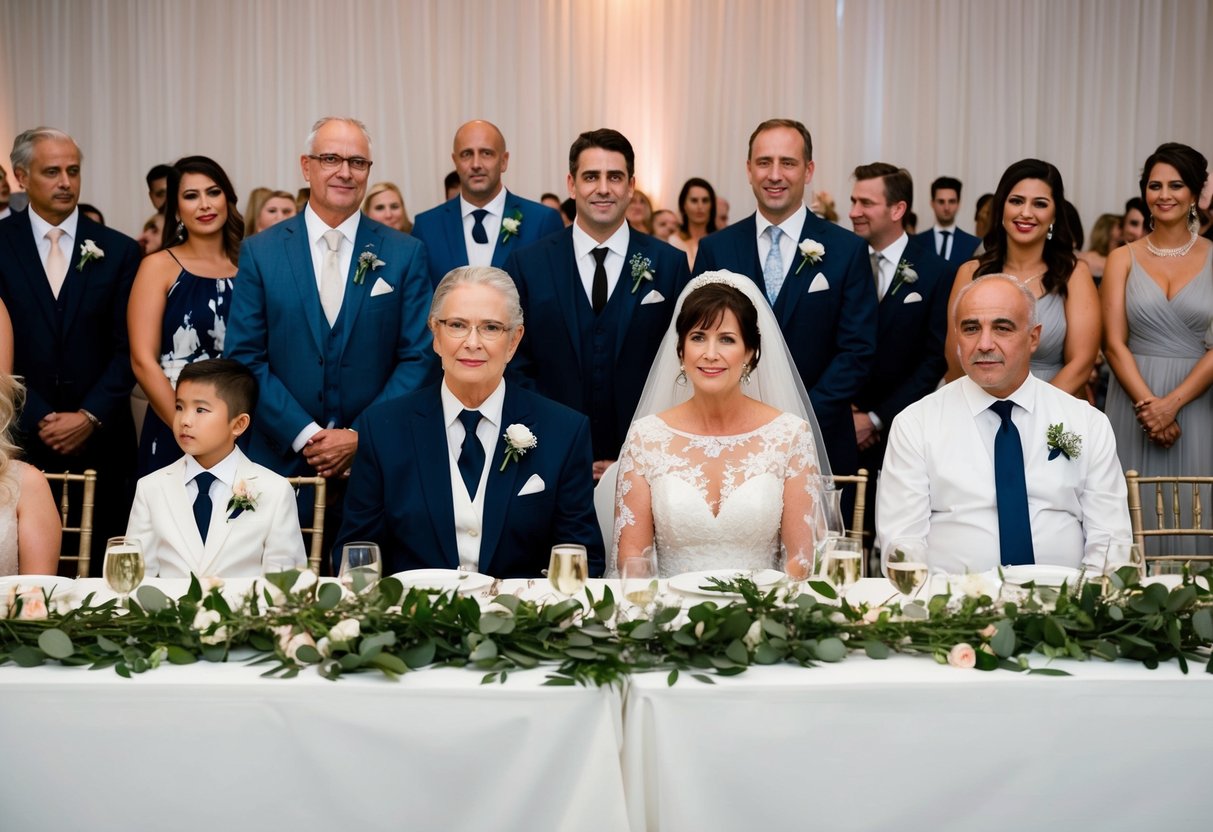
Planning a wedding involves not just the couple but also their families. It’s essential to think about seating arrangements to keep peace and honor everyone involved. Consider the unique family situations and how you can make everyone feel comfortable and included.
Seating Divorced Parents at the Wedding Reception
When seating divorced parents, give careful thought to their feelings. Aim for a setup that allows them to feel respected without causing tension.
A common approach is to seat each parent at separate tables. You can place their families at adjacent tables to encourage interaction while maintaining distance. If they get along, you might consider seating them at the same table but ensure it’s clear they are not expected to engage deeply.
Discuss the seating plan with both parents before finalizing it. Clear communication can prevent misunderstandings and make the event more enjoyable for everyone involved.
Involving the Mother and Father of the Bride
The mother of the bride usually plays a significant role in the wedding celebration. Traditionally, she sits at the main family table, often at the front or a place of honor. This role is significant as it celebrates her support and love for you.
The father of the bride also deserves acknowledgment. You can seat him next to the mother or at the same table. If the parents are divorced but cordial, try to arrange a seating plan that promotes harmony.
Having a family table for immediate family can help everyone feel connected. It becomes a central spot where laughter and memories can be shared.
Honoring Grandparents and Distinguished Guests
Your grandparents hold a special place at your wedding. Traditionally, they should sit at a prominent table, close to you and the wedding party. This recognition shows your love and respect for them.
Consider the needs of older guests. Ensure they have comfortable seating and are easily accessible. If you have distinguished guests, they can be seated nearby to honor their presence.
Creating a table for these important figures can add a meaningful touch to your reception. Everyone wants to feel valued on this special day, so include those who have impacted your life in a meaningful way.
Logistics and Preparation for Reception Seating

Preparing for reception seating takes careful planning to ensure everything goes smoothly. You’ll need to create a seating chart, finalize your guest list, and possibly coordinate with a wedding planner for assistance.
Creating an Effective Seating Chart
Start by mapping out where everyone will sit at the reception. An effective seating chart helps guests find their assigned seats easily.
Things to consider:
-
Family Dynamics: Place the mother and father of the bride at a table near the couple. This honors their role in the ceremony and keeps them close to family.
-
Friend Groups: Group friends together to encourage conversations. It’s a reception after all, and you want everyone to feel comfortable.
-
Plus-Ones: If guests have plus-ones, decide if these additional guests should sit with the main group or at their own table.
Creating a visual layout of tables can aid in planning, ensuring everyone has a spot.
Coordinating with a Wedding Planner
A wedding planner can help ease the stress of seating arrangements. They have experience in logistics and can offer advice on best practices.
Benefits of working with a wedding planner include:
-
Expertise: They know how to handle complex family dynamics and seating challenges, ensuring everyone is appropriately placed.
-
Final Adjustments: They can make last-minute changes if needed and help with the logistics of setting up the seating area.
-
Checklists: Wedding planners often provide checklists to ensure that all necessary details are covered. This can be a lifesaver during hectic wedding preparations.
Finalizing the Guest List and Table Assignments
Your guest list forms the foundation of your seating arrangements. Finalizing it early avoids last-minute changes that can complicate your plans.
Steps to take:
-
Confirm Attendance: Reach out to guests ahead of time to confirm their attendance. This allows for accurate table assignments.
-
Place Cards: Use place cards to mark specific seats. This helps guests find their spots without confusion.
-
Communication: Inform your guests about their seating arrangement before the event. A clear layout shared online can be very helpful.
By addressing these logistics, you can create a welcoming and organized environment for your reception.