
Which Parents Enter Wedding Reception First? A Guide to Wedding Traditions
At a wedding reception, one key moment everyone looks forward to is the entrance of the parents. Traditionally, the bride’s parents are introduced before the grand entrance of the couple. This moment can set a warm and celebratory tone for the rest of the evening. Knowing this can help you plan the flow of your reception more smoothly.
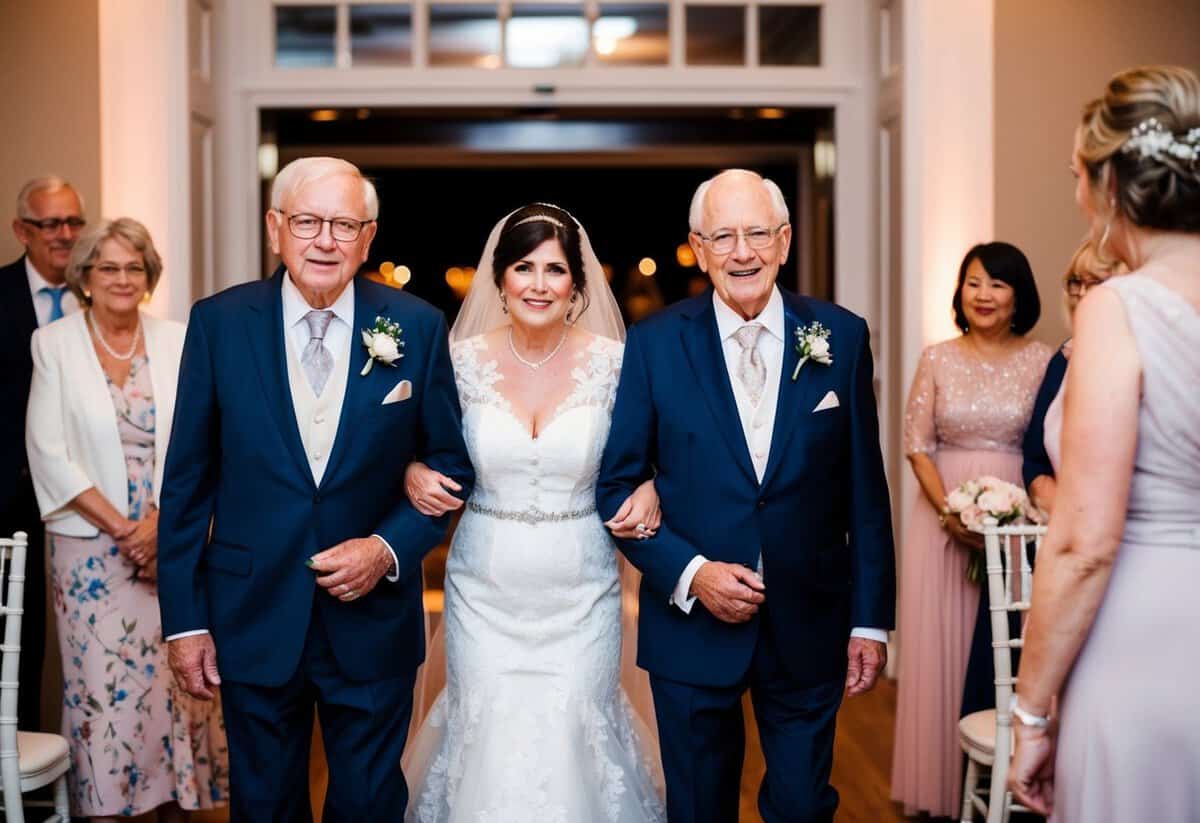
As you prepare for your special day, it’s important to think about how you want to honor both families. You might choose to have the groom’s parents enter along with the bride’s, or keep them distinct to highlight each family’s importance. The order can reflect your family’s traditions or your personal preferences, making the day uniquely yours.
Whether you decide to follow tradition or create a new approach, recognizing your parents during the reception will create a heartfelt moment. Keep their roles in mind while planning, and ensure that they feel celebrated as you kick off a beautiful evening with family and friends.
Understanding the Wedding Processional
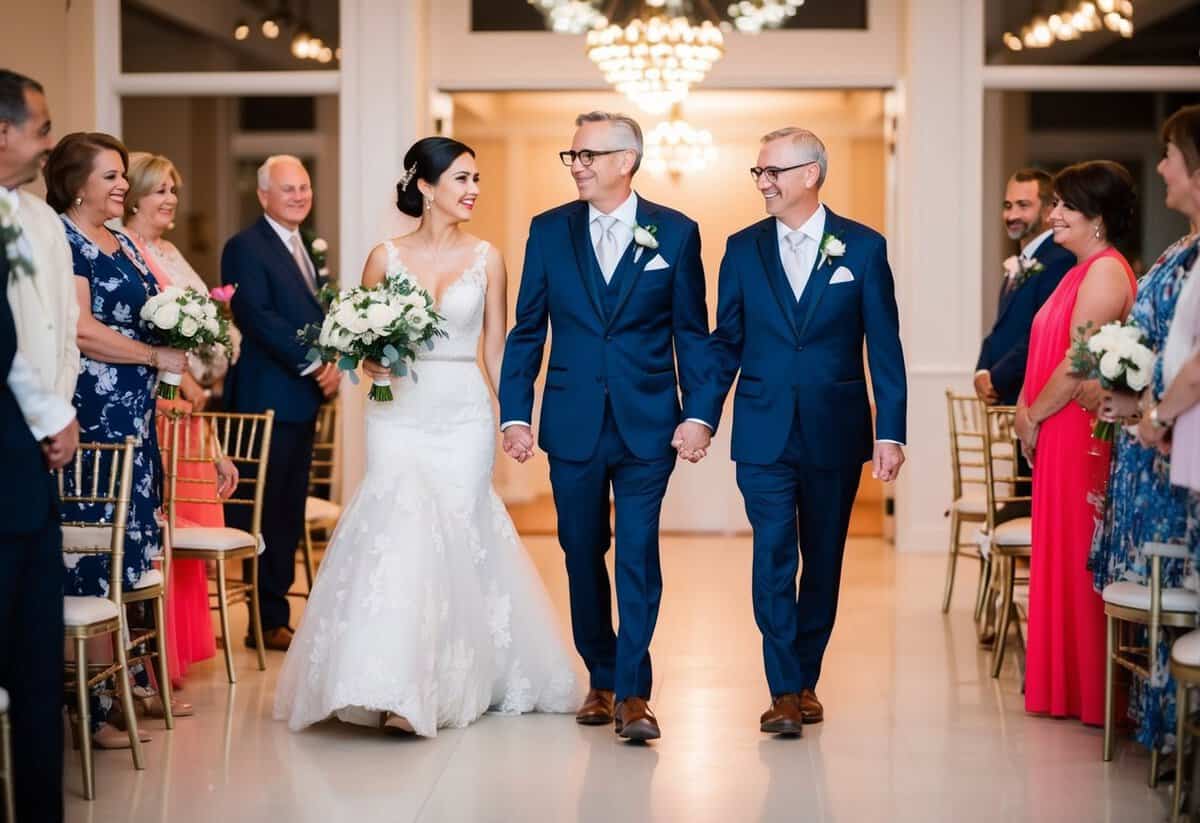
The wedding processional sets the stage for the ceremony, marking an important moment in your wedding day. It involves various participants walking down the aisle in a specific order, creating a memorable experience for you and your guests.
Order of Entry for Family and Wedding Party
The order of entry is a treasured part of the wedding tradition. Typically, the processional starts with the officiant and the groom. Next, the wedding party walks in, usually starting with the groomsmen. After them, the bridesmaids follow.
Here’s how it generally looks:
- Officiant
- Groom and Best Man
- Groomsmen
- Bridesmaids
- Flower Girl
- Ring Bearer
- Bride and Father
This order can change based on personal preferences. Some couples may have different traditions, especially when including family members. Always feel free to adjust it to what feels right for your day.
Roles of Parents in the Processional
The parents play a significant role in the wedding processional, often leading to emotional moments. Generally, the groom’s parents walk first, followed by the bride’s mother. Here’s a common order:
- Groom’s Parents: They walk in at the beginning, welcoming everyone.
- Bride’s Mother: She usually enters last before the bride, often alone or with a family member.
Some couples choose to have both sets of parents enter together, showcasing unity. The way parents participate can reflect your family’s traditions and values, adding a personal touch to the ceremony.
Special Considerations for the Parents’ Entrance
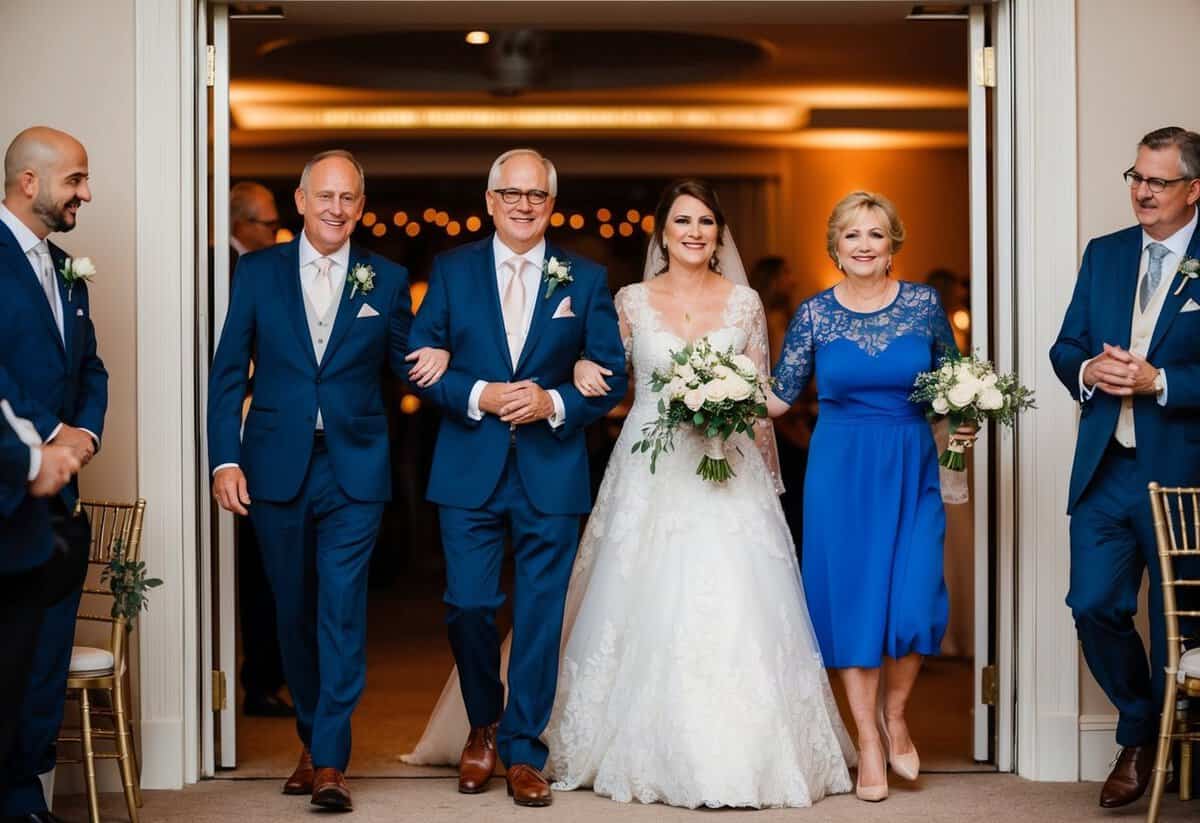
When planning the parents’ entrance at your wedding reception, it’s important to think about their roles and any cultural traditions that might influence the order of entry. This can help make their moment special and meaningful.
Solo Parent Arrangements
In cases where you have a solo parent, such as a mother or father who is attending without a partner, it can be important to make arrangements that honor their role. For the mother of the bride, you might want to have her enter solo or with a close family member if she prefers not to walk alone.
Similarly, if the father of the groom is attending by himself, consider letting him enter alone or paired with the mother of the bride if that feels right for both families. This ensures that each parent feels valued and included in the celebration.
Communicating with your parents about their preferences can help create a comfortable atmosphere. Clear communication fosters respect and ensures everyone feels supported during this meaningful moment.
Processional Variations Across Cultures
Different cultures have unique customs for parents’ entrances. In a Jewish wedding, for instance, the parents may arrive together under a chuppah, showing unity and support. This can symbolize the joining of two families.
In a more modern wedding processional, you might choose to break tradition and let your parents enter in a way that feels more personal. The parents of the bride often take part in the first introductions, but it’s perfectly fine to mix it up based on what you and your partner envision.
For Christian weddings, the sequence typically starts with the parents of the bride, followed by the parents of the groom. However, you can adapt this based on your own family’s preferences. By understanding these customs and making adjustments, you can craft a personalized experience that reflects your family’s values.
Reception Entrance Protocol
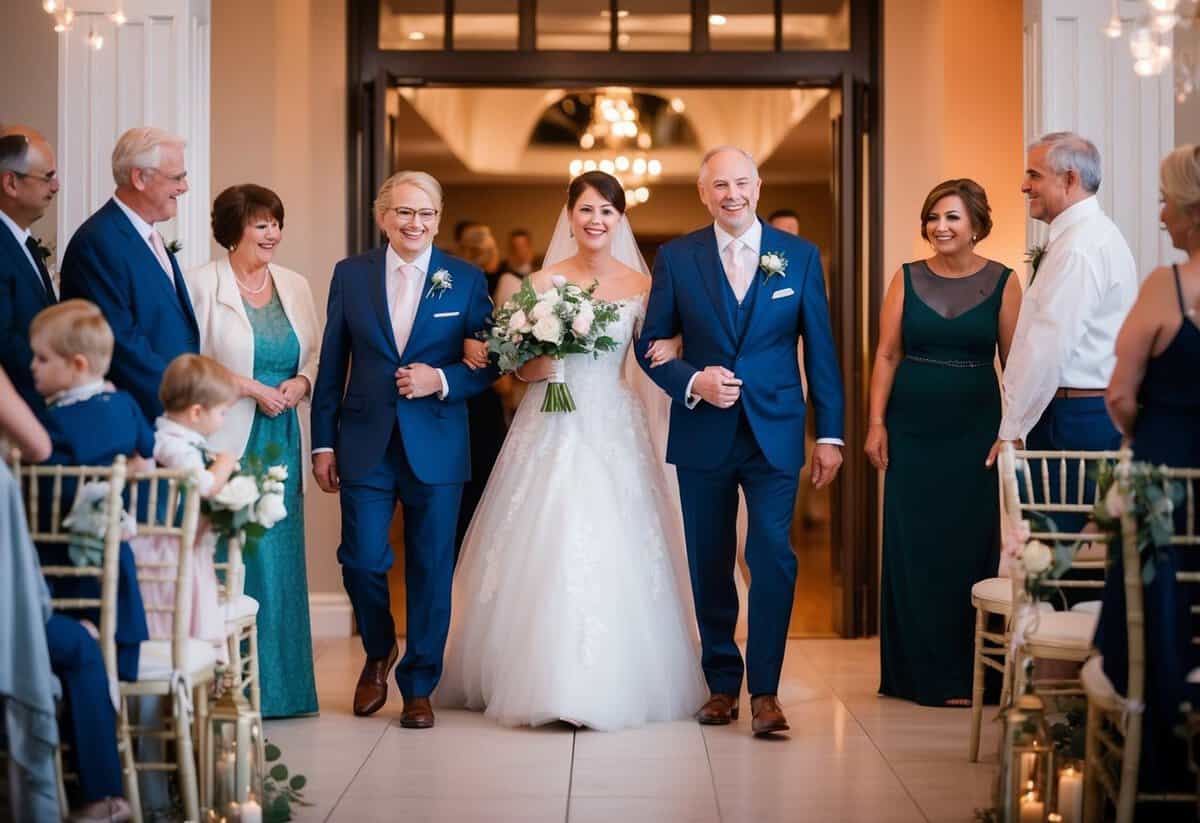
When it comes to entering the wedding reception, there are some traditional practices that can guide you. Knowing the correct order and how to coordinate the entrance can help set a joyful tone for your celebration.
Grand Entrance Choreography
The grand entrance is a key moment that can energize the reception. Usually, your parents enter first to symbolize their support. If they are still married, they will often walk together. In cases of divorce or loss, the entrance may look different.
Traditional Order:
- Groom’s parents
- Bride’s mother (or parents)
- Bridal party
- Newlyweds
Your wedding officiant or DJ will help coordinate these entrances, ensuring the music cues are just right. Selecting a fun, upbeat song for your entrance can create excitement and set the mood for the evening.
Queuing the Reception Entrance
To manage the reception entrance smoothly, you need proper queuing. Communicate with your family members about their roles ahead of time.
Consider using a short rehearsal before the big day to go over the flow. This will help everyone understand when they should enter. Some couples choose to use a designated usher, who can guide parents and other important family members down the aisle.
If you’re planning for same-sex weddings, discuss the order of entrances in line with your preferences. Flexibility can make the arrangement feel personal and meaningful. A clear plan helps avoid confusion, ensuring that you and your loved ones can enjoy this special moment.