
Which Parents Walk into the Reception First? A Guide for Wedding Planning
When planning your wedding reception, you might wonder about the order in which parents walk in. Typically, the groom’s parents enter before the bride’s parents during the reception entrance. This tradition helps set the stage for the couple’s big moment as they are introduced after their families.

Understanding the entrance order can ease some of the stress of planning. You want everything to flow smoothly, making it enjoyable for you and your guests.
Knowing who walks in first can keep the focus on the joy of the day, especially after the formalities of the wedding ceremony are over.
As you get ready for your reception, consider the significance of the entrance order. It showcases the importance of family in your union while perfectly leading up to your grand entrance as the couple.
Embrace these moments, as they are truly special in celebrating your journey together.
The Wedding Processional Order
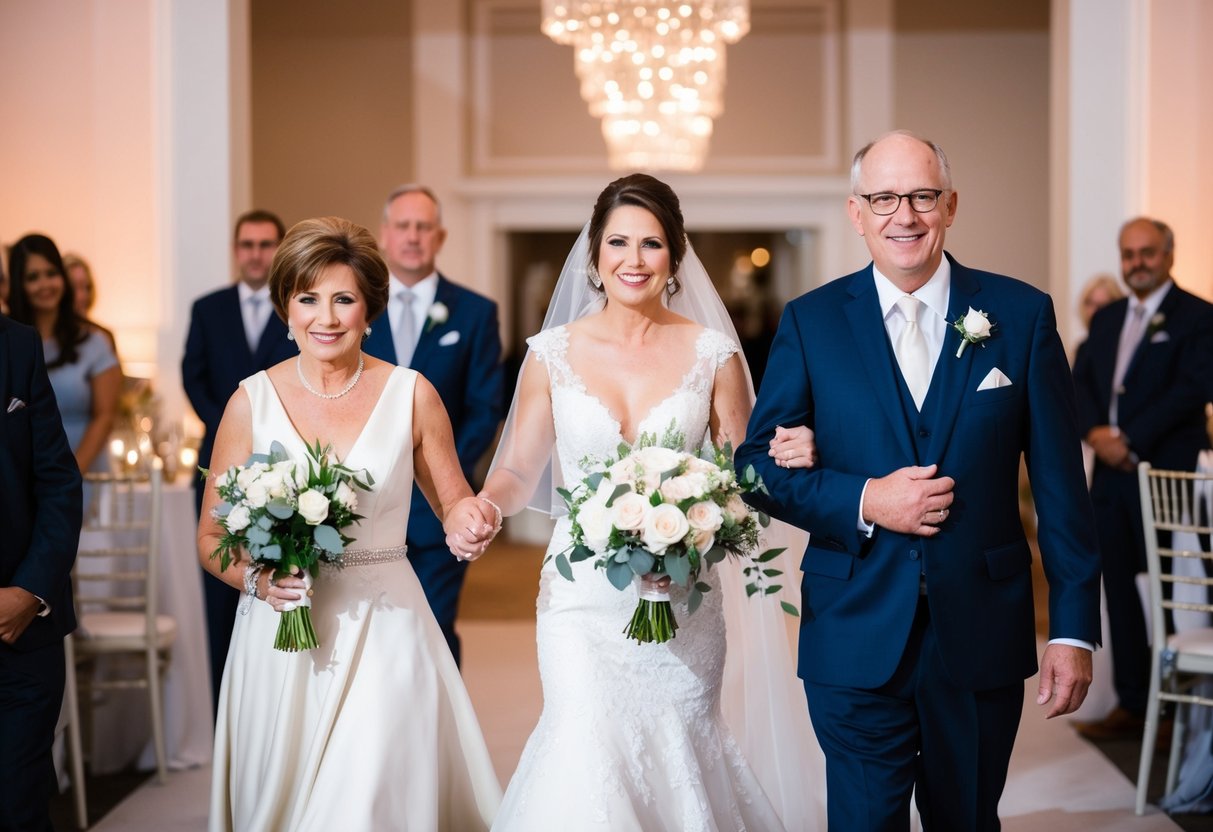
The wedding processional sets the tone for your ceremony and is an important moment for everyone involved. This order can vary depending on tradition and culture. Understanding how it works can help you plan your special day.
Traditional Christian Ceremony Processional
In a traditional Christian wedding, the processional usually follows a specific order. First, the grandparents are seated, followed by the parents. Typically, the groom’s parents walk in before the bride’s mother.
Next, ushers guide the bridesmaids and groomsmen down the aisle. The maid of honor walks right before the bride. Finally, the bride makes her grand entrance, often escorted by her father. This arrangement emphasizes the special roles each person plays in the ceremony.
Order Variations in Different Cultures
Different cultures have unique traditions that affect the wedding processional order. For example, in a Jewish wedding, both sets of parents are usually seated together. The groom often enters alongside his parents, while the bride is escorted by both of her parents.
Hindu weddings have their own processional styles, where the groom rides in on a horse or another vehicle. The bride typically enters separately, adding a dramatic effect to the ceremony.
Knowing cultural customs can help you honor both families on your big day.
Step-parents and Blended Family Considerations
When it comes to blended families, planning the processional can involve more considerations. You may want to include step-parents in the order.
A common practice is to have both biological and step-parents walk together or have separate moments.
For example, if the bride has a step-father, you might consider having both her biological father and step-father escort her. You can create a processional that reflects your family dynamics.
Discussing this with your family beforehand can keep everyone included and happy during the ceremony.
Ceremony and Reception Venues
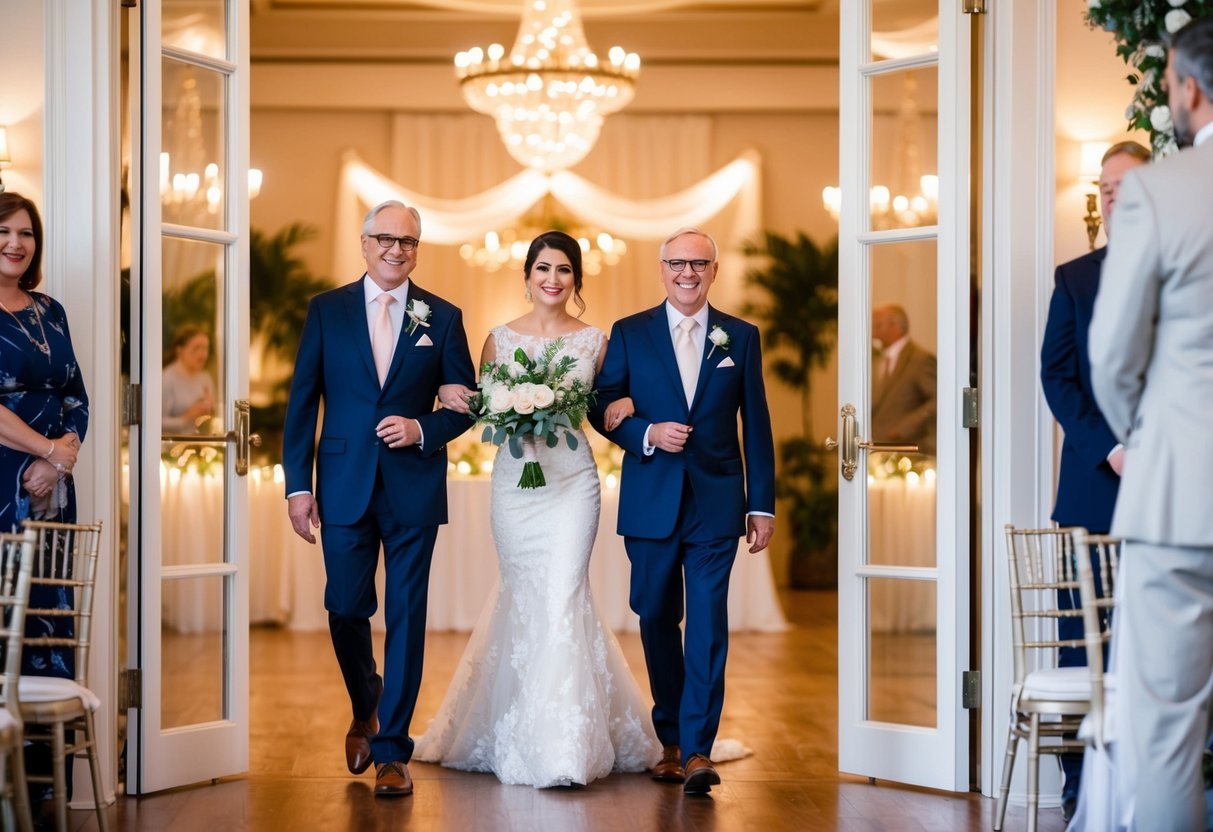
When planning your wedding, choosing the right ceremony and reception venues is crucial. These locations set the tone for your special day and can influence the order in which your guests are seated and introduced.
Honourary Seating Arrangements
Your seating arrangements for the ceremony are important for honoring special family members. It’s common for the grandparents of the bride and groom to have prominent seating. They often sit in the front row, allowing them to feel included in the ceremony.
After that, you might invite the parents to sit down before the bridal party walks in.
You can create a separate honourary table at the reception for family members. This table can include your grandparents or other close relatives. Make sure to let them know they have been specially recognized and appreciated throughout your wedding day.
Venue Specific Rules and Layout
Every venue has its own rules and layout that affect your ceremony and reception flow.
Check if the venue has a designated entrance for parents and family members. Some places require specific introductions, especially for the parents.
Make note of any restrictions, such as music volume or alcohol service. These can impact your plans for the reception.
Discuss your needs with the venue staff to ensure everything runs smoothly.
Communicating with them can help you create an enjoyable experience for both you and your guests.
The Grand Entrance at the Reception
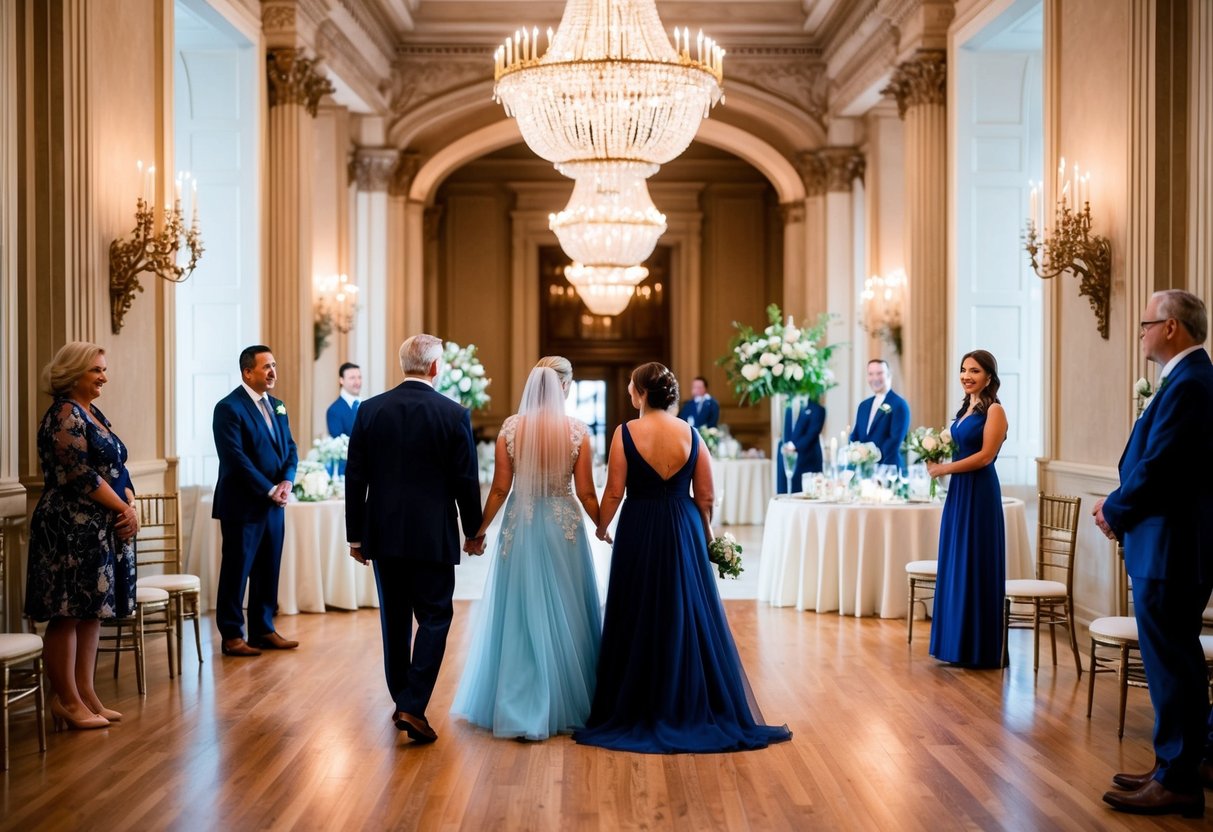
The grand entrance is a key moment in your wedding reception. It sets the tone for the celebration and welcomes everyone to the party. Knowing who walks in first and how to plan this moment is important for a seamless flow.
The Role of the Wedding Planner and Emcee
Your wedding planner and emcee are essential for a successful grand entrance. They will help organize the bridal party in the right order before entering the reception.
This preparation is vital because it ensures everyone knows their cue.
The emcee will announce each person clearly, which helps guests feel involved. Make sure they have the correct pronunciations for all names.
This attention to detail will help your guests feel comfortable and appreciated.
Taking time to coordinate with your planner and emcee can make this experience fun and memorable. They’ll also help manage the timing and energy levels, ensuring a lively atmosphere as you and your loved ones enter.
Ensuring a Smooth Reception Grand Entrance
A smooth grand entrance requires planning and organization.
Start by deciding the grand entrance order. Typically, the order includes the parents of the bride and groom, followed by the bridal party, and lastly, you as the couple.
Create a list of everyone involved and share this list with the DJ or emcee ahead of time. They can help make sure everyone knows when to enter.
This prevents confusion and makes the moment flow smoothly.
You might also want to choose a special song for your entrance. The right music can elevate the excitement and set the mood for your first dance.
Planning these details ahead of time will help create a memorable atmosphere for you and your guests at your wedding reception.
Special Moments Involving Parents
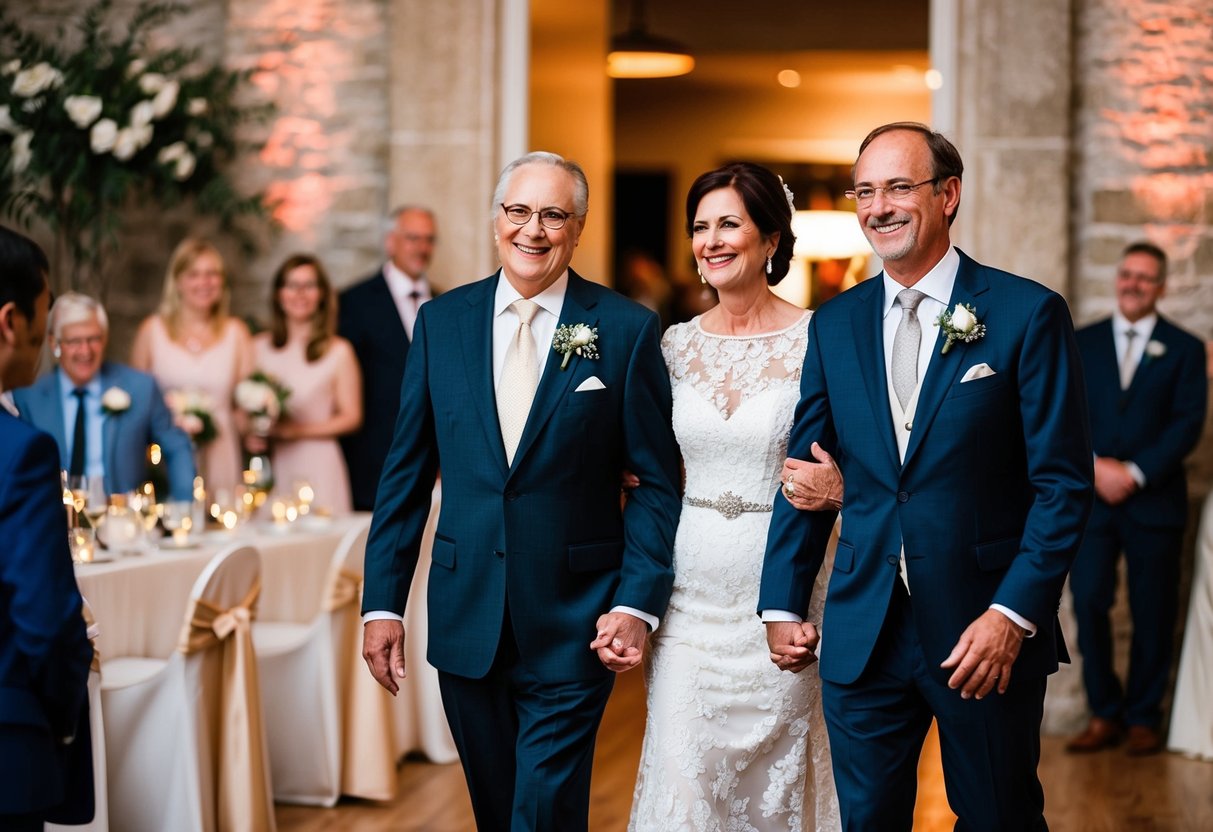
The parents of the couple play vital roles in wedding receptions. Whether it’s their entrance or involvement in special dances, these moments celebrate their support and love. Here’s a closer look at the special roles for each set of parents.
Mother of the Bride
The mother of the bride has a significant role at the reception. Traditionally, she is one of the first to enter, often proceeding after the bridal party. This moment honors her support throughout the wedding journey.
Choosing the right song for her entrance can make it even more memorable. A popular choice is “A Song for Mama” by Boyz II Men.
She may also participate in special dances, like the mother-daughter dance, which can be very emotional and meaningful.
Involving her in speeches or toasts helps highlight her role in your life. This tribute allows guests to see how special she is to you and sets a warm tone for the evening.
Father of the Bride
The father of the bride also has cherished moments at the reception. He typically walks his daughter down the aisle, symbolizing his support and love. His entrance at the reception is equally important, often following the bride and her mother.
A heartfelt song can accompany his entrance. “Butterfly Kisses” by Bob Carlisle is a touching choice.
Moments like the father-daughter dance can be especially moving, as it showcases the bond you share.
During the reception, he may give a speech or toast, sharing joyful memories and wishing you both happiness. These words can resonate with all the guests, creating a lovely atmosphere.
Groom’s Parents
The groom’s parents play a critical role in the celebration. They typically enter after the bride’s parents to signify their support. Their entrance can also include a meaningful song to set the mood.
They often participate in special dances, such as a parent-child dance. This allows them to celebrate their relationship with their son. Choosing a song that reflects their feelings is key.
Additionally, the groom’s parents may give a toast, sharing their pride and joy for their son. This moment can help connect both families and ensure everyone feels included in the celebration.